
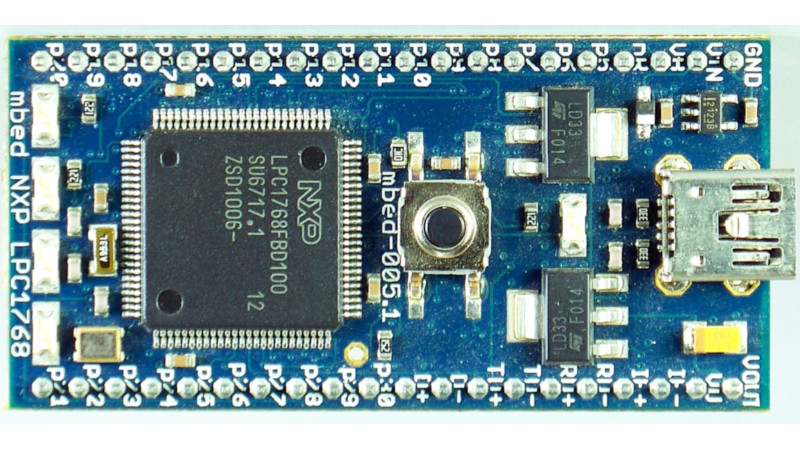
Mbed had a very good run. For years, it was the friendly front door to Arm microcontroller development: open a browser, pick a board, blink an LED, add a library, compile in the cloud, and feel briefly like the firmware gods had smiled upon your coffee-stained desk. But all developer fairy tales eventually meet a release note, and this one comes with a calendar reminder: Arm has announced that Mbed OS and the Mbed platform will reach end of life in July 2026.
That does not mean every Mbed-powered device will suddenly burst into tiny embedded flames. The code will remain publicly available, and existing projects do not instantly become useless. But the meaning is clear enough: Arm will no longer actively maintain or support Mbed OS, the Mbed website will be archived, and the online tools that made the platform so convenient will no longer be available for building projects. For developers, educators, product teams, and hobbyists, the message is not “panic.” It is “plan.” Preferably before your build pipeline becomes a museum exhibit.
What Is Mbed, and Why Did It Matter?
Mbed, often written as Arm Mbed or Mbed OS, was created to make development on Arm Cortex-M microcontrollers less painful. It combined an operating system, hardware abstraction layers, drivers, connectivity tools, security features, and development environments into one approachable ecosystem. That mattered because embedded development has a long tradition of greeting newcomers with datasheets the size of small novels and error messages that look like they were assembled during a thunderstorm.
Mbed helped smooth that path. It supported many development boards, offered examples, provided APIs that made code portable across supported targets, and gave developers a quick way to prototype connected devices. For students and makers, it was often a first taste of professional embedded programming. For engineers, it offered a faster way to evaluate hardware and build early IoT prototypes without manually stitching together every driver, RTOS primitive, and build script from scratch.
The Official End-of-Life Timeline
The key date is July 2026. At that point, the Mbed platform and operating system reach end of life. The Mbed website will be archived, and Arm’s online tools will no longer build projects. Mbed OS itself remains open source and publicly accessible, but it is no longer actively maintained or supported by Arm.
This distinction is important. “Open source” does not automatically mean “healthy.” A project can be visible on GitHub and still be functionally abandoned. The repo may remain useful as a reference, a dependency, or a forkable foundation, but teams should not expect Arm to provide ongoing security patches, board support updates, CI maintenance, new features, or long-term production assurances.
Mbed TLS Is Not Going Away With Mbed OS
One point deserves extra clarity: Mbed TLS is not the same thing as Mbed OS. The names are similar, which is helpful only if your favorite hobby is explaining branding at parties. Mbed TLS continues under the TrustedFirmware.org community and remains focused on cryptography, TLS, DTLS, X.509 certificate handling, and PSA cryptography support. So when people say “Mbed is ending,” they generally mean Mbed OS and the Mbed platformnot Mbed TLS.
Why Mbed’s End Matters
The end of Mbed OS is not just another software sunset. Embedded systems live longer than web apps, phones, and occasionally some office furniture. A connected sensor, smart industrial controller, educational lab board, or custom prototype may remain in use for years. When its foundation stops receiving maintenance, the risks become practical, not theoretical.
1. Security Becomes Your Responsibility
Connected devices need a security maintenance plan. If Mbed OS is no longer actively supported by Arm, teams using it in products must decide who owns vulnerability monitoring, patching, dependency updates, compiler compatibility, and long-term testing. That is manageable for a mature engineering organization, but it is a serious burden for small teams that adopted Mbed because it reduced complexity in the first place.
2. Online Tooling Disappears
Mbed’s cloud-based tools were part of its charm. They lowered the setup barrier and made embedded development feel less like preparing a spaceship for launch. Once those tools are no longer available, anyone who still depends on them will need an offline build system, exported projects, local dependencies, documented toolchains, and a repeatable way to compile firmware.
3. Board Support Can Drift
Microcontroller ecosystems change constantly. New silicon appears, vendor SDKs evolve, compilers shift, and old examples quietly stop compiling. Without active maintenance, Mbed targets may gradually fall behind. The older your hardware and dependencies become, the more likely your build will require pinned versions, patched scripts, and the kind of tribal knowledge usually stored in one engineer’s head under the label “Do Not Lose Dave.”
Who Is Most Affected?
Not every Mbed user faces the same level of pain. A hobbyist with an old demo board may simply export code and move on. A university course may need to update labs, documentation, and setup instructions. A commercial product team may need a formal migration plan, risk analysis, and support strategy.
Educators and Students
Mbed was popular in teaching because it removed much of the environment setup. Students could focus on C++, GPIO, timers, interrupts, networking, and RTOS concepts without first losing a weekend to compiler installation drama. For universities and training programs, the end of online tooling means course materials should move toward actively supported platforms, such as vendor IDEs, Keil Studio workflows, Zephyr-based labs, FreeRTOS examples, or Arduino-compatible routes depending on learning goals.
Hobbyists and Makers
Makers often loved Mbed because it made powerful Arm boards approachable. If you have Mbed projects saved online, export them. Save your libraries. Record the exact board target, compiler version, and Mbed OS version. Future you will thank present you, possibly with snacks.
Commercial Product Teams
For companies, the question is sharper: should a product continue shipping on an unsupported OS? Sometimes the answer may be yes for a stable, non-connected, tightly controlled device. But for connected products, regulated environments, or anything with long field life, relying on an unsupported stack can create security, compliance, hiring, and maintenance problems. “It still builds on my laptop” is not a lifecycle strategy. It is a cry for help wearing a hoodie.
What Should Developers Do Now?
The best response is not panic migration. It is inventory, risk ranking, and a calm plan. Treat the Mbed EOL timeline as a deadline for making your firmware reproducible and your roadmap realistic.
Step 1: Export and Archive Everything
Export projects from Mbed’s online tools while they are still accessible. Save source code, dependency versions, libraries, configuration files, documentation, generated binaries, and any notes about board setup. If your project depends on a library hosted through the Mbed ecosystem, mirror it or move it to a controlled repository. The goal is simple: no critical project should depend on a website that is about to be archived.
Step 2: Freeze a Known-Good Build
Create a reproducible local build environment. Use version control. Pin compiler versions. Document the target board, build commands, Python packages, CMake versions, Mbed CLI versions, and any patches. Better yet, containerize the build if practical. Embedded builds are famous for breaking because a minor dependency sneezed. Lock things down before the sneeze becomes a flu season.
Step 3: Decide Whether to Maintain or Migrate
Some projects can stay on Mbed OS if they are stable, offline, low-risk, and not expected to receive major new features. Others should migrate. The decision depends on product lifespan, security exposure, team expertise, hardware support, certification needs, and whether your firmware roadmap still has a pulse.
Best Alternatives to Mbed OS
No single replacement fits everyone. Mbed’s appeal was its combination of approachable APIs, RTOS features, board support, examples, and cloud tooling. Replacing it means choosing which of those qualities matters most.
Zephyr RTOS
Zephyr is one of the strongest modern options for connected embedded systems. It supports many architectures, including Arm Cortex-M, and offers a scalable RTOS, device tree-based hardware description, networking, Bluetooth, drivers, security features, and active community development. It has a learning curve, but it also has momentum. For teams building serious IoT products, Zephyr deserves a close look.
FreeRTOS
FreeRTOS remains a popular choice for microcontrollers and small microprocessors. It is widely used, actively maintained, lightweight, and supported across many processor architectures. If your application needs a dependable RTOS kernel with broad vendor familiarity, FreeRTOS may be a practical migration target. It will not automatically replace every Mbed API, but it offers a stable foundation.
Vendor SDKs
Sometimes the best replacement is the silicon vendor’s own SDK. ST, Nordic, NXP, Raspberry Pi, Espressif, Renesas, and others provide toolchains, examples, drivers, middleware, and board support tailored to their chips. Vendor SDKs can be less portable than Mbed, but they often provide the most direct access to hardware features and long-term support paths.
Arduino Ecosystem
Arduino remains attractive for education, prototyping, and maker projects. Some Arduino boards and cores have used Mbed beneath the surface, so users should check board-specific support. Still, the Arduino ecosystem offers broad documentation, a familiar API, and a large library base. For simple projects, it may be the least dramatic way to move forward.
CMSIS and Keil-Based Workflows
Arm’s CMSIS provides standardized interfaces and components for Cortex-M development, while Keil tools remain central in many professional Arm workflows. For developers who want to stay close to the Arm ecosystem without depending on Mbed OS, CMSIS-based projects and Keil development tools can provide a more durable path.
Migration Challenges to Expect
Migrating away from Mbed is not always a quick search-and-replace job. Mbed APIs abstracted GPIO, timers, serial communication, networking, storage, RTOS threads, events, and board configuration. Moving to another platform may require rethinking how your application is structured.
Drivers and Hardware Abstraction
If your project uses standard peripherals, migration may be straightforward. If it depends on custom board definitions, unusual drivers, or old community libraries, expect more work. Hardware abstraction is wonderful until you have to replace it. Then it becomes archaeology with a logic analyzer.
Networking and Security
IoT projects often rely on TLS, sockets, Wi-Fi, cellular modems, MQTT, or cloud integrations. These parts deserve careful testing after migration. Even when APIs look similar, timing, memory usage, certificate handling, and error behavior can change.
RTOS Behavior
Threads, mutexes, queues, timers, and event loops are not identical across RTOSes. A task that behaved politely under Mbed may become moody elsewhere. Test concurrency, interrupt interactions, stack sizes, timing assumptions, and watchdog behavior early.
Practical Checklist Before July 2026
- Export every Mbed project from online workspaces.
- Mirror important libraries and dependencies.
- Record exact Mbed OS, compiler, board, and tool versions.
- Create a reproducible local build.
- Identify products or prototypes still relying on Mbed OS.
- Classify each project as archive, maintain, or migrate.
- Evaluate Zephyr, FreeRTOS, vendor SDKs, Arduino, or CMSIS workflows.
- Run security and lifecycle reviews for connected products.
- Update documentation before institutional memory walks out the door.
What Mbed Got Right
It is easy to treat end-of-life news like a funeral announcement, but Mbed deserves more than a shrug. It made embedded development more accessible. It helped students learn. It let makers and engineers prototype quickly. It brought cloud compilation, portable APIs, examples, and board support to a space that was often intimidating. Many developers wrote their first serious microcontroller code in Mbed. Many products probably began as quick Mbed experiments before growing into something more formal.
Mbed’s biggest lesson is that ease of entry matters. Embedded software can be brutally complex, and tools that lower the first step create new engineers, new experiments, and new products. Even if Mbed OS is ending, its influence survives in the expectation that microcontroller development should be more approachable than deciphering ancient runes by candlelight.
Experience Notes: Living Through the End of a Favorite Embedded Platform
If you have ever maintained firmware after a platform’s prime years, the Mbed announcement probably feels familiar. The first stage is denial: “It still works, so we’re fine.” The second stage is inconvenience: a library fails to import, a compiler version changes, or a build server starts acting like it has developed artistic differences with your project. The third stage is acceptance, usually accompanied by a spreadsheet titled something cheerful like “Firmware Migration Risk Matrix.”
The practical experience is this: end-of-life rarely breaks everything at once. It breaks confidence first. You stop knowing whether a bug is yours, the toolchain’s, the OS layer’s, or a stale dependency’s. You start pinning versions. Then you start pinning the versions that pin the versions. Eventually, one developer has a laptop that can still build the release firmware, and everyone treats that laptop like a sacred artifact. Do not become that team.
For small teams, the smartest move is to separate emotional attachment from operational reality. Mbed may have been the fastest way to get a prototype running, but prototypes and production devices have different needs. A prototype rewards speed. A product rewards repeatability, security, support, and boring documentation. Boring, in firmware, is a compliment. Boring means the build runs. Boring means the watchdog behaves. Boring means nobody is debugging UART output at 2:00 a.m. while whispering threats at a development board.
Developers who used Mbed for education may have a different experience. In a classroom, setup time is precious. A tool that lets students write code quickly is valuable because the lesson is often about embedded concepts, not toolchain suffering. Migrating course material can be annoying, but it is also an opportunity to teach modern workflows: Git, local builds, CI, hardware abstraction, RTOS fundamentals, and security maintenance. Students should learn how to blink an LED, yes, but they should also learn why unsupported dependencies matter.
For hobbyists, the advice is more relaxed but still important. Save your projects. Export them. Keep local copies of libraries. Take screenshots of board settings if you must. Future-you may not remember why a specific pin was inverted, why the baud rate was weird, or why the code only worked when compiled under a particular profile. Future-you is busy and slightly annoyed. Help future-you.
For product teams, the Mbed EOL should trigger a real engineering conversation. What devices are in the field? Are they connected? Are customers expecting updates? Are there contractual support obligations? Does the firmware include security-sensitive components? Can the team rebuild the exact released image today? If the answer to that last question is “probably,” schedule a build audit immediately. “Probably” is not a build system. It is a coin toss with a makefile.
The good news is that embedded developers have strong options. Zephyr is growing, FreeRTOS remains dependable, vendor SDKs are often powerful, Arduino still shines for accessibility, and CMSIS-based workflows keep projects close to Arm standards. The best choice depends on the project, but the worst choice is pretending July 2026 is far away. In firmware time, July 2026 is basically tomorrow wearing a calendar disguise.
Conclusion
Time’s up for Mbed, but not for the projects and people it helped create. Arm’s end-of-life timeline marks the close of an important chapter in accessible Arm microcontroller development. Mbed OS made IoT prototyping faster, classrooms friendlier, and embedded development less intimidating. Now developers need to preserve what matters, export what they still need, and choose a sustainable path forward.
For hobby projects, that may mean archiving code and moving to Arduino or a vendor SDK. For serious connected products, it may mean evaluating Zephyr, FreeRTOS, CMSIS, or a supported commercial toolchain. For educators, it means refreshing labs before the old workflow disappears. The platform may be winding down, but the lesson remains: good tools matter, lifecycle planning matters more, and unsupported firmware has a way of becoming exciting at exactly the wrong time.











