
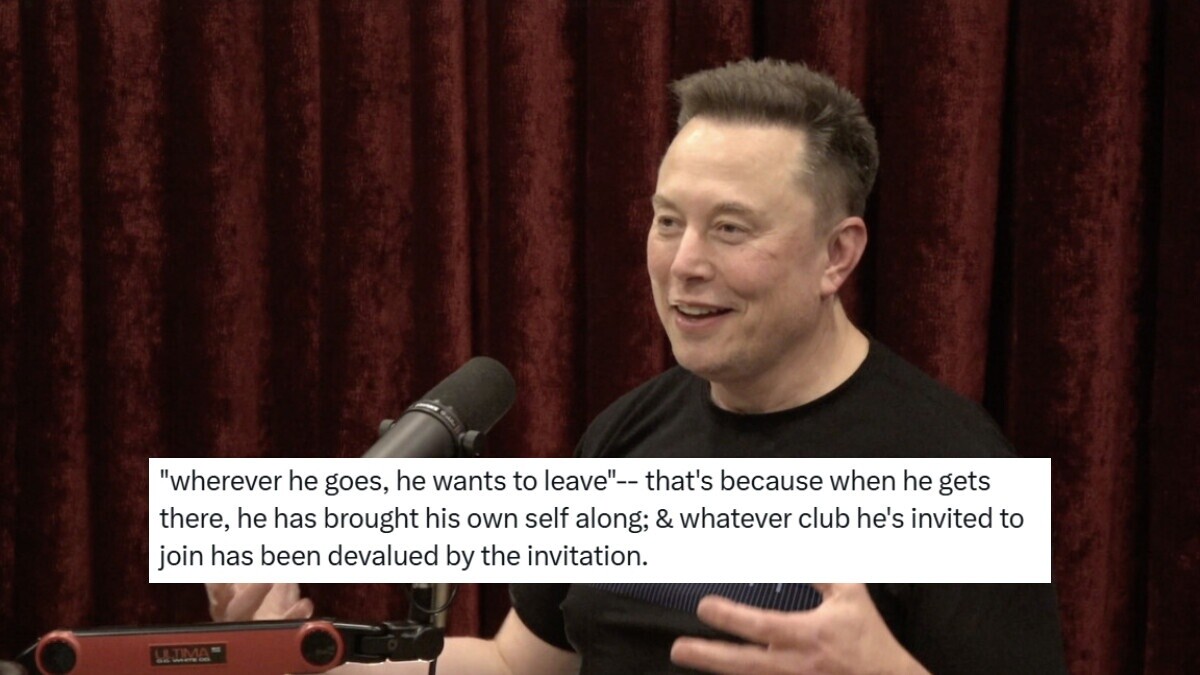
Every so often, the internet produces a duel so perfectly absurd that future historians will either study it carefully or pretend civilization was on vacation that week. In November 2025, one of those moments arrived when Joyce Carol Oates, the legendary American novelist, short-story master, essayist, professor, and professional destroyer of character illusions, aimed a few carefully arranged words at Elon Musk on X. The result was not merely a viral post. It was a cultural weather event.
The headline almost writes itself: Joyce Carol Oates roasts Elon Musk. But that phrase barely captures what made the exchange so memorable. This was not a standard celebrity clapback, not a influencer-style “ratio,” and certainly not a meme war fought with recycled reaction images. Oates, one of the most prolific and decorated writers in American literature, did what novelists do best: she looked at a public persona and described what seemed missing.
Her target was one of the most visible men on Earth: Elon Musk, the billionaire behind Tesla, SpaceX, X, xAI, and a public feed that often feels like a 24-hour conference call between markets, memes, politics, science fiction references, and the world’s loudest group chat. Oates did not focus on rockets, electric vehicles, net worth, or corporate strategy. Instead, she made a stranger, sharper observation. She wondered why someone with such unlimited resources appeared, from his public posting habits, to show so little evidence of ordinary delight: nature, pets, art, books, music, family pride, sports, history, grief, friendship, or the small pleasures that make a person seem fully alive.
That was the roast. Not “you are bad at business.” Not “your companies are overrated.” Not “your jokes are stale.” Oates went deeper. She questioned the emotional furniture of the man’s public life. It was less a punchline than an X-ray.
Why the Joyce Carol Oates Elon Musk Roast Went Viral
The viral power of the Joyce Carol Oates Elon Musk exchange came from contrast. Musk is often portrayed as a futuristic titan: rockets, robots, neural interfaces, electric cars, artificial intelligence, Mars, and trillion-dollar compensation debates. Oates is a literary titan of a different species: novels, short stories, essays, Gothic dread, American violence, psychological pressure, and sentences that seem to enter a room carrying a candle and a shovel.
When those worlds collided, the internet leaned forward. Here was an 87-year-old National Book Award-winning author using Musk’s own platform to perform a psychological critique that was both personal and weirdly universal. People did not share the post only because it insulted Musk. They shared it because it named something many users had felt about online billionaire culture: abundance without visible joy can look strangely poor.
Oates’s comment also arrived at the perfect cultural moment. Musk had recently been involved in public discussions about Tesla’s massive compensation plan, and X remained a stage where his fans and critics watched nearly every post as if it were a market signal, campaign slogan, stand-up bit, or corporate memo. Into that noise stepped Oates, who essentially asked: yes, but where is the cat photo? Where is the poem? Where is the sunset? Where is the simple proof that the richest person in the room has ever sat quietly and enjoyed being there?
That is a devastating question because it cannot be answered with a balance sheet. A billionaire can buy a platform, acquire a company, fund a rocket, and reshape public discourse. But can he convincingly post wonder? Can he demonstrate warmth without it looking like an emergency patch update? That was the comic engine of the moment.
Joyce Carol Oates: The Perfect Person to Deliver the Blow
Joyce Carol Oates was not some random account chasing engagement. She is one of the most important and tireless American writers of the past sixty years. Born in Lockport, New York, Oates published her first book in the 1960s and has built a body of work so enormous that describing her as “prolific” feels like calling the Grand Canyon “a ditch with confidence.”
Her novel them won the National Book Award in 1970. Blonde, her fictionalized portrait of Marilyn Monroe, became one of her most widely known works. Her fiction has repeatedly explored violence, identity, social pressure, gender, ambition, class, and the hidden storms inside ordinary American life. She has taught generations of writers and remains a major literary presence well into her late eighties.
That background matters because Oates’s roast did not sound like a brand manager’s insult. It sounded like a character note. She treated Musk not as a CEO, not as a political symbol, not even as a billionaire, but as a figure in a strange American novel: powerful, restless, surrounded by machines, and somehow spiritually under-decorated.
In other words, she did not simply drag him. She workshopped him.
Elon Musk’s Response Made the Roast Even Bigger
One reason the exchange exploded was Musk’s reaction. Instead of ignoring the criticism, he pushed back. Reports described him as calling Oates dishonest and mean, mocking her writing style, and taking aim at her literary reputation. For many observers, that response did not neutralize the roast. It confirmed the joke’s central premise: the comment had landed.
This is an ancient internet law. If someone accuses you of being too sensitive and you publish thirteen paragraphs explaining how calm you are, the algorithm will put on a little party hat. Musk’s replies helped convert Oates’s observation into a full online storyline. Suddenly, the conversation was not only about whether Oates had been fair. It was about why one literary jab from an octogenarian novelist seemed to bother a man who routinely battles politicians, journalists, regulators, competitors, comedians, and anonymous accounts with anime avatars.
Then came the next layer of comedy. After the criticism, Musk appeared to post or respond more visibly about movies and pop culture, which some users interpreted as an attempt to prove that he did, in fact, enjoy art. That may have been sincere. It may have been coincidence. But on the internet, coincidence is often treated like a confession wearing sunglasses.
For Oates’s supporters, the timing was delicious. The novelist had asked where the signs of cultural life were, and suddenly the timeline seemed to produce exhibits. It was as if a teacher had written “needs more evidence” in the margin, and the student returned with three movie titles, two defensive notes, and a smoldering keyboard.
Why This Was More Than a Celebrity Feud
The phrase Elon Musk roast makes the event sound like pure entertainment, and yes, it was entertaining. But the reason it traveled so far is that it touched a larger nerve: the relationship between money, meaning, and public identity.
In modern online life, wealthy public figures are expected to perform relatability. They post about music. They share family moments. They praise books. They photograph landscapes. They mourn. They celebrate sports teams. They reveal hobbies. They appear, at least occasionally, like people whose lives contain something beyond achievement and argument.
Oates’s critique suggested that Musk’s public persona often feels dominated by conquest: companies, technologies, disputes, ideology, jokes, and claims of world-historical mission. That does not mean he has no private joys. Public feeds are not full biographies. But a social media profile is a chosen performance, and Oates read that performance like literature.
That is why her post felt so precise. She was not claiming to know the whole human being. She was judging the character created by the feed. On X, Musk is not merely a person; he is also a text. And Joyce Carol Oates has spent a lifetime reading difficult texts.
The Literary Art of the Roast
Most online insults are blunt instruments. They swing hard, make noise, and leave behind a few dented replies. Oates used a different technique: accumulation. She listed simple human pleasures and let the list do the work. Nature. Pets. Films. Music. Books. Family accomplishments. Condolences. Sports. History. Each item was small, familiar, and emotionally ordinary. Together, they formed an indictment.
That structure is why the roast felt literary. It did not depend on one killer word. It depended on rhythm, contrast, and implication. The richest man in the world was measured against the cheapest available joys: a sunset, a good song, a beloved animal, a favorite team, a book that changes the afternoon. The joke was not that Musk lacked money. The joke was that, from Oates’s perspective, his feed made him look underfunded in wonder.
This is also why calling Oates the “all-time greatest roaster” of Musk is not simply hyperbole. A great roast does not only wound; it reframes. After Oates’s post, Musk’s timeline could be viewed through a new lens. Every joke, movie comment, political jab, and corporate announcement became part of a new question: is this a person expressing life, or a brand defending itself from emptiness?
That is the kind of roast that keeps cooking after the chef leaves the kitchen.
How X Turned the Clash Into a Cultural Spectacle
X, formerly Twitter, is built for compression, conflict, speed, and spectatorship. It rewards short declarations and emotional certainty. A thoughtful critique can become a gladiator match in minutes. The Oates-Musk exchange had everything the platform loves: fame, status, insult, literary prestige, billionaire defensiveness, screenshots, fan armies, and the special thrill of watching someone get roasted in their own digital living room.
The platform’s history under Musk added another layer. Since Musk’s acquisition of Twitter in 2022 and the later rebrand to X, the site has become inseparable from his personal image. He is not just another user. He owns the room, adjusts the lights, comments from the stage, argues with the audience, and occasionally insists the whole theater is about free speech. So when Oates criticized him there, the symbolism was obvious. She had walked into the king’s hall and rearranged the furniture.
Many users enjoyed the inversion of power. Musk commands wealth, companies, engineers, satellites, and enormous attention. Oates had sentences. For one viral weekend, the sentences won.
Was Joyce Carol Oates Being Fair?
A serious analysis should admit the limits of the roast. Social media is not the soul. A person can love books without posting about them. A person can enjoy nature without uploading a tree. A person can care about family, grief, sports, or art privately. Public posting habits are evidence of persona, not proof of inner life.
That said, public figures build meaning through what they repeatedly choose to show. Musk posts often enough that patterns become part of the story. When a person uses a platform constantly, audiences naturally read omissions as well as declarations. Oates’s critique was not a court verdict. It was a literary interpretation of a public performance.
And literary interpretations are allowed to be sharp. They are allowed to be unfair in the way satire is unfair: exaggerated enough to sting, accurate enough to spread.
What the Roast Reveals About Billionaire Culture
The popularity of the Oates roast shows that many people are tired of measuring greatness only by scale. Bigger company. Bigger valuation. Bigger rocket. Bigger platform. Bigger pay package. Bigger promises about the future. The public can be impressed by ambition and still wonder whether ambition alone makes a life admirable.
Oates’s post asked a surprisingly old-fashioned question: what is a rich life? Not a rich portfolio. Not a rich valuation. A rich life. The answer, for many readers, includes curiosity, affection, beauty, humility, memory, books, animals, landscapes, music, friendship, and tenderness. Those things cannot be automated, acquired, or optimized by a dashboard. They have to be lived.
That is why the roast resonated beyond Musk. It became a critique of a certain tech-age fantasy: that intelligence plus money plus disruption equals wisdom. Oates, representing the old republic of literature, seemed to say: not so fast, rocket man. Show us the inner weather.
The Internet’s Favorite New Literary Folk Hero
Joyce Carol Oates has long been a fascinating online presence. She posts constantly, sometimes beautifully, sometimes strangely, sometimes controversially, and often with the unpredictable energy of someone who discovered social media and decided it was simply another genre. Her feed can feel like a diary, a lecture hall, a birdwatching notebook, a political salon, and a haunted attic with Wi-Fi.
The Musk exchange transformed her, for many younger users, into a literary folk hero. Here was a woman in her late eighties, with a monumental career already behind her, still posting with the appetite of a teenager and the vocabulary of a thunderstorm. She did not need internet approval. She had already won prizes, taught at elite universities, published shelves of books, and shaped American letters. That made the roast feel even more powerful. She was not trying to become famous. She was already Joyce Carol Oates.
In a culture obsessed with youth, speed, and tech wealth, watching an elderly novelist dominate the timeline with nothing but observation felt almost medicinal. It reminded people that wit does not expire, literary intelligence travels well, and sometimes the sharpest person in the room is the one who knows exactly where to place the semicolon.
Specific Examples That Made the Moment Stick
1. Oates Focused on Absence, Not Achievement
The best part of the roast was that it ignored Musk’s preferred scoreboard. Instead of debating Tesla, SpaceX, AI, or market value, Oates examined what appeared absent from his online self-presentation. That move changed the battlefield. Musk is hard to beat in a debate about scale. He is easier to question in a debate about tenderness.
2. Musk’s Replies Extended the Story
Had Musk ignored the post, it might have remained a clever viral jab. By responding sharply, he helped give it a second life. The more he objected, the more people treated Oates’s critique as a bullseye.
3. The Platform Made the Irony Obvious
The exchange happened on X, the platform Musk owns. That detail gave the roast mythic flavor. It was not just a public insult; it was a literary ambush in the billionaire’s own castle, and the drawbridge was apparently open.
4. Oates’s Career Gave the Critique Weight
A random insult can go viral, but a Joyce Carol Oates insult arrives with decades of authority. She has spent a lifetime creating characters, studying violence, examining vanity, and writing about the American hunger for power. When she questioned Musk’s public persona, it sounded less like trolling and more like criticism from someone grading the human condition.
Experience Section: What This Moment Teaches Anyone Who Lives Online
The funniest lesson from the Joyce Carol Oates Elon Musk roast is also the most useful: your online presence tells a story even when you think you are only posting. Every share, joke, reply, silence, and obsession becomes part of the character other people assemble from your feed. That character may not be fair, but it is not imaginary either. It is built from what you repeatedly choose to reveal.
For writers, creators, founders, students, executives, and everyday users, the Oates-Musk clash is a reminder that personal branding is not just about looking successful. It is about looking human. A profile filled only with wins, arguments, opinions, and self-defense can start to feel airless. People want competence, but they also respond to curiosity. They want confidence, but they also trust signs of delight. A person who can praise a book, laugh at a pet’s ridiculous face, share a moment of awe, or admit sadness often seems more grounded than someone who only broadcasts dominance.
There is also a communication lesson here. When criticized, not every comment deserves a counterattack. Sometimes the most powerful response is not to reply at all. Sometimes it is to prove the critic wrong quietly over time. And sometimes, if the critic is Joyce Carol Oates, the best available strategy is to step away from the keyboard, drink water, and maybe read a novel with the seriousness of a man defusing a bomb.
The event also offers a practical lesson in humor. Great roasting is not just name-calling. It is observation plus surprise. Oates did not rely on obvious jokes about money or rockets. She found a more original angle: emotional scarcity amid material excess. That is why people remembered it. The roast worked because it felt like a diagnosis delivered in the tone of curiosity. It did not shout. It tilted its head, asked a question, and let the silence become embarrassing.
Anyone building an audience can learn from that. Specificity beats volume. A detailed observation beats a generic insult. The best commentary identifies a pattern other people recognize but have not yet put into words. When that happens, the audience feels the pleasure of recognition: yes, that is exactly it.
Finally, the moment shows that culture still matters. In a world dazzled by technology and wealth, a novelist’s sentence can still interrupt the machine. A literary mind can still expose the emotional awkwardness of a public persona. A writer with no spaceship, no car company, and no trillion-dollar package can still dominate the conversation because language remains one of the oldest forms of power. Musk may own X, but Oates reminded everyone that owning the platform is not the same as owning the room.
Conclusion: The Roast Heard Around the Timeline
Joyce Carol Oates emerged as the all-time greatest roaster of Elon Musk because she did something rare in internet culture: she made the insult feel intelligent. Her critique was funny, cutting, oddly philosophical, and impossible to reduce to a simple partisan swipe. She did not merely say Musk was uncool. She suggested that his public presence lacked signs of ordinary human richness.
Whether one agrees with her or not, the moment became unforgettable because it transformed a billionaire’s feed into a literary object. Oates read Musk’s online persona the way she might read a character in a novel: through pattern, absence, contradiction, and tone. Then she delivered the kind of sentence that keeps circulating because it gives people a new way to see something familiar.
That is the secret of the best roasts. They do not just burn. They illuminate.
Note: This article is an original synthesis based on publicly available reporting, biographical records, and cultural commentary about Joyce Carol Oates, Elon Musk, X, and the November 2025 online exchange.











