
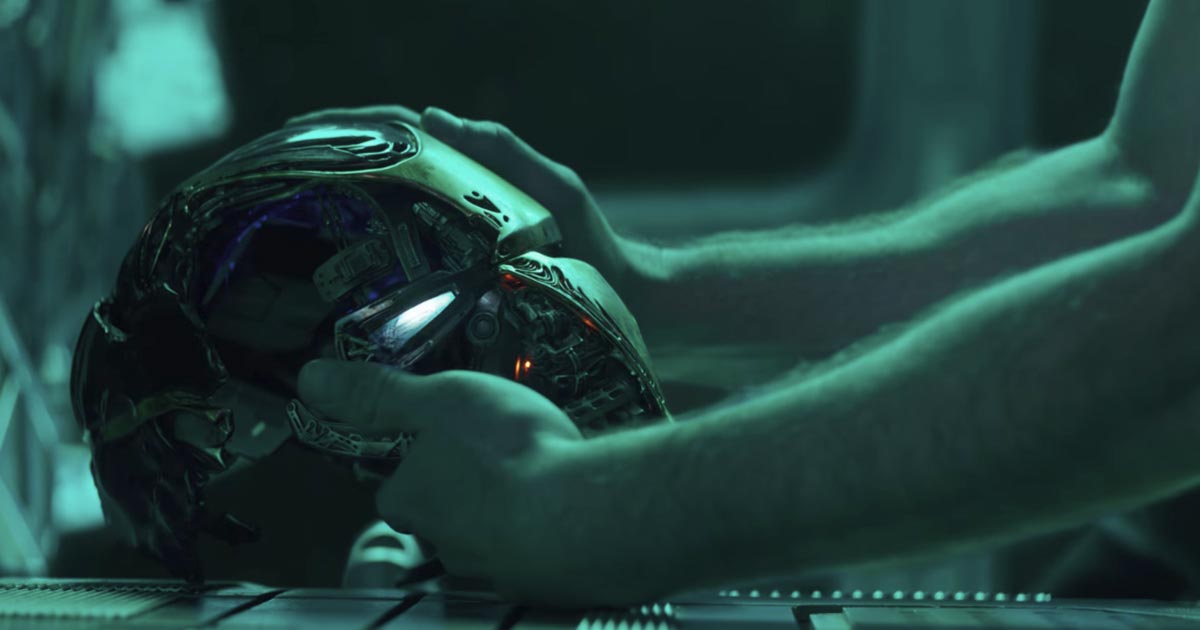
Marvel fans do not watch Avengers trailers. They investigate them. A two-second shot of a glove? Evidence. A suspicious haircut? Evidence. A coffee cup on the wrong side of the frame? Obviously, the multiverse is collapsing before brunch. So when a new Avengers trailer dropsor even when new Avengers footage is shown behind closed doorsthe internet naturally asks the most deliciously chaotic question possible: is there a time travel clue hiding in plain sight?
The short answer is: probably, yes. The smarter answer is: Marvel has trained its audience to look for time travel clues because the studio has done this before. The most famous example is the marketing for Avengers: Endgame, where a small moment involving Scott Lang, the Quantum Realm, and a security camera at Avengers Headquarters quietly told viewers more than it seemed to. It looked like a quick gag. In hindsight, it was practically a tiny neon sign blinking, “Time travel is coming. Please put on your theory helmet.”
Now, with Avengers: Doomsday and Avengers: Secret Wars positioned as the next giant chapters of the Marvel Cinematic Universe, the same question feels relevant again. Does the new Avengers footage suggest literal time travel, or is Marvel leaning harder into multiverse travel, alternate timelines, and character variants? Let’s unpack the clue board without needing a cork wall, red string, or a PhD in “Tony Stark said something important in 2012.”
Why Avengers Trailers Are Built for Detective Work
Marvel Studios has always treated trailers like magic tricks. The hand you are watching is rarely the hand doing the trick. A trailer may show a hero looking terrified, but not the monster they are staring at. It may include a line of dialogue from one scene over footage from another. It may even remove characters from a shot to protect spoilers. In other words, Marvel trailers are not just previews; they are puzzle boxes with dramatic lighting.
That is why fans immediately search for Avengers trailer Easter eggs, MCU time travel hints, Quantum Realm clues, Doctor Doom connections, and hidden multiverse references. The MCU has become a franchise where small details can matter years later. Nick Fury’s post-credit appearance in Iron Man helped launch the Avengers Initiative. The Tesseract turned out to be one of the Infinity Stones. A joke about Ant-Man’s size-changing abilities eventually became part of a cosmic rescue plan. Marvel has taught viewers that today’s background detail can become tomorrow’s plot engine.
When the question is “Is there a time travel clue in the new Avengers trailer?” the real issue is not whether a character says, “Hello, I am traveling through time now.” Marvel is usually less direct than that. The clue may be a repeated location, a strange costume, an impossible character return, an old piece of music, or a line that sounds emotional on first watch but technical on the fifth watch.
The Classic Time Travel Clue: Scott Lang at the Front Door
The best place to begin is the Avengers: Endgame trailer moment that launched a thousand theories. Near the end of the early trailer, Steve Rogers and Natasha Romanoff watch security footage of Scott Lang outside Avengers Headquarters. Scott introduces himself awkwardly, reminding them that they met years earlier at the airport in Germany during Captain America: Civil War. Steve asks whether it is an old message. Natasha replies that it is the front door.
On the surface, it plays like comic relief. Scott is alive, confused, and still very Scott. But fans quickly noticed that the moment raised several questions. How did Scott escape the Quantum Realm after being stranded there at the end of Ant-Man and the Wasp? Why did Steve think the message might be old? Why was the van there? And why was Marvel emphasizing Scott’s arrival when the remaining Avengers were desperate for a way to undo Thanos’ snap?
The answer was sitting right there in miniature form. Scott had survived because he was trapped in the Quantum Realm, where time does not behave normally. In Endgame, he experiences only a short amount of time while years pass in the outside world. That mismatch becomes the seed of the Avengers’ time heist. Scott does not solve time travel by himself, but he brings the idea to the team. Tony Stark, Bruce Banner, and the others then turn that idea into a plan involving Pym Particles, quantum navigation, and the most stressful group project in superhero history.
Why the Quantum Realm Matters So Much
The Quantum Realm is one of the MCU’s most important storytelling shortcuts. It is strange, colorful, unstable, and conveniently allergic to normal physics. In the Ant-Man films, it is described as a reality where ordinary concepts of time and space become unreliable. That gives Marvel a flexible tool: characters can become trapped, displaced, lost, aged differently, or moved through time in ways that would be impossible in the regular world.
In Endgame, the Quantum Realm becomes the highway for the time heist. The Avengers do not simply rewind the universe like a videotape. Instead, they travel to specific points in the past to borrow the Infinity Stones, creating the movie’s famous revisits to earlier MCU moments. New York in 2012, Asgard in 2013, and Morag in 2014 all become playable levels in the world’s most emotional video game.
That distinction matters because MCU time travel does not work like Back to the Future. Changing the past does not automatically erase the future the heroes came from. Instead, the MCU leans into branching timelines. That is why Loki escaping with the Tesseract in 2012 can create a new problem rather than simply rewriting everything. The franchise later builds on that idea with the Time Variance Authority, variants, and multiverse chaos.
So, Is the New Avengers Trailer Hinting at Time Travel Again?
If we are talking about new Avengers marketing in the Doomsday and Secret Wars era, the likely answer is yesbut with a twist. The MCU may not be pointing toward a clean “go back in time and fix the mistake” plot. Instead, the clues may be pointing toward time-adjacent storytelling: fractured timelines, alternate realities, multiversal collisions, returning legacy characters, and versions of familiar heroes who should not logically be standing in the same room.
That is a very Marvel way to evolve the formula. Endgame used time travel to revisit the past. The next Avengers chapters seem better positioned to use the multiverse to collide different histories. If Endgame was a victory lap through the MCU’s first decade, Doomsday and Secret Wars look like they may become a traffic jam of universes, with Doctor Doom holding the keys and refusing to validate parking.
One major clue is the confirmed involvement of characters and actors associated with different corners of Marvel screen history. The announced Avengers: Doomsday cast includes Avengers veterans, newer MCU heroes, Fantastic Four characters, and X-Men legacy performers. That combination does not automatically mean time travel, but it strongly suggests reality-bending. When characters from different eras and franchises begin gathering, the question becomes less “What year is this?” and more “Which timeline survived long enough to RSVP?”
Doctor Doom Changes the Kind of Clue We Should Look For
Doctor Doom is not just another villain in a metal mask. In Marvel Comics, Doom is a scientist, sorcerer, ruler, ego hurricane, and professional overachiever. He is the kind of character who sees a cosmic disaster and thinks, “Finally, a management opportunity.” His presence in an Avengers story naturally raises the stakes because Doom is often tied to power, destiny, alternate realities, and attempts to impose order on chaos.
That makes a potential time travel clue more complicated. If Thanos was a cosmic brute with a tragic philosophy, Doom is more likely to be a planner who understands systems. Time, memory, identity, and reality may all become tools. A trailer hint might therefore appear as a line about “saving the future,” a glimpse of a broken timeline, a returning character who died or aged differently, or a visual motif suggesting history is being rewritten.
Robert Downey Jr. returning to Marvel as Doctor Doom also makes fans extra alert. Viewers naturally connect Downey with Tony Stark, the hero who cracked time travel in Endgame. Even if Doom is not Tony Stark, the casting itself creates thematic echoes. Marvel knows audiences will bring Iron Man memories into the theater. That does not mean Doom is a Stark variant, but it does mean every line, mask shot, and technological detail will be examined like a sacred text written in nanotech.
What Counts as a Time Travel Clue?
Not every strange trailer detail is a time travel clue. Sometimes a weird background object is just production design. Sometimes a character looks sad because they are sad, not because they have seen seventeen futures and one of them involves a raccoon with a laser cannon. Still, there are certain signs that deserve attention.
1. A Character Appearing Where They Should Not Be
This is the big one. Scott Lang appearing at Avengers Headquarters after being presumed missing was the clearest Endgame clue. In a new Avengers trailer, the equivalent would be a character appearing in an era, location, or lineup that does not match their known timeline. If someone from the Fox X-Men world stands beside an MCU hero without explanation, that may not be time travel in the strictest sense, but it is definitely timeline business.
2. Old Costumes or Recreated Locations
Marvel loves visual callbacks. In Endgame, the heroes revisit the Battle of New York, Asgard, and other familiar settings. If a new trailer shows costumes or locations from earlier MCU phases, fans should pay attention. A recreated Avengers Tower, an old S.H.I.E.L.D. facility, a damaged version of the original compound, or a hero wearing a suit from a past film could all suggest timeline revisits, memory sequences, or alternate reality echoes.
3. Dialogue About Time, Fate, or Starting Over
Marvel trailers often use dialogue that sounds emotional but carries plot meaning. A line about “starting over,” “the end,” “what we lost,” or “the future coming for us” could be more than dramatic frosting. The Endgame campaign leaned heavily on grief, memory, and the idea that the Avengers had one chance to fix what happened. If a new trailer repeats that language, the franchise may be inviting viewers to connect the dots.
4. Technology That Looks Quantum, Temporal, or TVA-Adjacent
In the MCU, certain visual languages matter. Quantum technology tends to involve circular portals, suits, tunnels, and Ant-Man-style machinery. TVA-related material has its own retro-bureaucratic style: clocks, files, monitors, and timeline imagery. Doctor Doom may bring a different style entirely, mixing advanced science with mystical design. If a trailer includes devices that look designed to navigate time or reality, fans are right to pause the video and ruin their sleep schedule.
Time Travel vs. Multiverse: What Is the Difference?
For casual viewers, time travel and the multiverse can feel like two names for the same headache. But in the MCU, they are related without being identical. Time travel usually means moving to another point in time, often through the Quantum Realm. The multiverse means multiple realities or timelines existing alongside one another. A character can time travel and create a branch. A character can also cross from one universe into another without necessarily traveling to the past.
Endgame used time travel to visit the past and retrieve the Infinity Stones. Loki expanded the consequences by focusing on branched timelines and the TVA. Spider-Man: No Way Home and Doctor Strange in the Multiverse of Madness pushed the concept of alternate universes into the mainstream MCU. By the time the Avengers assemble again, the franchise has enough timeline material on the table to make even Bruce Banner reach for a whiteboard.
That is why the new Avengers clue may not be a traditional time machine. It could be an incursion, a collision between realities, or a Doom-engineered attempt to control the multiverse. In plain English: the heroes may not be going back to 2012 again, but the past may still come crashing into the present wearing a cape.
Why Fans Want Time Travel to Return
Time travel works in Avengers stories because it turns action into emotion. It is not just a plot device; it is a way for characters to confront regret. Tony Stark revisits his father. Steve Rogers sees the life he lost. Thor gets a final conversation with his mother. The Avengers are not simply collecting stones; they are walking through the museum of their own pain, trying not to touch the exhibits.
That emotional power is why fans keep looking for time travel clues. The MCU is at its best when spectacle and character history collide. Seeing a familiar hero return from another timeline can be exciting, but seeing that return force another character to make a painful choice is what makes the moment stick. A portal is cool. A portal that brings back unresolved grief is cinema popcorn with feelings.
The Strongest Theory: The Clue Is About Broken History, Not Simple Time Travel
The most convincing reading of the new Avengers conversation is that Marvel is not merely teasing time travel. It is teasing broken history. The difference is important. Time travel asks, “Can we go back?” Broken history asks, “What happens when every version of the past starts fighting for the future?”
That idea fits the larger direction of the MCU. The franchise has spent years introducing variants, alternate universes, timeline branches, and characters who carry the weight of earlier Marvel eras. Doctor Doom, especially in a Secret Wars-shaped story, is the kind of villain who could turn that chaos into a kingdom. If a trailer shows familiar faces from different timelines, the clue may be less about one trip through time and more about a multiverse crisis where time itself has become unstable.
In other words, the new Avengers trailer may be doing what the Endgame trailer did: hiding the answer in something that looks like fan service. Scott Lang once looked like a funny surprise. He turned out to be the key to the time heist. A returning legacy character or strange lineup in the new footage may work the same way. It may look like nostalgia. It may actually be architecture.
Specific Examples Fans Should Watch Closely
First, watch for Ant-Man. Paul Rudd’s Scott Lang remains one of the MCU’s most important links to Quantum Realm storytelling. If he appears near unusual machinery, a portal, or a scene involving Doom, that is worth noting. Scott may be comic relief, but in the MCU he has a habit of wandering into the central mechanism of the plot with the energy of a man who came for tacos and found destiny.
Second, watch for Loki. Tom Hiddleston’s character is now deeply connected to timeline mythology. Any Loki-related visual cue, especially one involving branching timelines or cosmic tree imagery, could signal that the Avengers are dealing with more than a standard villain attack.
Third, watch for the Fantastic Four. Reed Richards is one of Marvel’s great scientific minds, and Doctor Doom is his most famous rival. If the Avengers need someone to understand reality collapse, Reed is a natural choice. If Doom has already figured it out first, that is bad news for everyone who enjoys having only one version of their childhood memories.
Fourth, watch for X-Men characters. Their presence suggests the Avengers story may be connecting cinematic histories as much as fictional timelines. That does not require time travel, but it absolutely invites questions about where these characters come from, why they are here, and whether their universe is in danger.
Experience Section: Watching Avengers Trailers Like a Fan Detective
There is a special kind of joy in watching an Avengers trailer for the first time. You start with normal human behavior: press play, enjoy the music, gasp at the hero shot. Then, about fifteen seconds later, your brain becomes a conspiracy-powered search engine. Why is that character standing on the left? Why is the sky purple? Did the music briefly quote an old theme? Why did Marvel show that door for half a second? Suddenly, you are not watching a trailer. You are conducting an investigation in pajamas.
The time travel clue conversation is especially fun because it rewards memory. When Scott Lang appeared in the Endgame trailer, longtime viewers immediately connected him to Ant-Man and the Wasp. They remembered the Quantum Realm. They remembered Janet’s warnings. They remembered that Scott was trapped when Thanos snapped his fingers. The trailer did not need to explain the entire mechanism. It simply showed the right character in the right impossible place and trusted fans to start screaming politely on the internet.
That is the experience Marvel has created over many years: a shared guessing game where fans feel invited into the storytelling process. Of course, theories are often wrong. Sometimes hilariously wrong. For every accurate prediction, there are ten theories involving Mephisto, secret Skrulls, or a background chair that allegedly confirms a 38-film plan. But being wrong is part of the fun. Trailer theory culture is not only about solving the movie. It is about enjoying the space between mystery and release.
For writers, bloggers, and entertainment fans, this topic is a goldmine because it blends analysis with excitement. You can talk about MCU time travel rules, the Quantum Realm, Avengers trailer Easter eggs, Doctor Doom, Kang-era leftovers, the TVA, and the emotional function of revisiting the past. You can also write with personality because Marvel speculation is naturally dramatic. It invites phrases like “timeline soup,” “multiverse traffic jam,” and “Scott Lang accidentally saving existence with a van.” Not every topic gives you that kind of gift basket.
Personally, the best way to experience a new Avengers trailer is twice: once as a fan and once as a detective. The first watch should be pure feeling. Let the music hit. Let the surprise appearance work. Let the dramatic line make your inner twelve-year-old stand up and salute. Then watch again and look for patterns. Which characters are grouped together? Which locations repeat? Which shots seem too carefully chosen to be random? Which line sounds like marketing poetry but might actually explain the plot?
That two-watch method is also useful for spotting time travel clues. Time travel clues often hide in contradictions. A character is alive when they should be gone. A costume belongs to the wrong era. A location looks repaired after being destroyed. A hero reacts as if they recognize something the audience has not yet seen. The clue is not always the shiny portal. Sometimes it is the quiet mismatch.
The trick is to stay balanced. Fan theories are fun, but trailers are designed to mislead. Marvel wants excitement, not a full plot leak. A time travel clue may be real, but it may also be edited to suggest one thing while the movie does another. The healthiest approach is to enjoy the speculation without marrying it in a courthouse ceremony. Build the theory, argue with your friends, update your blog, and then let the movie surprise you.
That is why the question “Is there a time travel clue in the new Avengers trailer?” works so well as a headline. It is not just about one clue. It is about the entire Marvel viewing experience: memory, mystery, nostalgia, and the thrill of noticing something before the rest of the room catches up. Whether the clue leads to literal time travel, multiverse collision, or Doctor Doom turning reality into his personal chessboard, the hunt itself is half the fun.
Conclusion: The Clue Is Probably Real, But It May Not Mean What We Think
So, is there a time travel clue in the new Avengers trailer? The evidence suggests that Marvel is absolutely playing in the same sandbox: timelines, alternate realities, impossible returns, and characters whose histories do not neatly line up. But the clue may not point to another Endgame-style time heist. Instead, it may point toward a bigger, stranger story where time travel, multiverse travel, and broken reality all overlap.
The lesson from Endgame is simple: never underestimate the small shot. Scott Lang at the front door looked like a joke and became the doorway to the Avengers’ last chance. In the next Avengers era, a similarly small clue could be hiding in a mask, a costume, a familiar face, or a line about the future. Marvel does not always shout its secrets. Sometimes it lets Ant-Man ring the doorbell.











