
Most trips home from school are not exactly blockbuster material. There are backpacks,r sidewalks, and the lingering suspicion that someone assigned homework while you were not paying attention. Yet on one unusually late walk home, the ordinaryty lights appeared beneath a darkening sky, and the mountains held onto the final streaks of sunset. I had walked this route many times before, but that day I stopped treating it as a hallway between school and home. I started looking at it as a story.
These six photos were all taken during that single journey. Together, they became a small visual diary about light, timing, observation, and the surprising beauty hiding inside an everyday school commute.
How an Ordinary Walk Became a Photo Story
I left school later than usual, which initially felt like an inconvenience. The sun was already lower in the sky, my bag seemed to contain several bricks disguised as textbooks, and getting home quickly sounded like an excellent plan.
Then I noticed the light.
Late-afternoon sunlight was sliding across trees, rooftops, windows, and distant hills. Scenes I normally passed without a second glance suddenly looked theatrical. A tree appeared to be wearing pink. Buildings turned into bold shapes. Clouds reflected warm colors that made the sky look suspiciously well organized.
I began taking photos with the camera I had available. There was no tripod, elaborate lighting setup, or assistant dramatically holding a reflector. There was only a familiar route, changing daylight, and enough curiosity to stop walking for a few seconds.
That limitation helped. Instead of trying to photograph everything, I looked for six moments that felt connected. I wanted wide scenes, close observations, bright colors, dark silhouettes, natural landscapes, and signs of the city waking up for the evening.
The resulting series moves from daylight into darkness. That progression gives the photos a natural beginning, middle, and endalmost like six frames from a quiet coming-of-age movie in which the main character is late for dinner.
The Six Photos From My Way Home
1. This Tree Agrees That Pink Is Just Better
The first photo began with a tree that appeared to have borrowed its color palette from cotton candy. Warm sunset light touched the upper branches, turning the leaves and surrounding sky into shades of pink, coral, and pale purple.
I had seen the same tree countless times. It usually looked dependable, green, and completely uninterested in becoming art. Under that light, however, it became the main character.
I placed the tree slightly away from the center of the frame so the sky had room to participate. Its branches created natural lines that pulled the eye outward, while the open space around them emphasized the color. The image worked not because the subject was rare, but because the timing was.
That was the first lesson of the walk: everyday photography is often less about finding extraordinary objects and more about noticing when ordinary objects briefly look extraordinary.
2. Sunset at a City
The second image widened the view. Instead of focusing on one tree, I photographed the city beneath the sunset. Rooftops and buildings formed a dark, uneven line across the bottom of the frame, while most of the image belonged to the sky.
The contrast made the city look quieter than it really was. Cars were moving, people were heading home, and somewhere a dog was probably barking at a delivery truck as though national security depended on it. In the photograph, all that noise disappeared.
This wider composition established the setting for the series. The first image showed a detail; the second revealed the larger environment. That change in scale helped the six photos feel like a connected visual story rather than six unrelated pictures sitting awkwardly next to one another.
The sunset also added emotional context. Warm colors can make a familiar location feel nostalgic, peaceful, or even slightly mysterious. Here, the city seemed to be pausing between daytime responsibilities and nighttime possibilities.
3. The Garden of Eden
The third photo was the most experimental. Plants and branches filled the foreground, while nearby buildings competed for attention in the background. To simplify the image, I darkened the distracting structures until they became nearly black.
The result felt less like a neighborhood garden and more like a hidden landscape. Leaves stood out against the fading light, and the darkened architecture became a frame instead of a distraction.
Editing did not create the moment, but it clarified what I had noticed when taking the photo. The goal was not to transform the location into something unrecognizable. It was to remove visual noise and guide attention toward the plants, shapes, and atmosphere that made me stop.
This is one of the most useful lessons in smartphone photography: editing should support the story already present in the image. A little cropping, shadow adjustment, or color correction can strengthen a photograph. Turning every slider to maximum, meanwhile, can make a peaceful sunset look like the sky has been microwaved.
4. I Found Heaven
The fourth photo focused almost entirely on light and clouds. The sky opened into glowing layers, with brighter areas appearing between darker cloud shapes. For a few minutes, the scene looked enormous, dramatic, and strangely close.
I called the image “I Found Heaven” because the light created a sense of depth beyond the visible clouds. It looked less like a weather pattern and more like an invitation to somewhere quieter.
Photographing a bright sky can be tricky because cameras may overexpose the lightest areas. I lowered the exposure slightly before taking the shot, preserving more detail in the clouds. That small adjustment kept the brightest section luminous without turning it into a featureless white patch.
The photo also reminded me that simple compositions can carry strong emotions. There were no people, landmarks, or complicated objects in the frame. There was only light, shadow, and enough open space for viewers to bring their own interpretations.
5. Beautiful City Lights and the North Star
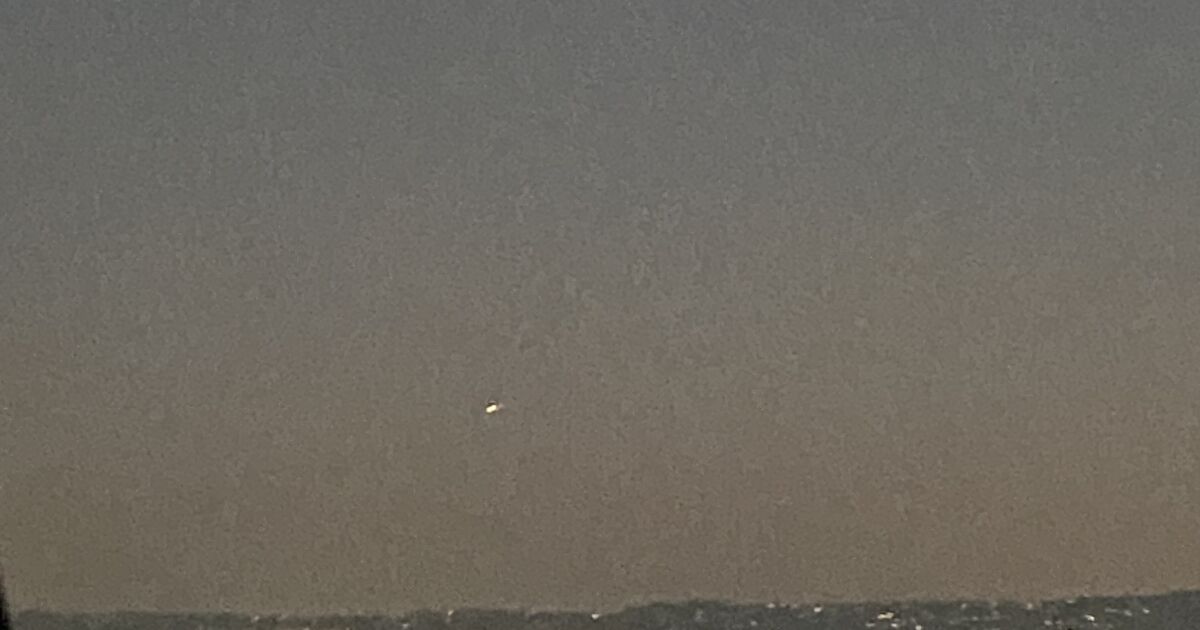
By the fifth photo, daylight was almost gone. Streetlights and windows had begun glowing, creating small points of warmth across the city. Above them, a single bright star appeared alone in the darkening sky.
The contrast between the city lights and the isolated star gave the image its personality. The lights below represented movement, homes, traffic, and human activity. The star above seemed calm and wonderfully uninvolved in all of it.
Low-light photography usually requires a steadier hand because the camera needs more time to collect light. I held the phone close to my body, paused my breathing for a moment, and took several frames. Not every attempt was sharp. One looked as though the entire city had sneezed during the exposure.
Taking multiple photos improved the chances of capturing one clean image. It also demonstrated that a successful photograph is often selected rather than magically produced on the first try.
Most importantly, I stopped to look carefully before crossing or walking near traffic. A photo is never worth stepping into danger, blocking a sidewalk, or becoming so focused on the screen that the surrounding world disappears.
6. Sunset Behind Some Mountains
The final image completed the journey. In the distance, mountains formed a dark silhouette beneath the last band of sunset. The sky shifted from warm orange near the horizon to cooler tones above, creating a natural gradient that required very little editing.
This photo felt like an ending. The city scenes had shown the evening beginning at street level, while the mountain view showed daylight leaving on a much larger scale.
I kept the mountain line low in the frame to emphasize the sky. The ridges created a gentle path for the eye, leading from one side of the image to the other. Nothing dramatic was happening, yet the photograph felt complete because the light, landscape, and timing worked together.
After taking it, I put the camera away and continued home. The useful light was fading, my backpack had not become any lighter, and dinner was gaining importance with every step.
Why These School Commute Photos Work as a Series
Each image can stand alone, but the sequence adds meaning. The photos move from a colorful detail to a wide cityscape, then into an edited garden scene, a luminous sky, evening lights, and finally distant mountains at dusk.
That order creates a visible passage of time. The changing light acts almost like a clock, guiding the viewer from afternoon to evening without requiring a caption that says, “Several minutes later, it became darker.”
The collection also includes different types of compositions. There are wide establishing views, medium scenes, isolated details, silhouettes, natural elements, and urban lights. This variety keeps the photo essay visually interesting while the shared location and color palette hold it together.
Most of all, the images share one perspective: they show what a student noticed while traveling through a familiar environment. The story is not about visiting a famous destination. It is about seeing a routine place with fresh attention.
What I Learned About Everyday Photography
Good Light Can Transform Familiar Places
A location does not need to be famous to be photogenic. The angle, intensity, and color of light can completely change how a street, tree, wall, or skyline appears. Returning to the same route at different times may produce entirely different photographs.
A Small Photo Limit Encourages Better Decisions
Choosing only six photos forced me to think about what each image contributed. Limiting a series can improve visual storytelling because every photograph needs a purpose. A weak image cannot simply hide behind 87 nearly identical pictures of the same cloud.
Sequences Tell More Than Single Images
One photograph captures a moment. A sequence can show movement, changing light, atmosphere, and progression. Photographing a journey naturally provides structure because the surroundings evolve as the photographer moves.
The Best Camera Is the One You Can Use Safely
A smartphone is enough for meaningful everyday photography. Understanding light, framing, timing, and subject selection usually matters more than owning complicated equipment. Expensive gear cannot notice a pink tree for you.
Observation Is a Skill
When I stopped rushing, I noticed reflections, color shifts, silhouettes, and layers in the landscape. Photography turned the walk into a simple exercise in being present. Instead of replaying the school day in my head, I paid attention to what was happening around me.
More Experiences From Photographing the Walk Home
After making this six-photo series, I started treating other walks home as small creative assignments. I did not photograph every day, and I did not expect every journey to produce a masterpiece. Some afternoons offered beautiful clouds. Others offered gray pavement, flat light, and a trash can that seemed oddly confident about being the most interesting object nearby.
One day, rain began just as school ended. My first reaction was to protect the phone and hurry home. Then I noticed how the wet sidewalk reflected traffic lights and storefront signs. Puddles turned ordinary colors into long, painterly streaks. I took a few photos from beneath a covered entrance, keeping both myself and the device dry. Those images taught me to look at bad weather as a change in visual conditions rather than the cancellation of photography.
Another afternoon, I tried photographing the same intersection from several safe positions. A wide image showed the street and surrounding buildings. A medium shot focused on students waiting near the corner. A close-up captured leaves caught against the curb. The three perspectives described the location more completely than any single frame.
I also learned that patience matters. When I first began taking photos, I often raised the camera and pressed the shutter immediately. That approach worked occasionally, mainly through luck. Waiting a few seconds usually produced stronger results. A person might enter the perfect part of the composition. A passing car might leave the frame. The wind might separate overlapping branches. Clouds might uncover the sun just long enough to change the entire scene.
There were failures, naturally. I once spent several minutes trying to photograph a bird on a power line. The bird remained perfectly still until the exact moment I pressed the shutter, when it apparently remembered an urgent appointment in another county. On another walk, I found an excellent reflection in a window but accidentally included my own confused face in the middle of it. The reflection was artistic. My expression was less so.
These mistakes became useful because they showed me what to check before taking a picture: the edges of the frame, unwanted reflections, tilted horizons, bright distractions, and objects growing visually out of someone’s head. Reviewing photos later helped me recognize patterns in what worked and what did not.
Photographing familiar routes also revealed seasonal changes. Trees that looked heavy and green in early fall became delicate networks of dark branches later in the year. Sunset shifted position. Decorations appeared in windows. Construction changed the shape of a street. A route that felt permanent was actually changing in small ways every week.
I became more careful about privacy as well. When people appeared clearly in a photograph, especially other students, I considered whether the image should be taken or shared. Often I waited for the scene to empty, photographed silhouettes without identifiable details, or framed the composition around architecture and nature instead. A good image should not require ignoring someone else’s comfort.
Safety remained the most important rule. I used sidewalks, stopped before taking photos, stayed alert near driveways and intersections, and put the phone away while crossing streets. Photography made me more observant, but only when I remembered to observe the real environment rather than staring continuously at the screen.
The biggest change was not technical. It was emotional. The walk home stopped feeling like wasted time between two important places. It became part of the day itselfa period when the world could be examined without a schedule, worksheet, or test.
Some days still produced no photographs. That was fine. The habit of looking remained valuable even when I never opened the camera. I noticed the first evening star, a crooked shadow, a freshly painted doorway, or the exact moment sunlight reached the top floor of a building.
The six original photos did not document a grand expedition. They documented attention. They showed that creativity can begin on a route traveled hundreds of times, using a camera already in your pocket and a few extra minutes before going home.
Conclusion: The Extraordinary Was Already on the Route
These six photos changed how I understood everyday photography. I had assumed interesting pictures required unusual destinations, professional equipment, or carefully planned photo sessions. Instead, the most memorable images came from slowing down on an ordinary walk home from school.
A pink tree, a city sunset, a shadowy garden, glowing clouds, evening lights, and distant mountains became chapters in one small story. None of the scenes lasted long. The light changed, the star became harder to see, and the evening continued. The photographs preserved the moments without pretending they were more complicated than they were.
That may be the real appeal of taking photos during an everyday journey. The camera does not merely record where you went. It encourages you to notice where you already are.











