
If you have a deep narrow pantry, congratulations: your kitchen came with a built-in magic trick. You put a jar of peanut butter on a shelf, blink twice, and somehow it vanishes behind three bags of rice, a half-used box of pasta, and a mysterious can of beans from a former presidential administration. Deep pantry organization sounds simple until you realize the real challenge is not storage. It is visibility, access, and stopping the back of the shelf from turning into a food witness protection program.
The good news is that a deep narrow pantry can be one of the most efficient storage spaces in your home when it is organized with intention. The secret is not buying every cute basket on the internet and hoping for the best. It is using the shape of the pantry to your advantage: creating zones, making the back accessible, using height wisely, and giving every item a job description. Once that happens, weeknight cooking gets easier, grocery shopping gets cheaper, and you stop buying your fourth bottle of soy sauce because you forgot you already had three.
Why Deep Narrow Pantries Get Messy So Fast
A standard pantry problem is clutter. A deep narrow pantry problem is hidden clutter. Because the shelves go back farther than your eyes naturally scan, products disappear behind each other. Narrow width also means you cannot spread things out very much, so people stack, pile, wedge, and balance items like they are auditioning for a kitchen circus.
That creates three common problems. First, food waste increases because older items get buried. Second, cooking becomes slower because you spend more time hunting. Third, the pantry feels smaller than it really is because badly arranged shelves waste vertical and back-of-shelf space. In other words, the pantry is not too small. It is just misunderstood.
Start with a Full Reset, Not a Tiny Tidy-Up
If you want a pantry that stays organized, start by taking everything out. Yes, everything. Not just the obviously expired crackers and the dented can you do not trust emotionally. A deep narrow pantry needs a full reset because hidden duplication is usually the biggest problem. Pull every item onto the counter or table, wipe the shelves, and sort food into broad categories.
Your first sorting groups can be simple:
- Breakfast foods
- Baking supplies
- Pasta, grains, and rice
- Canned goods
- Snacks
- Condiments and sauces
- Spices and seasonings
- Backstock or bulk items
As you sort, toss expired products, recycle damaged packaging, and combine duplicates where it makes sense. This is also the perfect time to be honest with yourself. If you have six specialty flours but only bake once every presidential election cycle, maybe your pantry does not need to revolve around your fantasy self.
Create Pantry Zones That Match Real Life
The best deep narrow pantry organization systems are built around how you actually cook, snack, and shop. That means organizing by use, not just by food type. If your family grabs granola bars and applesauce pouches every weekday morning, those items should live in the easiest-to-reach zone. If you only use cake decorating supplies twice a year, those can sit higher up or farther back.
A practical zoning plan looks like this:
- Eye-level shelves: daily-use items such as cereal, lunch supplies, coffee, peanut butter, bread, and snacks
- Waist-level shelves: heavier items such as canned goods, grains, pasta, and frequently used dry staples
- Upper shelves: backup items, entertaining supplies, and rarely used ingredients
- Floor area or lowest shelf: bulky appliances, drink packs, paper goods, or bins for potatoes and onions if the area stays cool and dry
- Back of deep shelves: backstock of the same category, not random mystery items
This matters because a deep pantry works best when every shelf has a purpose. The back should hold overflow of the same category. The front should hold active items. Think of it as your pantry having a first string and a bench. Everybody gets a place, but not everybody gets front-row seating.
The Best Storage Tools for Deep Narrow Pantry Organization
Not every organizing product deserves a standing ovation. For deep narrow pantries, some tools work much harder than others. Choose organizers that improve access and visibility, not just aesthetics.
1. Pull-out bins and drawers
If you can install sliding shelves or use clear pull-out bins, do it. These are the MVPs of deep storage because they bring the back of the shelf to you. They are especially helpful for snacks, baking ingredients, packets, and loose pantry items that love to collapse into chaos.
2. Turntables for awkward bottles and jars
Lazy Susans are not lazy at all. They are overachievers. Use them for oils, vinegars, sauces, nut butters, or small jars that otherwise get lost in corners and dark back rows. In a narrow pantry, a turntable prevents the dreaded domino effect of pulling one bottle and knocking over six.
3. Tiered risers for cans, spices, and short jars
Deep shelves can hide short items behind tall ones. Tiered risers solve that by letting you see labels in rows. They work especially well for canned vegetables, soup, tuna, spice jars, and baking extracts.
4. Clear airtight containers
Transfer flour, sugar, oats, cereal, pasta, and other dry goods into stackable containers if you use those items often. This reduces visual clutter, helps preserve freshness, and makes it easier to see what needs restocking. Bonus: square or rectangular containers usually waste less space than round ones.
5. Door-mounted storage
If your pantry has a door, that door should be working for a living. Shallow racks are ideal for spices, packets, wraps, small bottles, snack bars, and baking decorations. In a narrow pantry, door storage can free up an entire shelf.
6. Labels that do more than look pretty
Labels are not just decorative. They reduce decision fatigue. Label baskets, shelf zones, and decanted containers. If you transfer food into bins, add expiration dates or at least purchase dates somewhere discreet. Your future self will appreciate the clue.
How to Organize Each Shelf So the Space Actually Works
Now comes the part where deep narrow pantry organization gets practical instead of aspirational. You do not need a showroom pantry. You need one that functions on a busy Tuesday.
Use the “front active, back reserve” rule
On each deep shelf, place the items currently in use in front. Put backups of the same item or same category behind them. For example, the open box of pasta goes in front; the extra boxes stay behind it. This simple rule keeps the shelf from becoming a random traffic jam.
Store by height
Tall bottles and cereal boxes belong together. Short cans and jars belong together. Mixing heights on one shelf is the fastest way to block your own view. A pantry should not require hide-and-seek skills.
Corral small items into bins
Seasoning packets, pudding mixes, snack pouches, ramen, gravy envelopes, and tea bags should not roam free. Put them in labeled bins so you can pull out one container instead of excavating the shelf like an archaeologist.
Leave breathing room
One of the biggest organizing mistakes is filling every inch. A shelf packed wall-to-wall looks productive for about twelve minutes, then it becomes stressful. Leaving a little open space helps you see what you have and makes it easier to put groceries away without starting a shelf avalanche.
Smart Category Ideas for a Narrow Pantry
Not sure how specific your categories should be? Start broad, then get more detailed only where needed. If you have a lot of snacks, create subcategories such as salty, sweet, lunchbox, and grown-up “do not touch those” snacks. If you bake often, divide baking into dry ingredients, decorating supplies, and tools.
Examples of categories that work well in narrow spaces:
- Grab-and-go breakfast: oatmeal, cereal, bars, toaster pastries
- Lunch station: crackers, nut butter, fruit cups, lunchbox snacks
- Dinner starters: pasta, rice, canned tomatoes, broths, sauces
- Baking zone: flour, sugar, chocolate chips, leavening agents, sprinkles
- Snack bin: chips, popcorn, granola bars, dried fruit
- Flavor shelf: oils, vinegars, hot sauces, marinades, spices
When categories are consistent, grocery shopping gets easier because you know where everything belongs before you get home. That means fewer “I will just shove this here for now” moments. And we all know “for now” is often pantry code for “see you in six months.”
Deep Narrow Pantry Mistakes to Avoid
Buying organizers before measuring
A beautiful bin that is half an inch too wide is still useless. Measure shelf depth, width, and height before ordering containers, risers, or pull-out drawers.
Decanting everything
Transferring every item into a matching container can look nice, but it is not always practical. Decant staples you use regularly. Leave occasional-use items in original packaging if that makes more sense. Your pantry is not a museum.
Ignoring expiration dates
Deep shelves make expired items easy to forget. Rotate older products to the front and use a first in, first out system whenever possible. That applies especially to cans, baking ingredients, snacks, and backup items.
Letting the floor become a free-for-all
The bottom of a pantry often turns into the land of giant bags and kitchen regret. Use bins, crates, or rolling baskets so bulky items stay contained and easy to move.
A Simple Weekly and Monthly Maintenance Routine
The secret to staying organized is not a perfect setup. It is a maintenance rhythm that is so easy you will actually do it.
Weekly:
- Put stray items back in their zones
- Move older products to the front
- Wipe quick spills before they become sticky legends
Monthly:
- Check expiration dates
- Take inventory before shopping
- Refill labeled containers
- Donate unopened food you realistically will not use
This routine takes far less time than a full pantry rescue mission. A deep narrow pantry stays tidy when little resets happen often.
What a Well-Organized Deep Narrow Pantry Looks Like
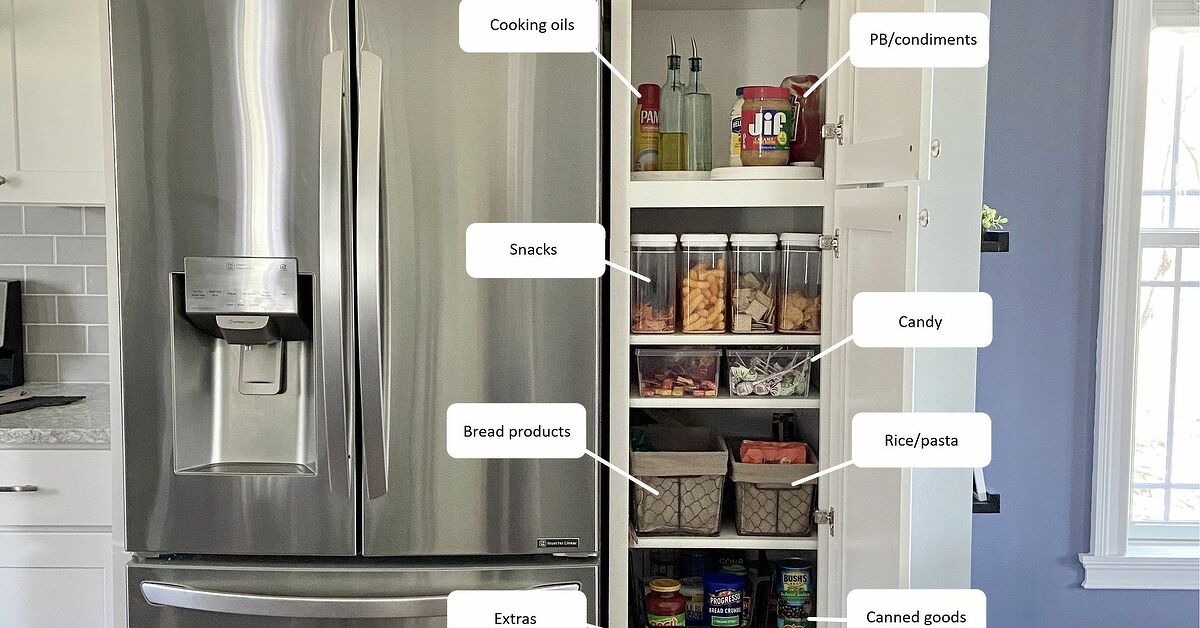
Picture this: the top shelf holds backup paper goods and rarely used baking gear. The next shelf down has cereals and breakfast items in bins. Eye-level shelves hold snacks, lunch items, and coffee. Waist-level shelves use risers for cans and pull-out bins for pasta, grains, and sauces. The inside of the door stores spices and seasoning packets. The bottom holds beverages in crates and a bin for potatoes and onions. Every category is labeled. Every item has a home. Nothing is hiding behind a tower of tortilla chips like it is plotting something.
That is the goal. Not perfection. Not matching canisters worthy of a magazine spread. Just a pantry that helps your kitchen run better.
Real-Life Experiences with Deep Narrow Pantry Organization
One of the most common experiences people have with a deep narrow pantry is realizing the space was never the problem. The system was. A homeowner might spend months convinced the pantry is too skinny, too deep, too awkward, and too annoying, only to discover that a few changes completely shift the experience. The first big win usually comes after removing everything and seeing how many duplicate items have been hiding in the shadows. Suddenly there are three breadcrumbs containers, two opened bags of brown sugar, and enough pasta to feed a softball team.
Another real-world lesson is that families do not organize the same way magazines do. A parent with school-age kids might need the most accessible shelf dedicated to lunch items and after-school snacks. A couple who cooks often may want eye-level shelves reserved for oils, grains, canned tomatoes, and spices. Someone who bulk shops at warehouse stores might need part of the pantry to function as an overflow zone instead of trying to fit every backup item front and center. Good pantry organization reflects household habits, not fantasy habits.
People also learn quickly that deep shelves reward simplicity. The more complicated the system, the faster it falls apart. For example, separate bins for every tiny category can sound smart at first, but if no one in the house remembers where “savory crackers” end and “miscellaneous crunchy snacks” begin, the whole setup collapses. A simpler approach usually works better: one snack bin, one breakfast bin, one baking shelf, one dinner-starter shelf. Clear labels beat clever labels every time.
Many homeowners say the best upgrade was not expensive at all. Sometimes it was adding risers so cans stopped disappearing. Sometimes it was a turntable for sauces. Sometimes it was writing expiration dates on transferred ingredients. And sometimes the game-changing move was just leaving some empty space on each shelf. That open space makes putting groceries away feel easy instead of like a competitive puzzle show.
There is also a strong emotional side to pantry organization that people do not talk about enough. A messy pantry can make daily cooking feel heavier than it needs to. When every meal starts with searching, moving, restacking, and muttering under your breath at a fallen box of crackers, the kitchen feels more stressful. But when the pantry is organized, even ordinary routines feel smoother. You grab what you need, you know what you have, and the whole room feels calmer. That is not dramatic. That is just what happens when your systems support your life instead of sabotaging it.
In the end, deep narrow pantry organization is less about chasing perfection and more about removing friction. The pantry should make feeding yourself easier. That is the job. If your new system helps you find the cumin, use the oldest can first, and stop buying duplicate cereal, it is working beautifully.
Conclusion
Deep narrow pantry organization works best when you stop fighting the pantry’s shape and start designing around it. Use zones that match your real habits, put everyday items within reach, rely on pull-out access and vertical tools, and keep the back of the shelf reserved for backup rather than randomness. A few smart changes can turn a cramped, frustrating pantry into one of the hardest-working spaces in your kitchen. And once that happens, dinner gets easier, grocery shopping gets smarter, and the peanut butter finally stops playing hide-and-seek.
SEO Tags
Note: Publication-ready HTML body only. SEO tags are included in JSON format at the end as requested.











