
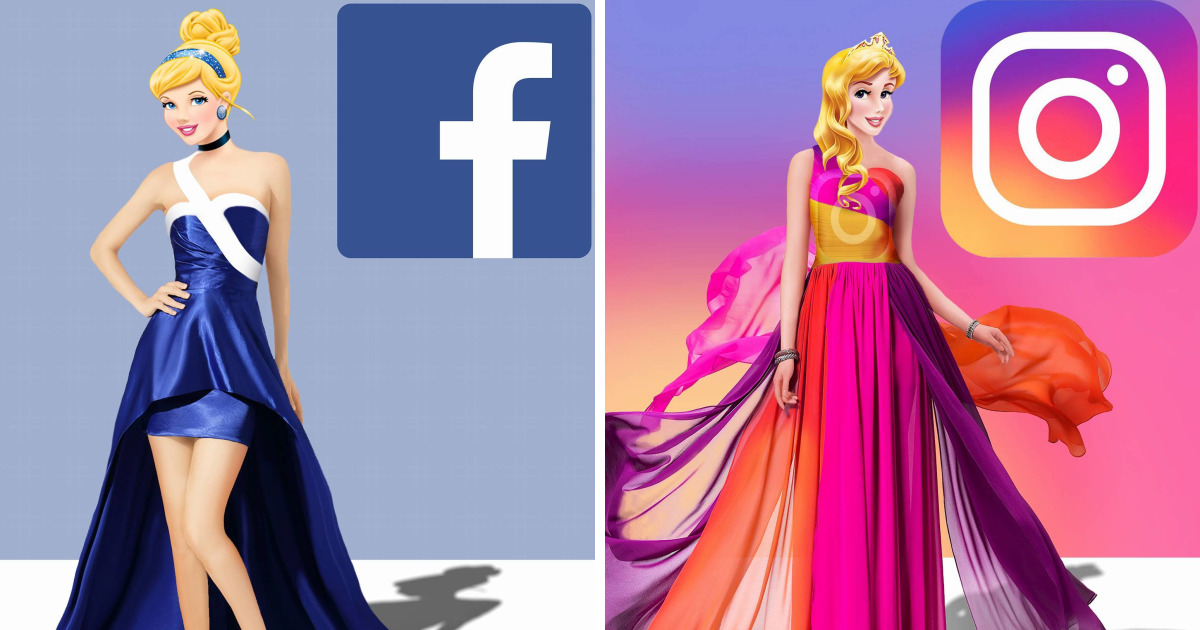
There are two things the internet never gets tired of: judging social media and giving Disney princesses yet another wildly entertaining makeover. Put those two obsessions in the same blender, hit puree, and you get the kind of art that makes people stop scrolling, laugh a little too hard, and immediately send it to a friend with the message, “This is so painfully accurate.” That is exactly why the idea behind “Artist Illustrates Social Networks With Disney Princesses” lands so well. It is playful on the surface, but it also understands something deeper about online life: social platforms are not just apps anymore. They are personalities, habits, performance spaces, and occasionally emotional support chaos machines.
The artist at the center of this conversation is Gregory Masouras, whose broader Animation In Reality work helped turn Disney characters into modern pop-culture citizens. Instead of leaving princesses in castles, forests, and highly impractical ballrooms, he has long placed them in fashion editorials, celebrity culture, red carpets, and internet-native situations. That move is clever for one simple reason: Disney princesses are instantly recognizable symbols. Social networks are too. When those two visual languages collide, the joke writes itself faster than a Facebook aunt writes “SO TRUE!!!” under a suspicious meme.
What makes this concept more than a one-note gag is that it works on several levels at once. It is fan art. It is satire. It is a commentary on self-presentation. It is also a reminder that online culture loves a familiar face wearing a new costume. And really, if the internet were a kingdom, it would absolutely have glitter, drama, algorithmic mood swings, and at least one bird delivering unwanted notifications at sunrise.
Why This Idea Works So Fast
Good internet art does not need a long instruction manual. You should be able to understand the premise in a second and then spend the next five minutes noticing extra layers. That is the sweet spot here. Disney princesses come with built-in traits: elegance, rebellion, curiosity, ambition, romance, stubbornness, style, and occasionally enough emotional baggage to fill a deluxe carriage. Social networks also come with built-in identities. One platform feels polished and glamorous. Another feels loud and argumentative. Another feels crafty, dreamy, and full of people planning a kitchen renovation they may never actually start.
That is why reimagining social networks with Disney princesses feels so natural. It turns abstract tech brands into characters. Suddenly, a platform is no longer just a logo or an interface. It has a vibe. It has posture. It has a probable favorite filter. It might also have the energy of someone who says, “I’m just being authentic,” while carefully curating 47 versions of the same selfie.
The best satire does not scream. It smiles, adjusts its tiara, and lets you realize the joke on your own. That is the power of this series. It understands that online behavior is already theatrical. Social media is basically a daily costume ball where some people arrive dressed as productivity experts, some arrive dressed as philosophers, and some show up like villains from Act Three holding a ring light and a discount code.
Gregory Masouras and the Rise of Fairy-Tale Pop Culture Mashups
Masouras built a recognizable identity by blending animated characters with real-world fashion and celebrity imagery. That larger body of work gave him a strong foundation for a concept like this one. He was not just drawing princesses because princesses are popular. He was using them as visual shorthand for status, fantasy, image management, and nostalgia. In other words, he was already working in the exact emotional territory social media lives in.
His appeal also fits how digital audiences consume art today. People love images that are familiar enough to understand instantly but fresh enough to feel like a discovery. A Disney princess placed into contemporary culture gives viewers both. It activates childhood memory while feeding adult internet humor. That combination is potent. It is the artistic equivalent of comfort food with unexpectedly spicy seasoning.
There is also a reason outlets across fashion, entertainment, and pop-culture media kept noticing this type of work. It sits at the intersection of fandom, meme logic, and visual commentary. It can be glamorous one second and ridiculous the next. It can flatter celebrity culture while gently roasting it. And because Disney characters carry decades of recognition, the images travel easily across feeds and platforms. You do not need to know art theory to get the joke. You just need working eyes and perhaps a passing relationship with chaos.
Why Disney Princesses Are Perfect Symbols for Social Networks
They are instantly readable
Disney princesses do in one glance what most brand strategy decks try to do in 47 slides. They communicate identity fast. Belle suggests intelligence and introspection. Ariel suggests curiosity and impulsive fascination with another world. Cinderella suggests transformation. Jasmine suggests confidence and independence. Rapunzel practically radiates creative energy. Whether viewers are hardcore Disney fans or just culturally literate enough to recognize a silhouette, the symbolism is immediate.
That matters because social networks are also shorthand machines. We do not talk about them only in technical terms. We talk about them in emotional ones. Instagram is polished. Pinterest is aspirational. TikTok is hyperactive. X has the energy of a town square that misplaced its security staff. LinkedIn is a castle where everyone says they are “thrilled” and “humbled” at the exact same time. Turning those platform personalities into princess-style archetypes is less random than it looks. It is practically visual anthropology with better hair.
They let artists critique online life without sounding preachy
If an essay tells people social media encourages performance, comparison, and fantasy, some readers nod and move on. If an artwork turns that same idea into a princess persona, people actually feel it. The image does the heavy lifting. It becomes obvious that online identity is not always fake, but it is often staged. We are not all lying online; we are all lighting ourselves a little differently.
That is where the humor lands. Princesses are associated with polished presentation, idealized stories, and iconic imagery. Social media thrives on those same instincts. Everyone wants a narrative. Everyone wants a look. Everyone wants their personal storyline to feel coherent, even if real life currently resembles a deleted scene from a very low-budget spin-off.
They connect nostalgia with modern anxiety
One reason audiences keep responding to Disney reinterpretations is that they let adults revisit childhood symbols in a world that feels far less innocent. Masouras himself has described Disney characters as the celebrities of childhood, and that idea explains a lot. When princesses are moved into today’s visual culture, the result is not just cute. It is revealing. It shows how innocence gets repackaged for adulthood, and how the internet turns almost everything into content, including memory.
What the Series Says About Social Media Culture
At first glance, this kind of artwork looks like a clever crossover. Look closer, and it starts to feel like commentary on the way each platform asks us to behave. Social networks are not neutral rooms. They reward different kinds of performance. Some want polish. Some want speed. Some want opinions. Some want aspiration. Some reward authenticity, but only after it has been edited, captioned, and arranged next to aesthetically pleasing coffee foam.
That is why the princess metaphor works so well. Fairy tales are about roles, and social media is full of roles. The wise one. The chaotic one. The romantic one. The cool minimalist one. The oversharer. The professional overachiever. The mysterious lurker. The person who somehow turns grocery shopping into a cinematic event. When an artist uses Disney princesses to reflect social networks, the art is really asking a sly question: what character are we all playing online?
The answer, of course, changes by platform. That is part of the joke. We are not exactly the same person everywhere. One app gets our polished side. Another gets our takes. Another gets our hobbies, our playlists, our recipes, our soft-launches, our hard-launches, and our occasional public descent into “Why did I post that at 1:14 a.m.?” The modern internet does not ask for one identity. It asks for a rotating cast.
In that sense, the artwork captures a truth many people feel without always naming: social media can feel like a giant costume department for the self. Not necessarily fake, not necessarily dishonest, but heavily styled. We are still us. We are just the trailer version.
The Bigger Trend: The Internet Loves Reimagined Princesses
This series also fits into a much larger creative pattern. Disney princesses have been reimagined as fashion models, modern young women, realistic portraits, villains, millennials, career women, edgy anti-heroines, and more. That broader trend matters because it shows these characters are no longer confined to their original stories. They have become a shared cultural toolkit. Artists use them the way editorial cartoonists use symbols: to make ideas visible, fast.
That flexibility is part of why princess art keeps thriving online. A princess can represent beauty standards, aspiration, rebellion, self-discovery, branding, fandom, femininity, or pure visual nostalgia depending on the artist’s goal. In Masouras’s hands, they become instruments for pop-cultural remixing. In the social-network concept, they become stand-ins for how digital life looks and feels. Either way, the appeal is not accidental. These characters are deeply familiar, visually distinctive, and emotionally loaded. They arrive with meaning already attached.
Even Disney itself eventually leaned into internet-savvy princess self-awareness. That matters because it shows just how thoroughly these characters have migrated into modern meme culture and meta-commentary. Once a brand can parody its own princess mythology in an internet setting, the fairy tale has officially learned how to use Wi-Fi.
What Readers and Viewers Respond To Most
People respond to this kind of artwork because it feels both smart and easy. It does not demand a lecture. It offers recognition. Viewers see a princess and immediately understand the emotional tone. Then they see the social-media angle and realize the piece is not just decorative. It is observational. It is saying something about how platforms behave and how we behave on them.
There is also pleasure in the mismatch. Princesses come from carefully built fictional worlds. Social networks are messy, noisy, ad-filled ecosystems where one second you are looking at a wedding photo and the next second you are watching a raccoon steal pet food from a porch. Bringing those worlds together creates friction, and friction creates comedy. Grace meets glitch. Fantasy meets feed refresh. Royal poise meets comment-section nonsense.
And somehow, that contrast feels incredibly modern. We live in a culture where elegance and absurdity are roommates. A person can post a perfectly lit portrait, then immediately share a meme about being emotionally held together by iced coffee and denial. The princess-social-network concept understands that split personality better than many serious essays do.
Experiences Related to “Artist Illustrates Social Networks With Disney Princesses”
There is a very specific experience that comes with seeing artwork like this for the first time. You do not just view it; you decode it. Your brain starts playing a rapid little game of cultural bingo. You recognize the princess. You recognize the platform behavior being referenced. Then, almost without permission, you start assigning people you know to each one. “Oh, this is absolutely my friend who treats Instagram like a magazine cover.” “This one is giving major Pinterest wedding-board energy.” “That one? That is every person who logs on ready to duel strangers before breakfast.” The art becomes interactive because your own online life fills in the blanks.
That is one reason pieces like this spread so easily. They do not stay on the screen as isolated images. They trigger stories, comparisons, inside jokes, and small personal revelations. Suddenly the artwork is not only about princesses or platforms. It is about the weird theater of being a person on the internet. It is about recognizing habits you never fully noticed until someone handed them a crown and a dramatic side profile.
There is also a strange comfort in it. Social media can feel exhausting when discussed in purely serious language. Every conversation becomes about burnout, doomscrolling, privacy concerns, algorithms, and digital fatigue. Those topics matter, but people also need lighter ways to think about online life. Art like this offers that. It lets viewers laugh at the performance without denying the pressure. It says, yes, the internet is ridiculous, but at least it is ridiculous in a visually entertaining way.
Another common experience is nostalgia colliding with self-awareness. Disney princesses are tied to childhood for many people, while social networks are tied to adulthood, performance, and constant visibility. Seeing them combined can feel funny, but it can also feel a little revealing. It reminds viewers how much modern life asks us to package ourselves. We once watched fairy tales about transformation; now we perform tiny transformations every day through captions, edits, angles, and curated fragments of personality. The distance between “once upon a time” and “posted 3 minutes ago” is not actually that large.
And then there is the group-chat effect. This topic is tailor-made for collective reaction. Nobody wants to enjoy it silently. People want to send it around and debate which princess fits which app, which platform is secretly the villain, and which social network would absolutely lose a glass slipper in a comment thread. The conversation becomes half cultural analysis and half nonsense, which is honestly the internet at its finest.
In the end, the experience of engaging with Artist Illustrates Social Networks With Disney Princesses is a mix of delight, recognition, and low-key exposure. You laugh because the concept is witty. You keep looking because the symbolism is sharp. And you remember it because, underneath the sparkle, it says something true: the online world may be built from code, but it still runs on personality, performance, fantasy, and a very human desire to be seen. Preferably with good lighting.
Conclusion
Artist Illustrates Social Networks With Disney Princesses works because it transforms digital behavior into visual storytelling. Gregory Masouras understands that both fairy tales and social platforms are systems of identity, image, and performance. By merging them, he gives viewers a joke they can enjoy quickly and an idea they can keep thinking about long after the laugh lands. That is the mark of strong internet art: it is accessible enough to go viral, but layered enough to stay interesting.
More importantly, the concept taps into something real about the way we live now. Social media is not just technology; it is stagecraft. Disney princesses are not just nostalgic characters; they are instantly readable cultural symbols. Put them together and you get more than a clever mashup. You get a bright, funny, slightly savage mirror held up to online life. And yes, the mirror probably has a gold frame and a suspiciously flattering filter.











