
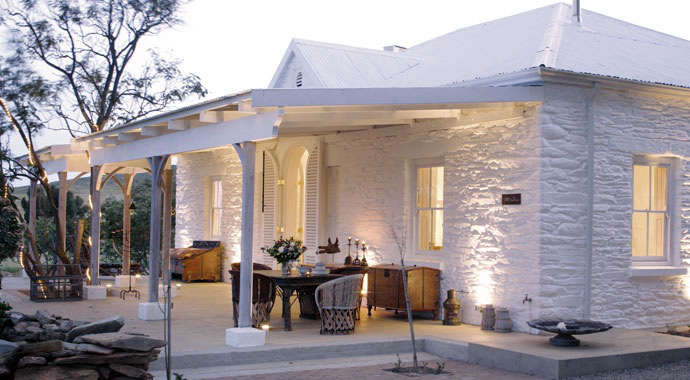
Some houses whisper. Others pose. A whitewashed villa in South Africa does something better: it exhales. Set in the wide, wind-brushed landscapes of the Western Cape, this kind of home feels less like a decorated object and more like a conversation between sun, stone, shade, and air. The walls are bright enough to make the afternoon glow. The rooms stay calm when the weather gets dramatic. The veranda practically begs you to sit down with a glass of Chenin Blanc and pretend you have never once answered an email.
The phrase “whitewashed villa in South Africa” may sound like a travel brochure with excellent lighting, but it points to something real and deeply rooted. In villages such as Koringberg in the Swartland, historic homes have been revived with a mix of conservation intelligence and laid-back modern living. One famous example is a weekend retreat restored by conservation architect Minky Lidchi, who transformed a period villa into an airy, textured, all-white escape. Its plastered walls, polished concrete floors, shaded spaces, and indoor-outdoor flow show why South African country houses have become a quiet obsession among design lovers.
This is not sterile minimalism. It is minimalism with dust on its boots, wheat fields in the distance, and a breeze moving through the curtains like it pays rent. Let’s step inside.
Why Whitewashed Villas Work So Beautifully in South Africa
Whitewashed architecture is not just pretty. In a warm climate, it is practical. White surfaces reflect light, soften harsh sun, and make compact interiors feel larger. In the Western Cape, where summers can be hot and dry, pale walls can help a home feel cooler and more relaxed. Add thick masonry, narrow windows, shutters, and shaded outdoor areas, and suddenly the house is doing the work that many modern buildings outsource to air conditioning.
South Africa’s Western Cape has a Mediterranean-style climate, with dry summers and wetter winters. That climate shaped the region’s architectural habits. Long before “passive cooling” became a phrase used in glossy sustainability reports, local builders understood the value of thick walls, controlled openings, deep shade, and natural ventilation. A well-designed villa does not fight the climate. It shakes hands with it.
The Beauty of Imperfection
The best whitewashed villas are not smooth, shiny boxes. They have texture. Limewash, bagged plaster, brick, stone, slate, timber, concrete, woven mats, and linen all play together. A wall might be uneven. A floor might show subtle marks. A doorway might reveal the original bones of an older house. That is the charm. The surface is not trying to look new forever. It is allowed to look lived-in, sun-touched, and human.
In the Koringberg villa often associated with this style, the discovery of original stone-like wall material helped guide the renovation. Instead of hiding every irregularity, the restoration celebrated texture. Light plaster and white paint allowed the structure to remain visible, giving the home a quiet sense of history. The result is rustic, but not rough; elegant, but not precious.
The Swartland Setting: Wheat Fields, Wine, and Wide Skies
The Swartland region sits north of Cape Town and is known for its wheat fields, vineyards, olive groves, and small farming towns. It is less polished than Stellenbosch or Franschhoek, and that is exactly the appeal. The landscape feels open, honest, and a little cinematic. In summer, the fields turn golden. After winter rains, the land shifts to green and dark tones, giving the region its name, which translates from Afrikaans as “black land.”
A whitewashed villa belongs beautifully here because it creates contrast. Against dry grass, dusty roads, and blue skies, the white walls appear crisp without feeling cold. The house becomes a landmark, but not a loud one. It glows at sunrise. It softens at dusk. At midday, it throws sharp shadows that make every arch, sill, and veranda post look intentional.
Koringberg: Small Village, Big Atmosphere
Koringberg is a small Swartland village with a name connected to wheat and the hill that rises near the town. It is the kind of place where the horizon has room to stretch and the pace of life is not trying to win a race. A villa here does not need a complicated design statement. The setting already supplies the drama: fields, weather, birds, hills, and that enormous Western Cape sky.
This is why the best interiors in such homes often stay restrained. Too much decoration would compete with the landscape. White walls, simple furniture, woven textures, and natural materials let the view remain the headline act. The room becomes a frame, and the outdoors becomes the painting.
Cape Dutch Influence, Without the Costume
South African whitewashed homes often borrow from Cape Dutch architecture, one of the region’s most recognizable historic styles. Traditional Cape Dutch houses are known for white walls, gables, thatched roofs, shutters, symmetrical forms, and a strong relationship to gardens and courtyards. The style developed from European influences but adapted to African climate and landscape.
A modern whitewashed villa does not need to copy every Cape Dutch feature. In fact, the most graceful homes borrow the principles rather than the costume. They use white walls for brightness and cooling. They rely on thick structures for thermal comfort. They create shaded thresholds between inside and outside. They keep proportions generous and uncluttered. Instead of saying, “Look at me, I am historic,” they say, “Come in, take your shoes off, and please stop overthinking the cushions.”
Old Bones, Modern Comfort
The smartest renovations respect what is already there. Old houses have memory: high ceilings, deep walls, unusual proportions, and materials that were chosen for reasons beyond trend. But modern living needs practical kitchens, comfortable bathrooms, better lighting, and flexible spaces. The trick is to make improvements without sanding away the soul.
In a whitewashed South African villa, that might mean pairing rough plastered walls with polished concrete floors. It might mean keeping narrow windows to reduce harsh heat while adding doors that open toward a veranda. It might mean using a sculptural bathtub in a rustic bathroom or placing contemporary seating against old masonry. Contrast makes the house feel alive.
Interior Design: Calm, Cool, and Not Trying Too Hard
The interior style of a whitewashed villa is refreshingly simple. Think all-white walls, cool floors, relaxed furniture, natural fabrics, and handmade accents. This is not the type of house where every object looks like it was purchased during a single frantic afternoon at a showroom. The beauty comes from layers: a woven grass rug, a tribal-inspired textile, a weathered wooden table, a linen-covered bed, and a ceramic bowl that looks better with peaches in it.
White interiors can become boring when everything is flat. The solution is texture. Matte plaster, stone, cotton, cane, sisal, wood, clay, leather, and concrete all add depth. In bright climates, texture also helps light behave beautifully. Shadows catch on uneven walls. Sunlight pools across floors. A plain room becomes quietly cinematic, especially when a breeze is involved.
Polished Concrete Floors: The Unsung Hero
Polished concrete is a practical choice in warm regions. It feels cool underfoot, handles dust and daily use, and brings a modern edge to older architecture. In an all-white villa, concrete grounds the palette. It prevents the interior from floating away into cloud territory. Add a woven rug, and the room becomes both comfortable and durable.
Concrete also ages well when treated as a living surface rather than a museum piece. A villa is not a porcelain teacup. It should handle sandy feet, dropped olives, a dog with opinions, and guests who forget coasters. That is part of the pleasure.
The Veranda: Where the House Becomes a Lifestyle
No whitewashed villa in South Africa is complete without a place to sit outside. The veranda is not an accessory; it is the social engine of the house. It catches shade, directs breezes, expands living space, and creates a soft border between indoors and landscape. Morning coffee tastes better there. Lunch lasts longer there. Even doing absolutely nothing feels like a respectable activity there.
Architecturally, the veranda solves several problems at once. It reduces direct sun on interior walls and windows. It gives people a comfortable outdoor room during hot months. It lets breezes pass through open doors without turning the living room into a wind tunnel. It also encourages a slower rhythm of life, which may be the most underrated design feature of all.
Breezes Included, But Not by Accident
Natural ventilation depends on planning. Openings must be placed so air can move through the home. Shaded areas help keep entering air cooler. Thick walls slow heat gain. Pale exteriors reflect sunlight. In the Western Cape, where wind is part of everyday weather, a house can use that movement intelligently. The goal is not to let the wind boss everyone around. The goal is to invite it in politely, give it a path, and prevent it from stealing the napkins.
How to Bring This Look Into Your Own Home
You do not need a villa in South Africa to borrow the feeling. The whitewashed villa aesthetic can translate to apartments, cottages, beach houses, and suburban homes. Start with a warm white palette rather than a cold, blue-toned white. Choose natural textures over glossy finishes. Keep furniture low, comfortable, and unfussy. Let imperfections show. Add shade where possible, especially with linen curtains, bamboo blinds, shutters, or covered outdoor seating.
For floors, consider concrete, limestone-look tile, pale wood, or natural fiber rugs. For furniture, mix old and new: a clean-lined sofa, a rustic bench, a hand-thrown vase, a woven chair, and a sturdy dining table. The magic comes from restraint. Do not fill every corner. White space is not empty; it is breathing room.
Best Decor Elements for a Whitewashed Villa Style
Use materials that feel honest: linen, cotton, cane, rattan, sisal, jute, oak, pine, clay, stone, and aged metal. Add black accents sparingly for definition. Bring in plants that can handle bright light. Use ceramics in earthy tones. Choose art with a sense of place, but avoid turning the room into a theme restaurant called “The Breezy Ostrich.”
Lighting should be soft and warm. During the day, the sun does most of the work. At night, use lamps, sconces, candles, and pendants to create pools of light. The goal is not brightness everywhere. The goal is atmosphere.
Why This Design Feels So Timeless
Trends come and go, usually wearing shoes they will regret in five years. A whitewashed villa lasts because it is based on climate, material, proportion, and comfort. It is not a gimmick. It is a response to place. The palette is simple, but the experience is rich. The rooms feel calm because they are not shouting. The architecture feels sophisticated because it is useful.
South African design, especially in the Western Cape, often succeeds when it balances European architectural memory with local landscape, craft, and climate. That blend creates homes that feel grounded and fresh at the same time. A whitewashed villa in the Swartland is not merely a pretty backdrop for vacation photos. It is a lesson in how to live with light.
Experiences Inspired by a Whitewashed Villa in South Africa
Imagine arriving in the late afternoon, when the sun has started to slide lower and the villa’s white walls are no longer blazing but glowing. The road into the village is quiet. Wheat fields ripple in the distance. The house appears behind a low wall, looking both modest and magnetic. You unlock the door, step inside, and the first thing you notice is the temperature. The air is cooler than expected. The second thing you notice is the silence, followed by the small sounds that make silence better: a bird outside, a curtain moving, the soft scrape of a chair on concrete.
The kitchen becomes the natural gathering place. Not because it is enormous or packed with gadgets, but because it is simple enough to use without a manual. Someone slices bread. Someone opens local olives. Someone pours wine from the Swartland, where independent producers have turned the region into one of South Africa’s most interesting wine areas. You carry everything outside because, obviously, the veranda has been waiting. It does not judge. It simply provides shade.
Morning is another kind of pleasure. The villa wakes slowly. Light enters through narrow windows, making bright shapes on the floor. The walls hold the coolness of the night for a while, and the first cup of coffee tastes better because there is no rush attached to it. Outside, the landscape changes color as the sun rises. A whitewashed house is particularly good at morning because it reflects light without making a fuss. It makes even toast feel poetic, which is frankly more than toast deserves.
By midday, the practical intelligence of the architecture becomes obvious. The veranda shields the interior. The concrete stays cool. The white walls keep the rooms bright without needing much artificial light. Doors can be opened to encourage airflow, and the breeze moves through like an old friend who knows where everything is kept. This is when the house becomes more than a visual style. It becomes a climate strategy, a comfort system, and a mood regulator.
In the evening, the villa changes again. White walls that looked crisp during the day become soft and shadowed. Candles look better here. Simple food looks better here. A bowl of citrus, a loaf of bread, grilled vegetables, and a bottle of wine can feel like a feast because the setting does half the hosting. The house does not demand formal behavior. It encourages bare feet, long conversations, and the kind of laughter that arrives after everyone stops checking the time.
The most memorable experience, though, may be how the villa affects your sense of pace. It makes hurry feel unnecessary. It reminds you that design is not only about what you see in photographs. It is about how a room feels at noon, how a floor feels underfoot, how air moves through a doorway, and how a home can make ordinary rituals feel generous. That is the gift of a whitewashed villa in South Africa: it gives you beauty, yes, but it also gives you permission to breathe.
Conclusion: The Quiet Luxury of Light, Air, and Place
A whitewashed villa in South Africa proves that luxury does not always need marble, chandeliers, or a sofa shaped like a question nobody asked. Sometimes luxury is a thick wall that keeps the heat out. Sometimes it is a veranda angled toward the breeze. Sometimes it is a room with almost nothing in it except good light, a comfortable chair, and a view that makes your shoulders drop.
Rooted in the Western Cape’s climate and architectural traditions, this style combines beauty with intelligence. It respects old materials, welcomes modern comfort, and turns simplicity into atmosphere. Whether in the Swartland countryside, along the Cape coast, or reimagined in your own home, the whitewashed villa remains timeless because it understands something many designs forget: a house should not just impress you. It should take care of you.











