
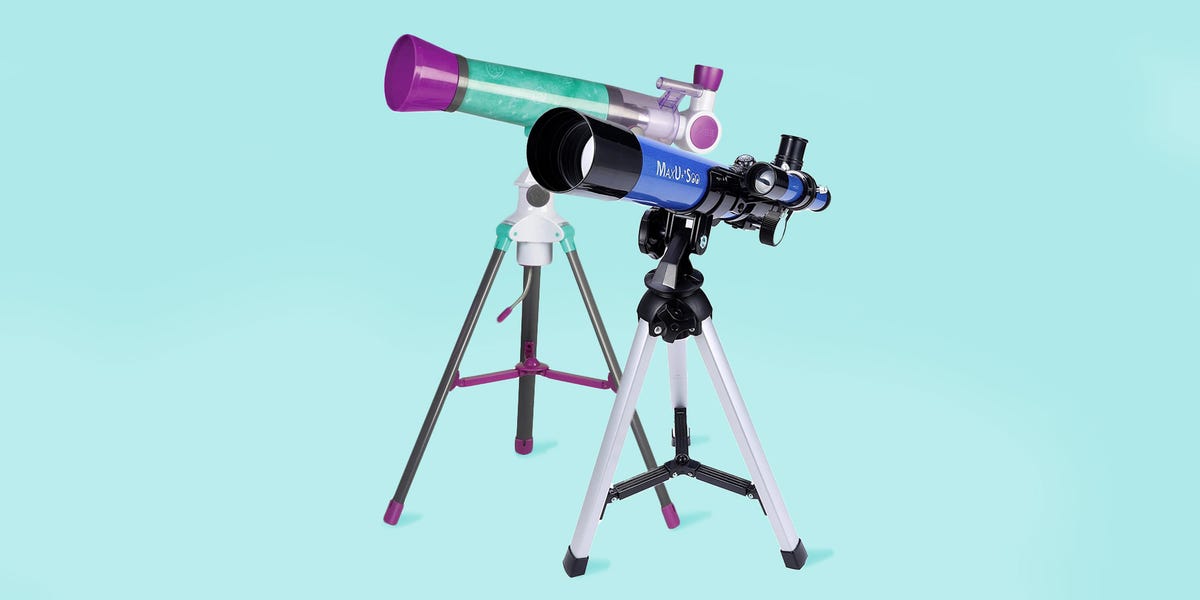
Buying a telescope for kids sounds simple until the internet starts throwing words like “aperture,” “focal ratio,” “Dobsonian,” and “highest useful magnification” at you like a meteor shower made of homework. The good news? Choosing the best telescope for kids and families does not require a physics degree, a backyard observatory, or a child who already knows the difference between an eyepiece and a burrito.
The best family telescope is the one that gets used. It should be sturdy, easy to aim, reasonably portable, and powerful enough to show the Moon in jaw-dropping detail, Jupiter’s four bright moons, Saturn’s rings under good conditions, and bright deep-sky objects like the Orion Nebula. It should also survive the classic family observing session: one parent reading instructions by red flashlight, one child asking if aliens are visible yet, and one sibling stepping directly on the accessory tray.
For this guide, the focus is on real beginner-friendly telescopes that balance optical quality, ease of use, value, and family fun. Some are small tabletop models for younger kids. Others are more capable instruments for older children, teens, and parents who secretly bought the telescope “for the kids” but absolutely plan to use it after bedtime.
How to Choose the Best Telescope for Kids and Families
Before jumping into the top picks, it helps to understand what actually matters. Spoiler: it is not the huge “600x magnification” printed on some toy telescope boxes. That number is usually about as useful as a chocolate spacesuit.
1. Aperture matters more than magnification
Aperture is the diameter of the telescope’s main lens or mirror. Bigger aperture gathers more light, which means brighter, sharper views. A 70mm refractor can be wonderful for the Moon and planets. A 130mm reflector can pull in more light for star clusters, nebulae, and faint objects. For kids, aperture should be balanced with portability. A giant telescope that never leaves the closet is not a telescope; it is furniture with ambition.
2. A stable mount is everything
A shaky mount can ruin a good telescope. At high magnification, even a tiny wobble makes the Moon bounce around like it has had too much coffee. For families, simple alt-azimuth mounts and tabletop Dobsonian mounts are usually easier than equatorial mounts. Kids can push them up, down, left, and right without needing a lecture on polar alignment.
3. Keep setup simple
The best telescope for kids should be ready quickly. If setup takes 45 minutes and three emotional support snacks, enthusiasm will evaporate before Saturn rises. Look for no-tool assembly, simple aiming systems, and included eyepieces that make the first night easy.
4. Think about age and patience level
Younger children usually do better with rugged tabletop telescopes and wide views. Older kids and teens may appreciate app-assisted locating systems, better optics, and more precise focusing. Parents should plan to help at first. Astronomy is family-friendly, but telescopes are not magic wands. They need pointing, focusing, and a little patience.
Quick Comparison: 5 Best Telescopes for Kids and Families
| Telescope | Best For | Aperture | Type | Family Difficulty Level |
|---|---|---|---|---|
| Celestron StarSense Explorer LT 80AZ | Best overall app-assisted family telescope | 80mm | Refractor | Easy |
| Sky-Watcher Heritage 130P Tabletop Dobsonian | Best optical value | 130mm | Newtonian reflector | Easy to moderate |
| Celestron Inspire 100AZ | Best refractor upgrade | 100mm | Refractor | Easy |
| Celestron AstroMaster 70AZ | Best simple planet and Moon telescope | 70mm | Refractor | Easy |
| Celestron FirstScope 76 | Best first telescope for young kids | 76mm | Tabletop Newtonian reflector | Very easy |
1. Celestron StarSense Explorer LT 80AZ: Best Overall for Families
The Celestron StarSense Explorer LT 80AZ is one of the best telescopes for families because it solves the biggest beginner problem: finding things in the sky. Most first-time telescope owners can point at the Moon. After that, the universe becomes a giant black ceiling full of “Is that the thing?” The StarSense system uses a smartphone app and dock to help guide users toward visible objects, which makes the first few nights far less frustrating.
This telescope has an 80mm refractor optical tube with a 900mm focal length, making it well suited for crisp views of the Moon, Jupiter, Saturn, and bright star clusters. It comes with 25mm and 10mm eyepieces, plus a 2x Barlow lens, so families can experiment with different magnifications right out of the box. The manual alt-azimuth mount is straightforward: move it up, down, left, and right. No complicated star charts required, although learning the constellations is still part of the fun.
For kids, the biggest advantage is motivation. When the app says, “Move this way,” children get instant feedback. It feels a little like a cosmic treasure hunt, except the treasure is Jupiter and nobody has to dig up the lawn. Parents will appreciate that the total kit is portable enough for backyard sessions, camping trips, and quick looks after dinner.
What families will like
The StarSense Explorer LT 80AZ is easy to use, has helpful app guidance, and delivers good lunar and planetary views. It is a strong choice for families who want a telescope that feels modern without becoming overly technical.
What to consider
Because it is an 80mm refractor, it will not gather as much light as a larger reflector. Deep-sky objects will look faint from light-polluted suburbs. Also, the phone app is part of the experience, so families trying to reduce screen time may want to set clear rules: the phone is the navigator, not the entertainment system.
2. Sky-Watcher Heritage 130P Tabletop Dobsonian: Best Optical Value
The Sky-Watcher Heritage 130P is the telescope you buy when you want serious views in a family-friendly package. Its 130mm aperture gathers significantly more light than smaller beginner refractors, which means brighter images and better potential for deep-sky observing. The Moon looks dramatic, Jupiter’s moons are easy targets, Saturn’s rings are possible in good seeing, and bright objects like the Orion Nebula become genuinely exciting.
This is a tabletop Dobsonian reflector with a 650mm focal length and fast f/5 optics. Translation: it is compact, wide-field, and excellent for scanning the night sky. The collapsible tube design helps with storage and transport, while the simple Dobsonian base keeps movement intuitive. Put it on a sturdy table, stool, crate, or dedicated platform, and you are ready for a night under the stars.
For families with curious older kids, this model offers a lot of room to grow. It is simple enough for beginners but capable enough that it will not feel like a toy after three nights. It also teaches real telescope skills, such as using a red-dot finder, changing eyepieces, and understanding how reflectors work.
What families will like
The Heritage 130P offers excellent aperture for the money, compact storage, and satisfying views of both solar system and bright deep-sky objects. It is one of the best beginner telescopes for families who care more about image quality than gadgets.
What to consider
It needs a stable surface. A wobbly card table will turn the viewing session into a tiny earthquake simulator. Reflectors may also need occasional collimation, which means aligning the mirrors. That sounds scary, but it is a normal part of owning many Newtonian telescopes and becomes easier with practice.
3. Celestron Inspire 100AZ: Best Refractor Upgrade
The Celestron Inspire 100AZ is a great pick for families who want a refractor with more light-gathering power than the typical 70mm starter scope. With a 100mm aperture and 660mm focal length, it offers a wide field of view, bright images, and an easy manual alt-azimuth mount. It is especially appealing for families who want a complete kit that feels polished and ready to use.
This telescope includes two eyepieces, an erect-image diagonal, a StarPointer Pro finderscope, and an integrated smartphone adapter. The red LED light built into the mount is a clever touch because it helps preserve night vision while preventing the classic “Where did the eyepiece cap go?” backyard mystery.
The Inspire 100AZ works well for the Moon, planets, star clusters, and brighter deep-sky objects. Because it is a refractor, it requires less maintenance than a reflector. There are no mirrors to collimate, and the sealed tube is generally forgiving for families who want to observe rather than tinker.
What families will like
The Inspire 100AZ feels like a step up from basic beginner telescopes. It is approachable, nicely equipped, and versatile enough for both nighttime astronomy and daytime nature viewing when used safely and responsibly away from the Sun.
What to consider
The lightweight mount is convenient, but families should still use a gentle touch at higher magnifications. Also, while the smartphone adapter is fun for Moon photos, this is not a deep-sky astrophotography rig. Expect simple snapshots, not magazine-cover nebula portraits.
4. Celestron AstroMaster 70AZ: Best Simple Moon and Planet Telescope
The Celestron AstroMaster 70AZ is a classic beginner refractor that makes sense for families who want something simple, recognizable, and easy to set up. It has a 70mm aperture and long 900mm focal length, which is helpful for lunar and planetary viewing. The Moon is the star of the show here, appearing crisp and detailed enough to make kids suddenly interested in craters, shadows, and whether astronauts left snacks behind.
The AstroMaster 70AZ uses a manual alt-azimuth mount with a pan handle, so aiming is intuitive. It usually includes 20mm and 10mm eyepieces, an erect-image diagonal, and a red-dot finder. Because it is a refractor, it is low maintenance and works well for families who do not want to adjust mirrors or learn extra setup steps.
This model is particularly good for patient kids, teens, and parents who want to focus on the Moon, Jupiter, and Saturn rather than faint galaxies. It also doubles as a daytime spotting scope for landscapes and wildlife, as long as everyone follows the golden rule: never point any telescope at the Sun without a proper certified solar filter designed for that exact use.
What families will like
The AstroMaster 70AZ is affordable, straightforward, and strong for lunar observing. It is a good “first real telescope” for families who want to avoid apps, batteries, and complicated mounts.
What to consider
The 70mm aperture has limits. It will not show faint galaxies in dramatic detail, and its included accessories are basic. Still, for Moon nights and planetary introductions, it offers a friendly start.
5. Celestron FirstScope 76: Best First Telescope for Young Kids
The Celestron FirstScope 76 is small, charming, and wonderfully unintimidating. It is a tabletop Newtonian reflector with a 76mm aperture and 300mm focal length. It comes preassembled, which is excellent news for parents who become emotionally fragile around instruction manuals.
This is not the most powerful telescope on the list, and it should not be expected to perform like a larger Dobsonian or app-assisted refractor. Its strength is accessibility. Young kids can move the tube by hand, look at the Moon, explore bright objects, and feel like they are using a real telescope instead of a plastic toy. The tabletop design is easy to store, easy to carry, and easy to set up for short observing sessions.
The FirstScope is best treated as a gateway telescope. It can spark curiosity, teach basic observing habits, and help families discover whether astronomy becomes a lasting hobby. If a child falls in love with stargazing, an upgrade to a 100mm refractor or 130mm tabletop Dobsonian will feel natural later.
What families will like
It is affordable, portable, and simple enough for younger children. For quick Moon views and casual backyard astronomy, it is a friendly first step.
What to consider
The optics and included eyepieces are basic. High magnification will not be its strong suit, and families should keep expectations realistic. Think “first taste of astronomy,” not “tiny Hubble on the patio.”
Best Telescope by Family Need
Best overall: Celestron StarSense Explorer LT 80AZ
Choose this if your family wants help finding objects and likes the idea of app-guided observing.
Best views for the money: Sky-Watcher Heritage 130P
Choose this if aperture, optical performance, and long-term value matter most.
Best refractor upgrade: Celestron Inspire 100AZ
Choose this if you want a low-maintenance refractor with more aperture and a complete accessory package.
Best for Moon and planets: Celestron AstroMaster 70AZ
Choose this if your main goal is simple lunar and planetary viewing on a budget.
Best for young children: Celestron FirstScope 76
Choose this if you want a small, easy, affordable telescope to introduce kids to the night sky.
Tips for a Better Family Stargazing Night
Start with the Moon. It is bright, easy to find, and full of detail. A half Moon or crescent Moon often looks better than a full Moon because shadows along the terminator reveal mountains, craters, and ridges. In other words, the Moon has better drama lighting than most family photos.
Use the lowest-power eyepiece first. Beginners often jump straight to high magnification, but low power makes objects easier to find and keeps the image brighter. Once the target is centered, switch to higher magnification if the atmosphere is steady.
Let the telescope cool outside for a little while, especially in colder weather. Warm indoor air trapped in the tube can create blurry views. Also, avoid observing over rooftops, driveways, and pavement that release heat after sunset.
Bring a red flashlight, not a bright white one. White light ruins night vision and makes everyone groan like vampires at sunrise. Red light helps preserve your eyes’ sensitivity while still letting you read a star chart or find a dropped eyepiece cap.
Finally, keep expectations realistic. Galaxies will not look like colorful space posters through most beginner telescopes. Many deep-sky objects appear as soft gray patches. That does not make them boring. It makes them honest. You are seeing light that traveled across space for years, centuries, or even millions of years. That is a pretty good return on a backyard evening.
Family Stargazing Experience: What It Really Feels Like
The first time a family uses a telescope together, the experience is usually equal parts wonder, comedy, and minor logistical chaos. Someone will ask why the image is upside down. Someone will touch the focus knob immediately after you get the Moon perfectly sharp. Someone will whisper “wow” so sincerely that every mosquito in the yard pauses respectfully.
A good family telescope turns the night sky from background decoration into a shared adventure. The Moon becomes a landscape instead of a glowing circle. Jupiter becomes a tiny world with nearby pinpoints of light that are actually moons. Saturn, when the air is steady and the telescope is focused just right, can produce the kind of silence parents remember. Kids who were bouncing around five minutes earlier suddenly freeze at the eyepiece because the universe has done something better than any app: it has surprised them.
One of the best parts of observing with children is how naturally they ask big questions. “How far away is that?” “Could people live there?” “Why does Saturn have rings?” “If the Moon has craters, did it have a bad day?” These questions are the real magic of family astronomy. The telescope is not just an optical instrument. It is a question machine.
Parents should not feel pressured to know every answer. In fact, not knowing can be part of the fun. Look it up together afterward. Keep a small astronomy notebook. Write down what you saw, the date, the weather, and the eyepiece used. Let kids draw Jupiter and its moons. The drawing may look like a potato with freckles, but that is fine. Science has room for potato-Jupiter.
Another helpful habit is creating a simple observing routine. Set up before dark if possible. Choose two or three targets, not twenty. Start with something easy, then try one challenge object. For example: Moon first, Jupiter second, Orion Nebula third. A short successful session is much better than a long frustrating one. Children remember the excitement of seeing Saturn more than they remember whether the session lasted 25 minutes or two hours.
Families in cities should not give up because of light pollution. The Moon, planets, double stars, and bright clusters can still look wonderful from suburban and urban locations. A trip to a darker park or campsite can be saved for special nights. When that happens, the difference can feel astonishing. The Milky Way may appear, constellations become easier to trace, and the telescope can reach fainter objects. Bring blankets, snacks, and patience. Snacks are not technically astronomy equipment, but every experienced parent knows they are essential field gear.
It also helps to let kids take ownership. Let them carry the eyepiece case, choose the first target, or announce when everyone gets a turn. With older children, teach them how to align the finder, focus carefully, and track an object as Earth rotates. That slow drift across the eyepiece is a beautiful reminder that we are standing on a spinning planet, which is both scientifically accurate and a great excuse if you feel dizzy.
The best telescope for kids and families is not always the most expensive model. It is the one that creates repeatable moments: a quick Moon view after dinner, a weekend planet hunt, a chilly winter look at Orion, or a summer night counting meteors while the telescope waits nearby. Over time, these moments become family stories. “Remember when we saw Saturn?” is a small sentence with a huge sky inside it.
Conclusion
The best telescopes for kids and families combine easy setup, stable movement, useful aperture, and enough “wow” factor to keep everyone coming back outside. The Celestron StarSense Explorer LT 80AZ is the strongest all-around choice for families who want app-assisted guidance. The Sky-Watcher Heritage 130P offers the best optical value for families ready for a capable tabletop reflector. The Celestron Inspire 100AZ is a polished refractor upgrade, while the AstroMaster 70AZ keeps lunar and planetary viewing simple. For younger children, the Celestron FirstScope 76 is a fun, affordable doorway into astronomy.
Whatever you choose, remember that the telescope is only part of the adventure. The real goal is to help kids look up, ask questions, and discover that the night sky is not empty. It is full of worlds, stories, and light that has traveled a very long way just to land in your backyard. Not bad for a family night.











