
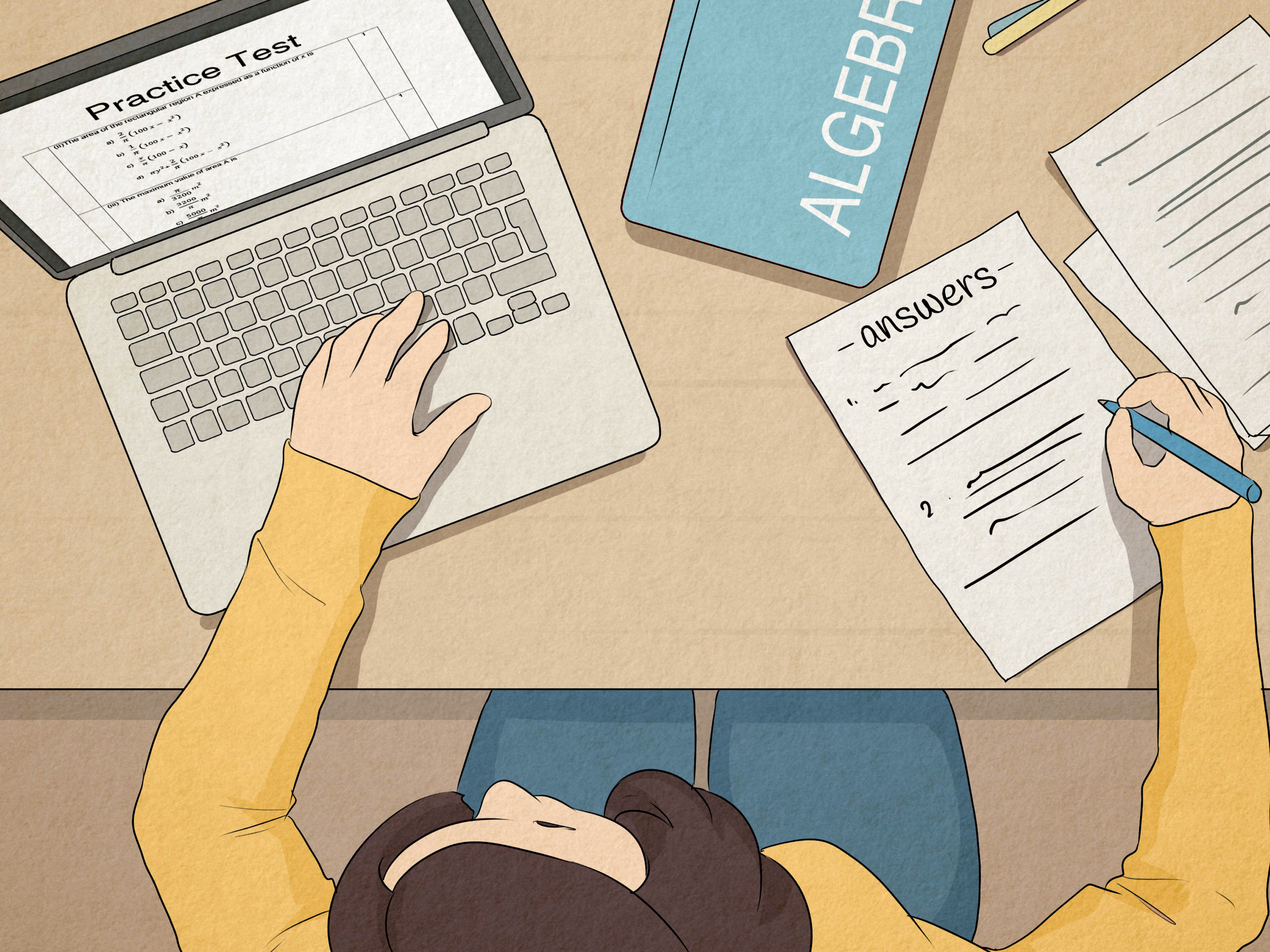
Hard subjects are not alwaying to learn a complex system with a study method built for memorizing a grocery list. Calculus, chemistry, coding, accounting, anatomy, economics, and foreign languages all ask your brain to connect ideas, not just collect facts like tiny academic Pokémon.
The good news is that you do not need to become a superhuman study machine powered by espresso and panic. You need a smarter learning process. The 11 strategies below can help you understand difficult subjects faster, remember material longer, and spend less time staring at a textbook as if it has personally offended you.
Note: “Quickly” does not mean instant mastery. These methods make learning more efficient by helping you focus on the right material, practice actively, and catch confusion before it grows into a full-blown academic monster.
Why Difficult Subjects Feel So Overwhelming
Difficult subjects tend to be cumulative. In math, one missing skill can make the next chapter look like it was written in ancient code. In biology, a missed concept about cells can make genetics feel impossible. In programming, a shaky understanding of variables can turn loops and functions into a mysterious swamp.
The solution is not simply to reread more pages or highlight every sentence until your notes resemble a neon art project. Effective learning requires you to retrieve information, explain it, apply it, and revisit it over time. In other words, your brain needs a workout, not just a tour of the textbook.
11 Easy Ways to Learn Difficult Subjects Faster
1. Start With a Clear, Tiny Learning Goal
A vague goal such as “study physics” is easy to avoid because it sounds enormous. A specific goal such as “solve three projectile-motion problems without looking at my notes” gives your brain a target.
Before each study session, write one sentence that answers: What should I be able to do by the end of this session? Use action words such as explain, solve, compare, calculate, diagram, write, or identify.
For example, instead of saying, “I need to learn accounting,” try, “I will explain the difference between assets, liabilities, and equity using my own example.” Suddenly, the mountain has a trail.
2. Build the Foundation Before Climbing Higher
Many learners try to understand an advanced topic while missing a prerequisite skill. That is like trying to build a second floor before admitting the first floor is made of crackers.
When a lesson feels impossible, ask yourself which earlier concept is causing trouble. In algebra, you may need to review fractions before tackling equations. In chemistry, you may need to revisit atomic structure before balancing reactions. In a language course, you may need a stronger grasp of basic sentence order before writing essays.
Create a short “missing pieces” list. Then spend 15 to 20 minutes repairing one foundation skill before returning to the harder topic. This prevents you from repeatedly fighting the same invisible problem.
3. Preview the Topic Before You Study It Deeply
Do not begin a difficult chapter by reading every word at the same speed. First, take five minutes to scan the headings, diagrams, bold terms, examples, summary questions, and key formulas.
This quick preview gives your brain a map. You will know where the lesson is going before you enter the forest of details. It also helps you create better questions, such as “Why does this formula work?” or “How is mitosis different from meiosis?”
Think of previewing as watching a movie trailer. You are not learning the whole story yet, but you are less likely to become confused when the plot starts moving quickly.
4. Use Active Recall Instead of Passive Rereading
One of the best ways to learn difficult subjects is to close the book and try to remember what you just studied. This is called active recall, and it is far more useful than repeatedly reading the same paragraph while nodding politely at words you do not actually understand.
After studying a small section, put your notes away and answer questions from memory. Write a short explanation, draw a diagram, solve a problem, or list the main steps in a process.
For example, after studying photosynthesis, close your notes and explain the process as if you were teaching it to a curious middle-school student. If you get stuck after “plants do something with sunlight,” congratulations: you found exactly what to review.
5. Break Big Topics Into Manageable Chunks
Trying to learn an entire unit in one sitting is a classic recipe for stress, snacks, and very little memory. Complex subjects become easier when you divide them into smaller chunks that make sense together.
A chunk might be one formula type, one biological system, one historical period, one grammar rule, or one programming concept. Study that chunk until you can explain or use it, then connect it to the next piece.
For instance, rather than studying “the human nervous system” in one marathon session, break it into neurons, neurotransmitters, the central nervous system, the peripheral nervous system, and reflexes. Small wins create momentum, and momentum is much more useful than dramatic sighing.
6. Practice With Problems, Not Just Notes
Some subjects cannot be learned by reading alone. Math, science, coding, finance, and statistics require you to practice doing the thing. Watching someone solve a problem can feel clear and satisfying, but solving a similar problem alone is where the real learning begins.
Start with a worked example. Study each step and ask why it happened. Then cover the solution and try a similar problem yourself. If you make an error, do not rush past it. Identify the exact step where your reasoning changed direction.
For example, in programming, do not only watch tutorials about loops. Write a small program that uses a loop to total numbers, sort a list, or display a simple pattern. Your keyboard should get at least a little exercise too.
7. Mix Similar Topics Instead of Practicing Only One Type
Once you understand the basics, avoid doing twenty identical practice problems in a row. That can make you feel confident because you already know what kind of problem is coming next. Real tests and real-life tasks are rarely that polite.
Instead, mix problem types. In math, combine fractions, equations, and graph questions. In language learning, mix vocabulary, listening, grammar, and short writing. In history, compare causes, effects, timelines, and competing viewpoints.
This approach teaches you to recognize which method to use, not just how to repeat one method when the answer is practically waving from across the room.
8. Explain It Out Loud in Plain English
If you cannot explain a concept simply, you probably do not understand it well enough yet. Teaching yourself out loud is one of the easiest ways to expose weak spots in your knowledge.
Choose a concept and explain it without reading from your notes. Use ordinary language first, then add the technical terms. You can talk to a friend, a study partner, a pet, your reflection, or an extremely patient houseplant.
For example, explain inflation as if you were describing why the same amount of money buys fewer tacos over time. Once the basic idea makes sense, you can add supply, demand, interest rates, and policy details.
9. Turn Information Into Visual Maps and Diagrams
Difficult subjects often become clearer when you can see the relationships between ideas. Concept maps, flowcharts, timelines, tables, labeled diagrams, and comparison charts can turn a pile of information into something your brain can navigate.
Use a flowchart for a process, such as how a bill becomes a law. Use a comparison table for similar concepts, such as mitosis versus meiosis. Use a timeline for history. Use a concept map for a broad topic with many connected parts.
The important step is to create the visual yourself from memory whenever possible. A beautiful diagram copied from the textbook may look impressive, but it is not nearly as helpful as a messy diagram that reveals what you actually know.
10. Keep an Error Log and Learn From Mistakes
Wrong answers are not proof that you are incapable. They are directions. Every mistake tells you where your current understanding needs repair.
Keep a simple error log with three columns: the question or topic, what went wrong, and the correct rule or strategy. For example: “Forgot to distribute the negative sign,” “Mixed up correlation and causation,” or “Used the past tense when the sentence required present perfect.”
Review this list before quizzes or exams. Over time, you will notice patterns. Maybe you rush through word problems, skip units in science calculations, or misread command words such as compare, analyze, and evaluate. Fixing patterns is faster than repeatedly hoping they disappear.
11. Use Focused Study Sprints, Breaks, Sleep, and Movement
Your attention is not an unlimited resource. Long study marathons often produce a strange state where you are technically sitting at a desk but mentally planning dinner, replaying old conversations, and wondering whether penguins have knees.
Try a focused study sprint: work for 25 to 45 minutes, then take a short break. During the sprint, silence notifications, place your phone out of reach, and keep only the materials you need open. During the break, stand up, walk, stretch, drink water, or look away from the screen.
Do not treat sleep as optional study time. Sleep helps support attention and memory, while short movement breaks can help you reset when your focus fades. A rested brain usually learns faster than a tired brain fueled by anxiety and vending-machine crackers.
A Simple 60-Minute Study Routine for Hard Subjects
You do not need a complicated color-coded system to study effectively. Try this practical one-hour routine when you need to learn a difficult topic:
- Minutes 1–5: Preview the topic and write one specific learning goal.
- Minutes 6–20: Study one small chunk using notes, a textbook, class materials, or a trusted lesson.
- Minutes 21–35: Close your materials and use active recall. Write, explain, draw, or solve from memory.
- Minutes 36–45: Practice problems or apply the idea to a realistic example.
- Minutes 46–50: Take a short movement break.
- Minutes 51–60: Review your mistakes, write one question for your teacher or study group, and schedule a quick review for tomorrow.
This routine may not look glamorous enough for a productivity video montage, but it works because it makes you interact with the material instead of merely sitting near it.
Learning Experiences: What It Really Feels Like to Master a Difficult Subject
Most people expect learning a difficult subject to feel like a clean upward climb. They imagine that one good study session will make everything click, followed by a triumphant walk into class with perfect notes and dramatic background music. Real learning is usually messier. It feels more like assembling furniture with vague instructions, one missing screw, and an emotional support snack nearby.
At first, difficult material often creates the uncomfortable feeling that everyone else understands it except you. A student in a calculus class may watch the instructor solve derivatives and think, “That looked easy,” only to freeze when facing a similar problem alone. A beginner in coding may understand every tutorial video but feel lost when the blank screen asks them to write a program from scratch. A language learner may recognize dozens of vocabulary words but suddenly forget all of them when trying to speak.
That gap is normal. Watching, recognizing, and understanding are not the same as recalling and applying. The moment you try to solve a problem without notes is often the moment learning becomes visible. It can feel frustrating because the weak spots are suddenly obvious. However, those weak spots are useful. They tell you what deserves your attention next.
Many learners also discover that confidence arrives later than progress. You may improve before you feel improved. For example, you might still feel uncertain about chemistry, yet notice that you can now explain why an equation must be balanced. You may still think grammar is confusing, but you catch yourself recognizing an error before your teacher points it out. These are meaningful signs that your mental framework is growing.
Another common experience is realizing that speed comes after repetition, not before it. Early practice can be slow because you are consciously thinking through every step. A new math problem may take ten minutes. A short paragraph in another language may take twenty. A coding assignment may involve forty minutes of debugging because one punctuation mark decided to hide in plain sight. With repeated practice, common patterns become easier to recognize, and your brain spends less energy figuring out where to begin.
Study partners can make this process less lonely. Explaining a concept to someone else reveals what you know, while listening to another person explain it may give you a new way to understand it. The best study groups are not places where everyone silently panics together. They are places where people quiz one another, compare problem-solving methods, ask honest questions, and admit when something does not make sense.
There is also a powerful shift that happens when you stop asking, “Am I naturally good at this?” and start asking, “What skill am I missing right now?” The first question feels personal and permanent. The second question is practical. It turns struggle into a problem you can solve. Maybe you need more vocabulary, more examples, more practice, better feedback, or a clearer explanation from a teacher. Those are all fixable.
Eventually, the subject that once felt impossible becomes familiar. It may never become your favorite topic in the universe, and that is perfectly fine. You do not need to fall in love with every formula, chapter, or grammar rule. You only need a repeatable process for moving from confusion to understanding. Once you develop that process, difficult subjects lose much of their power to intimidate you.
Final Thoughts: Learn Smarter, Not Miserably
The fastest way to learn difficult subjects is not to cram harder or reread longer. It is to study with purpose. Set clear goals, fill knowledge gaps, practice retrieving information, solve real problems, explain ideas simply, review over time, and use mistakes as feedback.
Hard subjects may still challenge you, but challenge is not failure. It is evidence that your brain is building new connections. Start with one small topic, use one or two strategies from this guide today, and let consistent practice do the heavy lifting. Your future self will be impressed. Your textbook may remain suspiciously smug, but at least you will understand it.











