
Every January, SaaS founders make the same heroic promises: “This is the year we fix onboarding,” “This is the year we finally document the API,” and the timeless classic, “This is the year sales and product stop throwing tiny emotional chairs at each other.” Noble goals, all of them. But there is one resolution that deserves more attention because it is practical, powerful, and less likely to require a company-wide existential retreat: add a layer.
In SaaS, adding a layer means building a useful extension around what already works. Not a complete pivot. Not a shiny distraction. Not “let’s rebuild the entire product in AI because a competitor launched a chatbot wearing a blazer.” A layer is an adjacent capability, workflow, data view, automation, integration, pricing option, or customer success motion that increases the value of your core product without ripping out the foundation.
The best SaaS companies rarely grow by doing one thing forever. They grow by deepening the customer relationship. First, they solve one painful problem. Then they add a layer that solves the next problem. Then another. Suddenly, they are no longer “that tool we use for one task.” They become the operating system for a workflow, a department, or even an entire business function.
What Does “Add a Layer” Mean in SaaS?
Adding a layer is the art of expanding value without creating chaos. Think of your existing product as the main dish. A good layer is not a random dessert dropped into the soup. It is the sauce, side, or seasoning that makes the whole meal better. In SaaS terms, this could be an analytics layer, an automation layer, an AI assistant, an integration marketplace, a compliance dashboard, a collaboration workflow, or a premium support experience.
The point is simple: customers already trust you for one job. Your opportunity is to ask, “What happens before, during, or after that job?” If your product helps sales teams manage leads, maybe the next layer is lead scoring, automated follow-up, call summaries, or revenue forecasting. If your product manages employee onboarding, maybe the next layer is compliance tracking, role-based checklists, manager coaching, or HRIS integrations. If your software handles invoices, maybe the next layer is cash-flow prediction, approval routing, or payment reminders that do not sound like they were written by a disappointed robot.
A layer should feel obvious in hindsight. Customers should say, “Of course this belongs here.” If they say, “Why did my project management app just launch a dating feature?” you may have layered in the wrong direction.
Why SaaS Companies Need Layers Now
The SaaS market has matured. Buyers are more careful. Budgets are scrutinized. Renewal conversations are tougher. Customers do not want another isolated tool floating around their tech stack like a lonely balloon at a finance conference. They want software that connects, automates, explains, and proves its value.
That is why layers matter. A strong layer can improve retention because the product becomes harder to replace. It can increase expansion revenue because customers are willing to pay for deeper value. It can strengthen product differentiation because competitors may copy your feature, but they will have a harder time copying your workflow depth, customer data context, and ecosystem.
Modern SaaS winners are not only selling access to software. Increasingly, they are selling outcomes: fewer manual tasks, faster decisions, cleaner data, better compliance, shorter sales cycles, lower support volume, or more accurate forecasting. A thoughtful layer moves your product closer to the outcome your customer actually cares about.
The Best Layers Are Close to the Core
The safest layers live near your existing customer pain. If you sell accounting software, a tax planning layer makes sense. If you sell developer monitoring, an incident response layer makes sense. If you sell customer support software, an AI triage layer makes sense. If you sell calendar scheduling, launching a cryptocurrency exchange probably requires a very persuasive whiteboard and possibly a nap.
Start by mapping your customer’s workflow. What do they do immediately before using your product? What do they do immediately after? What data do they export? What spreadsheet do they secretly maintain even though your product supposedly replaced spreadsheets? That spreadsheet is not an insult; it is a treasure map. It shows where the next layer may live.
Example: The Analytics Layer
Many SaaS products begin as systems of action: send the email, create the ticket, approve the expense, schedule the meeting. But once customers use the product regularly, they ask bigger questions. What is working? What is broken? Where are we wasting time? Which team is overloaded? Which process is quietly eating margin while smiling politely?
An analytics layer turns activity into insight. It can include dashboards, benchmarks, trend reports, anomaly detection, cohort views, or executive summaries. This layer is especially powerful because it helps customers justify renewal. When your champion can walk into a leadership meeting and say, “This product saved us 400 hours this quarter,” your renewal conversation becomes much friendlier. Fewer dramatic sighs. More purchase orders.
Example: The Automation Layer
Automation is one of the most natural SaaS layers because customers rarely wake up excited to perform repetitive admin work. A good automation layer removes friction from recurring tasks: routing approvals, assigning tickets, sending alerts, updating CRM fields, syncing records, or escalating exceptions.
The trick is to automate responsibly. Customers need control, visibility, and rollback options. An automation layer that acts like a helpful assistant is wonderful. An automation layer that behaves like a raccoon with admin permissions is less wonderful. Build guardrails, logs, permissions, testing modes, and human approval steps for sensitive workflows.
Example: The AI Layer
AI is the layer everyone is talking about, occasionally with the calmness of a person who has consumed nine espressos. But the best AI layer is not “we added a chat box, please clap.” It is AI embedded inside a real workflow: summarizing support tickets, drafting customer responses, detecting churn risk, recommending next actions, classifying documents, generating reports, or helping users complete complex tasks faster.
The AI layer should make your product more useful, not merely more fashionable. Customers are increasingly skeptical of vague AI promises. They want measurable value, predictable pricing, security, governance, and proof that the AI can operate within their business rules. In other words, they want intelligence with adult supervision.
Layers Create Expansion Revenue
In early-stage SaaS, new customer acquisition usually gets most of the attention. That makes sense. You need logos. You need revenue. You need proof that people other than your college roommate will buy the product. But as a SaaS company scales, expansion revenue becomes increasingly important. Existing customers are often the most efficient path to growth because they already know the product, trust the brand, and have data inside the system.
Adding a layer gives those customers a reason to grow with you. A basic plan can evolve into a professional plan. A single-team deployment can expand into a company-wide rollout. A useful feature can become a paid add-on. A product can move from “nice tool” to “strategic platform.”
The key is packaging. Do not hide your best value in a confusing pricing maze. Customers should understand what the new layer does, who it is for, and why it costs more. A strong SaaS pricing and packaging strategy creates a natural upgrade path. The customer should feel like they are graduating, not being shaken upside down for coins.
Layers Improve Retention by Increasing Switching Costs
Switching costs are not only about contracts and data migration. They are also about workflow familiarity, team habits, integrations, dashboards, automations, permissions, and internal reporting. Each useful layer creates more reasons for customers to stay because your product becomes woven into how they operate.
This does not mean trapping customers. The best retention comes from value, not handcuffs. If customers stay because your product saves time, reduces errors, and helps them look brilliant in meetings, that is healthy retention. If they stay because canceling requires faxing a notarized poem to a basement office, that is villain retention. Avoid villain retention.
How to Choose the Right Layer
Choosing the right layer starts with customer evidence. Interview your best customers. Study support tickets. Review lost deals. Analyze feature requests. Watch onboarding calls. Ask customer success teams what customers repeatedly ask for after month three. Look for pain that is frequent, valuable, adjacent, and urgent.
A good layer usually meets five tests:
- It is close to the core use case. The layer should strengthen what customers already hired your product to do.
- It solves a painful workflow problem. Nice-to-have layers rarely produce meaningful expansion.
- It uses existing product data. Your data advantage can make the layer smarter and harder to copy.
- It has a clear buyer. Someone must care enough to approve budget.
- It can be launched in stages. The first version should be useful without requiring a 19-month moon mission.
Common Layer Mistakes to Avoid
1. Adding a Layer Because Competitors Did
Competitor anxiety is a terrible product manager. Just because another company launched an AI copilot, integration hub, or executive dashboard does not mean you should immediately copy it. Your customers may need something different. Your data may support a better angle. Your product may require a simpler layer first.
2. Building Too Much Too Soon
A layer should start as a wedge, not a skyscraper. Launch a focused version for a specific customer segment. Measure usage, conversion, retention impact, and willingness to pay. Then expand. SaaS graveyards are full of ambitious modules that consumed engineering time, confused sales teams, and were used by exactly seven people, three of whom were employees testing the demo.
3. Forgetting the Go-to-Market Motion
A layer is not successful simply because product shipped it. Sales needs messaging. Customer success needs enablement. Marketing needs positioning. Finance needs pricing logic. Support needs documentation. If the layer changes how customers buy, use, or measure the product, the whole company needs to understand it.
4. Treating AI as Magic Dust
AI can be transformative, but only when connected to real workflows and reliable data. A vague AI feature may create curiosity, but a practical AI layer creates value. Focus on tasks where AI can reduce time, improve quality, or unlock new capabilities. Make the value measurable. Make the behavior explainable. Make the pricing predictable.
Practical SaaS Layers Worth Considering
Integration Layer
Connect your product to the systems customers already use: CRM, ERP, HRIS, data warehouses, communication tools, ticketing platforms, billing systems, and identity providers. Integrations reduce friction and increase stickiness.
Workflow Layer
Add approvals, routing, task management, escalation rules, checklists, and notifications. This turns your product from a database into a daily operating tool.
Intelligence Layer
Use AI, analytics, recommendations, forecasting, or anomaly detection to help customers make better decisions. This is especially valuable when customers already generate rich data inside your platform.
Collaboration Layer
Add comments, shared workspaces, role-based reviews, mentions, internal notes, and cross-team visibility. Many business problems are not data problems; they are “nobody knew Carl approved the thing last Tuesday” problems.
Admin and Governance Layer
As customers grow, they need permissions, audit logs, compliance controls, security settings, data retention policies, and reporting. This layer can unlock enterprise deals and reduce procurement friction.
Marketplace or Ecosystem Layer
Templates, partner apps, certified consultants, community workflows, and developer extensions can turn your product into a platform. This layer takes time, but it can create a strong moat.
How to Launch a Layer Without Breaking the Company
Start with a small group of high-fit customers. Build a prototype or beta. Set success metrics before launch. Decide whether the layer is free, paid, usage-based, bundled, or enterprise-only. Train the sales and success teams. Create simple messaging that explains the pain, the outcome, and the difference from the core product.
Then watch behavior. Are customers activating the layer? Are they using it repeatedly? Does it improve retention signals? Does it help close deals? Does it create expansion conversations? Does support volume explode like a popcorn machine with trust issues? The answers will tell you whether to scale, revise, or politely retire the idea.
The Real Power of Adding a Layer
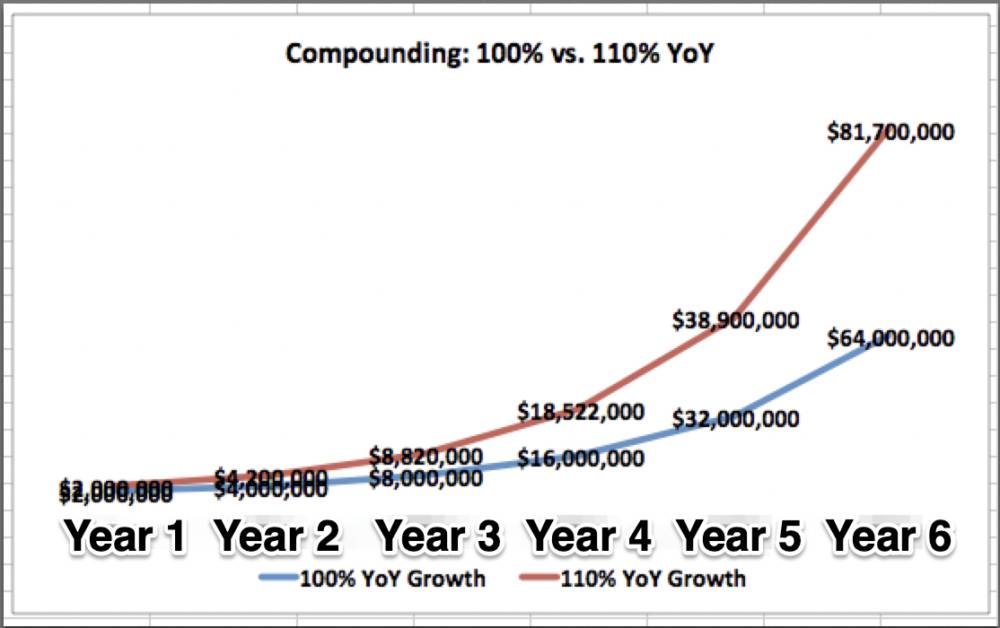
The magic of adding a layer is compounding. At first, the layer may not move monthly recurring revenue dramatically. It may feel small. But over time, it can improve product stickiness, create expansion paths, strengthen competitive positioning, and make your company more strategic to customers.
One layer can also reveal the next. An analytics layer may show customers need recommendations. Recommendations may lead to automation. Automation may require governance. Governance may unlock enterprise buyers. Enterprise buyers may request integrations. Suddenly, your roadmap is not a random wish list. It is a logical expansion of customer value.
Experience Notes: What Adding a Layer Feels Like in Real SaaS Teams
In real SaaS operations, adding a layer often begins with a deceptively ordinary customer complaint. It rarely starts with a dramatic boardroom speech under cinematic lighting. More often, someone from customer success says, “Three customers asked for the same export again,” or a sales rep says, “We keep losing deals because we do not have approval workflows,” or a founder notices that customers are using the product heavily but still managing the final step in a spreadsheet named something terrifying like “FINAL_final_v8_reallyfinal.xlsx.”
The first experience is usually tension. Product wants to protect focus. Sales wants the feature yesterday. Engineering wants clearer requirements. Customer success wants something that will stop renewal calls from becoming emotional obstacle courses. This tension is normal. In fact, it is useful. It forces the company to ask whether the proposed layer is truly strategic or just loud.
The best SaaS teams treat the layer like a business experiment, not a feature parade. They pick a narrow customer segment, define the problem, and build the smallest useful version. For example, a customer support platform might not begin with a full AI automation suite. It might begin with AI ticket summaries for enterprise accounts handling high volume. That narrow layer can prove whether users trust the output, whether it saves time, and whether managers see measurable value.
Another common experience is surprise. Sometimes the layer customers love is not the one the team expected. A company may launch a beautiful dashboard and discover that customers care most about one weekly email summary. A team may build advanced automation rules and find that the real win is a simple approval queue. This is why usage data and customer interviews matter. Customers are excellent at revealing pain, but not always perfect at designing the solution. That is the SaaS company’s job.
There is also a pricing lesson. Teams often undercharge for layers because they think, “It is just an add-on.” But if the layer saves money, reduces risk, or helps a leader make better decisions, it may be worth real budget. The strongest packaging connects price to value. If an automation layer processes thousands of tasks, usage-based pricing may make sense. If a governance layer unlocks enterprise security requirements, it may belong in an enterprise plan. If an analytics layer helps managers prove ROI, it may justify a premium tier.
The cultural experience matters too. Adding a layer pushes a SaaS company to mature. Documentation improves. Internal training becomes necessary. Product marketing gets sharper. Customer success starts selling outcomes, not just features. Support learns edge cases. Finance learns new revenue patterns. A layer is not merely a product decision; it is a company capability test.
Finally, adding a layer teaches patience. The first month may look underwhelming. Adoption may be uneven. Customers may need education. Sales may need better talk tracks. But if the layer is close to the core, solves a real problem, and becomes part of daily work, it can quietly become one of the most important growth engines in the business. That is the beauty of the strategy: it does not always arrive with fireworks. Sometimes it arrives as a better workflow, a happier renewal call, and a customer who says, “We need more of this.” In SaaS, that sentence is basically confetti.
Conclusion: This Year, Layer Up
Your belated SaaS New Year’s resolution does not need to be dramatic. You do not need to reinvent the company by Friday or add “AI-powered” to every button label. Instead, look at your strongest customer use case and ask: what layer would make this more valuable, more measurable, more automated, more connected, or more essential?
Add the layer that helps customers get closer to the outcome they already want. Add the layer that turns your product from a tool into a workflow. Add the layer that gives existing customers a reason to expand. Add the layer that makes renewal feel obvious. Start small, learn fast, package clearly, and build from the customer’s real pain.
Note: This article is based on current SaaS strategy research, market benchmarks, and real-world software business patterns from reputable U.S. technology, SaaS, pricing, AI, and enterprise software sources. It is fully rewritten for original publication and contains no copied source text.











