
Note: This article is written for web publication and synthesizes reputable customer experience, loyalty, and business growth research into original, SEO-friendly content.
Revenue is the scoreboard. Net Promoter Score, better known as NPS, is the sound coming from the crowd before the scoreboard changes. One tells you what already happened. The other gives you a clue about what is likely to happen next. That is why smart companies do not treat NPS as a fluffy customer survey number that lives in a dashboard nobody opens. They treat it as a warning light, growth signal, and customer loyalty compass rolled into one.
Of course, revenue matters. Try paying salaries, rent, cloud bills, and the office snack budget with “positive sentiment” and see how long everyone keeps smiling. But revenue alone can be dangerously comforting. A company may be earning money today while quietly losing trust, loyalty, referrals, and repeat buyers. That is like celebrating a full gas tank while ignoring smoke from the engine.
NPS is more important than revenue because it measures the quality of the relationship behind the transaction. Revenue shows what customers bought. NPS helps explain whether they will come back, spend more, recommend you, or warn everyone at brunch to run in the opposite direction.
What Is NPS?
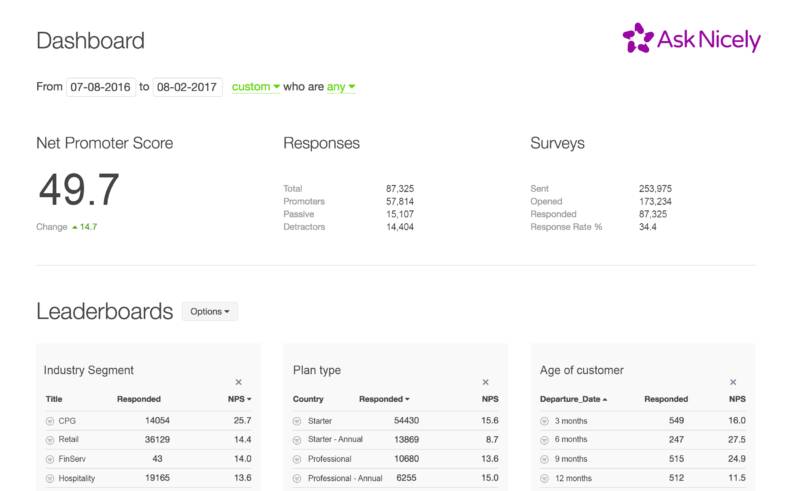
Net Promoter Score is a customer loyalty metric built around one simple question: “How likely are you to recommend this company, product, or service to a friend or colleague?” Customers answer on a scale from 0 to 10. Based on their response, they fall into three groups.
Promoters
Promoters give a score of 9 or 10. These are the customers who love what you do, return willingly, and tell others about you without being bribed with a coupon code. They are not just buyers; they are unpaid members of your marketing department.
Passives
Passives give a score of 7 or 8. They are satisfied, but not emotionally attached. They may like your product, but they are also one discount, one faster competitor, or one mildly persuasive TikTok review away from switching.
Detractors
Detractors give a score from 0 to 6. These customers are unhappy, disappointed, or annoyed enough to damage your reputation through negative reviews, complaints, social media posts, and word-of-mouth. A detractor is not just a lost sale. A detractor can become a tiny public relations department with a megaphone and a grudge.
The final NPS is calculated by subtracting the percentage of detractors from the percentage of promoters. The score can range from -100 to +100. But the real value is not the number itself. The real value is what the number reveals about customer loyalty, customer experience, and future revenue potential.
Why Revenue Alone Can Be Misleading
Revenue is a lagging indicator. It tells you what has already happened. By the time revenue drops, the real damage may have started months earlier. Customers may have been frustrated by slow support, confusing onboarding, weak product quality, hidden fees, or a checkout process that felt like solving a tax form underwater.
A business can grow revenue while customer loyalty is falling. This often happens when a company increases prices, pushes aggressive promotions, locks customers into contracts, or spends heavily on paid acquisition. The numbers may look strong for a while, but if customers are not happy, the growth is fragile.
Imagine a software company with record-breaking quarterly revenue. Investors cheer. Sales rings the gong. Leadership orders branded cupcakes. But behind the scenes, customers are submitting more support tickets, complaining about poor implementation, and refusing to recommend the product. Revenue looks great today, but NPS is telling the truth about tomorrow.
NPS Measures Future Growth Potential
NPS matters because loyal customers behave differently from unhappy customers. They stay longer, buy more, cost less to serve over time, and refer others. This creates a powerful flywheel: better customer experience leads to more promoters, more promoters lead to more referrals and retention, and those outcomes lead to healthier revenue.
Revenue answers, “How much did we sell?” NPS asks, “How much trust have we earned?” That difference is huge. Trust is what keeps customers from leaving when a competitor offers a lower price. Trust is what makes people forgive small mistakes. Trust is what turns ordinary customers into advocates.
This is especially important in markets where products are easy to compare. If you sell software, financial services, home improvement services, healthcare solutions, retail products, or subscriptions, customers often have many alternatives. In those markets, loyalty is not automatic. It must be earned repeatedly.
NPS Reveals the Health of the Customer Relationship
Revenue can hide customer pain. NPS exposes it. A customer may continue paying because switching is inconvenient, not because they are happy. Another may renew because their team has no time to evaluate alternatives. These customers produce revenue, but they are not loyal. They are hostages with invoices.
NPS helps uncover the emotional reality beneath the account balance. Are customers proud to recommend you? Are they quietly disappointed? Are they actively frustrated? These answers give leaders a clearer view of customer relationship health.
For example, a B2B company may discover that enterprise customers generate the most revenue but have the lowest NPS. That is a serious warning. It may mean the company is overpromising during sales, underdelivering after onboarding, or treating big clients like walking purchase orders instead of long-term partners.
NPS Connects Customer Experience to Business Strategy
The best companies do not collect NPS just to admire a number. They use it to make decisions. NPS can influence product roadmaps, customer support staffing, training programs, onboarding flows, pricing strategy, and even executive compensation.
When NPS is used properly, it forces the business to listen. It tells teams where friction exists and where loyalty is being created. A high NPS in one customer segment may reveal a strong product-market fit. A low NPS in another segment may reveal broken expectations, poor service, or unclear communication.
This is where NPS becomes more valuable than revenue. Revenue may tell you that one product line is popular. NPS tells you whether customers actually love it. Revenue may tell you that a campaign brought in new customers. NPS tells you whether those customers are likely to stay.
The Link Between NPS, Retention, and Customer Lifetime Value
Customer retention is one of the biggest reasons NPS deserves serious attention. Acquiring a new customer is often more expensive than keeping an existing one. When promoters stay longer, upgrade more often, and recommend others, their customer lifetime value increases.
A company that focuses only on revenue may chase new customers while neglecting existing ones. That creates a leaky bucket. Marketing pours in leads. Sales closes deals. Then poor service, weak communication, or product disappointment lets customers drip out the bottom.
NPS helps identify leaks before they become floods. If detractor scores rise after onboarding, the onboarding process needs attention. If NPS falls after renewal, customers may feel value is declining. If support-related comments dominate detractor feedback, the support experience is damaging loyalty.
NPS Can Predict Word-of-Mouth Growth
Word-of-mouth is one of the most powerful forms of marketing because people trust other people more than ads. Promoters create organic growth by recommending your brand to friends, colleagues, family members, and online communities.
This matters because referral-driven growth is usually more efficient than paid acquisition. A referred customer often arrives with trust already partially built. They have heard a real person say, “This worked for me.” That kind of endorsement is hard to buy, even with a dramatic landing page and a stock photo of people pointing at a laptop.
Detractors create the opposite effect. They warn people away. A single negative experience can travel through reviews, social posts, workplace conversations, and industry groups. In a digital world, unhappy customers do not simply leave. Sometimes they leave a trail.
Specific Example: Two Companies With the Same Revenue
Consider two companies, both earning $10 million a year.
Company A has strong revenue but a low NPS. Customers buy because the company spends heavily on ads and discounts. Support is slow, reviews are mixed, and renewals are unpredictable. Growth depends on constantly finding new buyers to replace unhappy ones.
Company B also earns $10 million a year, but it has a high NPS. Customers recommend the brand, renew often, leave positive reviews, and trust the company. Growth comes from repeat business, referrals, and expansion.
On paper, both companies look equal. In reality, Company B is healthier. Its revenue is supported by loyalty. Company A may be standing on a trapdoor covered by a nice quarterly report.
Why NPS Matters More in the Age of AI and Automation
Customer expectations are rising. People want fast answers, personalized service, smooth digital experiences, and human help when things get complicated. AI can improve customer experience when used well, but it can also make customers feel ignored if companies use automation as a wall instead of a bridge.
This makes NPS even more important. As businesses automate more interactions, they need a simple way to know whether the customer experience is actually improving. Faster is not always better. A chatbot that gives a wrong answer instantly is still a wrong answer. Congratulations, you annoyed the customer at record speed.
NPS can help companies understand whether technology is building loyalty or damaging it. If automation reduces wait times and customers feel helped, NPS may rise. If automation traps customers in a loop of useless answers, NPS will tell the truth.
How to Use NPS the Right Way
NPS is powerful, but it is not magic. It should not be treated as the only metric that matters. The smartest companies combine NPS with retention rate, churn rate, customer satisfaction, customer effort score, revenue growth, product usage, and customer lifetime value.
Ask Follow-Up Questions
The score tells you what customers feel. The follow-up question tells you why. Always ask customers to explain their rating. A short comment such as “billing is confusing” or “support took five days” may be more useful than the score itself.
Close the Loop
If a customer gives a low score, follow up quickly. Apologize, investigate, and fix what can be fixed. Closing the loop turns NPS from a survey into a relationship-building system.
Segment the Results
Do not rely only on one overall score. Segment NPS by customer type, product, region, channel, purchase date, account size, and lifecycle stage. This helps you find the exact places where customer loyalty is rising or falling.
Connect NPS to Financial Metrics
NPS becomes more valuable when it is connected to business outcomes. Compare promoters, passives, and detractors by retention, repeat purchase rate, average order value, referral rate, expansion revenue, and support cost. This transforms NPS from a “nice-to-know” metric into a growth strategy.
When Revenue Should Still Come First
Saying NPS is more important than revenue does not mean revenue is unimportant. A company with high NPS and no revenue has a fan club, not a business. Cash flow still matters. Profitability still matters. Unit economics still matter.
The real point is that revenue should not be worshiped alone. Revenue without loyalty is unstable. Revenue without trust is expensive. Revenue without customer satisfaction is vulnerable.
NPS is more important because it explains the quality of the revenue. It helps answer whether growth is sustainable or forced, whether customers are loyal or trapped, and whether the business is building a brand people actually want to recommend.
Experience Section: What Real Business Experience Teaches About NPS
In real business life, the importance of NPS becomes obvious when you watch what customers do after the sale. Revenue can make a team feel successful, but customer feedback reveals whether that success is stable. Many companies have experienced the strange moment when sales are rising but customer complaints are rising too. At first, it feels confusing. How can the business be growing and getting worse at the same time? The answer is simple: the company is selling faster than it is earning loyalty.
One common experience happens in subscription businesses. A company launches a strong campaign, brings in hundreds or thousands of new users, and celebrates the spike in monthly recurring revenue. But after a few weeks, support tickets pile up. Customers cannot figure out the setup process. The product demo looked simple, but the real experience feels messy. NPS drops. At that moment, NPS is doing the company a favor. It is warning leadership that growth is being built on frustration. If the company listens, it can improve onboarding, clarify documentation, train support teams, and prevent churn. If it ignores the signal, revenue may look good briefly before cancellation emails start arriving like tiny digital breakup letters.
Another experience comes from service businesses. A home services company, dental office, agency, or consulting firm may have strong revenue because demand is high. But if customers feel rushed, ignored, or surprised by hidden costs, they will not recommend the business. They may pay once and disappear. Even worse, they may leave a detailed review explaining exactly why nobody else should book. In these businesses, NPS is not just a number. It is a mirror. Sometimes the mirror says, “Your technicians are excellent, but your scheduling process is chaos.” Sometimes it says, “Your product is good, but your communication needs adult supervision.” Painful? Yes. Useful? Absolutely.
High NPS also creates confidence inside teams. Employees enjoy working for companies that customers love. When customers regularly say positive things, frontline teams feel their work matters. Sales teams sell with more belief. Support teams feel less like complaint firefighters and more like relationship builders. Product teams get clearer direction. A strong NPS culture can improve morale because everyone understands the mission: earn customer trust, then keep earning it.
The most useful lesson from experience is that NPS should never be treated as a vanity metric. A company should not chase a pretty score by pressuring customers, cherry-picking survey timing, or begging for 10s. That turns NPS into corporate theater, and customers can smell theater through Wi-Fi. Instead, businesses should use NPS honestly. Ask. Listen. Fix. Follow up. Repeat.
Over time, companies that respect NPS tend to make better decisions. They stop obsessing over short-term wins that damage long-term loyalty. They notice small problems before they become expensive disasters. They build products and services people are proud to recommend. That is why NPS is more important than revenue: revenue shows the harvest, but NPS tells you whether the soil is still healthy.
Conclusion: NPS Is the Customer’s Vote on Your Future
Revenue tells you what customers paid. NPS tells you whether they believe you deserved it. That difference is the heart of sustainable growth.
A company can force revenue through discounts, contracts, ads, and aggressive sales tactics. But it cannot fake genuine customer advocacy for long. Promoters are earned. Referrals are earned. Trust is earned. NPS matters because it measures the strength of that trust before the financial results fully appear.
The best businesses do not choose between NPS and revenue. They understand that strong NPS is one of the engines behind durable revenue. When customers are happy enough to recommend you, they become more than buyers. They become proof that your business is doing something right.
So yes, revenue keeps the lights on. But NPS tells you whether customers will still want to walk through the door tomorrow. And in business, tomorrow is where the real money lives.












