
Somewhere between childhood cartoons, cereal boxes, movie quotes, and late-night debates with friends lives one of the internet’s favorite brain glitches: the Mandela Effect. It is the strange, stubborn feeling that a memory is absolutely correct even when the receipts, recordings, and packaging all say otherwise. And not just your memory, either. A whole crowd of people often “remembers” the exact same wrong detail.
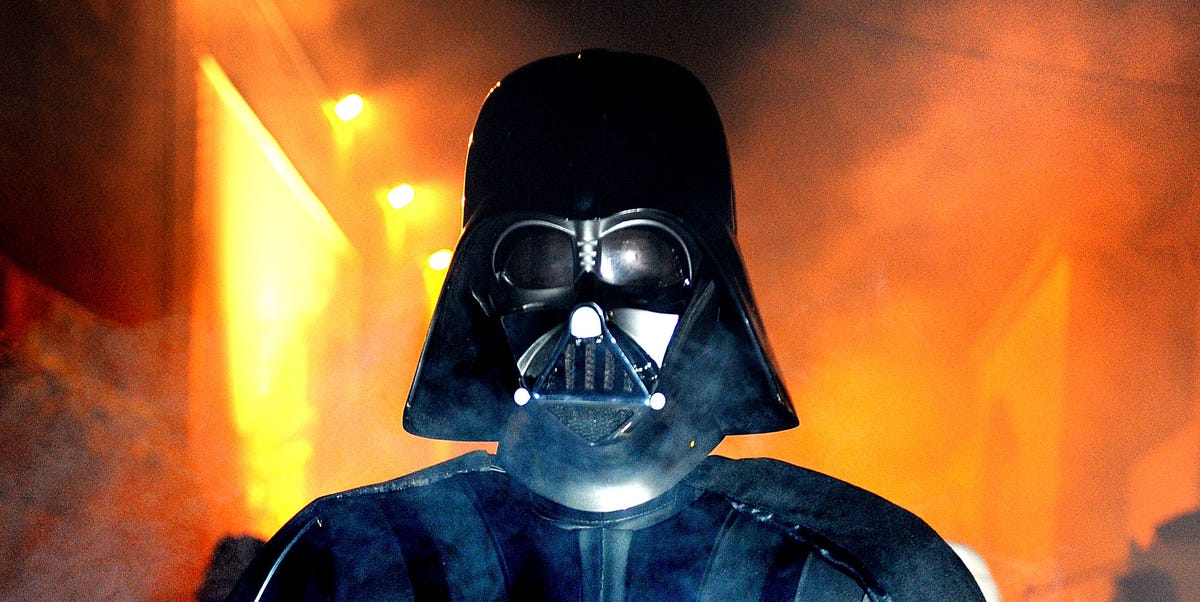
That is what makes the Mandela Effect so deliciously eerie. If you alone thought Darth Vader said, “Luke, I am your father,” you could shrug and blame a sleepy brain. But when millions of people are ready to swear on a stack of VHS tapes that they heard the same line, things get weird fast.
Before we blame parallel universes, cosmic clerical errors, or a glitch in the simulation, psychologists offer a less dramatic explanation: memory is not a perfect recording device. It is reconstructive. Your brain stores fragments, meanings, expectations, and emotional impressions, then stitches them back together when you remember. Most of the time, that system works beautifully. Other times, it confidently serves you counterfeit nostalgia.
So what is the Mandela Effect, why does it happen, and which examples keep making people question reality? Let’s open the memory attic and see what falls out.
What Is the Mandela Effect?
The Mandela Effect is a popular term for a shared false memory. The name comes from the widely repeated belief that Nelson Mandela died in prison in the 1980s. In reality, he was released in 1990, became president of South Africa in 1994, and died in 2013. The term caught on after writer Fiona Broome noticed that many other people shared the same incorrect memory.
That collective part is the key. A Mandela Effect is not just one person mixing up a detail. It is a pattern of people remembering the same wrong version in the same way. That is why the phenomenon keeps popping up in pop culture, famous quotes, logos, and major public events. Shared exposure gives shared mistakes plenty of room to grow.
Why the Mandela Effect Happens
Memory is reconstructive, not photographic
Your brain does not replay the past like a movie projector. It rebuilds memories from bits of information, expectations, and associations. That means every recall is a little like opening a saved file that has been edited by emotion, context, repetition, and whatever nonsense the internet fed you last week.
Schemas fill in the blanks
Psychologists often talk about schemas, which are mental shortcuts for how the world usually works. Rich mascot? Add a monocle. Monkey? Add a tail. Famous dramatic villain reveal? Add the hero’s name so the quote makes sense out of context. Your brain loves efficiency, and sometimes efficiency makes a mess.
Suggestion spreads fast
Once a wrong detail gets repeated often enough, it starts to feel familiar. Familiarity can easily masquerade as truth. Social media, memes, parody, and casual conversation all help reinforce a false memory until it feels less like a guess and more like a personal lived experience.
Culture copies the copy
Many famous misquotes survive because later movies, jokes, ads, and sketches keep repeating them. The parody becomes more famous than the original. Soon, the fake version is what people remember first. Your brain is not trying to lie to you; it is just overachieving at pattern matching.
55 Mandela Effect Examples
Here are 55 of the most famous Mandela Effect examples, with the false memory first and the reality second.
- Nelson Mandela: Many people remember him dying in prison in the 1980s. Reality: He was released in 1990 and died in 2013.
- The Berenstein Bears: Plenty of readers remember an “e.” Reality: It has always been The Berenstain Bears.
- Looney Toons: The spelling looks logical because cartoons. Reality: It is Looney Tunes.
- Sex in the City: Many people swear that is the title. Reality: The show is Sex and the City.
- Oscar Meyer: The jingle did not save us. Reality: The brand is Oscar Mayer.
- Jiffy peanut butter: A lot of people remember “Jiffy.” Reality: It is Jif.
- Febreeze: Looks right, sounds right, feels right. Reality: The product is Febreze.
- Sketchers: Many people add a “t.” Reality: It is Skechers.
- Kit-Kat: People often remember a hyphen. Reality: It is KitKat.
- Fruit Loops: Your brain wants normal spelling. Reality: Kellogg’s spells it Froot Loops.
- Captain Crunch: Sounds more complete, does it not? Reality: The cereal is Cap’n Crunch.
- Double Stuff Oreos: Most people add an extra “f.” Reality: It is Double Stuf.
- Cheez-Itz: Many people pluralize it in memory. Reality: The brand is Cheez-It.
- Chic-fil-A or Chick-Fil-A: The spelling gets mangled constantly. Reality: It is Chick-fil-A.
- JCPenny: One missing letter, one full identity crisis. Reality: It is JCPenney.
- Depends: Many people remember the plural. Reality: The brand name is Depend.
- Fruit of the Loom cornucopia: A shocking number of people remember a cornucopia behind the fruit. Reality: The logo never had one.
- The Monopoly Man’s monocle: It feels practically required. Reality: He has never worn a monocle.
- Pikachu’s black-tipped tail: Fans often picture a black tail tip. Reality: Pikachu’s tail is yellow, with brown at the base.
- C-3PO is all gold: That is how many toys and memories file him away. Reality: One lower leg is silver.
- Curious George has a tail: Because monkey. Obviously. Reality: Curious George has no tail.
- Mickey Mouse wears suspenders: Lots of people picture them. Reality: Mickey does not wear suspenders.
- Shaggy has an Adam’s apple: Some viewers vividly remember it. Reality: The classic character does not have one.
- Snoopy’s tail is black: Many remember an all-black tail. Reality: Snoopy’s tail is white, with only a small black marking.
- Tony the Tiger’s nose is black: Reasonable guess. Reality: His nose is blue.
- The Ford logo is plain: People often miss one detail. Reality: The “F” has a distinct little curl.
- The Volkswagen logo is one merged symbol: Many do not remember the divider. Reality: There is a visible gap separating the V and the W.
- Henry VIII turkey leg portrait: A classic fake memory. Reality: No famous historical portrait shows him holding one.
- The Thinker’s fist is pressed to his forehead: That pose turns up everywhere. Reality: Rodin’s figure rests his hand against his chin and mouth area.
- Shazaam starring Sinbad: Many people insist this genie movie existed. Reality: It did not.
- Britney Spears wore a headset in “Oops!… I Did It Again”: A lot of viewers remember the mic clearly. Reality: It is not in the video.
- “Luke, I am your father”: Pop culture has repeated it for decades. Reality: Darth Vader says, “No, I am your father.”
- “Mirror, mirror on the wall”: Nearly everyone says it this way. Reality: The line begins, “Magic mirror on the wall.”
- “Hello, Clarice”: Chills, yes. Accuracy, not quite. Reality: Hannibal Lecter says, “Good morning.”
- “Life is like a box of chocolates”: The quote lives everywhere. Reality: Forrest says, “Life was like a box of chocolates.”
- “Play it again, Sam”: The line is legendary. Reality: That exact quote is not spoken in Casablanca.
- “Beam me up, Scotty”: It sounds like peak Star Trek. Reality: The exact phrase never appears in the original series.
- “Lucy, you’ve got some ’splainin’ to do”: Everyone knows it. Except the original script. Reality: Ricky Ricardo never says that exact line.
- “If you build it, they will come”: A very common quote. Reality: The line in Field of Dreams is “If you build it, he will come.”
- “Houston, we have a problem” as the original Apollo 13 transmission: That is the popular version. Reality: The real wording was closer to “we’ve had a problem.”
- We Are the Champions ends with “of the world”: Many people hear it in their heads. Reality: The studio recording does not end with that line.
- “Fly, my pretties, fly!”: It sounds perfectly witchy. Reality: The Wicked Witch says, “Fly, fly, fly.”
- Interview with a Vampire: The title gets shortened in memory. Reality: It is Interview with the Vampire.
- Tom Cruise wore sunglasses in the Risky Business dance scene: People picture the shades automatically. Reality: No sunglasses.
- “It’s a beautiful day in the neighborhood”: The movie title did not help. Reality: Mister Rogers sang, “It’s a beautiful day in this neighborhood.”
- “Objects in mirror may be closer than they appear”: This one feels carved into every car ever made. Reality: The wording is “are closer than they appear.”
- The Flinstones: Many people drop a “t.” Reality: It is The Flintstones.
- Radar died on M.A.S.H.: Some viewers remember a tragic ending. Reality: Radar leaves the show alive.
- There were only four people in JFK’s car: That is how many remember it. Reality: There were six people in the car.
- Chartreuse is pink or reddish: The color name fools a lot of people. Reality: Chartreuse is a yellow-green shade.
- Billy Graham died years before 2018: Many people insist they heard the news earlier. Reality: He died in 2018.
- Leonardo DiCaprio had already won an Oscar long before The Revenant: Common assumption. Reality: His first acting Oscar win came in 2016.
- The Tiananmen Square tank man was run over: That version circulates often. Reality: The famous footage does not show him being run over.
- Smokey the Bear: The extra “the” sneaks in constantly. Reality: The mascot’s name is Smokey Bear.
- Daylight Savings Time: Almost everyone pluralizes it in conversation. Reality: The official term is Daylight Saving Time.
Why These Examples Feel So Convincing
What all these examples have in common is that the wrong version often feels cleaner, simpler, or more dramatic than the truth. “Luke, I am your father” works better when quoted outside the movie. “Mirror, mirror” sounds more rhythmic than “Magic mirror.” A monocle makes perfect visual sense on a wealthy board-game mascot. The false memory is often more elegant than reality, which is rude, honestly.
That is also why the Mandela Effect fascinates people who are not especially interested in psychology. It gives us a tiny existential wobble. You realize that memory is not a locked vault. It is more like a group project with too many editors and not enough adult supervision.
Shared Experiences With the Mandela Effect
A typical Mandela Effect experience usually does not begin in a laboratory. It begins in a kitchen, on a couch, or deep in a group chat at 11:47 p.m. Somebody casually says, “You mean the Berenstein Bears,” and another person replies, “No, it was Berenstain.” Suddenly the whole room turns into an emergency memory tribunal. People squint. People point. Someone starts searching old images online with the confidence of a detective in the final act of a crime movie.
That is part of what makes the Mandela Effect feel so personal. The examples are rarely random. They are tied to things people grew up with: cartoons before school, candy bars from the checkout aisle, movie lines repeated on playgrounds, logos seen a thousand times without ever really being studied. These details live in the background of everyday life, which makes the mistake feel impossible. If you have seen a cereal box for twenty years, surely you know how it is spelled. Apparently, your brain would like a word.
Many people describe the same emotional sequence when they run into a Mandela Effect. First comes certainty. Then disbelief. Then a bizarre laugh that sounds like the brain rebooting itself. Then comes the research spiral. You check old clips. You look up archived packaging. You ask siblings, friends, or parents what they remember. The funniest part is that the more people agree with the wrong answer, the more right it feels. Even when the evidence is sitting right there, your memory still wants to file an appeal.
There is also a strong nostalgia factor. The Mandela Effect often hits hardest when it touches childhood media. People do not just remember Looney Tunes or Curious George; they remember where they were when those characters mattered. The memory of the object gets mixed with the feeling of the era. That emotional glue can make the incorrect version feel deeper, warmer, and more “true” than the plain factual one.
And then there is the social side. Few things bring strangers together faster than discovering they all misremember the same ridiculous detail. It is one of the rare internet phenomena that can make people laugh, argue, and bond at the same time. Even when the explanation is ordinary human memory, the experience still feels uncanny. That tension is the whole charm. The Mandela Effect is spooky enough to be fun, but harmless enough that most examples end with a smile instead of a crisis.
In that way, the Mandela Effect is not just about being wrong. It is about realizing how human remembering really works. We do not store perfect copies of the world. We store meaning, emotion, repetition, and expectation. We remember what made sense, what sounded better, what everyone else said, and what fit the story already living in our heads. The miracle is not that our memories fail sometimes. The miracle is that they work as often as they do.
Final Thoughts
The Mandela Effect is less proof of alternate dimensions and more proof that the human brain is creative, efficient, and occasionally a chaos goblin. Shared false memories happen because memory is flexible, social, and vulnerable to suggestion. Add pop culture, repetition, nostalgia, and the internet, and you get a phenomenon that makes people laugh, argue, and check old logos with the intensity of forensic analysts.
So the next time you discover that a quote, title, or logo is not what you swore it was, do not panic. You are not broken, and reality probably has not split in half. You are just getting a front-row seat to one of the strangest truths in psychology: memory feels solid, but it is more like wet cement than stone.












