
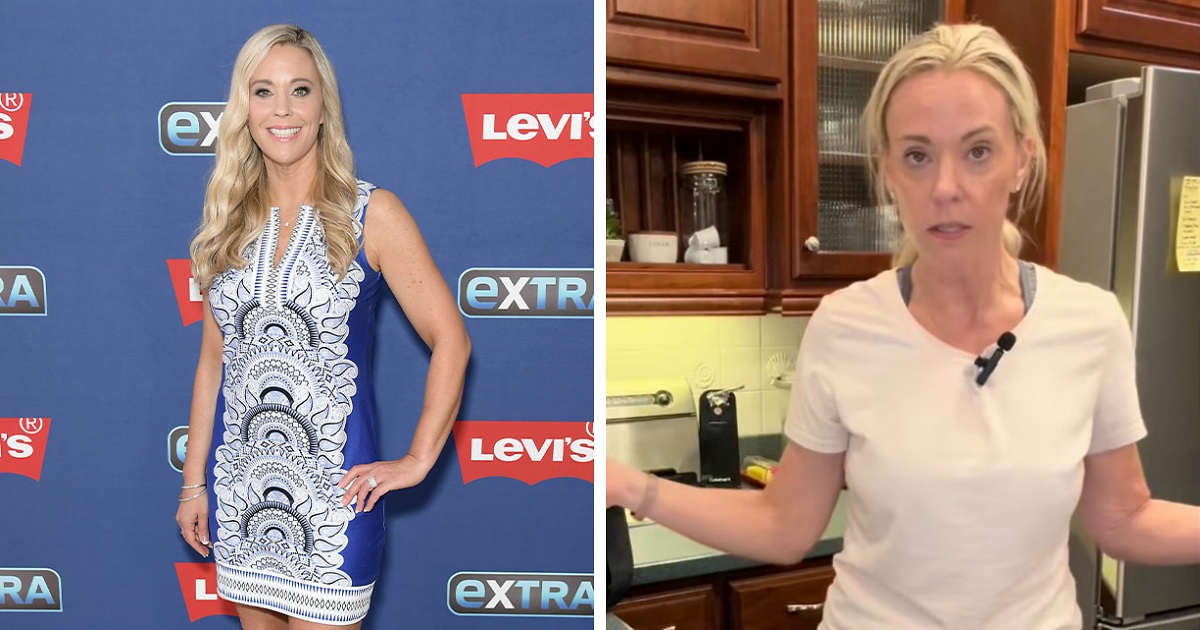
For years, Kate Gosselin’s daily life looked like the opposite of ordinary. Her family had television cameras in the kitchen, magazine photographers at the front door, and millions of viewers watching eight children grow up in carefully edited episodes. Then the cameras disappeared, the ratings machine moved on, and the former reality star found herself facing something far less glamorous: an early alarm, a demanding patient-care schedule, and dishes that still needed loading after a 12-hour nursing shift.
In August 2025, Gosselin explained on TikTok that she was again working as a registered nurse in pediatric home health care. The revelation surprised viewers who assumed that years of reality television had left her financially secure. According to Gosselin, however, much of the money had gone toward raising eight children, private education, college funds, housing, and prolonged legal disputes following her divorce from Jon Gosselin.
Some online commenters responded with sympathy. Others offered the internet’s favorite complimentary fruit basket: sarcasm. Versions of “welcome to the real world” appeared beneath coverage of her return to nursing, as critics argued that working long hours is normal for millions of Americans. The reaction was predictable, but the story is more complicated than a celebrity simply discovering that jobs exist.
Kate Gosselin’s Return to Nursing Explained
Gosselin did not enter nursing as a publicity stunt or a last-minute reinvention. Before Jon & Kate Plus 8 became a television hit, she had trained and worked as a registered nurse, including experience in labor and delivery. Nursing was part of her life before television producers turned grocery shopping with sextuplets into prime-time entertainment.
In her 2025 social-media update, Gosselin described working with a pediatric home-health patient and providing both medical care and everyday support. One reported shift included feeding, bathing, outdoor activities, water play, and accompanying the patient to a birthday gathering. After returning home, she prepared for another early start the next morning.
That description matters because pediatric home-health nursing is not simply paid companionship. Registered nurses in home settings may monitor symptoms, administer treatments, operate or check medical equipment, maintain clinical records, coordinate with physicians, educate family members, and respond when a patient’s condition changes. The location may feel domestic, but the responsibility remains clinical.
As of a May 2026 profile, Gosselin was still being described as a pediatric home-health nurse, suggesting that the job was more than a brief detour between television opportunities. It represented a sustained return to the profession she knew before fame arrived.
How Reality Television Created a Misleading Picture of Wealth
From a family documentary to a ratings phenomenon
The Gosselins first attracted national attention through television specials about raising twins and sextuplets. Their weekly series, Jon & Kate Plus 8, premiered on TLC in 2007 after earlier specials on Discovery Health. Audiences tuned in for birthday parties, family trips, organizational chaos, and the almost military logistics required to move eight children from one place to another.
The program became a defining reality show of the late 2000s. Its appeal came from the contrast between an extraordinary household and familiar parenting problems. There were more lunchboxes and considerably more laundry, but the arguments about schedules, discipline, and exhaustion were recognizable.
The family’s fame intensified when Jon and Kate’s marriage deteriorated publicly. They announced their separation in 2009, and the original program ended as the divorce became part of the entertainment-news cycle. Kate later continued with Kate Plus 8, which aired in various forms until 2017. She subsequently appeared in Kate Plus Date in 2019 and briefly competed on Special Forces: World’s Toughest Test in 2023, leaving during the first episode after an injury.
That résumé sounds profitable, and it probably was during its most successful years. But television income is not the same as permanent wealth. A reality personality may be highly visible without owning a valuable catalog of work, receiving decades of residual payments, or having another season guaranteed. When production ends, the checks can stop much faster than the public attention does.
Fame can make expenses grow faster than savings
Celebrity coverage often treats a successful television show like a magic retirement account. In reality, gross earnings can be reduced by taxes, representatives’ fees, travel, professional expenses, property costs, security needs, and the general inflation of maintaining a public lifestyle.
Gosselin also had an unusually large household. Raising eight children would be expensive without fame. Add private schooling, college planning, a home large enough for the family, transportation, and years of legal conflict, and even substantial television earnings can disappear.
Gosselin said she was proud that money had been placed toward her children’s college education. At the same time, she claimed repeated court proceedings consumed funds that might otherwise have supported additional savings and her retirement. She described the amount spent on attorneys as financially devastating and “sickening.”
Those are Gosselin’s own explanations, not an independently published audit of her finances. Nevertheless, they highlight a lesson that applies beyond celebrity culture: a high-income period does not guarantee long-term security when expenses are equally high and the income has an expiration date.
Why the Phrase “Forced to Return to Work” Divided Readers
Much of the backlash centered on the word forced. To an exhausted teacher, factory worker, caregiver, retail employee, or nurse, a celebrity discussing the burden of full-time employment can sound spectacularly tone-deaf. Most people do not describe having a job as a downfall. They call it Tuesday.
That explains why “welcome to the real world” became such an effective headline. It captures the public suspicion that reality stars occupy a separate economic universe until the money runs out. To critics, Gosselin was not enduring an injustice; she was experiencing the same obligation faced by ordinary adults who exchange labor for money.
Still, there is a difference between acknowledging privilege and mocking honest work. Returning to a licensed profession should not be treated as humiliation. Nursing requires education, clinical skill, legal accountability, emotional stamina, and the ability to remain calm when another person’s health depends on it. A television career may have made Gosselin famous, but fame cannot replace competence at a patient’s bedside.
The more reasonable interpretation is that Gosselin felt compelled to return because her preferred television income was no longer dependable. That is not the same as being physically forced into a hospital corridor by a producer carrying a giant butterfly net. It means financial circumstances narrowed her options.
What a 12-Hour Nursing Shift Actually Involves
Twelve-hour schedules are common in parts of American health care because patients need continuous coverage. Depending on the position, nurses may work days, nights, weekends, holidays, or rotating schedules. A compressed workweek can create more full days away from the job, but the shifts themselves are physically and mentally demanding.
The U.S. Bureau of Labor Statistics reports that registered nurses assess patients, document symptoms, administer medications and treatments, monitor equipment, collaborate with other medical professionals, and teach patients and families how to manage health conditions. Home-health nurses also travel into private residences, where they must provide care without the immediate support structure of a hospital unit.
A scheduled 12 hours can also stretch longer because of documentation, a late replacement, a patient emergency, or a difficult handoff. By the time commuting, meals, preparation, and post-shift chores are included, the day may leave little room for anything beyond showering, eating, and collapsing into bed like a phone at 1% battery.
Federal workplace-safety guidance warns that extended shifts can increase fatigue, stress, reduced concentration, and injury risk. The National Institute for Occupational Safety and Health has created specific training for nurses because long hours and shift work can interfere with sleep and contribute to errors, health symptoms, and drowsy driving. OSHA cites research associating 12-hour workdays with an increased risk of occupational injury.
In other words, Gosselin’s schedule is not remarkable because a former celebrity has performed it. It is remarkable because nurses across the country perform similar schedules every week while being trusted with tasks where “I was tired” cannot undo a serious mistake.
Nursing Is Not a Symbol of Failure
Some coverage framed the career change as though Gosselin had fallen from a palace directly into a mop bucket. That framing says more about society’s obsession with celebrity hierarchy than it does about nursing.
Registered nursing remains a skilled, licensed profession with strong labor demand. The Bureau of Labor Statistics reported a median annual wage of $93,600 for registered nurses in May 2024, although actual compensation differs significantly by region, specialty, employer, experience, and schedule. The agency projects hundreds of thousands of openings each year as nurses retire, leave the workforce, or move between occupations.
Federal workforce projections also anticipate continued nursing shortages, particularly outside major metropolitan areas. Returning nurses therefore enter a field where qualified professionals are needed, not a career equivalent of being sent to celebrity detention.
There is also dignity in using an established skill after another industry becomes unreliable. Plenty of actors teach, musicians work in construction, former athletes sell insurance, and reality stars return to careers they held before television. Reinvention is not evidence that the earlier chapter was fake. It is evidence that no chapter is guaranteed to last forever.
The irony is that nursing may offer something reality television rarely provides: usefulness that does not depend on ratings. A patient does not care whether a nurse once appeared on magazine covers. The patient cares whether medication is given correctly, symptoms are noticed, and someone dependable arrives for the shift.
The Complicated Public Legacy of Kate Gosselin
Public reaction to Gosselin has never been neutral. During her television years, viewers criticized her controlling communication style, her treatment of Jon, and the decision to keep filming the children during periods of intense family conflict. Others defended her as an overwhelmed mother responsible for a household whose scale would make an airport operations manager request backup.
The family’s later estrangements and public accusations have made the story more sensitive. Collin Gosselin has made serious allegations about his childhood and his relationship with his mother. Kate, directly and through representatives, has disputed key claims and has described concerns about his behavior. Because those accounts conflict, they should be presented as allegations and denials rather than established conclusions.
None of that history disappears because Kate returned to nursing. Nor does returning to work settle old debates about the family’s years on television. It simply adds another chapter: a polarizing former reality star is now doing highly practical work while confronting the financial consequences of decisions, expenses, and conflicts accumulated over many years.
Readers are free to dislike her television persona. They can question the choices made during the family’s most famous period. But cheering because someone must work long shifts reveals an uncomfortable attitude toward labor. If employment is respectable for ordinary people, it should not suddenly become a public punishment when performed by someone famous.
Five Broader Lessons From Kate Gosselin’s Financial Downfall
1. Public visibility is not financial stability
Being recognized at an airport does not pay a mortgage. Entertainment income can be large but irregular, and public attention often lasts longer than the contracts producing the money.
2. Temporary income needs a permanent plan
People with unusually profitable years need emergency reserves, diversified investments, realistic spending limits, retirement contributions, and advisers who are paid to protect the client rather than applaud every purchase.
3. Legal conflict can become an economic sinkhole
Some legal disputes are unavoidable, especially when custody or safety is involved. However, prolonged litigation can consume money that neither side will recover. Winning a motion may still feel like losing after the invoice arrives.
4. A professional credential can be a powerful safety net
Gosselin’s nursing background gave her a practical route back into stable employment. Maintaining licenses, qualifications, networks, and continuing education can provide options when an unpredictable career changes direction.
5. Work should not be confused with disgrace
The true downfall would not be returning to nursing. It would be believing that useful work is beneath someone simply because television once made that person famous.
Real-World Experiences: What Returning to a Demanding Career Can Feel Like
Imagine spending years in a career where your schedule is shaped by filming dates, interviews, travel, and producers. You may work hard, but the work revolves around your personality and your family’s story. Then you return to a profession where the clock starts at a fixed hour, the rules are clinical, and nobody pauses a medical need because you had a difficult morning.
The first shock is often physical. A person who has been away from bedside or home-health care may remember the knowledge while underestimating the stamina. Twelve hours of standing, driving, documenting, lifting, concentrating, and responding to another person’s needs can turn comfortable shoes into medieval punishment devices. By hour ten, even deciding what to eat may feel like an advanced licensing examination.
The second adjustment is emotional. In entertainment, attention is the currency. In health care, attention must flow in the opposite direction. The nurse’s role is to observe the patient, protect the patient’s dignity, anticipate complications, and support the family. Personal fame becomes irrelevant or, in a private home, potentially distracting. A former public figure may have to establish trust with people who already think they know her from television.
There is also the awkward experience of being recognized while performing an ordinary job. Some patients or relatives may be curious. Others may arrive with opinions formed years earlier from edited episodes and tabloid headlines. Professionalism requires the nurse to avoid turning the patient’s home into a reunion special. Boundaries matter, particularly because medical privacy is not optional.
Financially, returning to regular employment can be both reassuring and humbling. A predictable paycheck provides structure, yet it may feel modest compared with peak television earnings. That contrast can make every expense more visible. Restaurant meals become grocery calculations. Travel becomes a calendar problem. Retirement stops being an abstract future event and starts staring from the spreadsheet with crossed arms.
At the same time, ordinary work can restore a sense of control. Television careers depend on ratings, executives, audience interest, contracts, and timing. Nursing shifts may be exhausting, but the pathway is clearer: maintain the license, complete the work, receive the paycheck, and return for the next scheduled day. There is less glamour, but there may also be less uncertainty.
Many people experience a similar transition without ever appearing on television. A business closes. A marriage ends. A parent spends savings on children. A medical problem interrupts a career. Someone who once earned comfortably returns to school, takes night shifts, works weekends, or accepts a position below a previous level of status. The emotional mixture is rarely simple. Relief, embarrassment, gratitude, exhaustion, and pride can all occupy the same break room.
The healthiest response is not to romanticize the struggle or ridicule it. Long shifts are hard whether the worker is famous, anonymous, wealthy, indebted, admired, or disliked. The practical questions are more useful: Is the work safe? Is the employee adequately rested? Are the patient and family receiving dependable care? Is the worker rebuilding financial security rather than chasing the appearance of it?
Kate Gosselin’s return to nursing therefore offers a larger lesson about identity. A career can disappear without erasing the person who performed it. Starting again does not require pretending the famous years never happened. It requires accepting that the next stage may involve less applause, more responsibility, and a dishwasher running late at night before another early shift.
Conclusion
Kate Gosselin’s reported financial decline makes an irresistible celebrity headline, but the nursing career itself should not be the punchline. She returned to a profession that demands training, patience, endurance, and trust. Her explanationthat raising eight children, funding education, and paying extensive legal bills depleted her resourcesalso challenges the assumption that years on television automatically create lifelong wealth.
The phrase “welcome to the real world” may satisfy people who disliked Gosselin during her TLC years. Yet the real world is not merely a place where former stars are humbled. It is where millions of people adapt when income changes, plans collapse, families become expensive, and retirement savings fall short. Some complain. Some restart. Many do both before breakfast.
Whether viewers see Gosselin’s story as accountability, resilience, or a complicated combination of the two, her 12-hour shifts reveal something reality television often hides: eventually, the cameras leave, the bills remain, and a practical skill can become more valuable than fame.
Note: This article distinguishes Kate Gosselin’s public statements about her work and finances from disputed family allegations, which are not presented as proven facts. Reporting was cross-checked against coverage from People, E! News, Page Six, Fox News, ABC News, Variety, TLC and CNN, together with nursing-workforce guidance from the U.S. Bureau of Labor Statistics, CDC/NIOSH, OSHA and HRSA.












