
Note: This article is written for web publishing and synthesizes research-based U.S. education guidance on math problem solving, reading comprehension, vocabulary, annotation, writing, and mathematical discourse.
Introduction: When Math Sneaks Into Story Mode
Math word problems have a special talent for making perfectly capable students stare at a page as if it just started speaking ancient squirrel. The numbers may be simple, the operation may be familiar, and the answer may be only a few steps away. Yet the problem is wrapped in sentences, context, vocabulary, and tiny clues that can easily turn a basic calculation into a full detective mission.
That is exactly why using literacy skills to solve math word problems is so powerful. Word problems are not just math exercises with extra words sprinkled on top for decoration. They are reading tasks, reasoning tasks, and communication tasks all working together. To solve them well, students need to understand the situation, identify the question, sort important information from distracting details, choose a strategy, calculate accurately, and explain why the answer makes sense.
In other words, successful problem solving is not only about knowing whether to add, subtract, multiply, or divide. It is about reading closely, thinking carefully, and translating language into mathematics. Once students learn to treat word problems like short stories with numbers hiding inside, they become less intimidating. The monster under the math desk turns out to be mostly vocabulary, structure, and comprehension wearing a dramatic cape.
Why Literacy Skills Matter in Math Word Problems
Many students struggle with word problems not because they “cannot do math,” but because they have trouble understanding what the problem is asking. A student may know how to multiply fractions, compare quantities, or find a total, but still miss the problem because the wording is confusing. Literacy skills help students unlock the meaning before they rush into calculation.
Reading comprehension, vocabulary knowledge, sentence analysis, summarizing, questioning, and writing all support math problem solving. These skills help students slow down, notice relationships, and avoid the classic mistake of grabbing the first two numbers and throwing them into an equation like they are tossing socks into a laundry basket.
Math Word Problems Are Texts
A word problem is a text. It has characters, actions, quantities, relationships, and a purpose. Sometimes it includes a clear storyline: “Maria bought 3 packs of pencils with 12 pencils in each pack.” Sometimes it includes comparison language: “Jamal has 8 fewer stickers than Ava.” Sometimes it includes multi-step reasoning: “After saving money for three weeks, spending part of it, and receiving more, how much does he have now?”
To solve the problem, students must understand the text structure. Who is involved? What is happening? What changes? What is being compared? What is missing? What does the final question ask? These are reading questions before they are math questions.
Language Carries the Math
Words such as “altogether,” “difference,” “fewer,” “per,” “each,” “remaining,” “increased by,” and “twice as many” can signal mathematical relationships. However, students should not depend only on keyword tricks. The word “more,” for example, does not always mean addition. In the sentence “How many more does Ava have than Ben?” students need comparison, often subtraction. In the sentence “Ben bought 4 more,” addition may be appropriate. Same word, different job. English can be sneaky like that.
Strong literacy instruction helps students understand meaning in context instead of memorizing unreliable shortcuts. The goal is not to hunt keywords like math treasure hunters. The goal is to understand the situation well enough to choose the right operation with confidence.
The Core Literacy Skills That Help Students Solve Word Problems
1. Close Reading
Close reading means reading carefully, often more than once, to understand both the big picture and the details. In math, close reading helps students identify what the problem is about, what information is given, and what answer is needed.
A useful routine is simple: read once for the story, read again for the math, and read a third time to check the question. The first reading helps students understand the context. The second reading helps them locate quantities and relationships. The third reading keeps them from solving the wrong problem, which is a very common way to produce a beautifully calculated but completely unrelated answer.
2. Vocabulary Understanding
Math has its own language. Some words are technical, such as “quotient,” “product,” “radius,” and “equivalent.” Others are everyday words with special meanings in math, such as “table,” “mean,” “volume,” and “difference.” Students need repeated exposure to these words in real contexts.
A math word wall can help, especially when it includes student-friendly definitions, examples, diagrams, and sentence frames. For example, instead of listing “difference = subtraction,” a stronger entry might say: “Difference means how far apart two amounts are. Example: The difference between 15 and 9 is 6.” This builds meaning, not just memory.
3. Annotation
Annotation gives students a way to interact with the problem. They can underline the question, circle important numbers, box math vocabulary, cross out unnecessary information, and write quick notes in the margin. Annotation turns passive reading into active thinking.
For example, in the problem “Lena has 24 beads. She uses 6 beads for each bracelet. How many bracelets can she make?” students might circle 24, circle 6, underline “each bracelet,” and underline the question. Then they can write “groups of 6” beside the text. That tiny note is a bridge from language to division.
4. Summarizing
Summarizing helps students restate the problem in their own words. If a student cannot explain what is happening, it is usually too early to calculate. A summary does not need to be fancy. It can sound like, “She has 24 beads and puts 6 on each bracelet. I need to find how many groups of 6 fit into 24.”
This skill is especially useful for multi-step problems because it forces students to organize events in sequence. First this happened, then that happened, now we need to know this. Suddenly the word problem looks less like a tangled headphone cord and more like a plan.
5. Questioning
Good readers ask questions while reading. Good math problem solvers do the same. Students can learn to ask: What do I know? What do I need to find? What information matters? Is there extra information? What operation matches the situation? Does my answer make sense?
These questions build metacognition, which means thinking about one’s own thinking. Instead of racing through steps, students monitor their understanding. They learn to pause, check, adjust, and continue. That habit is valuable far beyond math class.
6. Writing and Explaining Reasoning
Writing helps students clarify their thinking. When students explain how they solved a problem, they must connect the story, numbers, operation, and answer. This reveals misunderstandings and strengthens mathematical reasoning.
Teachers and parents can use sentence frames such as: “I know ___ because ___.” “First, I ___.” “The operation I chose was ___ because ___.” “My answer makes sense because ___.” These frames support students who know the math but struggle to express it clearly.
A Step-by-Step Strategy for Solving Math Word Problems
Step 1: Read the Whole Problem First
Students often want to start calculating as soon as they see numbers. Encourage them to resist the urge. The first job is to read the whole problem and understand the situation. No number should be touched until the reader knows what is happening. This may sound strict, but math problems reward patience. They are not popcorn; they do not need to be attacked immediately.
Step 2: Identify the Question
The question tells students what the answer should represent. Are they finding a total, a missing part, a comparison, a rate, an area, a time, or a number of groups? Underlining the question helps students stay focused.
Example: “A school has 6 buses. Each bus carries 42 students. How many students can the buses carry altogether?” The question asks for the total number of students. That points toward multiplication: 6 groups of 42.
Step 3: Retell the Problem in Your Own Words
Retelling checks comprehension. A student might say, “There are 6 buses, and each one has 42 students. I need the total.” This simple retell strips away extra wording and reveals the math structure.
Step 4: Mark Important Information
Students should identify useful numbers and labels. Labels matter because 6 buses and 42 students are not just numbers floating around looking for a hobby. They represent quantities in a relationship. Writing labels beside numbers helps prevent errors.
Step 5: Choose a Representation
Many students benefit from drawing a diagram, table, number line, bar model, equation, or quick sketch. A representation makes the invisible relationship visible. For younger students, drawing equal groups can clarify multiplication and division. For older students, tables and equations can show ratios, rates, and algebraic relationships.
Step 6: Solve the Problem
Once students understand the text, identify the question, and choose a strategy, calculation becomes much easier. The math step should come after comprehension, not before it.
Step 7: Check the Answer in the Story
The final step is to return to the context. Does the answer make sense? Should it be larger or smaller than the numbers in the problem? Does the label match the question? If the answer is “252 students,” that makes sense for 6 buses with 42 students each. If the answer is “252 buses,” the calculation may be right, but the label has run off into the bushes.
Specific Examples of Literacy-Based Problem Solving
Example 1: Addition and Subtraction
Problem: Maya had 38 stickers. She gave 12 stickers to her brother and then bought 15 more. How many stickers does Maya have now?
Literacy approach: First, students read the whole problem. Then they retell it: Maya starts with 38, loses 12, then gains 15. The sequence words “gave” and “then bought” show two actions. This is a two-step problem.
Solution: 38 – 12 = 26. Then 26 + 15 = 41. Maya has 41 stickers now.
Check: The answer should be close to the starting number because Maya gave some away but also bought more. 41 makes sense.
Example 2: Multiplication
Problem: A teacher places 7 books on each of 9 shelves. How many books are on the shelves in all?
Literacy approach: The phrase “each of 9 shelves” signals equal groups. Students can summarize: There are 9 shelves, and each shelf has 7 books. I need the total.
Solution: 9 x 7 = 63. There are 63 books in all.
Example 3: Division
Problem: Carlos has 48 apples. He packs 8 apples into each bag. How many bags can he fill?
Literacy approach: Students identify the total, the group size, and the unknown number of groups. The language “each bag” helps show equal groups.
Solution: 48 ÷ 8 = 6. Carlos can fill 6 bags.
Example 4: Comparison
Problem: Olivia read 36 pages. Noah read 49 pages. How many more pages did Noah read than Olivia?
Literacy approach: The phrase “how many more” asks for the difference between two amounts, not the total. Students compare 49 and 36.
Solution: 49 – 36 = 13. Noah read 13 more pages than Olivia.
Why Keyword Tricks Are Not Enough
For years, students have been taught lists like “altogether means add” or “left means subtract.” These shortcuts may help sometimes, but they can also mislead students. Consider this problem: “There are 20 students on the playground. Some students left. Now there are 12 students. How many left?” The word “left” appears, and subtraction is involved. But students still need to understand that the missing amount is found by 20 – 12.
Now consider: “Jenna had 5 marbles. Her friend gave her 3 more. How many does she have altogether?” Here “more” and “altogether” both appear, and addition works. But in “How many more marbles does Jenna have than Sam?” the word “more” asks for comparison. The same word can play different roles depending on the sentence.
That is why literacy skills matter. Students need to read for meaning, not just hunt for signal words. Word problems are less about magic vocabulary buttons and more about relationships.
Teaching Students to Recognize Problem Structures
One of the most effective ways to help students solve word problems is to teach them common problem structures. A structure is the underlying relationship in the problem. For example, addition and subtraction problems often involve joining, separating, part-part-whole, or comparing. Multiplication and division problems often involve equal groups, arrays, area, rates, or multiplicative comparison.
When students recognize structure, they can solve new problems more flexibly. They stop asking, “What keyword should I look for?” and start asking, “What relationship is happening here?” That shift is huge. It moves students from guessing operations to reasoning mathematically.
Common Structures Students Should Know
Join problems: Something is added to a starting amount. Example: “A box has 14 crayons. Then 6 more are added.”
Separate problems: Something is taken away from a starting amount. Example: “A jar has 30 cookies. Ten are eaten.”
Part-part-whole problems: Two or more parts combine to make a whole. Example: “There are 12 red flowers and 9 yellow flowers.”
Compare problems: Two amounts are compared. Example: “Liam has 5 fewer cards than Emma.”
Equal groups problems: Groups of the same size are combined or separated. Example: “There are 4 bags with 8 oranges in each bag.”
Rate problems: A quantity is connected to one unit of another quantity. Example: “The car travels 60 miles per hour.”
How Teachers Can Blend Reading and Math Instruction
Model Thinking Aloud
Students benefit when teachers model the invisible thinking behind problem solving. A teacher might say, “I am going to read the whole problem first. I notice the question asks for how many are left, so I need to understand what was removed. I see there is extra information about color, but it does not affect the answer.” This kind of think-aloud shows students how strong readers and mathematicians approach a problem.
Use Partner Talk
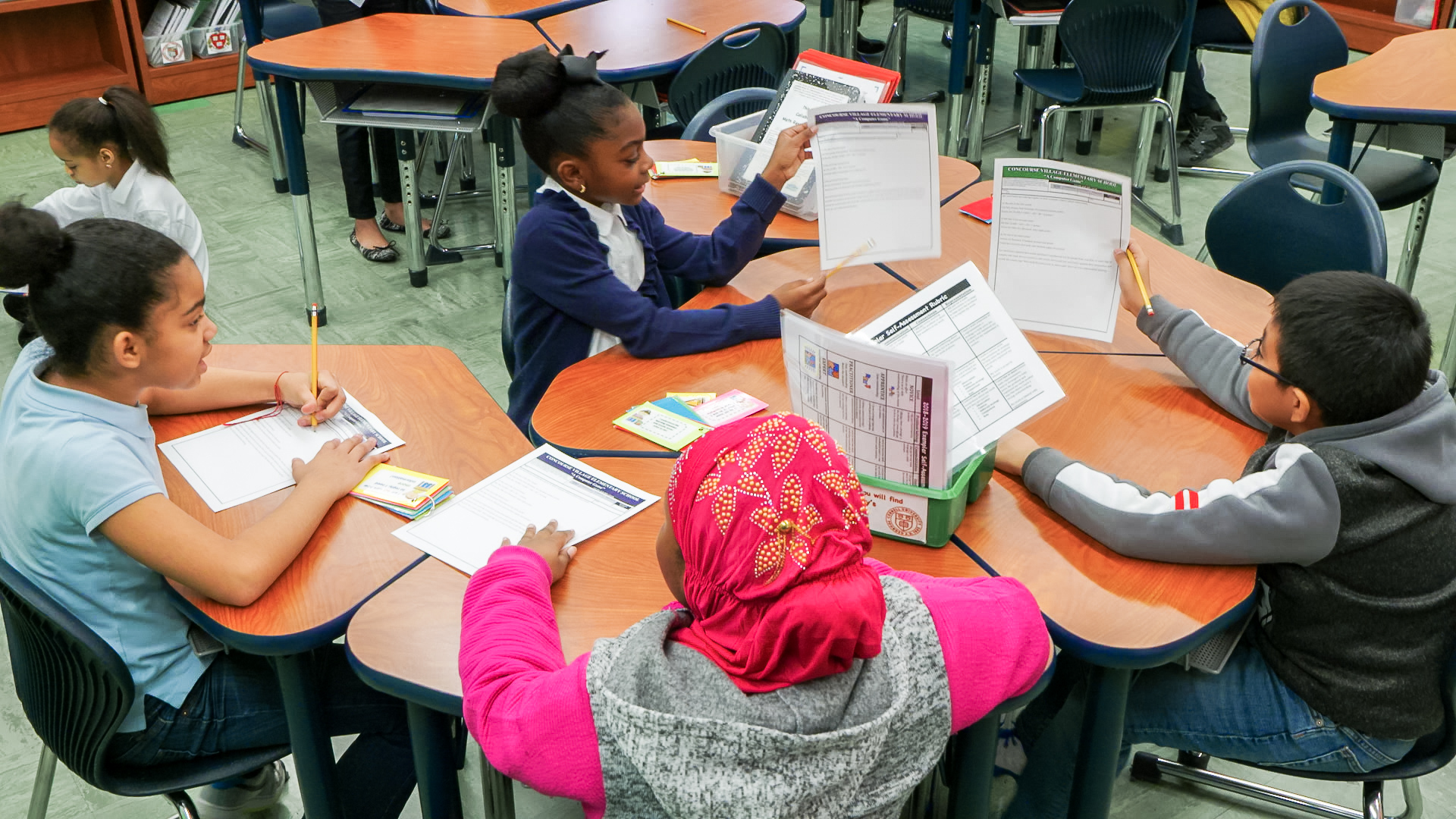
Before solving, students can explain the problem to a partner. Talking gives them a chance to process language, hear another interpretation, and practice mathematical vocabulary. It also reduces the pressure of immediately writing the perfect answer. Sometimes the brain needs to warm up out loud before it performs on paper.
Invite Students to Write Their Own Word Problems
Creating word problems helps students understand how problems are built. When students write a multiplication problem, for example, they must create equal groups, include relevant quantities, and ask a clear question. This improves both math reasoning and writing clarity.
Use Graphic Organizers
A simple organizer can guide students through the process: What is happening? What do I know? What do I need to find? What strategy will I use? What is my answer? Why does it make sense? Over time, students internalize these questions and need the organizer less often.
Supporting English Language Learners and Struggling Readers
English language learners and struggling readers may understand the math concept but struggle with the language of the problem. They may need explicit vocabulary instruction, visuals, sentence frames, repeated reading, and opportunities to discuss problems before solving them independently.
Teachers can support these students by previewing key vocabulary, connecting problems to familiar contexts, using pictures or manipulatives, and allowing students to explain reasoning with drawings, gestures, numbers, and words. The goal is not to lower the math demand. The goal is to make the language accessible so students can show what they know.
At-Home Strategies for Parents
Parents do not need to turn the kitchen table into a miniature testing center. In fact, please do not; everyone deserves snacks without a pop quiz. Instead, parents can support word problem skills through simple conversations.
Ask children to explain what the problem is about before solving it. Encourage them to underline the question. Have them draw a quick picture. Ask, “Does your answer make sense?” When shopping, cooking, planning time, or comparing prices, talk through the math in everyday language. Real-life math builds the background knowledge students need for school word problems.
Common Mistakes Students Make
They Start Calculating Too Soon
Many students see numbers and immediately perform an operation. This leads to errors because they have not understood the relationship. Slowing down is not wasting time; it is saving time from wrong answers.
They Ignore the Question
Sometimes students solve for a number that appears in the middle of the problem but not the final answer. Underlining the question helps prevent this.
They Forget Labels
An answer without a label is incomplete. Is it dollars, feet, students, boxes, minutes, or cookies? Labels connect the answer back to the story.
They Trust Keywords Too Much
Keywords can be helpful clues, but they are not guarantees. Students must read the entire sentence and understand the context.
Building Confidence Through Literacy
When students learn to use literacy skills in math, they gain more than better test scores. They gain confidence. They realize that a word problem is not a trap. It is a message to decode, a situation to understand, and a puzzle to solve.
This confidence matters. Students who believe they can make sense of problems are more likely to persist, revise their thinking, and try different strategies. They become flexible problem solvers instead of number hunters.
Experiences Related to Using Literacy Skills to Solve Math Word Problems
One of the most useful classroom experiences related to using literacy skills to solve math word problems is watching what happens when students are asked to put their pencils down before solving. At first, this feels almost illegal to them. A math problem with no pencil? Suspicious. But when students spend the first minute reading, discussing, and restating the problem, their solutions often become clearer and more accurate.
For example, in a fourth-grade-style problem about tickets sold for a school play, students may see three or four numbers and immediately try to add all of them. However, when they are asked to summarize the problem first, they often notice that one number describes the number of rows, another describes seats per row, and another describes empty seats. Suddenly the problem is not “add everything and hope for the best.” It becomes: find the total seats, subtract the empty seats, and answer with tickets sold.
Another valuable experience comes from using annotation consistently. Students who dislike word problems often say, “There are too many words.” Annotation gives them a way to manage those words. They can underline the actual question, circle quantities, and write short notes such as “total,” “groups,” “left,” or “compare.” These small marks help students feel in control of the text. The problem no longer looks like a paragraph trying to ruin their afternoon.
Writing explanations also changes the learning experience. When students write, “I multiplied because there were 5 equal groups of 8,” they are not just reporting an answer. They are proving that they understand the relationship. If their reasoning is unclear, the teacher can see exactly where support is needed. Maybe the student calculated correctly but misunderstood the label. Maybe the student chose the wrong operation but had a reasonable first step. Written reasoning makes student thinking visible.
Partner discussion is another practical experience that shows the power of literacy in math. When two students explain a word problem to each other, they often catch details they missed alone. One student might say, “Wait, it says each box, so these are equal groups.” Another might respond, “But the question asks how many boxes, not how many items.” That conversation is mathematical literacy in action: reading, speaking, listening, questioning, and reasoning all at once.
Real-world experiences also make word problems easier. Students who have helped cook, shop, measure, save money, compare prices, or plan time often have stronger background knowledge for understanding problem contexts. A recipe problem makes more sense to a child who has seen measuring cups. A money problem feels less abstract to a student who has counted change. A distance-rate-time problem becomes clearer when connected to travel, sports, or walking speed.
Perhaps the most important experience is helping students learn that confusion is not failure. Good readers reread. Good mathematicians revise. Good problem solvers pause and ask better questions. When students use literacy skills, they learn that being stuck is part of the process, not proof that they are “bad at math.” The word problem becomes a conversation: What is happening? What do I know? What do I need? What strategy fits? Does my answer make sense?
That mindset can completely change a student’s relationship with math. Instead of treating word problems like mysterious riddles written by someone with a grudge, students begin to see them as readable, solvable, and even useful. Literacy gives them the tools to enter the problem, organize the information, and explain the solution. And once students can explain their thinking, they are not just solving math problems. They are becoming confident mathematical thinkers.
Conclusion
Using literacy skills to solve math word problems helps students understand the language, structure, and meaning behind the numbers. Close reading, vocabulary knowledge, annotation, summarizing, questioning, discussion, and writing all make problem solving more manageable. These skills teach students to slow down, read for meaning, identify relationships, choose suitable strategies, and check whether their answers make sense.
Math word problems are not only tests of calculation. They are opportunities to connect reading and reasoning. When students learn how to translate words into mathematical ideas, they become more independent, more accurate, and more confident. The secret is not a magic keyword list or a one-size-fits-all formula. The secret is comprehension. Once students understand the story, the math finally has a place to stand.












