
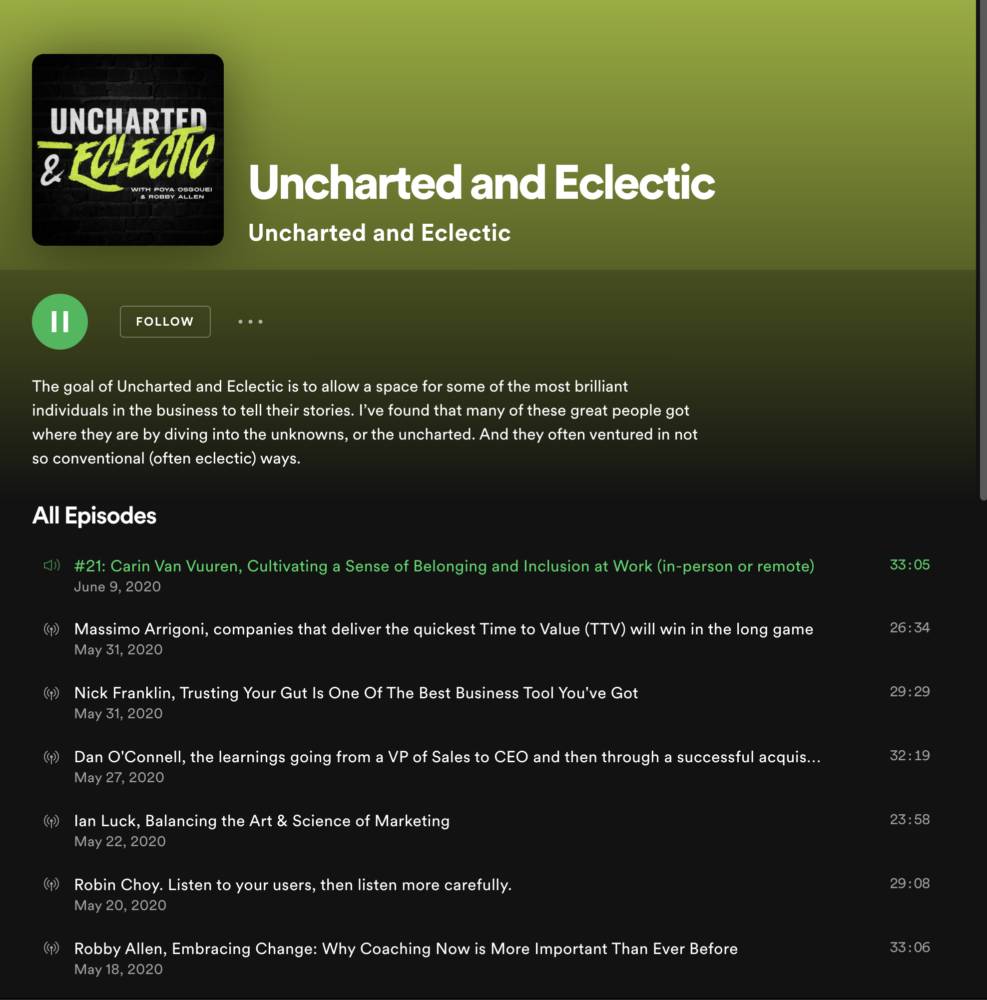
Some leadership interviews feel like a polished LinkedIn carousel wearing a blazer. Then there are conversations like “Uncharted & Electic with Carin Van Vuuren, CMO of Greenhouse”a discussion that wanders into the big, messy, very human questions behind hiring, belonging, inclusion, identity, and what it means to build a workplace where people do not have to shrink themselves to fit inside the org chart.
Carin Van Vuuren, Chief Marketing Officer at Greenhouse, brings more than a marketing résumé to the table. Her story connects business growth, brand leadership, structured hiring, and a deeply personal understanding of exclusion shaped by growing up in South Africa during apartheid. That background gives her view of inclusion a useful sharpness. It is not corporate confetti. It is not a rainbow logo slapped on a careers page once a year. It is a daily operating system.
Greenhouse, the hiring platform known for structured hiring and candidate experience, sits at the center of this conversation because hiring is where company culture stops making speeches and starts making decisions. The job interview is often a candidate’s first real glimpse into how an organization behaves when it has power. And as every job seeker knows, some hiring processes are less “welcome aboard” and more “please retype your résumé into these 43 boxes while we ghost you politely.”
This article explores the ideas behind the SaaStr episode featuring Carin Van Vuuren, the role of Greenhouse in modern recruiting, and the broader lesson for leaders: belonging is not a vibe. It is a practice.
Who Is Carin Van Vuuren?
Carin Van Vuuren is the Chief Marketing Officer at Greenhouse, where she focuses on business growth, go-to-market strategy, brand management, and corporate communications. Before joining Greenhouse, she served as a Partner at Capgemini Consulting and as CMO of Fahrenheit 212, an innovation consultancy. She also advises startup tech founders, which means she has likely seen every possible version of the phrase “we’re disrupting the space” and survived.
What makes her leadership perspective especially compelling is the combination of strategic marketing discipline and lived experience. Van Vuuren grew up in South Africa, and her reflections on apartheid inform the way she talks about belonging, barriers, bias, and inclusion. She does not treat diversity as a department. She treats it as a responsibility that begins with self-examination.
That point matters. In many companies, inclusion is framed as a program someone else runs. HR owns it. The DEI team owns it. The employee resource group owns it. The person who scheduled the lunch-and-learn owns it. Van Vuuren’s message is more demanding: inclusion begins with each person asking, “What am I doing that helps others become their best selves, and what am I doing that may be getting in the way?”
What “Uncharted & Electic” Really Means
The title “Uncharted & Electic” feels almost fitting because the conversation itself does not sit neatly in one category. It is part leadership interview, part workplace culture reflection, part hiring manifesto, and part reminder that humans are not spreadsheet rows with shoes.
“Uncharted” captures the reality many leaders face today. Work has changed. Hiring has changed. AI has entered the room, taken a chair, and started offering to summarize everyone’s feelings. Remote and hybrid work have altered how people connect. Candidates are more vocal about transparency, communication, and fairness. Employers are trying to move faster without making decisions that feel cold, biased, or legally questionable.
“Electic,” whether read as a stylized version of “eclectic” or simply as the title’s unique spelling, fits the range of themes in Van Vuuren’s story. She talks about inclusion, remote work, human connection, change management, team goals, and even beekeeping. Yes, beekeeping. Because apparently leadership metaphors are much better when they come with honey and a tiny risk of being stung.
Greenhouse and the Mission to Make Hiring Work
Greenhouse is a hiring software company focused on helping organizations build more structured, consistent, and equitable recruiting processes. Its platform supports applicant tracking, interview planning, scorecards, onboarding, reporting, candidate experience, and increasingly, responsible AI capabilities.
The company’s core argument is simple: better hiring does not happen by accident. A strong hiring process requires clear role requirements, defined evaluation criteria, prepared interviewers, consistent scorecards, and thoughtful communication. Without structure, hiring can become a chaotic talent talent show where the loudest résumé, warmest referral, or most familiar background wins.
Structured hiring is not about turning people into robots. It is about giving humans better guardrails so they do not make major decisions based on “good vibes,” shared hobbies, or whether the candidate also loves the same obscure coffee grinder. A structured process helps teams define what success looks like before interviews begin, ask role-relevant questions, evaluate candidates consistently, and reduce the risk of unconscious bias.
Belonging Starts Before Someone Is Hired
One of the strongest ideas connected to Van Vuuren’s public comments is that the candidate experience is not separate from culture. It is culture in preview mode. If a company communicates clearly, respects time, and treats candidates like adults, it sends one message. If it posts vague job descriptions, stretches interviews across eight rounds, vanishes for weeks, and returns with a lowball offer, it sends another messagemostly, “We have a ping-pong table, but emotionally, good luck.”
Greenhouse’s candidate experience research has emphasized that candidates pay attention to how companies treat them during hiring. That experience influences whether they accept offers, recommend the company, or quietly warn their group chat to run.
Belonging begins before day one. It begins with the job description. It appears in the application process. It shows up in whether interviewers are prepared. It is felt when a recruiter communicates honestly about timelines. It is reinforced when candidates receive fair questions, realistic expectations, and respectful feedback where possible.
Inclusion Is Not a Poster; It Is a Practice
In the SaaStr conversation, Van Vuuren emphasizes that inclusion requires looking inward. That is a useful correction to the way many organizations treat inclusion as a branding exercise. A company can have excellent values written on a wall and still create meetings where only three people speak, promotions where only familiar profiles advance, and hiring panels where “culture fit” quietly means “reminds me of us.”
Real inclusion asks harder questions. Who gets heard? Who gets interrupted? Who gets the benefit of the doubt? Who has to prove competence repeatedly? Who is described as “passionate” and who is described as “difficult” for the same behavior? Who gets invited into informal networks where decisions actually happen?
These are uncomfortable questions, which is exactly why they are useful. Inclusion without discomfort is usually decoration.
The Remote Work Lesson
Van Vuuren’s reflections on inclusion during work-from-home periods are especially relevant. Remote work made many teams more flexible, but it also made isolation easier. A remote employee can attend every meeting, hit every deadline, and still feel like a floating square in a digital aquarium.
Inclusive remote culture requires deliberate connection. Leaders must ask people how they are, where they are, and what is on their mind. They must create space for informal interaction, not just transactional updates. In a physical office, casual connection happens near the coffee machine, in hallways, or during the sacred corporate ritual of pretending not to want the last donut. Remotely, those moments need design.
That does not mean forcing everyone into mandatory virtual fun, which often becomes less “team bonding” and more “hostage situation with trivia.” It means creating humane rhythms: check-ins, informal study halls, small group conversations, peer support, and meeting norms where people are invited to participate without being put on the spot like contestants on a game show.
Why Structured Hiring Matters More Than Ever
Hiring today is under pressure from every direction. Candidates use AI tools to tailor applications. Employers use automation to manage volume. Recruiters face larger applicant pools, tighter budgets, and higher expectations. Meanwhile, candidates are tired of black-box processes that make applying for jobs feel like sending their résumé into a haunted printer.
This is where structured hiring becomes more than an HR best practice. It becomes a trust mechanism.
A structured hiring process generally includes a kickoff meeting to define the role, a scorecard to identify success criteria, interview kits to standardize questions, clear expectations for interviewer feedback, and a final decision process that compares evidence instead of opinions shouted confidently in a conference room.
When done well, structured hiring helps reduce bias because every candidate is evaluated against the same job-related criteria. It also helps hiring teams move faster because they are not reinventing the process for every role. Most importantly, it creates a more defensible and respectful experience for candidates.
Marketing, Trust, and the CMO’s Role
As CMO, Van Vuuren’s role is not only to market software. It is to help define and communicate what Greenhouse stands for in a crowded HR technology market. That requires a careful balance. Greenhouse sells to businesses, but its product touches job seekers, interviewers, recruiters, hiring managers, legal teams, and executives. In other words, its brand promise must survive contact with actual humans.
Modern B2B marketing is no longer just lead generation with nicer fonts. For a company like Greenhouse, marketing must explain a point of view: hiring should be structured, fair, candidate-aware, and ready for the future without abandoning human judgment. That is a more sophisticated message than “our dashboard has buttons.”
Van Vuuren’s background in consulting, innovation, brand strategy, and growth marketing gives her a useful toolkit. But her deeper advantage may be her ability to connect business outcomes with human stakes. Hiring is not just workflow optimization. It affects careers, families, confidence, company performance, and who gets access to opportunity.
AI in Hiring: Helpful Tool or Bias Amplifier?
Greenhouse has been expanding its AI-related capabilities, including responsible AI tools and the 2026 acquisition of Ezra AI Labs, a voice AI interviewer designed to support structured, on-demand conversations. This reflects a major shift in the hiring technology market: companies want speed, but they cannot afford to turn hiring into a faceless automation maze.
The promise of AI in hiring is real. AI can help recruiters manage high-volume applications, identify patterns, summarize information, reduce administrative work, and create more responsive candidate experiences. But the risk is equally real. Poorly governed AI can scale bias, obscure decision-making, and make candidates feel judged by systems they cannot understand.
That is why Greenhouse’s emphasis on responsible AI and human judgment is important. AI should support decisions, not secretly replace accountability. The future of hiring should not be a robot bouncer deciding who gets into the career club while everyone else refreshes their inbox in existential despair.
The Beekeeper Lesson: Change Needs the Hive
One memorable detail from Van Vuuren’s conversation is that she is a beekeeper. Beyond being a fun fact that instantly makes most executive bios more interesting, it gives her a vivid metaphor for organizational change.
In a hive, change does not happen well if the system ignores the collective. The health of the hive depends on signals, cooperation, roles, adaptation, and shared movement. A leader cannot simply announce transformation from a stage and expect everyone to buzz in perfect alignment by Monday morning.
Organizations are similar. Change requires participation. People need context. They need the chance to ask questions, raise concerns, and understand why the change matters. Move too slowly and nothing happens. Move too quickly and people may comply on paper while emotionally staying behind at the old address.
Van Vuuren’s lesson is practical: set goals over time, bring people along, and remember that belonging is built through participation, not proclamation.
What Leaders Can Learn from Carin Van Vuuren
1. Start With Self-Awareness
Inclusion begins with leaders examining their own habits. Who do they mentor? Who do they trust quickly? Who do they challenge more harshly? Who gets access to information early? These questions are not always flattering, but they are necessary.
2. Make Connection Deliberate
Whether teams are remote, hybrid, or office-based, connection cannot be left to luck. Leaders need to create environments where people can speak honestly, laugh, disagree, and build trust. A quiet Zoom room is not always a productive room. Sometimes it is just a room where everyone is silently wondering whether they should unmute.
3. Treat Hiring as Culture
The hiring process is not merely a funnel. It is a public demonstration of company values. Every job post, interview, delay, rejection, and offer tells candidates what the organization truly respects.
4. Use Structure to Protect Fairness
Structure does not remove humanity from hiring. It protects humanity from inconsistency. Scorecards, interview plans, and defined criteria help ensure candidates are evaluated for the work they will actually do.
5. Let AI Assist, Not Decide Alone
AI can improve speed and signal, but it must be transparent, explainable, and governed. In high-stakes decisions like hiring, humans must remain accountable.
Why This Conversation Still Matters
The workplace has entered a strange new chapter. Candidates are more empowered in some ways and more exhausted in others. Employers have more tools but also more complexity. AI can help, but it can also make hiring feel less human if used carelessly. Inclusion is widely discussed, yet many employees still feel unseen, unheard, or filtered out by systems that were never designed with them in mind.
That is why “Uncharted & Electic with Carin Van Vuuren, CMO of Greenhouse” remains relevant. It connects the emotional and operational sides of work. It reminds leaders that belonging is not soft. It is structural. It lives in meeting norms, hiring processes, communication habits, leadership decisions, and technology choices.
The best companies will not be the ones that merely say they care about people. They will be the ones that design systems proving it.
Experience Notes: Applying the Lessons of “Uncharted & Electic” in Real Work
In practical workplace experience, the difference between a performative culture and a genuinely inclusive one often becomes visible in small moments. A candidate receives a thoughtful update instead of silence. A junior employee is invited to speak before the most senior voice dominates the meeting. A hiring manager pauses and asks, “Are we evaluating the candidate against the scorecard, or are we just reacting to style?” These moments may not look dramatic, but they are where culture gets built. Culture is rarely one giant heroic speech. It is more often a thousand tiny decisions wearing sensible shoes.
One useful way to apply Van Vuuren’s message is to audit the candidate journey as if you were the applicant. How long does it take to apply? Is the job description clear, or does it read like it was assembled by a committee trapped in a thesaurus factory? Are salary expectations transparent? Do candidates know what will happen next? Are interviewers prepared? Are rejections handled with basic respect? When teams walk through this process honestly, they often discover friction they had stopped noticing because the system worked well enough for insiders.
Another experience-based lesson is that structured hiring improves conversations, not just compliance. Some leaders fear that structured interviews will feel stiff. In reality, good structure frees interviewers to listen better. When the team knows which competencies matter, interviewers can ask sharper follow-up questions and compare evidence more fairly. Candidates also benefit because they are not forced to guess what each interviewer secretly values. The process becomes less like a mystery dinner theater and more like a professional evaluation.
Belonging also requires leaders to notice who is missing from informal influence. In many organizations, opportunity travels through invisible channels: quick messages, side conversations, after-meeting chats, and “I thought of you for this project” moments. Remote and hybrid work can make those channels even more uneven. Leaders who care about inclusion must distribute access intentionally. That means rotating opportunities, documenting decisions, inviting quieter voices, and checking whether the same people are always receiving stretch assignments.
The beekeeping metaphor is surprisingly useful here. A healthy hive depends on communication, shared purpose, and collective movement. If leaders introduce change without listening, people may resistnot because they hate progress, but because they were treated like passengers instead of participants. The better approach is to explain the why, define the path, invite input, and create feedback loops. Change becomes less frightening when people can see where they fit inside it.
For marketing leaders, Van Vuuren’s example also shows that brand is not separate from operations. A company cannot market fairness while running a confusing hiring process. It cannot advertise belonging while ignoring employee voice. The strongest brand stories are the ones employees, candidates, and customers can recognize from experience. That is the real test. Not whether the tagline sounds good, but whether the company behaves like the tagline when nobody is making a campaign deck.
Ultimately, the experience behind this topic is simple: people remember how systems make them feel. A fair hiring process creates confidence. Clear communication creates trust. Inclusion creates energy. Poor process creates cynicism, and cynicism is very expensive, even when it does not appear as a line item in the budget. The lesson from Carin Van Vuuren and Greenhouse is that better hiring and better belonging are not separate ambitions. They are two sides of the same leadership challenge: designing work so people can contribute fully, fairly, and without needing to decode a secret rulebook first.
Conclusion
“Uncharted & Electic with Carin Van Vuuren, CMO of Greenhouse” is more than a leadership interview. It is a reminder that the future of work will be shaped by how seriously companies take belonging, fairness, hiring structure, and human connection. Van Vuuren’s perspective stands out because it blends personal history, marketing leadership, and practical workplace wisdom. She understands that inclusion is not achieved by slogans. It is built through systems, conversations, and choices repeated over time.
Greenhouse’s role in this story is equally important. As hiring becomes more complex and AI-driven, companies need tools and principles that keep people at the center. Structured hiring, responsible AI, clear communication, and candidate respect are not trendy extras. They are the foundation of trust.
The uncharted part of work is not going away. The companies that thrive will be the ones willing to navigate it with humility, structure, humor, and enough courage to ask whether their systems truly help people belong.
Note: This article is an original, source-informed synthesis based on publicly available information about Carin Van Vuuren, Greenhouse, structured hiring, candidate experience, inclusion, and responsible AI in modern recruiting.












