
Note: Body-only HTML in standard American English. Source links intentionally omitted.
Every once in a while, the internet produces a post so small, so ordinary, and so painfully accurate that people collectively point at their screens and yell, “Well, that’s my entire household in one sentence.” This was one of those posts.
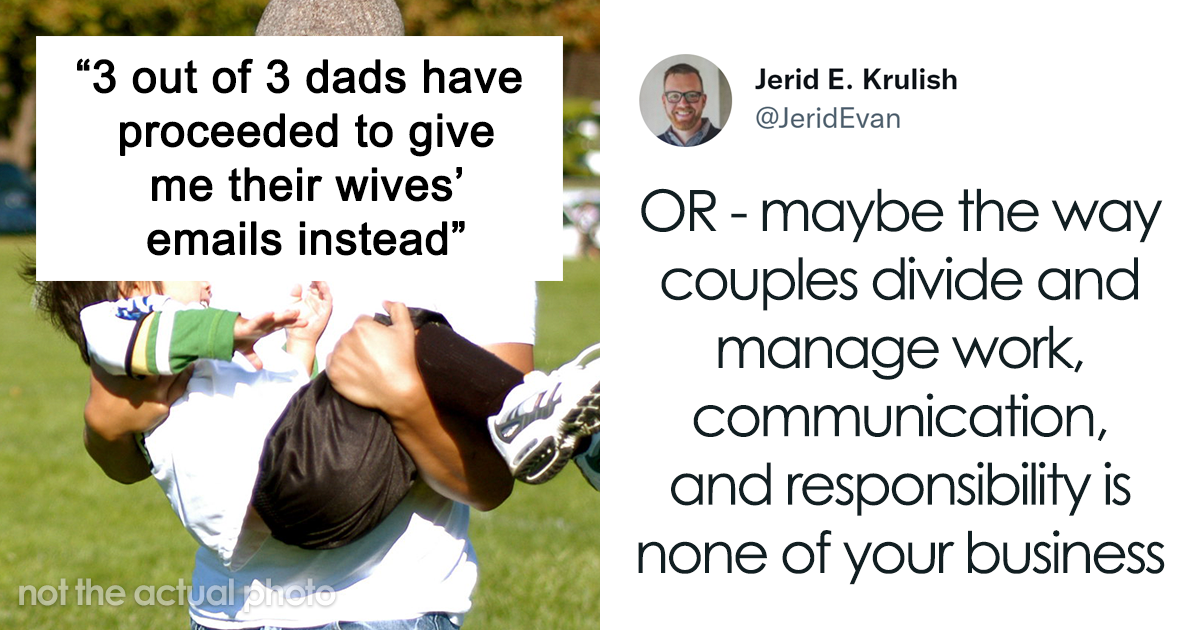
The tweet in question came from Sonya Bonczek, who joked that she had been asking dads from her 3-year-old’s class for their email addresses so she could send birthday invitations. Three out of three, she wrote, gave her their wives’ email addresses instead. What looked like a funny social observation landed like a parenting truth bomb, because it captured something millions of families understand instantly: moms are still often treated as the default parent, the family air-traffic controller, and the unpaid chief executive officer of Remembering Stuff.
That is why the post traveled far beyond birthday RSVPs. It was not really about email addresses. It was about the hidden architecture of family life. Who remembers the school forms? Who knows the shoe size? Who gets the dentist reminder, the daycare text, the teacher email, the frantic “tomorrow is pajama day” message at 8:47 p.m.? In many households, even loving and generally helpful ones, that person is still Mom.
And the uncomfortable part is this: the “default parent” role is not always assigned by one dramatic conversation or one cartoonishly lazy partner. It is often built through tiny everyday handoffs. A dad says, “Text my wife.” A school calls Mom first. A pediatric office directs instructions toward the mother even when both parents are standing there. Before long, one parent becomes the household’s memory bank, emotional support desk, logistics coordinator, and backup plan for literally everything from cupcakes to cough syrup.
That is what made the tweet hit so hard. It was funny in the way stepping on a Lego is funny: technically hilarious, emotionally loaded, and somehow still leaving a mark.
The Tweet Was Tiny, but the Pattern Was Huge
Bonczek’s story resonated because it felt absurdly familiar. Asking a father for his own contact information should not feel like a sociology experiment, yet there it was. The dads in the story were not necessarily absent, uncaring, or uninvolved. In fact, that is part of what makes the situation so revealing. They were present enough to be seen in passing at school-related moments, but when asked to participate in the social administration of childhood, they redirected the responsibility to their wives.
That distinction matters. The modern parenting imbalance is not always about whether fathers love their children or even whether they spend time with them. Often, it is about who owns the invisible planning. One parent may play, help, and show up, while the other parent quietly manages the entire operating system underneath it all.
Think of it this way: many dads are participating in parenting, but many moms are still managing parenting. Those are not the same job. One is visible. The other is the family version of running IT, customer service, inventory control, scheduling, event planning, and emotional triage while someone occasionally asks where the backup batteries are.
What “Default Parent” Really Means
The phrase sounds casual, but the role is anything but. The default parent is usually the person everyone assumes is in charge of the children’s physical needs, emotional needs, appointments, school communication, forms, birthday gifts, medication refills, snack restocks, backup clothes, and emergency logistics. If there is a forgotten lunch, a fever at noon, a class party tomorrow, or a child melting down because the blue cup is somehow an insult, the default parent is the one expected to absorb the impact.
That role includes practical labor, but it also includes mental and emotional labor. It is not just driving a child to soccer. It is remembering registration deadlines, checking whether the cleats still fit, packing the water bottle, confirming the carpool, noticing the weather, and realizing at 10 p.m. that somebody needs orange slices. It is not just helping with homework. It is knowing the login, tracking the project rubric, remembering library day, and sensing the difference between “I hate math” and “I am actually panicking.”
In other words, default parenting is rarely one big task. It is 500 small ones, stacked like pancakes nobody asked you to make.
The Data Says This Is Not Just Internet Drama
If the tweet felt true, the research explains why. Pew Research Center found that in opposite-sex marriages and partnerships, mothers are far more likely than fathers to say they do more of managing children’s schedules and activities. Large shares of mothers also say they handle more emotional support, more help with schoolwork, and more of children’s basic daily needs. That does not describe a rare household glitch. It describes a broad social pattern.
Time-use data tells a similar story. Fathers today are more involved than fathers of past generations, and that is real progress worth acknowledging. But progress is not the same as parity. U.S. Bureau of Labor Statistics data still shows mothers spending more time than fathers caring for and helping household children. The gap is especially noticeable among parents with younger children, where the daily care load remains heavier for mothers.
Then there is the mental load. Parents magazine recently highlighted research showing that mothers and primary parents carry roughly 71% of family management tasks. That phrase, family management, sounds almost suspiciously tidy for work that often feels like being pecked to death by ducks wearing school spirit shirts. But it gets at something important: the burden is not just doing tasks, it is owning them from start to finish.
And this has consequences. The U.S. Surgeon General’s advisory on parental mental health and well-being found that parents report higher stress than other adults, with many saying their stress is completely overwhelming on most days. When one parent is disproportionately carrying the planning, anticipating, comforting, deciding, and remembering, it is not hard to see why. The default parent is not just busy. The default parent is on call.
Why Moms Still End Up Here
1. Competence gets mistaken for preference
One of the trickiest parts of this whole issue is that women often become the default parent because they have already become good at it. They know the teacher’s name, the pediatrician’s extension, the favorite bedtime book, and which stuffed animal is somehow constitutionally required for all car rides over seven minutes. Once a mother becomes the person who reliably knows the details, everyone around her starts acting as if she naturally owns them.
That is how skill turns into expectation. Soon, “Mom is better at it” becomes code for “Mom will handle it,” which becomes code for “Why would I even keep track of this myself?”
2. Institutions often reinforce the bias
The family dynamic does not exist in a vacuum. Schools, camps, medical offices, and other adults often reinforce the idea that Mom is the point person. Even families that want a more equal arrangement can find themselves nudged back into old patterns by forms, habits, and assumptions. When outside systems treat the mother as the automatic contact, they effectively deputize her as the default parent whether she volunteered or not.
3. Gender scripts are stubborn little creatures
American parenting culture has changed a lot, but some of its oldest scripts are still hanging around like expired yogurt in the back of the fridge. Moms are often still expected to be nurturing, detail-oriented, emotionally available, and naturally better at child-related organization. Dads, meanwhile, are often praised for being involved without necessarily being expected to manage the same level of invisible labor.
That double standard is weirdly efficient. It asks mothers to do more and asks fathers to be applauded for doing some.
The Cost of Being the Automatic Parent
There is a reason the default parent conversation sparks such an emotional reaction. This is not merely about fairness on paper. It affects health, relationships, time, identity, and even the quality of family life.
When one parent carries the bulk of the mental load, exhaustion can become the house soundtrack. Resentment builds fast because the work is constant and often invisible. A default parent may look “organized” from the outside while internally feeling like a browser with 47 tabs open, three frozen windows, and mysterious music playing from somewhere.
It also changes relationships. Partners may start speaking less like teammates and more like project managers and assistants. One person becomes the assigner of tasks, the other becomes the person who waits to be assigned. That setup is bad for intimacy because adults usually do not dream of being romanced by someone they have to remind to buy the class gift for Teacher Appreciation Week.
The effect on selfhood is real, too. When a parent is always the default responder, they can stop feeling like a full person with interests, rest, and private mental space. They become the household’s emergency lane. Useful, yes. Peaceful, absolutely not.
Why This Hurts Fathers Too
This is not only a mothers’ issue, even if mothers disproportionately bear the burden. Fathers lose, too, when the culture assumes they are secondary. Many dads want deeper involvement, but if institutions and social habits keep routing important information, emotional expectations, and organizational authority toward mothers, fathers can get boxed into a supporting role they did not actually choose.
That is one reason the viral tweet annoyed some men as much as it validated some women. Plenty of fathers do not want to be seen as the fun backup adult who occasionally grills hot dogs and bravely survives bedtime once a quarter. They want to be treated as full parents. The problem is that our culture still too often divides parenting into visible dad moments and invisible mom systems.
So yes, the tweet called out dads who passed along their wives’ emails. But the larger takeaway is not “fathers are hopeless.” It is that society still trains families to hand the clipboard to Mom.
What Real Change Actually Looks Like
Fixing this is not about one grand speech or one heroic weekend of folding laundry. It is about ownership.
Shared parenting works best when both adults own entire categories of responsibility, not when one person becomes the household dispatcher. If Dad handles school communication, he should actually handle it: the emails, the forms, the reminders, the follow-up, the picture day order, the inevitable “bring three empty paper towel rolls” request. If Mom handles medical care, that means the other partner owns a different full lane. Real balance is not “just tell me what to do.” Real balance is “I already know what needs to be done, and I’m on it.”
Families can also make the invisible visible. Shared calendars, written task ownership, rotating point-person roles, and regular check-ins can help. It sounds unromantic because it is unromantic. So is resentment. Pick your hard.
And institutions have work to do as well. Schools, pediatricians, camps, and extracurricular programs should stop assuming the mother is the first and best contact. Ask families who the primary contact is. Use both parents’ information. Address both adults. Small administrative choices can either challenge the default-parent model or pour concrete around it.
Experiences Parents Recognize Instantly
To understand why Bonczek’s tweet spread so widely, you only have to look at the kinds of experiences parents keep repeating. A mom is at work when the school nurse calls her first, even though the child’s father is listed as the primary daytime contact and works five minutes away. A mother gets the class party signup, the daycare supply reminder, and the message about library books, while the father hears about it later over dinner like he is getting the recap episode. A pediatrician explains medication instructions while facing Mom, even though Dad asked the question. A grandparent calls the mother to ask what size shoes the child wears, what the child wants for a birthday, and whether soccer is still on this weekend, as if mothers are born with a built-in family database and a software patch for weather alerts.
Then there are the quieter moments that never trend but probably should. The parent who lies in bed mentally scanning the next day like an airport departure board: lunch packed, field trip form signed, inhaler in backpack, dance shoes found, cupcakes ordered, camp payment sent, pediatric follow-up scheduled, teacher email answered. The parent who cannot fully relax at a birthday party because she is mentally calculating nap timing, sugar fallout, and whether anyone remembered the extra clothes in the car. The parent who knows that “We’re out of milk” is never just about milk; it is about breakfast, lunchboxes, coffee, and whether there is time to stop at the store before pickup.
These experiences are why the default-parent conversation has so much emotional heat. People are not reacting to a single tweet. They are reacting to years of being the one who remembers the permission slip while everybody else remembers to be surprised there was a permission slip. They are reacting to the way competence becomes a trap. They are reacting to being told, explicitly or implicitly, that this labor is small because it is domestic, natural because it is maternal, and not really labor because nobody sends a paycheck for making sure the cleats fit.
And yet many parents also recognize the awkward gray areas. Some couples genuinely divide responsibilities in ways outsiders do not see. Some dads are excellent planners. Some moms prefer certain categories. Some families rotate roles beautifully. The point is not that every household is broken. The point is that the culture still defaults in one direction, and that default is powerful enough that one funny tweet about birthday invitations felt less like a joke and more like a documentary short.
That is why stories like this matter. They give language to something slippery. They help parents say, “No, I’m not overreacting. I’m carrying the mental map.” They also give families a chance to redraw that map with more intention, more fairness, and a lot fewer moments where Mom becomes the human forwarding address for everyone else’s responsibilities.
Conclusion
The viral tweet about dads handing over their wives’ email addresses worked because it exposed a familiar truth with almost cartoonish efficiency. In one tiny exchange, it showed how mothers still get cast as the administrative center of family life, even when both parents are present, loving, and theoretically sharing the load.
That does not mean nothing has changed. Fathers are more involved than they used to be, and many families are actively building more equal partnerships. But the deeper expectation that moms will notice, remember, organize, and emotionally absorb the chaos is still very much alive. That is why the tweet felt funny, irritating, and validating all at once.
The real lesson is not that mothers are somehow magically better at managing family life. It is that they have been trained, expected, and often cornered into doing it. Once we stop confusing default with destiny, parenting starts to look less like one exhausted person running family operations and more like what it should have been all along: shared responsibility, shared authority, and shared ownership of the stuff nobody sees until it does not get done.













