
Travel is supposed to be the glamorous part of life: airport coffee, hotel beds with too many pillows, tiny shampoo bottles that make you feel like a giant, and the hopeful belief that this time your suitcase will not return looking like it wrestled a bear. But for many plus-size travelers, the dream of “just relax and enjoy the trip” often comes with an extra layer of planning, anxiety, and awkward design problems that thinner travelers may never notice.
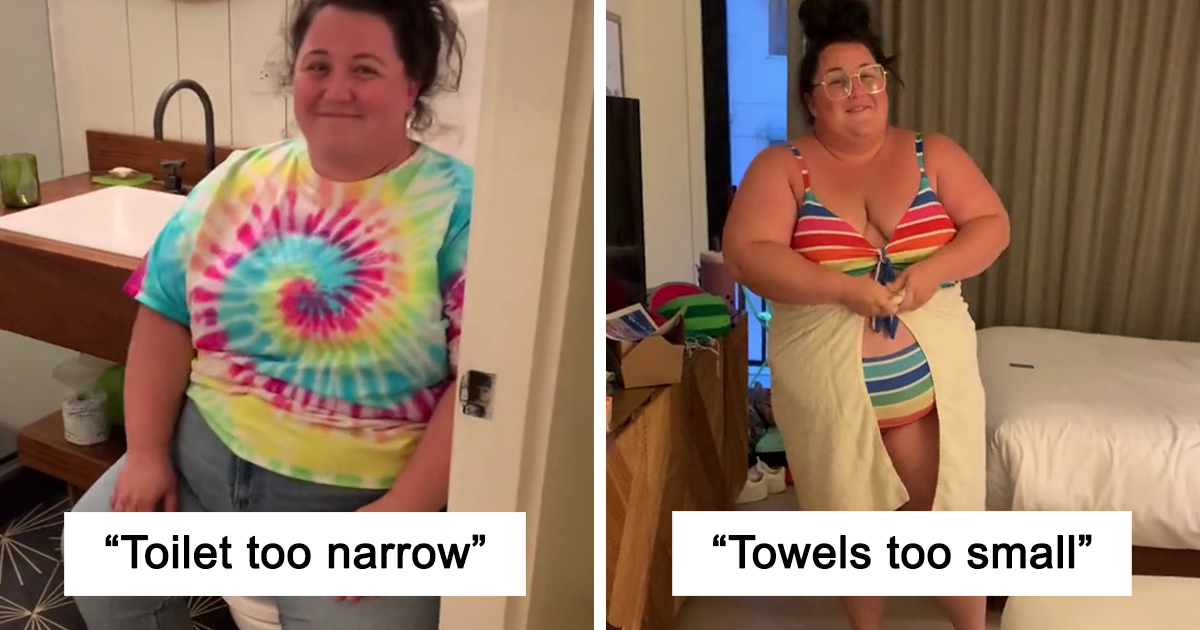
That is exactly why Mary Fran Donnelly, a teacher and body positivity advocate, struck such a nerve online with her viral “Traveling as a Fat Person” videos. During a family vacation, she used humor to point out the small-but-not-small problems in a hotel room: towels that barely wrapped, a bathroom layout that seemed designed by someone who had never met hips, balcony chairs that looked suspiciously decorative, and spaces that treated larger bodies as an afterthought.
The videos were funny, but the message landed because the issue is real. Traveling while fat is not simply about needing a bigger seat. It can mean wondering whether the airplane seat belt will fit, whether the hotel chair will hold, whether the shower will be comfortable, whether the restaurant booth will trap you like a polite upholstered bear hug, and whether strangers will make your body their business before you even reach baggage claim.
Why Mary Fran Donnelly’s Travel Videos Went Viral
Mary Fran’s series worked because it did something clever: it made an uncomfortable truth easy to see. Instead of delivering a lecture, she gave viewers a tour. The towel was too small. The toilet was wedged too close to the wall. The pool towel offered the thrilling wardrobe choice of covering the front or the back, but apparently not both. The balcony chair looked less like a place to lounge and more like a workplace trust exercise.
Her humor mattered. She laughed, her sister laughed, and millions of viewers laughed too. But underneath the jokes was a practical question: why are so many travel spaces designed as if every guest has the same body?
That question is bigger than one hotel room. It applies to airlines, rental cars, tour buses, restaurant seating, theme park rides, cruise excursions, spas, bathrooms, and even travel photography. When a person has to research every chair, seat, belt, towel, bathroom, and walking distance before booking a simple getaway, vacation starts feeling less like leisure and more like unpaid project management.
The Hidden Labor of Plus-Size Travel
One of the biggest problems with traveling as a fat person is the mental checklist. A thin traveler may book a hotel based on price, location, breakfast, or whether the pool looks like it belongs in a movie where someone dramatically removes sunglasses. A fat traveler often has to go further.
They may check room photos to see if chairs have arms. They may scan bathroom images to judge whether the toilet has enough space beside it. They may look for shower doors instead of curtains, bed frames that do not appear flimsy, and restaurants with tables instead of fixed booths. They may call the airline to ask about extra-seat policies, seat-belt extenders, armrest rules, boarding options, and whether buying a second seat will actually result in keeping that second seat.
This is not vanity. It is logistics. And it is exhausting.
The travel industry often sells itself with words like “escape,” “comfort,” and “hospitality.” But for plus-size travelers, comfort is not always included in the base fare. Sometimes it costs extra. Sometimes it depends on whether an employee knows the policy. Sometimes it depends on whether another passenger decides to be kind or to behave like the unpaid sheriff of Row 23.
Airplane Seats: The Main Character in Every Plus-Size Travel Nightmare
Air travel is usually the most stressful part of traveling as a fat person. Economy seats are narrow, armrests can become battleground borders, and seat belts vary by aircraft. Even when a traveler fits safely, the social anxiety can be intense. Will the person next to them sigh dramatically? Will someone ask to move? Will the flight attendant handle a seat-belt extender discreetly? Will boarding become a public measurement event? Nobody wants their vacation to begin with a live audience and a policy debate.
Airline policies also vary. Some carriers allow passengers to purchase an extra seat for comfort. Some may rebook a traveler if there is not enough space available. Some policies rely on phrases like “safely and comfortably,” which sound simple until a nervous passenger has to interpret them at a crowded gate while holding a boarding pass and a cinnamon pretzel.
Seat-Belt Extenders Should Not Be Shame Machines
Seat-belt extenders are safety tools. That is it. They are not moral judgments, personality tests, or scarlet letters with buckles. Many travelers need them for different reasons, including body size, pregnancy, medical conditions, or aircraft belt length.
The respectful way to handle this is simple: airlines should make extenders available discreetly and train crews to respond without fuss. A traveler should be able to ask quietly while boarding or after sitting down. Flight attendants who treat the request as routine can transform a stressful moment into a non-event. That should be the goal.
The Extra-Seat Problem Is Not as Simple as “Just Buy Two”
People often say plus-size travelers should “just buy another seat,” as if money grows in the overhead bin next to someone’s suspiciously oversized carry-on. In reality, buying an extra seat can be expensive, confusing, and inconsistent. Some booking systems are not user-friendly for extra-seat reservations. Aircraft changes can complicate seat assignments. Full flights can create new problems. Refund rules may depend on the airline, the fare, and whether the flight leaves with open seats.
For many travelers, buying an extra seat may be the best comfort option when it is affordable and available. But it should not be treated as a magic solution that erases the industry’s responsibility to design clearer, more humane systems.
Hotels Have a Size-Inclusion Problem Too
Mary Fran’s videos focused heavily on hotel spaces, and that is where the conversation becomes especially revealing. Hotels know how to market comfort. They can describe a mattress in twelve poetic ways. They can brag about rainfall showers, luxury linens, curated minibars, and lobby scents that smell like “wealthy lemon.” Yet many still overlook basic body diversity.
A hotel towel that does not wrap around a guest is not just a towel problem. It is a dignity problem. A chair with narrow arms is not just a chair. It is a message about who the room was designed to welcome. A bathroom where the toilet is squeezed between a wall and a vanity may be technically functional for some guests but uncomfortable or unusable for others.
Hotels do not need to turn every room into a palace. They do need to think realistically about the range of bodies that book rooms. Larger towels, sturdier armless chairs, clearer room photos, spacious bathroom layouts, and accurate accessibility information would make travel better for many guests, not only fat travelers.
Restaurant Seating, Tour Buses, and the Awkward Chair Olympics
For plus-size travelers, the seating anxiety does not stop after landing. Restaurants can be tricky, especially when seating is mostly booths or small metal chairs with arms. Outdoor patios can be a gamble. Hotel breakfast areas may feature chairs that look fashionable but feel like punishment. Tour buses, ferries, shuttles, and rideshares can also create discomfort when seats are narrow or seat belts are short.
This is where inclusive design becomes practical. Armless chairs, mixed seating options, sturdy furniture, adjustable seat belts, and clear weight-capacity information can prevent embarrassment. Most travelers do not want special treatment. They want reliable information and a reasonable chance to sit down without doing mental math about physics and public humiliation.
The Social Problem: Other People’s Opinions Travel for Free
The physical barriers are frustrating, but the social barriers can be worse. Fat travelers often have to deal with stares, comments, online cruelty, unsolicited health opinions, and the assumption that their body is a public discussion topic. Somehow, a stranger who brought tuna salad onto a plane may feel qualified to lecture another passenger about consideration. Humanity is complicated.
The truth is simple: everyone deserves to move through the world with dignity. A person’s body size does not cancel their right to visit family, attend work events, relax on a beach, tour a museum, or enjoy a hotel pool without becoming entertainment for strangers.
Travel already brings enough chaos. Nobody needs extra commentary from people who think empathy is an optional carry-on.
What Plus-Size Travelers Can Do Before a Trip
While the travel industry should improve, travelers still need practical strategies right now. A little preparation can reduce stress and make the journey smoother.
Research the Airline Before Booking
Check the airline’s current extra-seat policy, seat selection options, refund rules, and boarding procedures. If comfort is a concern, compare aircraft seat widths and consider premium economy, exit-row alternatives where allowed, or an extra seat if the budget permits. Always verify rules directly with the airline because policies can change, and travel advice ages faster than airport sushi.
Ask for a Seat-Belt Extender Early
If you think you may need a seat-belt extender, ask a flight attendant when you board. A calm, simple request usually works best: “Hi, may I please have a seat-belt extender?” You do not owe a speech, apology, or medical history. It is a safety item, not a confession.
Look Closely at Hotel Photos
Before booking, examine photos for bathroom space, shower style, chair types, bed frames, and restaurant seating. Traveler review photos can be more useful than polished hotel images because they show reality, not the room’s dating profile.
Call Ahead With Specific Questions
Instead of asking, “Is your hotel plus-size friendly?” ask direct questions: Are there armless chairs in the room? Are bath sheets available? Is the shower a walk-in shower or a tub? How much space is beside the toilet? Are restaurant tables movable? Specific questions get better answers.
Pack for Comfort Without Shame
Some plus-size travelers bring their own towel, anti-chafing balm, compression socks, wide-calf boots, a portable fan, a seat cushion, or clothing layers for unpredictable airplane temperatures. This is not “being difficult.” This is being prepared. The Boy Scouts did not invent planning; fat travelers simply perfected it under pressure.
What the Travel Industry Should Change
The burden should not fall only on travelers. Airlines, hotels, restaurants, and tour operators can make size-inclusive travel easier with thoughtful, affordable changes.
Publish Clearer Policies
Airlines should explain extra-seat procedures in plain language, including how to book, what happens during aircraft changes, whether refunds are available, and how staff will handle full flights. Confusing policies create anxiety for travelers and inconsistent decisions for employees.
Train Staff With Dignity in Mind
A good policy can still become humiliating if staff enforce it carelessly. Employees should be trained to discuss seating, extenders, furniture, and accessibility needs privately and respectfully. The goal should be problem-solving, not public embarrassment.
Design for Real Bodies
Hotels can add larger towels, sturdier chairs, armless seating, more spacious bathroom layouts, and better room photos. Restaurants can offer a mix of booths and chairs. Tour operators can list seat dimensions and physical requirements clearly. These changes help fat travelers, disabled travelers, tall travelers, older travelers, pregnant travelers, and anyone who has ever looked at a tiny café chair and thought, “Absolutely not today.”
Stop Treating Inclusion as a Luxury Upgrade
Comfort should not be available only to people who can pay more. Of course, premium seats and suites will always exist, but basic access should not depend on buying your way out of poor design. A travel industry that welcomes more bodies welcomes more customers. That is not charity; it is business with functioning eyes.
Why This Conversation Matters
Some people dismiss plus-size travel concerns as complaints. But Mary Fran’s videos revealed something important: exclusion often hides in ordinary objects. A towel. A chair. A toilet placement. A seat belt. A booth. A narrow aisle. These things seem small until they decide whether a person can relax, participate, or feel welcome.
Body size should not determine who gets to enjoy the world. A person should not have to shrink themselves physically or emotionally to deserve a vacation. The point is not that every space can meet every need perfectly. The point is that travel companies can do much better when they start designing for the people who actually show up.
Additional Experiences: What Traveling as a Fat Person Can Really Feel Like
Traveling as a fat person often begins long before the suitcase comes out. It starts at the laptop, staring at booking pages and trying to predict comfort from tiny photos. A beach resort may look dreamy, but are the pool chairs sturdy? A boutique hotel may look adorable, but is the bathroom door wide enough to move through comfortably? A trendy restaurant may have five-star reviews, but are the seats all narrow wooden chairs with arms designed by someone who apparently hates thighs?
Then comes the airport. Many plus-size travelers arrive early not only because security lines are unpredictable, but because rushing can make everything worse. Sweating through a terminal while carrying bags, worrying about boarding order, and silently rehearsing how to ask for a seat-belt extender can turn a two-hour flight into a full-body stress event. The moment of sitting down can feel like a test: armrest down, belt check, neighbor reaction, tray table distance, breath held. Vacation has not even started, and the traveler has already completed an obstacle course.
On the plane, small design choices become big experiences. A tray table may not lay flat. The lavatory may feel impossible to use. The aisle may be so narrow that walking to the restroom means brushing against shoulders and apologizing to half the cabin. The passenger may avoid drinking water to reduce bathroom trips, even though that is uncomfortable and unhealthy. Nobody should have to choose between hydration and humiliation at 30,000 feet.
At the hotel, the emotional math continues. The bed may be comfortable, but the robe may not close. The towel may feel like a handkerchief with ambition. The shower may have fixed glass panels that make entry awkward. The desk chair may have arms that dig into hips. The balcony chair may creak, causing the traveler to stand instead of enjoying the view they paid for. These are not dramatic demands. They are ordinary moments where the space either says “welcome” or “we did not think about you.”
Excursions can bring another round of questions. Is there a weight limit for the zipline? Are the kayaks stable? Will the tour bus seat belt fit? Can the walking tour handle slower pacing? Are spa robes available in larger sizes? Will the massage table be sturdy? Some companies provide this information clearly, which is wonderful. Others bury it, avoid it, or make guests call and ask personal questions that could have been answered on a website.
The emotional toll is real because fat travelers are often expected to be grateful for whatever accommodation they receive, even when they paid the same price as everyone else. They may laugh things off, just as Mary Fran did, because humor can be armor. But humor should not distract from the underlying point: travel is better when people are considered from the beginning, not patched in after a problem becomes viral.
The good news is that many plus-size travelers continue to explore anyway. They share tips, review airlines honestly, post hotel photos, recommend inclusive destinations, and remind each other that joy is not reserved for one body type. That community knowledge is powerful. Still, the industry should not rely on travelers to do all the work. Real hospitality means anticipating needs, reducing shame, and making room literally and culturally for more people to experience the world.
Conclusion
Mary Fran Donnelly’s “Traveling as a Fat Person” series became popular because it mixed comedy with a truth many people recognized immediately. Plus-size travel challenges are not imaginary, and they are not limited to airplane seats. They show up in hotel towels, bathroom layouts, restaurant booths, balcony chairs, seat belts, tour buses, and the attitudes of strangers.
The solution is not to shame fat travelers or tell them to stay home. The solution is better design, clearer policies, respectful staff training, and a travel culture that understands bodies come in many sizes. Travel should expand people’s worlds, not remind them of every place they were forgotten in the blueprint.












