
Science myths are remarkably durable. They survive classroom corrections, television documentaries, internet fact-checks, and that one cousin who brings a laser pointer to Thanksgiving dinner. Once a scientific misconception becomes familiar, it can feel more convincing than the complicated truth.
That is partly because myths are neat. They fit into one sentence. Real science usually arrives carrying caveats, probabilities, footnotes, and a slightly exhausted researcher asking everyone to define their terms.
From the claim that humans use only 10% of their brains to the warning that swallowed gum remains in the stomach for seven years, many popular “facts” are not facts at all. Here are 10 ridiculously common science myths, why people continue believing them, and what the evidence actually shows.
1. Humans Use Only 10% of Their Brains
The myth
Ninety percent of the human brain is supposedly sitting around unused, waiting for the right inspirational seminar, experimental pill, or dramatic movie montage to activate it.
The scientific reality
Brain imaging and neurological research show activity throughout the brain. Different regions specialize in different functions, and their activity changes depending on whether a person is speaking, moving, remembering, sleeping, solving a problem, or staring blankly into an open refrigerator.
That does not mean every neuron fires simultaneously. Such nonstop activity would not represent superintelligence; it would represent a serious medical emergency. It means that healthy brain tissue has functions and is used at different times.
The brain also consumes a substantial share of the body’s energy despite accounting for only a small percentage of body mass. Evolution would be unusually wasteful if humans carried around a large, energy-hungry organ that was 90% decorative.
The 10% brain myth probably survived because it sounds motivational. We may have enormous potential for learning and improvement, but that is not the same as having warehouse-sized sections of unused brain tissue.
2. Humans Have Exactly Five Senses
The myth
Humans experience the world through sight, hearing, smell, taste, and touch. End of list. Aristotle said so, elementary school posters repeated it, and apparently nobody was allowed to add another column.
The scientific reality
The familiar five are important external senses, but they are not the whole sensory system. Humans can also detect balance, body position, movement, temperature, pain, and internal physical conditions.
Proprioception tells you where your limbs are without requiring you to look at them. The vestibular system helps your brain track balance and acceleration. Interoception provides information about internal conditions such as hunger, thirst, heartbeat, and the need to breathe.
Scientists do not always agree on one definitive number because the answer depends on how a “sense” is classified. Touch alone can be divided into pressure, vibration, temperature, pain, and other forms of detection.
Therefore, “five senses” is a useful introductory model, not a complete inventory. Your nervous system is running a considerably more sophisticated operation than a five-button control panel.
3. Lightning Never Strikes the Same Place Twice
The myth
Once lightning hits a tree, tower, roof, or unlucky lawn ornament, that location has supposedly received a permanent atmospheric exemption.
The scientific reality
Lightning can strike the same location repeatedly. Tall, isolated, conductive structures are particularly likely to be hit more than once because their height and position make them favorable parts of an electrical discharge path.
Skyscrapers, communication towers, and mountaintops may experience multiple strikes. During a single thunderstorm, lightning may even follow approximately the same channel several times in rapid succession.
The saying survives mainly because it works well as a metaphor for rare events. Unfortunately, the atmosphere does not recognize metaphors. A previously struck location remains dangerous during a storm.
When thunder is audible, move inside a substantial building or enclosed vehicle. Do not stand beneath the tree that was “already struck once.” Lightning has no loyalty program and does not stamp a location’s card after the first visit.
4. Cold Weather Directly Causes the Common Cold
The myth
Walk outside with wet hair, forget your coat, or sit near a drafty window, and a cold will supposedly materialize before dinner.
The scientific reality
The common cold is caused by respiratory viruses, not by low temperature itself. A person must encounter a virus to develop a viral infection.
However, the relationship between winter and respiratory illness is not entirely imaginary. People often spend more time indoors and close to others during cold weather, making transmission easier. Cool, dry air may also affect nasal defenses and help certain viruses remain stable or spread efficiently.
Feeling chilled is therefore not the same as becoming infected. Going outside without a hat does not manufacture rhinoviruses inside your nose.
Wearing warm clothing is still sensible because comfort and protection from extreme cold matter. Just do not confuse good winter clothing advice with germ theory. Grandma was right about the coat, but the microbiology section of her explanation needed revision.
5. Sugar Automatically Makes Children Hyperactive
The myth
Give a child a cupcake and, within minutes, the child will begin orbiting the living room at highway speed.
The scientific reality
Controlled studies have generally failed to show that sugar directly causes hyperactivity in most children. Even studies involving children described by their parents as “sugar sensitive” have not consistently found the expected behavioral effect.
Context provides a more convincing explanation. Children commonly consume sugary food at birthday parties, holidays, festivals, and other exciting events. They are surrounded by friends, games, decorations, noise, presents, and temporarily distracted adults. The cake may be present, but it is not acting alone.
Expectations can also influence perception. When adults believe children have consumed sugar, they may rate ordinary energetic behavior as unusually hyperactive.
This does not make unlimited sugar consumption harmless. Excess added sugar can contribute to tooth decay, poor diet quality, and excessive calorie intake. The narrower claim being debunked is that a sweet snack reliably transforms every child into a tiny stunt performer.
6. Swallowed Gum Stays in Your Stomach for Seven Years
The myth
Swallow one piece of gum at age 10, and it will supposedly remain inside you until you are old enough to drive.
The scientific reality
The human digestive system cannot fully break down gum base, but that does not mean gum attaches itself to the stomach wall and establishes a seven-year lease.
Like other indigestible materials, a small piece of gum normally moves through the gastrointestinal tract and is eventually eliminated. The body may not digest it, but it can transport it.
Regularly swallowing large quantities of gum is not recommended. In rare situations, a large mass of gumespecially when combined with other indigestible materialcan contribute to an intestinal blockage. Young children should understand that gum is meant to be chewed and discarded.
An accidentally swallowed piece, however, is generally not a countdown to a gastrointestinal anniversary. The seven-year number appears to be memorable folklore rather than a measurement obtained by a very patient digestive scientist.
7. Cracking Your Knuckles Causes Arthritis
The myth
Every knuckle pop supposedly removes another brick from the road leading to healthy hands.
The scientific reality
Research has not found a reliable association between habitual knuckle cracking and an increased risk of arthritis. The popping sound is related to rapid pressure changes and gas behavior inside the fluid surrounding a joint, not bones grinding themselves into powder.
Knuckle cracking is not completely incapable of causing trouble. Aggressive twisting or pulling can injure a joint, tendon, or surrounding tissue. Some studies have also explored possible links with hand swelling or grip strength, although the evidence is not the same as proving arthritis.
Painless, occasional popping is usually not a major concern. A joint that is painful, swollen, unstable, or difficult to move deserves medical attention regardless of whether it produces a sound.
So the habit may annoy everyone within a 20-foot radius, but annoyance is not a form of inflammatory joint disease.
8. Bats Are Blind
The myth
Bats supposedly fly through the night without functional vision, surviving entirely through echolocation and an impressive refusal to collide with patio furniture.
The scientific reality
Bats are not blind. Most bat species can see, and many have vision adapted to low-light conditions. Some species use vision to navigate, locate food, or recognize environmental features.
Echolocation gives many bats an additional sensory tool. They emit high-frequency sounds and analyze returning echoes to estimate an object’s distance, direction, size, texture, and movement. This system can be remarkably precise, allowing insect-eating bats to track small prey in darkness.
Not all bat species rely on echolocation in the same way. Large fruit bats, for example, often depend heavily on vision and smell.
The phrase “blind as a bat” is therefore unfair to bats and probably disappointing to anyone who has used it confidently for decades. A more accurate phrase might be “visually capable and equipped with biological sonar as a bat,” although it is admittedly less convenient during conversation.
9. Goldfish Have a Three-Second Memory
The myth
A goldfish supposedly forgets everything every three seconds, making each lap of its aquarium a completely new vacation.
The scientific reality
Goldfish can retain information for much longer than a few seconds. Researchers and animal trainers have taught fish to respond to feeding signals, navigate simple routes, distinguish stimuli, and associate particular cues with rewards.
These abilities require learning and memory. A fish that can return to a food location or respond to a trained signal is not continually rebooting like an unreliable router.
The myth may persist because fish do not express recognition in ways humans easily understand. A dog runs to the door, a cat loudly demands dinner, and a goldfish quietly turns left near a plastic castle. The fish’s behavior is less dramatic, but it is still behavior.
Recognizing that fish can learn also matters for animal welfare. An aquarium should provide appropriate space, water quality, stimulation, and species-specific carenot merely a decorative bowl justified by the assumption that its inhabitant remembers nothing.
10. The Great Wall of China Is Visible From the Moon
The myth
The Great Wall is often described as the only human-made structure visible from the Moon with the naked eye.
The scientific reality
The Great Wall is not visible to the unaided human eye from the Moon. Even from low Earth orbit, it can be extremely difficult to distinguish without magnification and favorable lighting, atmospheric, and viewing conditions.
The problem is not simply length. Visibility depends heavily on width, contrast, shape, lighting, and distance. The wall is long, but it is relatively narrow and often resembles the colors and textures of the surrounding landscape.
Other signs of human activityincluding cities, illuminated roads, reservoirs, large agricultural areas, and airport runwaysmay be easier to identify from orbit under suitable conditions.
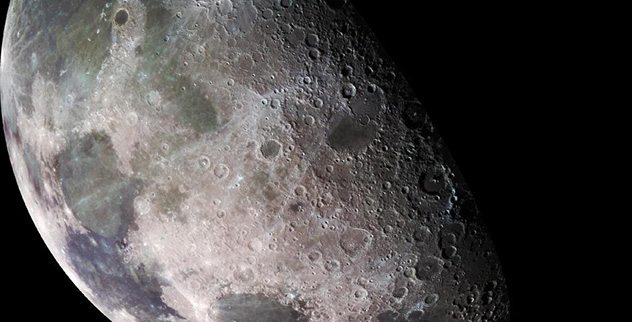
The Great Wall remains an extraordinary achievement without requiring an imaginary lunar audience. Human engineering can be impressive even when astronauts cannot spot it from approximately 238,000 miles away.
Why Common Science Myths Are So Difficult to Eliminate
Most science myths contain at least a tiny piece of truth. Gum is difficult to digest. Bats use echolocation. Respiratory infections increase during colder months. Sugar is served when children are excited. The brain does not activate every cell at maximum intensity at the same moment.
A myth forms when that kernel of truth is simplified, exaggerated, or stripped of context. The shortened version is easier to remember and repeat. It may also offer a clean cause-and-effect story in situations where reality is more complicated.
Repetition creates another problem. People often mistake familiarity for accuracy. A claim heard from parents, teachers, television characters, and social media accounts can eventually feel true even when nobody can identify its original source.
Good science communication should do more than label a statement false. It should explain why the myth sounded reasonable, what the evidence shows, and which partif anycontained a legitimate observation.
Everyday Experiences With Ridiculously Common Science Myths
Science myths rarely appear during formal scientific debates. They usually arrive in ordinary conversations, often with absolute confidence and no warning.
Imagine a thunderstorm rolling over a neighborhood. Someone looks at a damaged tree and says everyone should stand near it because lightning already struck it last year. This creates an immediate opportunity to replace a catchy saying with a safety lesson: repeatedly struck objects are not protected objects. The most useful response is not a lecture about electrical potential lasting 45 minutes. It is a calm explanation followed by moving everyone indoors.
Family gatherings provide another reliable myth habitat. A child eats cake and starts running around with cousins. Several adults point toward the frosting as though they have just completed a controlled clinical trial. Yet the room also contains balloons, music, games, gifts, and 12 children encouraging one another to become progressively louder. Noticing the surrounding stimulation helps reveal why coincidence is easily mistaken for causation.
Classrooms and workplace training sessions often expose the 10% brain myth. It usually appears in motivational language: “Imagine what you could accomplish if you activated the other 90%.” The intention is positive, but the biology is fictional. A better message is that brains change through practice, learning, sleep, feedback, and experience. Neuroplasticity is inspiring enough without inventing a mostly dormant organ.
Pet stores offer a different lesson. A shopper may see a goldfish in a tiny bowl and assume the animal needs little space or stimulation because it forgets everything almost instantly. Learning that goldfish can form associations and remember trained responses changes the ethical question. The fish stops being a moving decoration and becomes an animal capable of learning from its environment.
Personal habits also attract myths. Someone cracks a knuckle, and another person predicts future arthritis with the solemn certainty of a time traveler. The claim may have been passed down for generations, but repetition is not longitudinal medical evidence. The productive distinction is between ordinary painless popping and symptoms such as pain, swelling, or instability.
Then there is swallowed gum, perhaps the perfect childhood science myth. The seven-year warning sounds precise, which makes it feel researched. Why seven years rather than six or eight? Nobody knows, but specificity can disguise weak evidence. Discovering that indigestible material can still move through the digestive tract is a small but memorable lesson in how the body works.
These experiences demonstrate that correcting misinformation requires tact. Telling people they are foolish usually makes them defend the myth. Asking where they heard it, acknowledging the believable part, and offering a clear explanation works better.
A useful habit is to pause whenever a scientific claim contains words such as “always,” “never,” “only,” or an oddly precise number with no source. Not every simple claim is wrong, but those features should activate curiosity. Science advances by testing attractive explanations rather than awarding them permanent truth status because they sound good at dinner.
Conclusion: Curiosity Is Better Than a Perfectly Neat Answer
These common science myths are entertaining, but they also show how easily incomplete explanations become accepted knowledge. Humans do not have vast unused brain regions waiting to unlock psychic powers. Bats can see, goldfish can remember, gum does not remain inside the body for seven years, and lightning is entirely willing to revisit the same address.
The purpose of debunking science myths is not to win arguments or embarrass the person who repeated them. It is to practice a better way of thinking: examine the evidence, separate correlation from causation, look for missing context, and remain willing to update a belief.
Scientific truth is often less tidy than folklore, but it is also more interesting. Reality has biological sonar, electrical storms, sensory systems hidden inside the body, adaptable brains, trainable fish, and viruses that do not care whether your hair was wet. Frankly, science does not need myths to make it fascinating.
SEO Information












