
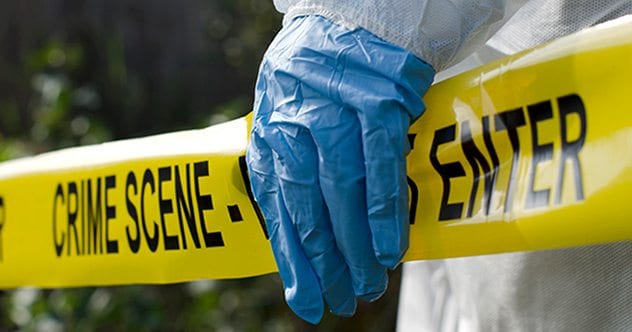
For decades, some murder mysteries looked permanently frozen in time: no confession, no eyewitness who could seal the case, no clear suspect, and no convenient detective-movie clue glowing under a desk lamp. Then forensic science walked in, adjusted its lab goggles, and said, “Actually, I kept the receipts.”
Modern forensic technology has transformed cold case investigations. DNA profiling, forensic genetic genealogy, CODIS database searches, Y-STR testing, advanced sequencing, and careful re-testing of old crime scene evidence have helped investigators solve murders once considered nearly impossible. In many cases, the most important clue was not dramatic. It was a cigarette butt, a napkin, a discarded bottle, a piece of clothing, or preserved biological evidence that waited patiently for science to catch up.
This article explores ten real murder mysteries finally solved using forensics. Some ended in guilty pleas. Some identified killers who had already died. Some corrected wrongful convictions. All of them show the same lesson: evidence may go quiet, but it does not always disappear.
How Forensics Changed Cold Case Investigations
Before DNA evidence became a routine part of criminal investigation, detectives relied heavily on witness accounts, fingerprints, behavioral patterns, confessions, and physical evidence that was often difficult to interpret. Those tools still matter, but DNA gave investigators something extraordinary: a biological signature that can link a person to a crime scene with scientific power.
Traditional forensic DNA profiling compares crime scene DNA to known profiles, often through systems such as CODIS, the Combined DNA Index System. If the suspect has a qualifying profile in the database, investigators may get a direct hit. If not, the case can still stall. That is where investigative genetic genealogy changed the game. Instead of looking only for the exact person, genealogy searches can identify relatives, allowing investigators to build family trees and narrow the suspect pool through age, location, sex, opportunity, and old-fashioned detective work. In short, it is ancestry research with subpoenas, lab coats, and much higher stakes.
Top 10 Murder Mysteries Finally Solved Using Forensics
1. The Golden State Killer: Joseph James DeAngelo
The Golden State Killer case became the modern symbol of forensic genetic genealogy. For years, investigators linked a terrifying series of California crimes from the 1970s and 1980s through patterns, locations, and DNA evidence. The offender had been known by several names, including the East Area Rapist and Original Night Stalker, before the cases were publicly grouped under the Golden State Killer label.
The breakthrough came when investigators used DNA from old crime scene evidence to search genealogical databases and identify distant relatives. From there, they built family trees and narrowed the possibilities until Joseph James DeAngelo, a former police officer, emerged as the suspect. Investigators collected DNA from items connected to him, confirmed a match, and arrested him in 2018. In 2020, DeAngelo pleaded guilty to multiple murders and admitted to numerous crimes. The case did more than solve a nightmare; it launched a national conversation about DNA, privacy, and cold case justice.
2. The Boston Strangler’s Final Victim: Mary Sullivan
The Boston Strangler case haunted American crime history for half a century. Albert DeSalvo had confessed to killing multiple women in the Boston area during the 1960s, but doubts persisted. Confessions can be messy, especially when fame, fear, and flawed investigation methods enter the room. For years, the question remained: did DeSalvo really kill Mary Sullivan, the final victim attributed to the Boston Strangler?
Forensics finally provided a clearer answer. Investigators used preserved biological evidence from Sullivan’s 1964 murder and compared it with DNA connected to DeSalvo’s family. Authorities later exhumed DeSalvo’s remains for direct testing. The DNA match linked DeSalvo to Sullivan’s murder, resolving a major part of the mystery. While debates continue about whether one person committed every killing attributed to the Boston Strangler, forensic DNA gave Mary Sullivan’s case a long-awaited scientific conclusion.
3. Christy Mirack: The Teacher’s Case Solved After 26 Years
In 1992, Christy Mirack, a young Pennsylvania schoolteacher, was murdered in her home. The case devastated her community and frustrated investigators for decades. Evidence existed, including DNA from the crime scene, but no known suspect matched it. The killer remained hidden in plain sight, which is unsettling enough to make every true crime reader look suspiciously at the neighborhood DJ.
That detail became important. In 2018, forensic genetic genealogy led investigators to Raymond Rowe, a well-known local entertainer who performed as “DJ Freez.” Police collected DNA from items he discarded and compared it with crime scene evidence. It matched. Rowe pleaded guilty in 2019 to killing Mirack and received a life sentence. The case showed how DNA evidence, when paired with genealogy research, can turn a decades-old unknown profile into a name, a face, and a conviction.
4. April Tinsley: A Child Killer Identified Through Genetic Genealogy
Eight-year-old April Tinsley was abducted and murdered in Indiana in 1988. Her killer later taunted the community with messages, creating one of the most disturbing cold cases in the region’s history. Investigators had DNA evidence, but for many years, it did not identify the perpetrator.
In 2018, investigators used forensic genetic genealogy to trace the unknown DNA profile through relatives. The search led to John D. Miller. Police collected DNA from items in his trash, and that DNA matched evidence connected to the case. When questioned, Miller confessed. He later pleaded guilty and was sentenced to 80 years in prison. The April Tinsley case demonstrated how preserved DNA, even after decades of silence, can become the loudest witness in the room.
5. Angie Dodge: Forensics Corrected a Wrongful Conviction
The 1996 murder of Angie Dodge in Idaho is one of the most important forensic cold case stories because it did not simply identify a killer. It helped clear a man who had been wrongfully convicted. Christopher Tapp spent years in prison despite the fact that his DNA did not match the biological evidence from the crime scene.
Investigative genetic genealogy eventually pointed investigators toward Brian Dripps, who had lived near Dodge at the time of the murder. Detectives obtained DNA from a discarded cigarette, and the sample matched crime scene evidence. Dripps confessed and was later convicted. Tapp was exonerated. This case is a powerful reminder that forensics should not be treated as a trophy for prosecutors alone. Used responsibly, it can also expose mistakes, undo injustice, and prove that a confession without physical evidence deserves careful scrutiny.
6. Michella Welch: A Napkin Helped Solve a 1986 Murder
Michella Welch, a 12-year-old girl in Tacoma, Washington, was murdered in 1986. For years, investigators had no arrest. Eventually, a male DNA profile was developed from evidence, but it did not produce an immediate database match.
Investigators turned to genetic genealogy, which helped narrow the search to Gary Hartman. Then came the classic cold case twist: detectives collected DNA from a discarded restaurant napkin. That DNA matched the profile from the crime scene. Hartman was charged and later convicted of first-degree murder. The napkin was not glamorous evidence. It was not hidden in a secret vault beneath a dramatic thunderstorm. But in forensic terms, it was gold.
7. Carla Walker: A 1974 Case Solved With Modern DNA Testing
Carla Walker was abducted and murdered in Fort Worth, Texas, in 1974 after attending a Valentine’s dance. Her case remained unsolved for more than four decades. Investigators had preserved evidence, but the science available in the 1970s could not do what modern forensic testing can do today.
Advanced DNA testing and forensic genetic genealogy eventually led investigators to Glen Samuel McCurley. Detectives confirmed the connection through DNA, and McCurley later pleaded guilty. The case inspired broader attention to the value of funding advanced forensic testing for cold cases. Carla Walker’s story is painful, but it also proves that evidence preservation matters. A piece of evidence that seems unusable today may become the key tomorrow.
8. Pamela Maurer: DNA Identified a Suspected Serial Killer
Pamela Maurer was killed in Illinois in 1976. For decades, the case sat unresolved. Then forensic genealogy and DNA analysis helped authorities identify Bruce Lindahl, a man long suspected in other violent crimes. Lindahl had died years earlier, so there would be no trial, no cross-examination, and no courtroom climax.
Still, the forensic identification mattered. It gave investigators and the family a name after decades of uncertainty. It also helped authorities re-examine Lindahl’s possible connection to other crimes. Cases like this show that “solved” does not always mean a living defendant is led away in handcuffs. Sometimes it means the mystery is finally answered, the public record is corrected, and families receive the truth that was denied to them for far too long.
9. Julie Ann Hanson: Nearly 50 Years to a DNA Breakthrough
Julie Ann Hanson, a 15-year-old from Naperville, Illinois, was murdered in 1972. Her case haunted the community for nearly half a century. Investigators kept working, and advances in DNA analysis eventually gave them a path forward.
In 2021, authorities arrested Barry Lee Whelpley after genealogy and DNA evidence connected him to the case. He had lived near Hanson’s family at the time of the murder. Whelpley died while awaiting trial, meaning a jury never decided the case. That makes this case more complicated than a clean courtroom ending. Still, the forensic breakthrough gave investigators their strongest answer after decades of uncertainty and showed how even very old evidence can still speak when technology improves.
10. Debra Lee Miller: A 43-Year-Old Ohio Murder Solved by DNA
Debra Lee Miller was killed in Mansfield, Ohio, in 1981. Her murder remained unsolved for 43 years. The case had twists, suspicion, and controversy, but the decisive answer came through advanced DNA testing. Investigators eventually identified James Vanest, Miller’s upstairs neighbor at the time, as the killer after DNA evidence connected him to the crime.
Vanest died before he could be prosecuted for Miller’s murder, but authorities considered the case solved. For Miller’s family, the answer arrived painfully late, yet it arrived. The case is another example of how re-testing old evidence can change everything. Cold case files may gather dust, but DNA does not care about dust. It waits, quietly, for the right technology.
What These Cases Teach Us About Forensic Breakthroughs
The biggest lesson from these solved murder mysteries is that forensics is not magic. It is methodical, slow, technical, and sometimes about as glamorous as labeling envelopes in a basement evidence room. But that is exactly why it works. Good forensic work depends on preservation, chain of custody, careful interpretation, and investigators who refuse to treat old evidence like old news.
One common experience across these cases is patience. Families often waited decades for answers. Detectives retired. Witnesses moved away or died. Suspects aged into ordinary-looking grandparents. Meanwhile, the evidence stayed behind, sometimes sealed in storage, waiting for science to advance. That patience is heartbreaking, but it is also the reason many of these cases were eventually solved.
Another lesson is humility. Forensics can identify killers, but it can also reveal when investigators got it wrong. The Angie Dodge case is especially important because DNA did not merely strengthen an existing conviction; it helped overturn one. That should make every crime writer, investigator, and armchair detective pause before declaring a case “obvious.” Human intuition is useful, but DNA has a way of interrupting confident mistakes.
These cases also show that forensic genetic genealogy is not a replacement for police work. It generates leads, not automatic convictions. After a genealogy search points toward a family line, detectives still need to confirm identity through direct DNA comparison, timelines, opportunity, location, and other evidence. The family tree may open the door, but traditional investigation still has to walk through it without tripping over the furniture.
There are also real ethical questions. Genetic genealogy can solve violent crimes, but it raises privacy concerns for people who uploaded DNA to learn whether they are 12 percent Scandinavian or simply to prove Uncle Bob’s family story was nonsense. Responsible use requires clear policies, serious oversight, and careful limits. The goal should be justice, not a genetic free-for-all.
Finally, these stories offer a practical message to law enforcement agencies: preserve evidence. The scrap that seems useless today may become tomorrow’s breakthrough. The old swab, clothing sample, envelope, or biological trace may hold the answer when new testing arrives. Science keeps improving, and cold cases are increasingly becoming less “cold” and more “temporarily waiting for better tools.”
Conclusion
The top murder mysteries solved using forensics prove that time does not always protect the guilty. DNA profiling, forensic genetic genealogy, CODIS searches, and advanced sequencing have rewritten the endings of cases once thought unsolvable. Some answers came through a cigarette butt. Others came from a napkin, a discarded bottle, or evidence preserved before anyone knew how valuable it would become.
For readers, these cases are fascinating because they combine science, persistence, and the oldest mystery question of all: who did it? For families, they are far more than fascinating. They are proof that truth can still surface after decades of grief. For investigators, they are a reminder that cold cases are not dead cases. Sometimes they are simply waiting for the right test, the right database, and the right person stubborn enough to try again.
Note: This article summarizes real criminal cases respectfully and avoids unnecessary graphic detail. It is written for educational and SEO publishing purposes, with emphasis on forensic science, cold case investigation, and the role of DNA evidence in solving long-unsolved murders.












