
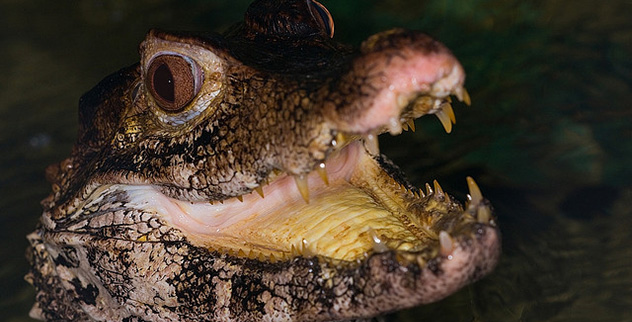
Crocodilians have been refining the art of looking prehistoric for millions of years. While other animals experimented with feathers, antlers, stripes, and increasingly complicated social media strategies, crocodilians stuck with a winning formula: armored skin, powerful jaws, excellent swimming skills, and the patience to remain motionless until lunch makes a terrible decision.
Yet these reptiles are far more diverse than the familiar alligator resting beside a Florida golf course. The order Crocodylia includes crocodiles, alligators, caimans, gharials, and their unusually specialized relatives. Some have jaws designed for grabbing slippery fish. Others climb steep riverbanks, gallop across land, tolerate seawater, dig elaborate burrows, or survive in habitats barely large enough to contain their remaining populations.
This guide explores 10 fascinating and unique crocodilians, highlighting the adaptations, behaviors, habitats, and conservation stories that make each species remarkable. Prepare for narrow snouts, tiny armored tanks, enormous aquatic predators, and at least one crocodile that behaves as though it has had three espressos.
Research basis:
What Makes Crocodilians So Successful?
Crocodilians are ambush predators built around efficiency. Their eyes, ears, and nostrils sit near the top of the head, allowing most of the body to remain hidden underwater. A muscular tail provides propulsion, while bony plates called osteoderms protect the skin. Their teeth are regularly replaced throughout life, which is convenient when your dining style involves grabbing animals that strongly object to being eaten.
They are also more behaviorally complex than their permanently unimpressed expressions suggest. Crocodilians communicate with bellows, grunts, vibrations, splashes, and body postures. Mothers guard nests, respond to the calls of hatchlings, and may carry newborns gently in their mouths. Courtship can include snout rubbing, bubbling, vocalizing, and synchronized movements.
Not every species follows the same blueprint. The following crocodilians demonstrate just how creatively evolution can modify an already formidable reptile.
1. Gharial: The River Specialist With a Built-In Megaphone
Scientific name: Gavialis gangeticus
The gharial looks as though someone stretched a crocodile’s snout in a photo-editing program and forgot to press “undo.” Its extremely long, narrow jaws contain more than 100 sharp, interlocking teeth, creating an ideal trap for fish.
This design makes the gharial one of the most specialized crocodilians. A broad crocodile snout creates considerable resistance when moved sideways through water. The gharial’s slim profile reduces that drag, allowing it to snap rapidly at passing fish. Adults mainly feed on fish, while younger animals also catch insects, frogs, and crustaceans.
Mature males develop a bulbous growth at the tip of the snout called a ghara, named after a traditional Indian pot. It acts as a visual display and helps amplify buzzing vocalizations during courtship. Essentially, the male grows both an ornament and a loudspeaker directly on his face.
Gharials are highly aquatic and poorly suited to long journeys across land. This dependence on large river systems makes them especially vulnerable to dams, sand mining, fishing nets, shoreline development, and the disappearance of undisturbed nesting banks. Today, fragmented populations remain primarily in northern India and Nepal.
2. Sunda Gharial: The “False” Gharial That Is Very Real
Scientific name: Tomistoma schlegelii
Also known as the tomistoma or false gharial, the Sunda gharial inhabits freshwater swamps, lakes, rivers, and flooded forests in Southeast Asia. Its long, narrow snout resembles that of the Indian gharial, although the head is heavier and the diet is less strictly focused on fish.
Large individuals can exceed 16 feet, making the species considerably more imposing than the delicate-looking jaws might suggest. Fish are important prey, but Sunda gharials may also consume birds, mammals, reptiles, and other animals available around forest waterways.
One of the most charming surprises involves courtship. Observations of Sunda gharials in human care have documented partners rubbing their snouts over each other’s heads and bodies. They may also vocalize and blow bubbles, creating brief fountains at the water’s surface. It is less “terrifying swamp monster” and more “heavily armored ballroom dance.”
Unfortunately, peat-swamp drainage, forest clearing, fires, hunting, and wetland conversion have greatly reduced suitable habitat. Because the species is secretive and often lives in difficult terrain, accurately counting wild individuals remains challenging.
3. Cuban Crocodile: The Athletic Overachiever
Scientific name: Crocodylus rhombifer
The Cuban crocodile is not the largest crocodilian, but apparently nobody told it that size was supposed to be a limitation. This muscular, long-legged species is famous for being unusually agile on land. It can perform an elevated walk, leap powerfully, and accelerate with a bounding gait that looks startlingly energetic for an animal shaped like an armored canoe.
Cuban crocodiles have broad heads, pronounced ridges behind the eyes, heavily keeled scales, and striking patterns of dark and yellowish coloration. Their strong rear legs and reduced webbing are associated with greater terrestrial ability than is typical among crocodilians.
They also have a reputation for intelligence. Crocodiles in professional care can learn routines, recognize signals, participate in health examinations, and respond consistently to trained behaviors. These abilities do not mean anyone should invite one to game night, but they do challenge the outdated idea that reptiles operate entirely on simple reflexes.
The Cuban crocodile has an extremely restricted natural range, principally in Cuba’s Zapata Swamp and Lanier Swamp. Habitat changes, illegal killing, and hybridization with American crocodiles threaten the genetic identity and survival of this distinctive species.
4. Saltwater Crocodile: The Ocean-Going Giant
Scientific name: Crocodylus porosus
The saltwater crocodile is the largest living crocodilian and the heavyweight champion of modern reptiles. Big males commonly reach impressive dimensions, while exceptional individuals can grow substantially larger. Even an average adult male is enough reptile to make a small boat feel emotionally vulnerable.
Commonly called a “saltie” in Australia, this species ranges from eastern India through Southeast Asia to northern Australia and nearby islands. Specialized salt glands help it manage excess salt, allowing it to use freshwater rivers, brackish estuaries, mangrove channels, and coastal waters.
Saltwater crocodiles are excellent long-distance swimmers. Ocean currents can assist their movements between islands and distant sections of coastline, helping explain the species’ enormous geographic range. Their menu may include fish, turtles, birds, wild pigs, monkeys, livestock, and other animals that approach the water.
Its success comes from flexibility. A saltwater crocodile can wait quietly, strike explosively, overpower large prey, and move between aquatic environments. Humans living within its range must practice strict crocodile awareness because this is a powerful wild predator, not an oversized pool float with teeth.
5. Chinese Alligator: The Burrowing Miniature
Scientific name: Alligator sinensis
Compared with its American cousin, the Chinese alligator is compact. Adults are generally around five feet long, although sizes vary. The species has a broad, rounded snout and extensive armor, including protective scales across the belly.
Its most unusual adaptation is its burrowing lifestyle. Chinese alligators occupy freshwater habitats around the lower Yangtze River region and excavate burrows containing chambers and entrances near the water. These underground retreats provide protection during cold winter conditions.
The Chinese alligator is the only living alligator species native outside the Americas. It eats snails, crustaceans, insects, fish, small mammals, and other manageable prey. Its blunt teeth are particularly useful for crushing hard-shelled animals.
Agricultural development and the loss of natural wetlands have reduced its wild habitat to severely fragmented areas. Captive-breeding programs maintain substantial populations, but restoring secure, connected habitat remains essential. A species cannot truly recover if its only reliable neighborhood has feeding schedules and a gift shop.
6. Cuvier’s Dwarf Caiman: The Pocket-Sized Armored Tank
Scientific name: Paleosuchus palpebrosus
Cuvier’s dwarf caiman is widely recognized as the smallest living crocodilian. Adults typically measure roughly four to five-and-a-half feet, making them tiny only by crocodilian standards. They remain muscular predators equipped with strong jaws and an exceptionally well-armored body.
This species possesses an extraordinary covering of osteoderms. Bony plates reinforce much of the skin, producing a rugged appearance that resembles a medieval shield collection assembled by a reptile.
Dwarf caimans inhabit streams, flooded forests, wetlands, and river systems across much of tropical South America. They frequently use shaded waterways and may travel over land between aquatic habitats. Their diet includes fish, amphibians, crustaceans, insects, birds, and small mammals.
Their modest size does not make them suitable pets. They require specialized environments, can live for decades, and retain the defensive equipment of much larger relatives. “Small crocodilian” is still a phrase containing the word “crocodilian.”
7. Black Caiman: The Amazon’s Shadowy Giant
Scientific name: Melanosuchus niger
At the opposite end of the caiman scale sits the black caiman, the largest member of the alligator family. This formidable predator inhabits rivers, lakes, flooded forests, and slow-moving wetlands throughout the Amazon Basin.
Its dark coloration provides camouflage in tea-colored and shadowed water, particularly during nighttime hunting. Pale bands and markings along the jaw and body may remain visible even in adults. Large black caimans prey on fish, turtles, birds, capybaras, deer, pigs, and other animals sharing their aquatic territory.
Ecologically, the black caiman functions as an apex predator. By influencing prey behavior and population sizes, it helps shape wetland communities. Females construct nests and guard nearby hatchlings, which may gather in groups that include young from more than one nest.
Commercial hunting once caused severe declines because the species’ dark hide was highly valued. Protection has allowed recovery in parts of its range, but habitat degradation, illegal killing, and conflict with people continue to create local pressures.
8. Philippine Crocodile: A Rare Freshwater Survivor
Scientific name: Crocodylus mindorensis
The Philippine crocodile is one of the world’s rarest crocodilians. It is a relatively small freshwater species with a broad snout, heavy armor, and dark crossbands that are especially noticeable in younger animals.
Historically, it occurred across several Philippine islands. Today, remaining populations are isolated in a limited number of freshwater wetlands, rivers, ponds, and marshes. Habitat destruction, accidental capture in fishing equipment, deliberate killing, and confusion with the larger saltwater crocodile have all contributed to its decline.
Community-based conservation has become particularly important. Programs that protect nests, educate residents, restore wetlands, and involve local people in monitoring can turn the crocodile from a feared animal into a source of regional pride.
The Philippine crocodile demonstrates that rarity is not always caused by biological weakness. Sometimes a capable predator becomes endangered because the waterways it needs have been fragmented, altered, or treated as disposable.
9. American Alligator: The Conservation Comeback Celebrity
Scientific name: Alligator mississippiensis
The American alligator is familiar, but familiarity should not be mistaken for ordinariness. This species was once severely depleted by unregulated hunting and habitat loss. Legal protection, habitat conservation, regulated management, and restrictions on trade helped its populations recover across the southeastern United States.
American alligators have broad, U-shaped snouts and powerful crushing bites. When the mouth is closed, the enlarged fourth tooth of the lower jaw fits into a socket and is generally hidden. In crocodiles, that tooth is usually visible.
Alligators also act as ecosystem engineers. By excavating depressions known as alligator holes, they create pools that can retain water during dry periods. Fish, turtles, birds, and other wildlife may use these refuges, although everyone presumably agrees that the landlord is intimidating.
Females build vegetation nests, guard their eggs, respond to hatchling calls, and protect the young after they emerge. These behaviors reveal a level of parental investment rarely associated with reptiles in popular culture.
10. American Crocodile: Florida’s Coastal Recluse
Scientific name: Crocodylus acutus
The American crocodile ranges through coastal areas of the Caribbean, Central America, northern South America, and the Pacific coast of the Americas. In the United States, it occurs naturally at the northern edge of its range in southern Florida and the Florida Keys.
This crocodile generally has a narrower, more pointed snout than the American alligator. It prefers brackish and saltwater environments such as mangrove creeks, coastal ponds, coves, and estuaries, although individuals may enter freshwater canals.
Despite its formidable appearance, the American crocodile is commonly described as shy and reclusive. A basking individual may rush noisily into the water when surprised, which is understandable. Nobody enjoys being interrupted during an important sunbathing appointment.
Florida’s population declined to only a few hundred animals during the 20th century. Habitat protection and legal safeguards helped produce a significant recovery, leading to its federal reclassification in Florida from endangered to threatened. Development, rising seas, human disturbance, and the limited availability of nesting habitat remain serious concerns.
Why Crocodilian Conservation Matters
Crocodilians regulate aquatic food webs, move nutrients between water and land, create habitat, and influence the behavior of prey species. Their nests, trails, burrows, and excavated pools can affect entire wetland communities.
Their conservation stories also show that protection can work. American alligators recovered after hunting controls and management programs were introduced. American crocodiles increased in Florida when nesting areas and coastal habitat received stronger protection. Other species, including gharials, Philippine crocodiles, and Chinese alligators, remain in far more precarious situations.
Successful recovery requires more than breeding animals behind fences. Crocodilians need functioning rivers, healthy wetlands, secure nesting sites, sustainable fishing practices, informed communities, and enough connected habitat to behave like wild animals.
An Immersive Crocodilian-Watching Experience
Encountering a crocodilian in a well-managed zoo, wildlife refuge, or natural wetland is a lesson in correcting expectations. The first surprise is often how difficult the animal is to see. A visitor may scan a pool several times before realizing that a “log” has nostrils. The outline blends into mud, vegetation, reflections, and dark water with almost unreasonable effectiveness.
Then an eye moves.
That tiny motion changes the entire scene. What appeared to be empty water suddenly feels occupied. The crocodilian may remain motionless, but its stillness no longer seems passive. It feels deliberate, as though the animal has reviewed the situation and decided that everybody else is making too much effort.
Watching different species reveals how misleading the general label “crocodile” can be. A gharial glides with its slender jaws held just above the surface, looking elegant and specialized. Nearby, a dwarf caiman resembles a compact fortress tucked beneath branches. A Cuban crocodile may stand higher on its legs and move with startling confidence. A saltwater crocodile creates the opposite impression: immense weight controlled with minimal movement.
Feeding demonstrations, when conducted by trained professionals, reveal another side of crocodilian biology. The explosive strike receives the loudest reaction, but the preparation is more interesting. The animal adjusts its position, aligns its head, observes the keeper, and waits for the correct opportunity. In modern zoological facilities, crocodilians may be trained to move between areas, touch a target, open their mouths, or remain still for examinations. These behaviors reduce stress and allow veterinarians to perform safer health checks.
Natural observation requires even greater patience. In a refuge, the most memorable moment may not involve a dramatic attack. It could be the low bellow of an alligator vibrating across the water, a female resting near a nest, hatchlings chirping from vegetation, or a crocodile sliding silently from a mangrove bank.
Responsible observers remain at a safe distance, follow posted rules, keep pets away from shorelines, and never offer food. Feeding teaches wild crocodilians to associate people with meals, increasing danger for visitors and often producing fatal consequences for the animal.
The best crocodilian experience leaves a person with two impressions that seem contradictory but are equally important. First, these reptiles are powerful predators that deserve caution. Second, they are attentive parents, habitat engineers, skilled communicators, and highly adapted animals rather than mindless monsters.
That combinationdangerous yet vulnerable, ancient-looking yet behaviorally sophisticatedis what makes crocodilians unforgettable. You may arrive expecting teeth. You leave thinking about evolution, wetlands, parental care, and whether the motionless object beside the next river is truly a log.
Safety research:
Conclusion
The world’s most fascinating crocodilians demonstrate that there is no single way to be an armored aquatic predator. Gharials sweep narrow jaws through rivers, saltwater crocodiles cross coastal waters, dwarf caimans carry exceptional body armor, Chinese alligators retreat into burrows, and Cuban crocodiles move across land with astonishing agility.
Their differences were shaped by fish-filled rivers, flooded forests, mangrove coastlines, seasonal wetlands, and millions of years of evolution. Their futures, however, increasingly depend on human decisions. Protecting rivers, nesting banks, swamps, and coastal habitats gives these ancient reptiles room to continue performing their ecological roles.
Crocodilians survived planetary upheavals, shifting continents, and dramatic climate changes. With thoughtful conservation, perhaps they can also survive waterfront construction, plastic pollution, disappearing wetlands, and our unfortunate habit of treating every useful river as a potential parking lot.












