
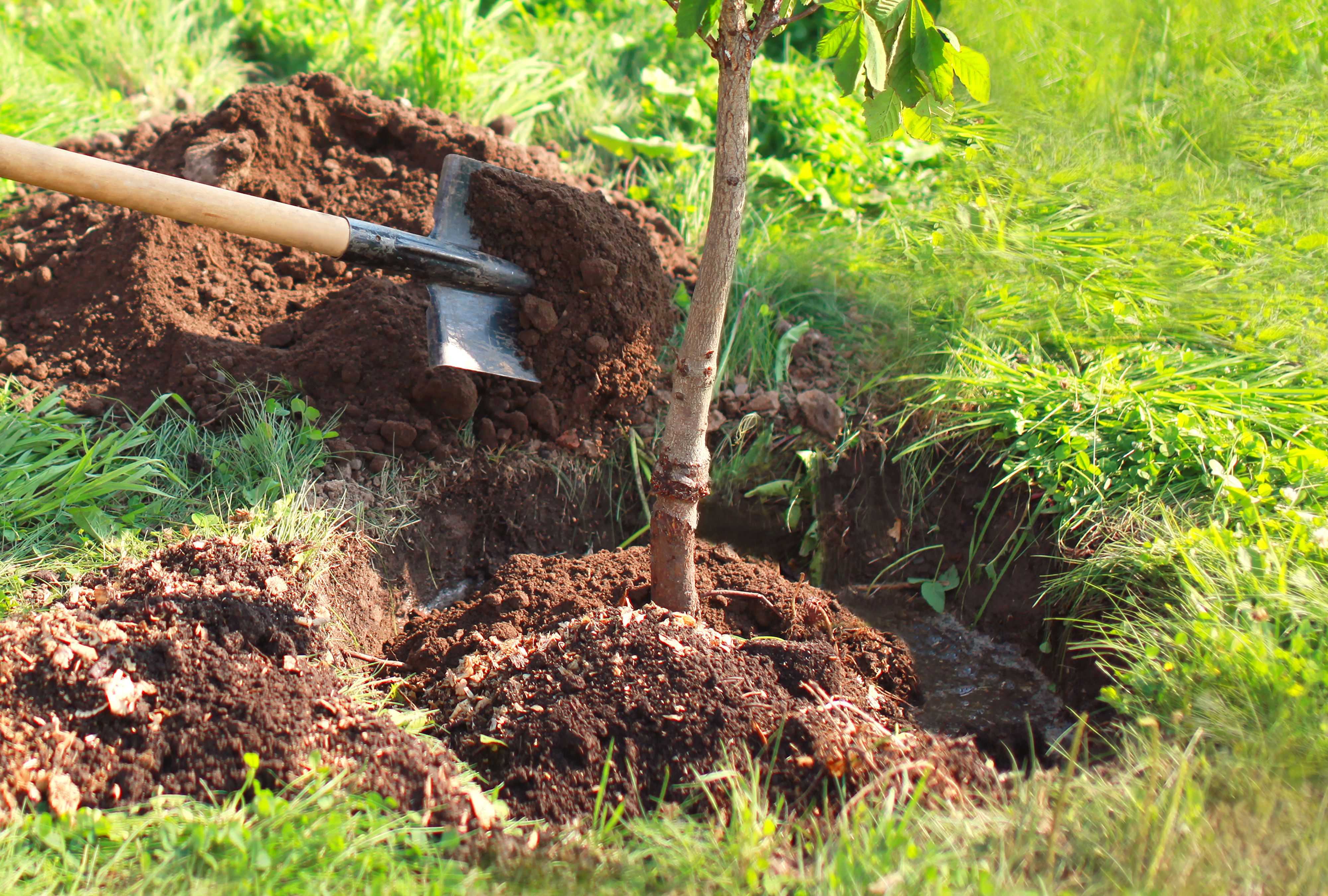
Planting a tree feels like the kind of wholesome life decision that should automatically earn you good karma, better shade, and at least one approving nod from a passing squirrel. But here is the plot twist: plenty of trees do not die because people forgot to water them or picked the “wrong” species first. They struggle because they were planted too deep.
Ask an arborist about the biggest tree-planting mistake, and one warning comes up again and again: burying the root flare. That swollen area where the trunk widens and transitions into the top roots is not meant to disappear underground like a shy celebrity avoiding paparazzi. When it gets buried, the tree can slowly decline for years before anyone realizes the original mistake happened on day one.
If you want to plant a tree that actually lives long enough to cast real shade, boost curb appeal, and stop your yard from looking like a “before” photo, this is the mistake to avoid. Below, we will break down why planting too deep is so harmful, how to spot it, and what arborists recommend instead.
Why Planting Too Deep Is the Worst Tree-Planting Mistake
The worst tree-planting mistake is simple: placing the tree so low in the ground that the root flare, also called the trunk flare or root collar, ends up buried beneath soil or mulch. It sounds minor. It is not.
A tree trunk and a tree root system do not do the same job. The trunk is built to stay above ground, where air circulates freely and bark stays relatively dry. Roots, on the other hand, belong in the soil. When you bury the flare and the lower trunk, you force above-ground tissue into below-ground conditions. That mismatch can trigger bark decay, oxygen stress, poor root development, moisture problems, and the formation of girdling roots that eventually squeeze the tree like a belt cinched three notches too tight.
The especially sneaky part is timing. A deeply planted tree may look fine at first. It might even leaf out, grow a bit, and fool everyone into thinking the job was done correctly. Then, two, three, or five years later, it starts declining. The canopy thins. Leaves look smaller. Branch tips die back. The trunk shows stress. By then, homeowners often blame heat, insects, bad luck, or cosmic gardening betrayal. In reality, the tree was set up to fail before the shovel was even put away.
What Exactly Is the Root Flare?
The root flare is the area at the base of the trunk where it widens before becoming the first major roots. Think of it as the tree’s natural foot. A properly planted tree should not look like a telephone pole jammed into the soil. It should have visible taper at the bottom, with the flare slightly above or at the surrounding grade.
This is where many people go wrong. Nursery trees are often sold in containers or root balls where the flare is hidden under excess soil or potting media. If you plant the tree based only on the top of the container soil, you may accidentally bury the flare several inches too deep. In other words, even if you think you are planting “level,” you may still be planting too deep.
That is why arborists do not just drop a tree into a hole and hope for the best. They first locate the flare. Sometimes that means gently removing extra soil from the top of the root ball until the first structural roots become visible. It is not glamorous work, but it is the kind of detail that separates a thriving tree from an expensive stick with ambitions.
Why Deep Planting Causes Long-Term Tree Problems
1. It encourages bark decay
The lower trunk is not designed to stay constantly covered with damp soil and mulch. When it does, bark can soften, decay, and become vulnerable to disease or stress. The tree may look sturdy from a distance while the base quietly deteriorates where nobody is looking.
2. It reduces healthy root function
Most tree roots develop in the upper portion of the soil, where oxygen is available. When a tree is planted too deep, root growth can become abnormal, stressed, or delayed. The result is slower establishment and weaker long-term performance.
3. It promotes girdling roots
One of the biggest hidden dangers is the formation of roots that circle or press against the trunk instead of growing outward. Over time, those roots can restrict the movement of water and nutrients. The tree is alive, yes, but it is also being slowly strangled by its own architecture. Nature has a dark sense of humor sometimes.
4. It creates instability later on
Deep planting can affect how roots anchor the tree. A tree may establish poorly, lean more easily, or become structurally compromised as it matures. That matters even more in landscapes exposed to wind, storms, or compacted urban soil.
5. It hides the problem until it is expensive to fix
Because symptoms often show up slowly, homeowners tend to discover the issue only after the tree is under serious stress. At that point, the “simple planting mistake” can require root-flare excavation, root correction, arborist intervention, or full replacement. That is a frustrating price to pay for a hole that was dug a little too enthusiastically.
Why So Many Homeowners Accidentally Plant Trees Too Deep
Deep planting is incredibly common because it feels intuitive. Many people assume the top of the root ball should sit flush with the surrounding soil. Others dig a deep hole because they think “more room” must be better. Some pile mulch high around the trunk afterward, creating the dreaded mulch volcano that buries the flare all over again.
There is also a visual trick at play. A freshly planted tree often looks “secure” when it sits low in the ground, like it has been tucked in safely for the night. But trees do not want to be tucked in like toddlers. They want the flare exposed, the hole broad, and the root zone treated with some respect.
Another issue is container-grown stock. Roots can circle inside pots, and the root flare can be buried under extra soil. If you never inspect the top of the root ball, you are trusting nursery depth more than tree biology. Arborists generally do not recommend blind trust in this department.
How to Plant a Tree the Right Way
Step 1: Find the root flare before you dig
Before the tree goes into the ground, locate the point where the trunk begins to widen and the first major roots emerge. Remove excess soil from the top of the container or root ball if needed. This is your true planting depth reference, not the top of the potting mix.
Step 2: Dig a wide, shallow hole
The planting hole should be much wider than the root ball, but not deeper. A wide hole helps new roots move into surrounding soil. A too-deep hole creates settling, and settling is how the flare ends up buried after you thought you did everything correctly.
Step 3: Set the flare at or slightly above grade
In many landscapes, especially heavier soils, setting the flare a little above the surrounding soil line is smarter than setting it low. Trees can settle slightly over time, and it is far safer to be a little high than a little deep.
Step 4: Correct circling roots
If roots are wrapping around the inside of the container shape, loosen, straighten, or prune them according to good planting practice. Ignoring circling roots at planting time is like spotting a knot in a shoelace and deciding future-you can deal with it. Future-you will not be thrilled.
Step 5: Remove unnecessary materials
Take off or cut back containers, twine, burlap, and wire as appropriate. The goal is to let roots expand into the surrounding soil without unnecessary barriers around the trunk or upper root zone.
Step 6: Backfill with the original soil
Use the native soil that came out of the hole unless there is a very specific site issue being addressed. The tree needs to adapt to the real soil in your yard, not a luxury spa pocket of amendments it will eventually outgrow.
Step 7: Mulch correctly, not dramatically
Apply a layer of mulch over the root zone, but keep it away from the trunk. Mulch should look like a flat ring, not a volcano. Volcano mulching traps moisture against the bark, hides the flare, and turns a good planting job into a slow-motion problem.
Step 8: Water consistently during establishment
Newly planted trees need regular watering while roots establish. The exact schedule depends on climate, soil, species, and rainfall, but the principle is simple: water deeply enough to moisten the root zone, and do not assume one good soaking at planting time solves everything forever.
Step 9: Stake only if necessary
Many newly planted trees do not need staking at all. If the tree is stable and the site is not unusually windy, letting the trunk move naturally can help it develop strength. If staking is needed, do it loosely and remove supports on time. A tree is not supposed to remain on training wheels indefinitely.
How to Tell If a Tree Was Planted Too Deep
If you cannot see any flare at the base of the trunk, that is your first clue. A healthy tree base should widen naturally before entering the soil. If the trunk goes straight down into the ground like a fence post, investigate further.
Other warning signs include:
- Mulch or soil piled against the trunk
- Small or discolored leaves
- Slow growth or poor vigor
- Early fall color or premature leaf drop
- Dieback in branch tips
- Cracking, soft bark, or decay at the base
- Circling roots visible near the trunk
Not every struggling tree was planted too deep, of course. Trees face drought, compacted soil, mower damage, poor site selection, and other stressors. But deep planting is common enough that it should always be near the top of the suspect list.
Can You Fix a Tree That Was Planted Too Deep?
Sometimes, yes. The sooner you catch the problem, the better the odds. For a recently planted tree, correction may be as straightforward as lifting and replanting it at the right depth. For an established tree, the solution may involve carefully exposing the flare and removing excess soil or mulch around the base.
In more advanced cases, a certified arborist may recommend root-flare excavation or treatment for girdling roots. That is not a casual weekend project when the roots are large or the tree is already stressed. In those situations, calling a professional is the wise move. Heroic confidence and a shovel are not always the same thing.
The Arborist’s Bottom Line
If you remember only one thing about tree planting mistakes, let it be this: never bury the root flare. Planting too deep is one of the most damaging and most common mistakes people make, yet it is also one of the easiest to prevent with a little patience and a careful eye.
A tree planted at the correct depth has a better shot at establishing strong roots, resisting stress, and living the long life you imagined when you bought it. A tree planted too deep may survive for a while, but it often does so unhappily and expensively.
So yes, pick the right species. Water it well. Mulch it properly. But before all that, make sure the trunk flare is visible. Because when it comes to planting trees, being a little too high is usually forgivable. Being too deep is where the trouble starts.
Real-World Experiences: What This Mistake Looks Like in Actual Yards
One of the most common experiences homeowners report goes something like this: they plant a beautiful young tree in spring, water it faithfully, admire every new leaf, and feel like they have officially become “the kind of person who knows landscaping.” The first season goes fine. The second is decent. By the third year, though, the tree looks thin, tired, and vaguely offended. That is often the moment an arborist arrives, scrapes away the soil at the trunk, and says some version of, “Well, here’s the problem.” The flare is buried.
Another familiar scenario happens with container-grown trees. A homeowner buys a tree from a garden center, assumes the soil level in the pot is the correct planting depth, and installs it neatly. Everything looks professional. Unfortunately, the nursery soil may already be covering the flare. So the tree begins life in the landscape with a hidden disadvantage, and then mulch gets added on top, creating a double burial. It is not sabotage, just a very common misunderstanding.
Arborists also see this issue in newer developments where builders have added soil grade around existing or newly planted trees. A yard gets smoothed, beds are topped off, mulch is refreshed, and suddenly the base of the tree sits lower and lower under layers of material. Nobody notices at first because the tree still has leaves. Trees can be surprisingly polite about suffering.
There are also the “helpful” fixes that backfire. Someone sees exposed roots and assumes they must need more soil. Someone else thinks a thick mulch cone around the trunk will keep the tree cozy. Another person stakes the tree tightly and leaves the support in place for years, turning routine establishment into a long-term dependency issue. Each choice is made with good intentions, which is precisely why the problem keeps repeating. Tree mistakes rarely begin with bad motives. They begin with advice that sounds reasonable until biology enters the chat.
On the positive side, many people catch the issue early enough to save the tree. Once the flare is exposed and the mulch is pulled back, the difference can be dramatic. The base of the tree suddenly looks wider and more natural. Watering becomes more effective. The trunk stays drier. The tree often responds with stronger growth over time. It is not an overnight miracle, but it is one of those satisfying corrections where the fix finally matches the way the plant was built to live.
The biggest lesson from all these experiences is simple: tree planting is not just about getting roots underground. It is about getting the right part underground and leaving the rest where it belongs. Homeowners who understand that tend to have better survival, fewer mysterious decline problems, and far less buyer’s remorse. In other words, the best tree-planting experience usually starts with resisting the urge to dig too deep and remembering that trees, much like houseguests, prefer not to be buried up to their necks.
Conclusion
The worst tree-planting mistake to avoid is planting too deep and burying the root flare. It is common, costly, and easy to miss until the damage is already underway. The good news is that it is also preventable. Locate the flare, dig a wide shallow hole, keep mulch off the trunk, correct circling roots, and water with consistency during establishment. Those simple steps can make the difference between a tree that merely survives and one that truly thrives.
If you want your tree to grow into a healthy, long-lived part of your landscape, do not judge success by how tidy the planting day looked. Judge it by whether the tree was set at the right depth from the start. Arborists know that the base of the trunk tells the truth. And when that flare is visible, the tree has a fighting chance.












