
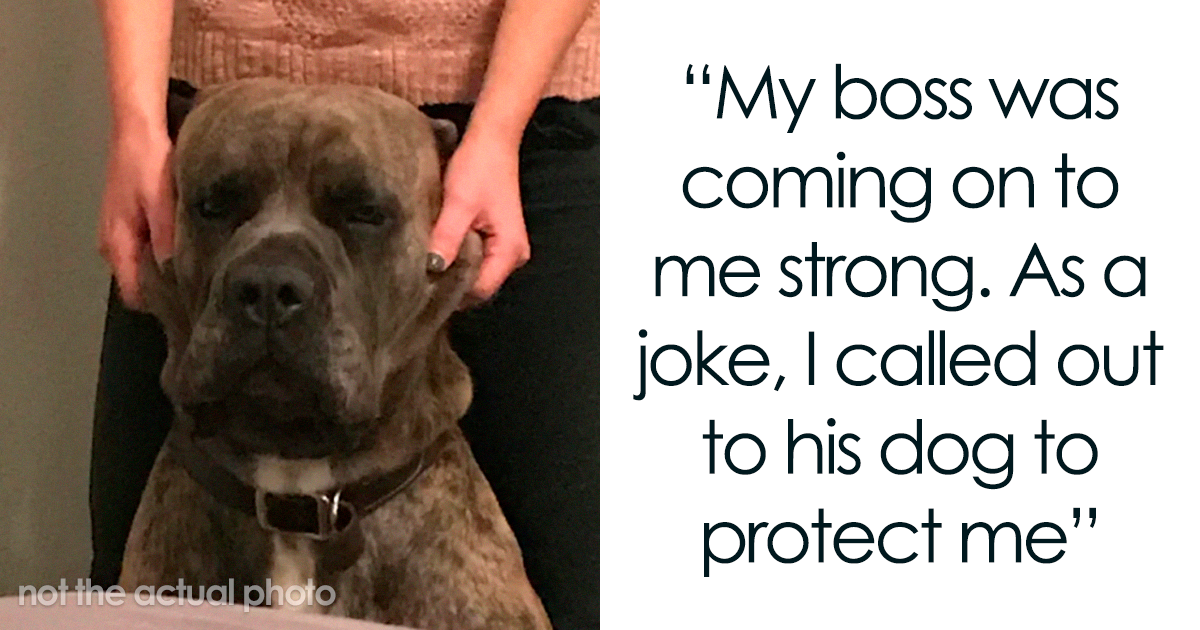
Not all workplace heroes wear pressed blazers, hold HR binders, or send “per my last email” with Olympic-level passive aggression. Sometimes, the hero has four paws, a thunderous bark, and enough body weight to make a grown adult suddenly remember the concept of personal boundaries.
The story of a 95-pound dog stepping between a woman and her sexually harassing boss became unforgettable because it sounds almost cinematic: a young woman, an older man in power, a private home-work arrangement, escalating unwanted touching, and then one large Cane Corso deciding, with perfect timing, that enough was enough. The dog did not file a complaint, schedule a meeting, or ask whether the behavior violated company policy. She simply stood guard, growled, barked, and made the room safer.
Behind the dramatic rescue is a serious issue: workplace sexual harassment often happens in quiet corners, private offices, job sites, homes, cars, restaurants, and informal work arrangements where the person being targeted may feel trapped. This article looks at what reportedly happened, why the dog’s reaction matters, what it teaches us about safety, and how workers can protect themselves when someone with power crosses the line.
A Shocking Story With a Four-Legged Plot Twist
The woman in the story had reportedly taken a job helping an older man with tasks around his home, including caring for his large dog. At first, nothing seemed alarming. He was familiar to her family, respected her father’s work, and appeared polite when others were around. That detail matters because harassment rarely begins with a neon sign that says, “Danger: walking red flag ahead.” It often starts subtly, wrapped in charm, jokes, or behavior that can be dismissed as “just how he is.”
The dog, a 95-pound Cane Corso, was part of the job. The woman bonded with her quickly. Anyone who has ever won over a big dog knows the feeling: one minute you are strangers, the next minute you are legally required to provide belly rubs under the constitution of Dog Nation.
But the employer’s behavior reportedly changed. What began as casual hugs became uncomfortable physical contact. His hands brushed places they should not have. He made comments about her body. He allegedly held her too long even when she objected. Like many people facing harassment, she tried to laugh it off, leave the room, or avoid confrontation. That reaction is not weakness. It is a common survival response when a person is trying to stay safe, keep a job, and process what is happening in real time.
The Moment the Dog Stepped In
The most powerful moment came when the woman was sitting on a sofa tying her shoes while the dog lay near her feet. She reportedly felt the man pulling at her hips. She moved away and told him no. When he continued approaching, she panicked and called the dog’s name, asking for help or protection.
Then the unexpected happened: the dog got up, positioned herself between them, and began growling and barking at her own owner. The boss, apparently surprised, backed off. For the rest of the time the woman was there, he did not touch her.
That is why the story struck such a nerve online. The dog did what many institutions fail to do quickly enough: she believed the distress in front of her, responded immediately, and created distance. No committee. No paperwork. No “let’s circle back.” Just a very large dog saying, in fluent canine, “Absolutely not, sir.”
Why This Dog’s Reaction Was So Incredible
Dogs are not legal experts, therapists, or security systems with fur. Still, many dogs are remarkably tuned in to human body language, tone of voice, stress, and changes in the room. Research on human-animal interaction has found that pets can reduce stress and increase feelings of social support. Studies also suggest dogs can detect changes associated with human stress through scent and behavior. In plain English: your dog may not understand your taxes, but she may understand when your nervous system is screaming.
A Cane Corso is also no pocket-sized lap ornament, although many of them seem deeply committed to pretending otherwise. The breed is known for strength, confidence, loyalty, and protective instincts when responsibly bred and trained. A 95-pound dog standing guard is not just emotionally reassuring; it changes the physical equation in the room.
However, the point is not that everyone should rely on a dog for protection. The point is that the woman’s fear was real enough for an animal to react. When humans debate, dismiss, minimize, or ask whether someone is “overreacting,” this dog’s response cut through the fog. She saw distress and acted.
What Counts as Workplace Sexual Harassment?
Workplace sexual harassment includes unwelcome sexual advances, requests for sexual favors, and verbal or physical conduct of a sexual nature. It can also include offensive comments about someone’s sex, body, gender, or sexuality. The setting does not have to be a corporate office. Harassment can happen in a private home, during a work errand, in a car, at a job site, through texts, or anywhere connected to employment.
The behavior described in this story includes classic warning signs: unwanted touching, comments about the body, ignoring “no,” using power or age to intimidate, and creating a situation where the worker feels unable to leave easily. Even if the boss frames it as joking, flirting, hugging, or “being friendly,” consent still matters. A hug stops being friendly the second someone feels trapped inside it.
One of the most harmful myths about harassment is that it must look dramatic from the beginning. In reality, it often escalates. A comment becomes a touch. A touch becomes a longer touch. A boundary gets tested. If the person does not protest loudly, the harasser treats silence as permission. But silence is not consent. Nervous laughter is not consent. Freezing is not consent. Needing a paycheck is definitely not consent.
Why Victims Often Stay Quiet
People sometimes ask, “Why didn’t she quit immediately?” or “Why didn’t she report him right away?” Those questions may sound logical from a safe distance, but they ignore real-life pressure. Many workers live paycheck to paycheck. Some do not have HR departments. Some work for small employers where the boss is the entire power structure. Others fear retaliation, disbelief, shame, or damage to their reputation.
Victims may also question themselves. They may wonder whether they misunderstood the behavior, whether they are “making a big deal,” or whether others will blame them. Harassers often exploit exactly that confusion. They rely on politeness, fear, financial dependence, and social pressure. In this story, the woman reportedly felt embarrassed and ashamed even though she had done nothing wrong. That is one of harassment’s cruelest tricks: it tries to hand the shame to the person who was harmed instead of the person causing harm.
The Power Problem: When the Boss Is the Harasser
Harassment becomes even more complicated when the person crossing boundaries controls schedules, pay, references, assignments, or employment itself. Power changes everything. A creepy comment from a stranger is bad. A creepy comment from the person who can fire you is a trap with a paycheck attached.
In the story, the man was described as someone used to getting his way. That kind of dynamic can make confrontation feel risky. Workers may feel they must choose between safety and income, dignity and survival, speaking up and being punished. That is why prevention cannot depend only on victims “being more assertive.” The responsibility belongs to employers, managers, coworkers, families, and communities to take harassment seriously before someone has to call a dog for backup.
What Workers Can Do When Boundaries Are Crossed
If someone at work behaves in a sexually inappropriate way, the first priority is safety. Move toward an exit, public area, coworker, neighbor, or phone if possible. If you can, create distance and use direct language: “Do not touch me,” “That comment is not appropriate,” or “I am here to work.” Short, boring sentences are useful because they leave less room for debate. You are not writing a poem; you are setting a boundary.
Documentation can also help. Write down dates, times, locations, what happened, who was present, and any messages or calls connected to the behavior. Save texts, emails, voicemails, schedules, and photos if relevant. If you report internally, doing so in writing can create a record. If the workplace has no HR department, consider contacting a trusted person, legal aid organization, advocacy group, or government agency for guidance.
People experiencing harassment should not have to handle it alone. Telling one trusted person can reduce isolation and create a witness to your timeline. That person might be a friend, family member, coworker, mentor, counselor, advocate, or attorney. The right support person will not pressure you into one path; they will help you think clearly, preserve your choices, and stay safe.
What Employers Should Learn From This Story
Employers should not need a 95-pound dog to teach them workplace safety, but here we are. This story highlights the need for clear anti-harassment policies, safe reporting options, trained supervisors, prompt investigation, and protection from retaliation. A workplace that only looks respectful when witnesses are present is not safe. A boss who behaves well in front of fathers, contractors, customers, or coworkers but changes behind closed doors is showing the real policy: power without accountability.
Good employers do not treat harassment as gossip, drama, or “personal conflict.” They treat it as a safety issue, a legal risk, and a culture failure. They make sure workers know where to report concerns. They do not punish people for speaking up. They do not require targets to keep working alone with someone who has crossed boundaries. Most importantly, they act before the situation escalates.
Why the Dog Became a Symbol
The dog became more than a cute animal in a viral story. She became a symbol of protection, instinct, and immediate belief. She did not ask the woman what she was wearing, whether she had smiled too much, or why she had accepted the job. She noticed fear and moved toward it.
That is the lesson people connected with: survivors need more responses like that. Not aggression, not chaos, not vigilante justice, but quick, clear support. “I believe you.” “You are not overreacting.” “Let’s get you somewhere safe.” “I will help you document this.” Those sentences can be as powerful as a bark when someone feels alone.
Experience Section: Lessons From Stories Like This
Stories like this often remind people of the small signals they once ignored because they wanted to be polite. A worker may remember a supervisor who stood too close, a customer who kept touching their arm, or a manager who turned every conversation into a comment about appearance. At the time, the person may have smiled awkwardly because that felt safer than creating conflict. Later, they may replay the moment and think, “Why didn’t I say something?” But the better question is: why did the other person make the situation unsafe in the first place?
One practical experience many workers share is that boundaries are easier to keep when they are prepared before panic hits. For example, someone who works alone in homes, offices, or job sites can make a habit of telling a friend where they are, keeping their phone charged, parking where they cannot be blocked in, and leaving if a client or boss insists on being inappropriate. These habits are not paranoia. They are seatbelts for your workday.
Another common lesson is that animals often notice tension before people admit it out loud. A normally relaxed dog may stand up, stare, bark, or place itself between people when the energy in a room changes. That does not mean every bark is heroic or every growl is accurate. Dogs are animals, not judges. But their reactions can remind us to pay attention to body language, fear, and discomfort instead of explaining it away.
For friends and family members, the experience lesson is simple: respond gently when someone tells you they were harassed. Do not begin with interrogation. Begin with care. Say, “I’m sorry that happened,” “You didn’t deserve it,” and “What do you need right now?” A survivor may need help leaving a job, writing down a timeline, finding counseling, speaking to an attorney, or simply sitting in silence with someone who does not make them feel ashamed.
For coworkers, the story is a reminder that bystanders matter. If you see a boss making repeated sexual comments, cornering someone, touching them, or isolating them, do not wait for a disaster. Interrupt with a work question. Invite the person to another room. Check in privately. Offer to be a witness. Workplace culture changes when people stop treating harassment as background noise and start treating it as a fire alarm.
For employers, the lesson is even clearer: build systems that work before someone is desperate. A safe workplace should not depend on a brave dog, a lucky interruption, or a victim’s ability to shout. It should depend on rules, training, accountability, and leadership that does not tolerate abuse from anyone, especially the person signing the checks.
Conclusion
The story of the 95-pound dog who protected a woman from her boss’s sexual harassment is incredible because it combines danger, instinct, loyalty, and justice in one unforgettable moment. But it is also painful because no worker should need an animal to enforce a boundary that a human being should have respected from the start.
The dog’s actions gave the woman space, safety, and proof that her fear mattered. The wider lesson is that harassment thrives in silence, isolation, and power imbalance. It weakens when people document, speak up, support survivors, and build workplaces where “no” is treated as a complete sentence.
So yes, the dog deserves every treat in the pantry. But the real goal is a world where workers do not need a Cane Corso bodyguard to get through a shift safely.
Note: This article is for general informational and educational purposes. Anyone facing workplace sexual harassment, assault, threats, or retaliation should seek immediate safety and consider contacting trusted support, local authorities, a qualified attorney, or a confidential survivor-support organization.












