
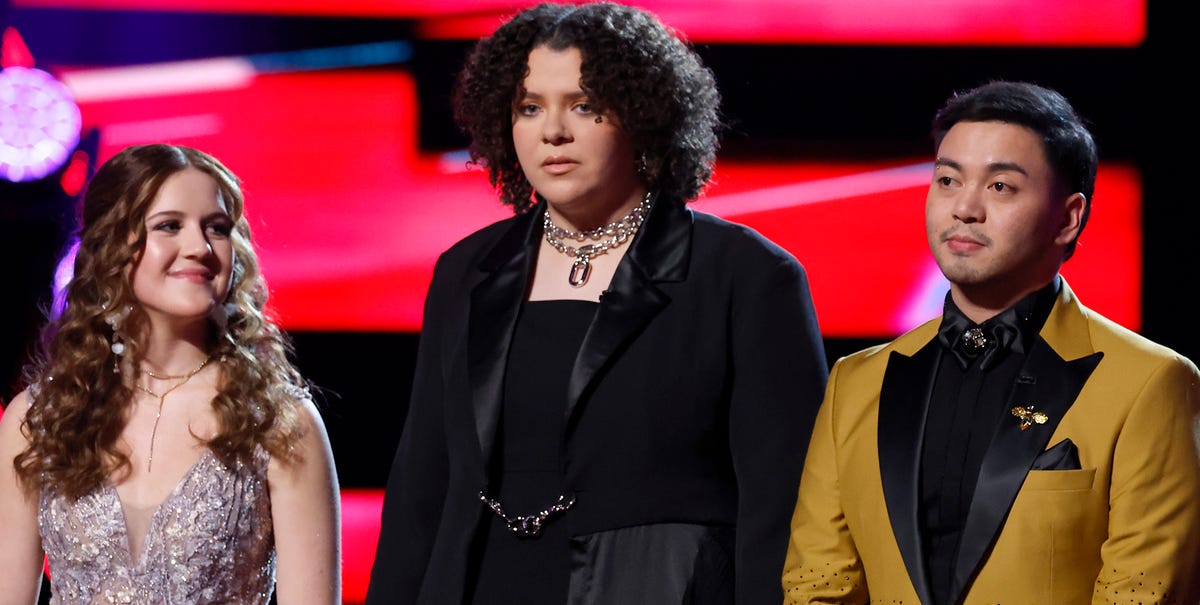
When The Voice Season 26 crowned Sofronio Vasquez as its 2024 winner, the internet did what the internet does best: it clapped, cried, argued, investigated, celebrated, and somehow turned a singing competition result into a full-blown group therapy session with hashtags. One side shouted, “He deserved it!” Another side insisted their favorite was robbed. A third group was simply busy replaying his performances and wondering how one human throat could hold that much drama, soul, and controlled vocal firepower without needing a small city permit.
Vasquez’s win was not just another confetti moment on NBC’s long-running reality competition. It was historic. The Filipino singer, who competed on Team Michael Bublé, became the first Filipino winner of the U.S. version of The Voice and one of the show’s most talked-about champions in years. His victory also gave rookie coach Michael Bublé a win in his debut season, which is the kind of television storyline producers dream about while pretending they are “just letting the magic happen.”
But the real story is not only that Sofronio won. It is why fans reacted so strongly. His Season 26 journey touched on talent, representation, song choice, coach chemistry, online voting culture, and the eternal reality-TV question: did America get it right?
Who Is Sofronio Vasquez?
Sofronio Vasquez is a Filipino singer from Mindanao, Philippines, who later moved to the United States and lived in Utica, New York. Before becoming a household name among The Voice fans, he had already spent years chasing music through competitions, performances, and personal setbacks. His backstory added emotional weight to every performance, especially because he often spoke about his late father’s influence on his love for singing.
Unlike contestants who arrive on singing shows with a carefully polished “future pop star” package, Vasquez came across as someone who had lived several lives before stepping onto the NBC stage. He had pursued dentistry, worked to support his family, performed in different settings, and carried the pressure of representing not only himself but also a large community of viewers who saw his journey as bigger than a trophy.
That combination made him easy to root for. He was not just technically gifted; he seemed grateful, humble, and emotionally open. In a competition where big notes matter, authenticity matters too. Sofronio had both, which is basically the vocal-show equivalent of showing up to a potluck with the best casserole and remembering everyone’s birthday.
How Sofronio Vasquez Won The Voice Season 26
Sofronio’s path to victory began with a four-chair-turn Blind Audition, a major early signal that he was not there to politely participate. His performance of “I’m Goin’ Down” immediately showed the coaches that he had vocal range, emotional control, and the ability to make a familiar song feel personal.
He chose Michael Bublé as his coach, a decision that became one of the season’s defining partnerships. Bublé helped guide Vasquez through a wide variety of songs and styles, including classic ballads, soul-heavy moments, and more contemporary choices. Throughout the season, Sofronio delivered performances that allowed him to show different sides of his voice instead of being locked into one predictable lane.
Key Performances That Built His Momentum
Several performances helped turn Sofronio from “great contestant” into “possible winner.” His take on “Crying” showed his gift for dramatic phrasing. “Unstoppable” allowed him to step into a modern power anthem. “A Million Dreams” gave him a finale moment built for emotion. His duet with Michael Bublé on “Who’s Lovin’ You” brought the coach-contestant relationship full circle and reminded viewers that their chemistry was not just for camera-friendly rehearsal clips.
By the finale, Sofronio was competing against a strong Top 5 that included Shye, Sydney Sterlace, Danny Joseph, and Jeremy Beloate. Each finalist had a fan base and a musical identity, which is exactly why the result sparked so much discussion. This was not a season where one contestant casually jogged to the finish line while everyone else politely waved. The final stretch was competitive.
Why Fans Celebrated Sofronio’s Win
For many fans, Sofronio Vasquez winning The Voice Season 26 felt deeply satisfying. He had the voice, the story, the stage presence, and the growth arc. Viewers who supported him saw a contestant who consistently delivered high-pressure performances without losing the warmth that made him likable in the first place.
His victory also meant a great deal to Filipino and Asian audiences. Representation is sometimes treated like a buzzword, but in moments like this, it becomes very real. Fans in the Philippines and across the diaspora saw someone with a familiar story, accent, background, and dream standing on a major American stage and winning through public support.
That is not a small thing. In entertainment, visibility can feel like oxygen. Sofronio’s win told many viewers that a Filipino artist could not only compete internationally but also win a mainstream American singing competition. For fans who had followed his journey from earlier competitions and performances, the Season 26 finale felt like a long-awaited payoff.
Why Some Fans Disagreed With the Result
Of course, no reality-TV finale is complete without a little digital thunderstorm. Some fans believed another finalist should have won. Shye had a strong case as a unique young artist with emotional depth and a distinctive sound. Danny Joseph attracted viewers who loved grit, rock influence, and raw performance energy. Jeremy Beloate and Sydney Sterlace also had passionate supporters who felt their favorites brought something special to the season.
After the winner was announced, some viewers complained online that the result felt predictable or unfair. Others questioned whether fan voting favored contestants with large international or community support. A few even used the classic reality-TV word “rigged,” which appears after nearly every finale in television history, usually within six seconds of the confetti cannon.
It is important to separate disappointment from evidence. Viewers are allowed to be upset when their favorite does not win. That is part of fandom. But claiming a competition was fixed is a much larger accusation. In Sofronio’s case, the public result reflected the voting system used by the show, and his fan support was clearly powerful. Whether someone preferred Shye, Danny, Jeremy, or Sydney, Sofronio’s win did not come out of nowhere. He had been a front-runner for much of the season.
The Michael Bublé Factor
One reason Sofronio’s win became such a major talking point was Michael Bublé. Season 26 was Bublé’s first season as a coach, and winning immediately gave him a very shiny entrance into The Voice history. Not bad for a rookie. Some coaches need several seasons to figure out the game. Bublé showed up, charmed America, coached a powerhouse vocalist, and left with a trophy like he had simply stopped by to borrow sugar.
The Bublé-Sofronio partnership worked because it felt sincere. Bublé did not only praise Sofronio’s big notes; he pushed him toward interpretation. He encouraged him to take on songs that required emotional ownership instead of mere imitation. That mattered because Sofronio’s strength was not just singing loudly or cleanly. His strength was making songs feel lived-in.
Fans noticed that. Even viewers who were not initially rooting for Team Bublé often admitted that the coach-contestant pairing had a strong identity. They seemed to trust each other. Bublé also continued showing support after the season, which helped fans believe the mentorship was more than a TV storyline.
Was Sofronio Vasquez the Right Winner?
The answer depends on how a viewer defines “right.” If the right winner is the person with the biggest vocal range, Sofronio has a strong argument. If the right winner is the person with the most emotionally resonant story, he also has a strong argument. If the right winner is the contestant who created the largest cultural moment, his case becomes even stronger.
However, if a viewer values originality above vocal polish, they may have preferred Shye. If they wanted a more rugged, genre-specific artist, Danny Joseph may have been their pick. If they connected with theatricality, Jeremy Beloate had appeal. If they wanted youthful star potential, Sydney Sterlace offered that spark.
That is why the debate became so lively. Sofronio did not win because the other finalists were weak. He won in a season where several contestants had legitimate strengths. In many ways, that made his victory more impressive.
Fan Reactions: Celebration, Debate, and a Lot of Feelings
The fan response to Sofronio Vasquez’s win can be divided into three broad camps. The first camp celebrated without hesitation. These fans saw him as a deserving champion, praised his consistency, and viewed the result as a historic breakthrough. Many Filipino fans were especially emotional, treating the win as a national and cultural moment.
The second camp respected Sofronio but preferred another finalist. These fans often said something like, “He is talented, but Shye should have won,” or “Great singer, but Danny was my winner.” This is the healthiest kind of finale disagreement because it leaves room for multiple truths. Yes, Sofronio was excellent. Yes, another artist may have connected more strongly with certain viewers.
The third camp was the conspiracy corner, where every result is suspicious unless their favorite wins. These fans questioned the voting, the editing, or the show’s promotion. While reality competitions do use editing and storytelling to shape viewer perception, there is no credible reason to dismiss Sofronio’s win as undeserved. His performances, fan base, and finale momentum were all strong enough to explain the outcome.
What Sofronio’s Win Says About The Voice
Sofronio’s Season 26 victory highlights what The Voice still does well. At its best, the show creates a stage where a gifted singer can turn exposure into opportunity. It gives audiences a weekly reason to invest in someone’s growth. It also allows coaches to shape artists in ways that feel immediate and personal.
At the same time, the reaction to his win shows the ongoing challenge of reality singing competitions. Fans do not only vote for vocals. They vote for stories, identities, personalities, coach dynamics, song choices, and emotional connection. A technically excellent singer can lose if the audience does not feel attached. A less polished performer can go far if viewers believe in their journey.
Sofronio had the rare mix: polished vocals and emotional connection. That is why his win landed so loudly.
The Bigger Meaning of His Historic Victory
For Filipino and Asian artists, Sofronio Vasquez’s win was bigger than a finale result. It was a signal that mainstream American audiences are open to more diverse voices and stories. His journey challenged the narrow idea of what a U.S. singing-show winner looks or sounds like.
That does not mean every fan had to vote for him because of representation. His talent had to carry the moment, and it did. But representation amplified the emotional impact. When a singer wins while carrying a community’s hopes, the victory feels communal. Sofronio’s fans were not just watching a contestant. Many were watching a dream become visible.
What Comes Next for Sofronio Vasquez?
Winning The Voice is a major achievement, but it is not the finish line. The show has produced several memorable champions, yet long-term music success depends on original songs, smart management, touring, fan engagement, and timing. Sofronio’s challenge now is to turn television momentum into a sustainable career.
He has some advantages. He has a powerful voice, an international fan base, a compelling story, and a respected mentor in Michael Bublé. He also has experience performing before the show, which may help him navigate the less glamorous parts of the industry. Talent opens the door, but consistency keeps the lights on once the confetti has been swept into a storage closet somewhere in Los Angeles.
His best path may be a blend of pop, soul, R&B, and adult contemporary music. That lane would allow him to use his vocal strengths while reaching listeners who enjoy emotional, melody-driven songs. Fans will likely expect big ballads, but the smartest move would be balancing vocal showcases with songs that feel current and replayable.
Experience Notes: Watching Sofronio’s Win as a Fan Moment
There is a particular kind of energy that happens during a The Voice finale. Even if you tell yourself you are “just casually watching,” suddenly you are judging song arrangements like a Grammy producer, refreshing social media, and developing strong opinions about lighting design. Sofronio Vasquez’s Season 26 win had exactly that kind of pull.
What made the experience memorable was the tension between expectation and emotion. Sofronio had been strong all season, so his win was not shocking in the traditional sense. Yet the moment still felt huge because of how he reacted. When a contestant looks genuinely overwhelmed, viewers tend to feel the weight of the journey with them. That is why his victory did not feel like a simple announcement. It felt like a release.
For fans watching from Filipino households, Filipino American communities, or Asian diaspora spaces, the experience likely carried another layer. It was not just, “My favorite singer won.” It was, “Someone who sounds like us, looks like us, and comes from a story we recognize just won one of America’s biggest singing competitions.” That kind of moment travels fast. It shows up in family group chats, reaction videos, Facebook posts, TikTok edits, and proud comments from relatives who may not know every contestant’s name but absolutely know when history is being made.
At the same time, watching the debate unfold was a reminder of how personal music taste can be. Some fans heard Sofronio and thought, “That is the winner.” Others heard Shye’s artistry or Danny Joseph’s grit and felt more connected there. That disagreement is not a flaw in the show; it is the show. Singing competitions are built on the beautiful chaos of subjective taste. If everyone agreed, the finale would be about as exciting as reading a printer manual.
The most interesting part of the fan conversation was how quickly it moved beyond vocals. People talked about fairness, identity, coach loyalty, stage presence, song selection, and what kind of artist can succeed after The Voice. Sofronio became a mirror for all those questions. Was he the best singer? Was he the best storyteller? Did Bublé choose the right songs? Did international enthusiasm help? Could he turn the win into a real career? These are the questions fans ask when a winner feels important enough to debate.
Personally, the most compelling takeaway from the Sofronio moment is that a great reality-TV winner does not need to silence every critic. In fact, some debate can make the win more memorable. The key is whether the champion can stand up to scrutiny. Sofronio can. His performances were strong, his growth was visible, and his emotional connection with viewers was real. Whether someone ranked him first or second, he belonged in the winner conversation from the start.
That is why the Season 26 finale still feels worth discussing. Sofronio Vasquez did not simply win a title. He created a moment fans could celebrate, argue about, and remember. In reality television, that is the jackpot. Well, that and the recording contract.
Conclusion
Sofronio Vasquez’s victory on The Voice Season 26 was historic, emotional, and, yes, a little controversial in the way every memorable finale tends to be. Fans had plenty of thoughts because the season gave them plenty to discuss. His supporters saw a once-in-a-generation breakthrough for Filipino and Asian representation on an American singing competition. His critics believed other finalists had stronger artistic identities or deserved more votes. Both reactions helped prove the same point: Season 26 mattered to viewers.
In the end, Sofronio won because he combined vocal excellence with a moving story and a coach partnership that resonated. Michael Bublé helped him shape performances that showed range, heart, and ambition. Fans responded with votes, and the result made history. Whether the debate continues or not, Sofronio Vasquez’s name now sits permanently in The Voice winner list, and his next chapter may be even more important than the finale itself.
Note: This article is written in original wording for web publication and is based on publicly reported information about The Voice Season 26, Sofronio Vasquez’s performances, finale results, fan reactions, and post-show updates.












