
Turn on financial television during a rough market day and you may hear that “the economy is collapsing.” Check the same channel a few months later, after a major stock index hits a record, and suddenly everything sounds wonderful. Meanwhile, your grocery bill is still rude, your neighbor is worried about layoffs, and somebody on social media is celebrating a 400% gain in a company that has yet to discover profits.
Welcome to one of the most misunderstood relationships in finance: stocks and the economy are connected, but they are not the same thing.
The stock market is a forward-looking auction for ownership in public companies. The economy is the enormous system of production, employment, income, spending, credit, trade, and investment involving hundreds of millions of people and businesses. The two influence each other, sometimes strongly, but they can move in different directions for months or even years.
Understanding that difference can make you a calmer investor, a sharper consumer of financial news, and a little less likely to sell everything because a television graphic turned red.
The Stock Market Is Not the Economy
A stock represents partial ownership in a company. When investors buy and sell shares, they are constantly estimating what a business may earn in the future and what those future profits are worth today. The broader stock market therefore reflects expectations about corporate earnings, interest rates, inflation, technological change, government policy, and investor psychology.
The economy is measured much more broadly. The Bureau of Economic Analysis tracks indicators such as gross domestic product, consumer spending, business investment, income, saving, and corporate profits. The Bureau of Labor Statistics measures employment, unemployment, wages, and inflation. No single stock index captures all of that.
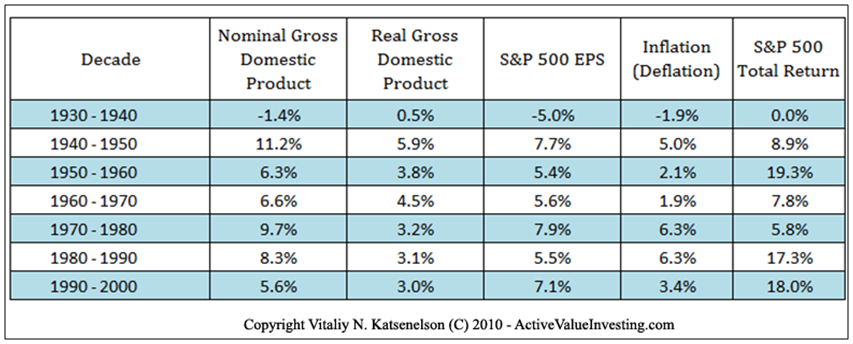
That distinction is the first big truth about stocks and the economy: a rising market does not automatically mean every household is thriving, and a falling market does not automatically mean the entire economy is in recession.
Public companies are only part of the economic picture
Major stock indexes mainly represent publicly traded corporations. But the real economy also contains millions of privately held businesses, nonprofit organizations, government agencies, freelancers, family businesses, and workers whose fortunes may look very different from the companies dominating a stock index.
A technology giant can report booming profits while a local restaurant struggles with food costs. A multinational manufacturer can benefit from overseas demand while a small domestic business faces expensive credit. Both stories can be true at the same time.
This is why the sentence “stocks are up, so the economy must be great” deserves the same skeptical eyebrow you would give a restaurant claiming one excellent appetizer proves the entire menu is flawless.
Why Stocks Often Move Before the Economy
Stock prices are largely about expectations. Investors do not wait for an economic report to announce that every problem has disappeared. They attempt to anticipate what conditions will look like six months, a year, or several years ahead.
That forward-looking nature helps explain a pattern that confuses many people: the stock market may begin falling before a recession becomes obvious, and it may begin recovering while economic news is still miserable.
Historical business-cycle research has long examined stock prices as a leading indicator because markets attempt to discount future changes in profits and economic activity. But “leading” does not mean “psychic.” Stocks have predicted recessions that arrived, feared recessions that never came, and occasionally reacted to events with the emotional grace of a cat encountering a cucumber.
Markets trade on the difference between expectations and reality
Suppose investors expect a company to earn $10 billion, but it earns $9 billion. That sounds profitable, yet the stock may fall because the result was worse than expected.
Now imagine the economy is contracting badly, but investors expected an even deeper contraction. New data show conditions are still poor, just less awful than feared. Stocks may rise.
This is one of the strangest rules of markets: bad news can be bullish when investors expected worse, and good news can be bearish when investors expected better.
The market is not grading the economy on an absolute scale. It is constantly comparing reality with the expectations already embedded in prices.
Corporate Profits Matter More Than Headlines
Over long periods, the value of a stock is connected to the underlying company’s ability to generate cash, grow earnings, and return value to shareholders. Short-term prices can be driven by enthusiasm, fear, speculation, and changing valuations, but businesses eventually have to produce results.
Corporate profits therefore form an important bridge between stocks and the economy. Economic growth can support sales. Consumer spending can increase company revenue. Higher productivity can improve margins. Recessions can weaken demand.
Yet the connection is not perfectly synchronized. Large companies may cut costs, automate operations, expand overseas, or gain market share even when domestic economic growth is weak. Conversely, a rapidly growing economy does not guarantee strong stock returns if investors previously paid extremely high prices for expected profits.
In other words, a great company can be a bad investment at the wrong price, and a mediocre economic environment can still produce successful companies. Valuation matters. Expectations matter. Earnings matter. The economy matters too, but it does not get to sit alone in the driver’s seat.
Interest Rates: The Connection Investors Cannot Ignore
Interest rates affect nearly every corner of finance. They influence borrowing costs for households and businesses, mortgage rates, bond yields, investment decisions, and the value investors place on future corporate earnings.
When rates rise, borrowing may become more expensive. Businesses may postpone expansion. Consumers may rethink large purchases. At the same time, bonds and cash-like investments may become more attractive competitors to stocks.
Higher rates can also reduce the present value investors assign to profits expected far in the future. This can be especially important for fast-growing companies whose valuations depend heavily on distant earnings.
Lower rates can work in the opposite direction, although there is no magical rule saying “rate cut equals stock rally.” A central bank may cut rates because economic risks are increasing. Investors must consider both the policy action and the reason behind it.
The Federal Reserve describes monetary policy as working through broader financial conditions that affect households and businesses. Those conditions include interest rates and asset prices, which helps explain why Wall Street pays such obsessive attention to central-bank decisions. Somewhere, at almost any moment, a trader is analyzing one adjective in a Federal Reserve statement as though it were a clue in a murder mystery.
Inflation Can Help Some Stocks and Hurt Others
Inflation is a broad increase in prices, but its effects on companies are uneven.
A business with strong pricing power may pass higher costs to customers. Another company may see wages, transportation, materials, and financing costs rise faster than it can increase prices. The first company may preserve its profit margins. The second may discover that “inflation adjustment” is corporate language for “ouch.”
Persistent inflation can also influence interest rates, consumer purchasing power, and investment valuations. This is why investors often examine inflation together with wage growth, productivity, consumer demand, and monetary policy rather than treating one data point as the economic equivalent of a crystal ball.
The effect also varies by sector. Energy producers, banks, manufacturers, retailers, software companies, utilities, and real estate businesses respond differently to changes in growth, rates, and prices. The economy is not one giant company, and neither is the stock market.
A Strong Economy Can Still Produce a Weak Stock Market
This seems backward until valuation enters the conversation.
Imagine investors become extremely optimistic and push stock prices to levels that assume years of spectacular growth. The economy may continue expanding, employment may remain healthy, and corporate profits may increase. Yet stocks can still disappoint if actual results fail to justify the extraordinary expectations already reflected in prices.
The reverse can also occur. After a major sell-off, stocks may become much cheaper. The economy may still look terrible, but prices may already reflect a large amount of bad news. Even modest improvement can trigger a significant recovery.
This is why economic forecasting and market forecasting are different jobs. Accurately predicting economic growth does not automatically tell you what stocks will do because you must also know what investors expected, what they paid, and how those expectations will change.
Why a Booming Stock Market Does Not Make Everyone Rich
Another uncomfortable truth is that stock ownership and financial wealth are not distributed evenly.
When stock prices rise, households with substantial equity holdings can experience large gains in net worth. Households with little or no exposure to stocks may see far less direct benefit. A booming index therefore can coexist with financial stress among families dealing with high housing costs, expensive debt, job insecurity, or limited savings.
The Federal Reserve has noted that changes in household net worth are often driven by movements in equities and real estate, while ownership of these assets is concentrated unevenly across households. Asset prices can influence consumer spending through wealth effects, but that impact is not identical for everyone.
This explains why people can look at the same economy and describe completely different experiences. A retired investor with a diversified portfolio, a first-time homebuyer, a renter with student debt, and a business owner seeking a loan may all experience the same economic cycle differently.
Recessions and Bear Markets Are Not the Same Thing
A recession describes a broad decline in economic activity. A bear market generally refers to a major decline in stock prices. They frequently overlap, but neither guarantees the other.
Stocks may fall because investors fear a recession that never fully develops. A recession may damage some industries far more than others. A bear market can begin before economic contraction becomes clear, while a stock-market recovery can start before employment and household confidence fully recover.
This timing mismatch is why waiting for the economy to feel “safe” before investing can be problematic. By the time every headline sounds cheerful, markets may already have risen substantially.
It is equally dangerous to assume every decline is a bargain. Some companies genuinely deteriorate. Some industries face permanent disruption. A falling price is not automatically a discount; sometimes it is an accurate review.
Does the Stock Market Affect the Real Economy?
Yes. The relationship runs in both directions.
Falling stock prices can reduce household wealth, weaken confidence, and make companies more cautious. Financial stress can tighten access to capital. A severe market disruption can affect business investment and consumer spending.
Rising markets can support confidence and make it easier for some businesses to raise capital. Higher household wealth may encourage additional spending, particularly among households that own significant financial assets.
However, ordinary day-to-day market volatility should not be confused with a financial crisis. A 2% decline in a stock index may create dramatic television graphics without changing whether millions of Americans go to work the next morning.
The important issue is whether market movements become large and persistent enough to influence credit, wealth, confidence, investment, and financial stability.
What Investors Should Actually Watch
No single indicator can explain the stock market or the economy. A more useful approach is to examine several categories together.
Economic growth and consumer demand
GDP, personal income, consumer spending, and business investment help show whether economic activity is expanding or contracting.
Employment and wages
Jobs support household income and spending. But labor-market indicators can lag turning points, so they should not be used alone to forecast markets.
Inflation and interest rates
These affect purchasing power, financing costs, bond yields, and stock valuations.
Corporate earnings
Stocks ultimately represent businesses. Revenue, margins, cash flow, debt, and profit growth deserve more attention than a daily collection of dramatic headlines.
Valuation
The price paid for an investment affects future return potential. Strong companies can become overpriced, while difficult periods may create attractive opportunities.
Financial conditions and credit
Markets function more smoothly when households and businesses can access financing at sustainable costs. Credit stress can spread beyond Wall Street into the broader economy.
The goal is not to construct an economic dashboard so complicated that it requires its own weather satellite. The goal is to avoid mistaking one number for the whole story.
The Biggest Mistakes People Make About Stocks and the Economy
Mistake 1: “The president controls the stock market”
Government policy can influence taxes, regulation, spending, trade, and business confidence. But markets also respond to corporate earnings, monetary policy, global events, technology, valuations, and millions of independent decisions. Giving one politician full credit or blame for every market move is usually an oversimplification.
Mistake 2: “Good economic news is always good for stocks”
Strong economic data can sometimes raise concerns about inflation or interest rates. The market reaction depends on expectations and context.
Mistake 3: “A market crash means sell everything”
Emotionally driven selling can convert temporary declines into permanent losses. Regulators and major investment organizations consistently emphasize aligning investments with goals, time horizon, risk tolerance, asset allocation, and diversification rather than reacting impulsively to volatility.
Mistake 4: “The market always comes back quickly”
Broad markets have historically recovered from major declines, but the timing is unpredictable, and individual companies can fail permanently. Long-term optimism is not a substitute for diversification and risk management.
Practical Experiences That Reveal the Truth About Stocks and the Economy
The relationship becomes easier to understand through experiences investors commonly encounter. The following composite scenarios are not personal investment claims or predictions; they illustrate recurring lessons from real market behavior.
Experience 1: Selling because the news feels unbearable
Imagine an investor named Sarah who builds a diversified retirement portfolio during calm markets. Then a crisis arrives. Stocks fall, financial headlines become increasingly alarming, and economic data deteriorate. Sarah decides she will sell now and buy again when conditions are “clearly better.”
The problem is that markets often recover before the news feels comfortable. When conditions finally seem safer, prices may already be much higher. Sarah avoided some emotional discomfort, but she also created a second difficult decision: when to get back in.
The experience teaches an important lesson. Market timing requires two successful decisionsthe exit and the reentry. Getting one right is difficult. Getting both right repeatedly is considerably harder.
Experience 2: Buying a great story at any price
Marcus discovers a fast-growing company operating in an exciting industry. Revenue is rising, the product is popular, and almost everyone he follows online calls it “the future.” He assumes a great company must automatically be a great stock.
Then the company reports strong growth that is slightly below extravagant expectations. The business is still healthy, but the stock falls sharply.
Marcus learns that investment returns depend not only on business quality but also on valuation. Paying a price that assumes perfection can leave little room for ordinary disappointment. The economy may be expanding and the company may still be successful, yet the stock can struggle because expectations ran ahead of reality.
Experience 3: Assuming a bad economy means every company loses
During an economic slowdown, Linda expects all stocks to perform poorly. Instead, she notices enormous differences among industries. Some businesses face collapsing demand, while others benefit from structural changes, recurring revenue, cost advantages, or increased demand for essential services.
The lesson is not that recessions are harmless. They are not. The lesson is that an economy contains thousands of different business models. Economic weakness can redistribute opportunities and risks rather than affecting every company equally.
Experience 4: Discovering that personal finances matter more than predictions
David spends years trying to predict recessions. Eventually, he realizes that his biggest investing risk is more personal: he keeps too little emergency cash. Whenever an unexpected expense appears during a market decline, he risks selling investments at a bad time.
Building a stronger financial buffer changes his experience. He becomes less dependent on short-term market movements because money needed soon is no longer relying entirely on volatile assets.
This is where economics becomes personal. The “best” portfolio is not merely the one with the highest theoretical return. It must also fit the investor’s time horizon, liquidity needs, ability to tolerate losses, and real-life obligations.
Experience 5: Learning that doing less can be a strategy
Emma begins investing and assumes successful investors must constantly react. She checks futures before breakfast, economic reports at lunch, and market commentary before bed. Her portfolio becomes a hobby, then a second job, then a small anxiety factory.
Eventually, she adopts a simpler process: diversified investments, regular contributions, periodic rebalancing, and fewer attempts to predict every market turn.
The result is not excitement. That is precisely the point.
A disciplined approach can feel boring compared with chasing hot stocks or making dramatic recession calls. But investing is one of the few activities where constant action can create the illusion of control without improving the outcome. Sometimes the most useful experience is discovering that a portfolio does not need to respond to every headline.
Conclusion: The Real Relationship Between Wall Street and Main Street
The truth about stocks and the economy is more nuanced than the nightly headline.
The economy influences corporate revenue, profits, borrowing costs, and consumer demand. The stock market influences wealth, confidence, capital formation, and financial conditions. They are deeply connected.
But they are not interchangeable.
Stocks are forward-looking and expectation-driven. Economic statistics often describe conditions that have already occurred. Markets can rise during painful economic periods because investors anticipate recovery. They can fall during decent economic conditions because prices had already assumed something even better.
For investors, the most useful response is usually not to predict every recession or decode every market twitch. It is to understand what you own, respect valuation and risk, maintain appropriate liquidity, diversify, and build a strategy that can survive both good times and bad.
The stock market is not an economic report card. It is a giant, noisy, occasionally irrational auction of future expectations. The economy is the much larger world in which people work, spend, save, borrow, build businesses, and try to remember whether eggs were always this expensive.
Understand both, and the daily financial circus becomes much easier to watch without joining the clowns.
Note: This educational article synthesizes research and investor guidance from 15 reputable U.S.-focused sources, including the Federal Reserve, Bureau of Economic Analysis, Bureau of Labor Statistics, SEC, FINRA, Investor.gov, Federal Reserve Bank of New York, Federal Reserve Bank of St. Louis, NBER, Congressional Budget Office, U.S. Treasury, Vanguard, Fidelity, Charles Schwab, and J.P. Morgan. It is general information, not individualized financial advice.












