
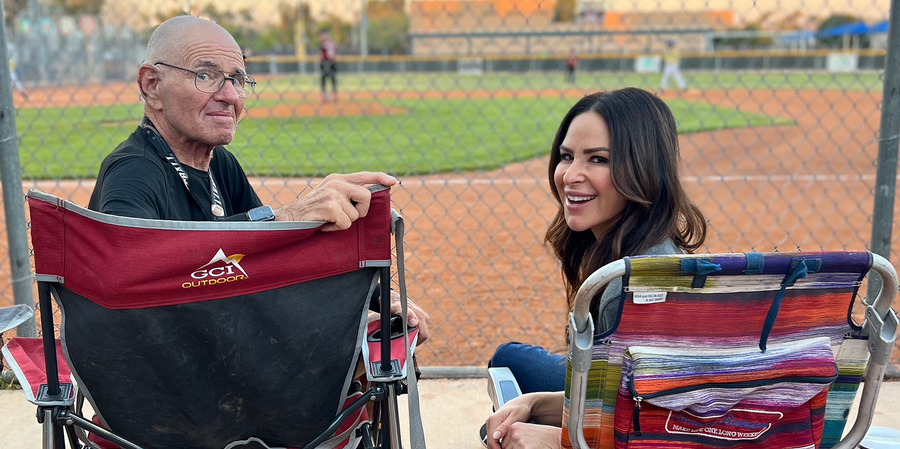
Grief has a strange sense of humor. It shows up when you are trying to buy cereal, when a song ambushes you in traffic, and, in my case, somewhere between a Little League dugout and a dusty folding chair that had absolutely no lumbar support. I did not set out to join a grief group. I did not sign up for a circle of chairs, a box of tissues, or a name tag that said, “Hello, I’m Processing.” I simply went to a baseball field because someone I loved was gone, and the house had become too quiet.
What I found was the most unorthodox grief group imaginable: a ball field, a schedule, a scoreboard, a handful of parents, a few kids in oversized helmets, and the reliable absurdity of baseball. There were strikeouts, snack bags, bad calls, heroic grounders, and at least one child who ran from second base to first with the confidence of a man inventing a new sport. Somehow, all of it helped.
This is not an argument that baseball cures grief. Nothing cures grief in the way cold medicine tackles a sniffle. But baseball gave my grief somewhere to sit. It gave sorrow a rhythm, a routine, a place to show up without needing to explain itself. In the long season after loss, baseball became a language I could understand when feelings were speaking in thunder.
Why Grief Needs a Place to Go
Grief is not tidy. It is emotional, physical, social, and spiritual all at once. It can make your chest feel heavy, your brain feel foggy, your appetite act like it moved to another zip code, and your calendar look like an accusation. People often talk about grief as a journey, which sounds elegant until you realize the journey includes getting lost in the laundry room because you forgot why you walked in there.
One of the hardest parts of grief is that the world keeps moving. Bills still arrive. Dishes still need washing. Children still ask what is for dinner with the urgency of federal investigators. The ordinary refuses to pause for the extraordinary pain you are carrying. That is why routine matters. Not because routine fixes heartbreak, but because it gives the day a skeleton when everything inside you feels boneless.
Baseball, at its best, is routine dressed as drama. Practices happen on certain days. Games begin at certain times. Innings come in order. Three outs mean a change. There is comfort in that structure. When grief made the future feel impossible, the baseball calendar offered something small and manageable: Tuesday practice. Thursday game. Saturday morning snacks. Not a five-year plan. Just the next pitch.
The Ball Field as a Grief Support Group
A traditional grief support group can be deeply helpful. People gather, listen, speak honestly, and learn that their pain is not strange. But not everyone is ready to sit in a room and say the hardest thing out loud. Some of us need a side door into healing. Baseball was my side door.
At the field, nobody asked me to summarize my loss. Nobody expected a breakthrough before the second inning. People simply nodded, made room on the bleachers, and passed the sunscreen. That quiet companionship mattered. Grief can make you feel like a distant planet; community pulls you back into orbit. Even casual connection can remind you that you still belong to the living world.
Baseball parents become a temporary civilization. They share water bottles, folding chairs, bug spray, and rumors about which concession stand has edible hot dogs. They cheer for children who occasionally forget which hand the glove goes on. They clap for effort, not perfection. In that odd little society, I did not have to perform happiness. I only had to show up.
There Is Healing in Being Expected Somewhere
After loss, isolation can feel tempting. Home is private. Pajamas are loyal. The couch does not ask questions. But too much isolation can deepen the ache. The baseball field gave me a reason to leave the house without requiring me to be charming, productive, or emotionally polished.
Being expected somewhere is powerful. A team schedule does not erase grief, but it interrupts the spiral. It says, “Put on shoes. Bring the glove. Sit in the sun. Watch one small thing happen.” That may sound simple, but in grief, simple things can be heroic. Sometimes healing begins with the radical act of arriving.
Baseball Understands Failure Better Than Most People
Baseball is a sport built around failure. A great hitter fails most of the time. A routine pop fly becomes an adventure. A perfect throw arrives one inch too late. The game does not panic when things go wrong; it adjusts, resets, and continues. That made sense to me.
Grief also involves repeated failure. You think you are doing better, then cry in the produce section because the oranges look like the ones your loved one used to buy. You answer an email normally, then stare at a coffee mug for twenty minutes. You have a good day and feel guilty about it. You have a bad day and feel guilty about that too. Grief is very committed to guilt. It should consider a career in management.
Baseball taught me to stop treating setbacks as proof that I was broken. A strikeout is not the end of the season. A terrible inning is not the whole game. A wave of sadness does not mean you are back at the beginning. It means you are still playing while carrying something heavy.
The Rituals That Kept Me Standing
Rituals matter in grief because they give love a shape after the person is gone. Some rituals are formal: funerals, memorials, anniversaries, prayers. Others are humble and homemade: wearing a favorite sweatshirt, cooking a familiar recipe, taking the long way past a meaningful place.
Baseball added new rituals to my life. I packed the same chair. I parked under the same tree. I brought sunflower seeds, though I never mastered the graceful seed-spitting technique and mostly looked like a confused squirrel. I learned the rhythm of warmups: catch, stretch, chatter, first pitch. These rituals did not replace the person I lost. They helped me carry the loss without dropping everything else.
The Scoreboard Was Not the Point
At first, I thought the games would distract me. Distraction gets a bad reputation, but sometimes the mind needs a safe place to rest. Over time, though, baseball became more than distraction. It became a practice in attention.
For two hours, I watched the ball. I listened for the crack of the bat. I noticed dust rising around cleats. I saw kids learn resilience in real time. One child struck out and then returned to the dugout as if personally betrayed by physics. Another made a catch and looked so shocked that everyone cheered twice, once for the catch and once for the facial expression. These moments pulled me into the present. Grief often drags you backward. Baseball, pitch by pitch, asked me to look here.
How Baseball Helped Me Talk Without Talking
One of the surprising gifts of the season was that baseball created conversation without pressure. In grief, direct questions can feel impossible. “How are you?” is a lovely question that can also feel like being handed a pop quiz in a language you do not speak.
At the field, conversations began sideways. “Nice hit.” “Do you know what inning it is?” “Did anyone bring extra water?” “Was that a strike, or is the umpire simply experimenting?” These small exchanges made it easier to be around people again. I did not have to narrate my pain to benefit from human connection.
Eventually, the small talk made room for real talk. Someone mentioned losing a parent. Someone else understood the odd loneliness of first holidays. Another person admitted that they came to games because sitting at home was worse. The ball field became a place where grief could breathe in the background while life happened in the foreground.
The Childlike Wisdom of Playing Anyway
Children are not always graceful with grief, but they are often honest. They can cry hard, then ask for a snack. They can miss someone deeply, then chase a foul ball with total commitment. Adults sometimes mistake this for forgetting. It is not forgetting. It is the body’s genius for survival.
Baseball reminded me that joy after loss is not betrayal. Laughing at a wild pitch does not mean you loved the person less. Enjoying a sunny afternoon does not cancel your sadness. Grief and joy can share a bench. They may not speak politely at first, but eventually they learn to stop elbowing each other.
Watching kids play also softened my expectations of myself. They made mistakes loudly and recovered quickly. They accepted coaching. They asked for snacks after disaster. There is wisdom in that. When grief knocked me down, I began to ask simpler questions: Did I eat? Did I move? Did I talk to someone kind? Did I go outside? Did I, in some tiny way, keep playing?
Why Sports Communities Can Help the Heart
Sports communities create belonging through shared attention. Everyone looks toward the same field. Everyone reacts to the same moment. Everyone groans at the same error and celebrates the same unlikely double. That shared emotional rhythm can be surprisingly comforting when grief has made you feel separate from everyone else.
Baseball is especially suited to grief because it leaves room for silence. It is not constant action. There is waiting, watching, adjusting, hoping. A baseball game has pauses built into it, and grief needs pauses. The space between pitches felt like permission. I could think. I could remember. I could miss someone. Then the next pitch came, and I came back.
The game also carries a gentle sense of continuity. Baseball seasons come and go. Players grow. Gloves wear in. Teams win, lose, and try again. In grief, continuity can feel offensive at first. How dare the world continue? But eventually, continuity becomes a rope. The season continues, and somehow you do too.
Specific Lessons Baseball Taught Me About Healing
1. Show Up Before You Feel Ready
If I had waited until I felt ready to rejoin life, I might still be waiting. Baseball gave me a low-stakes place to practice being present. I could arrive sad. I could leave sad. The victory was not emotional transformation. The victory was attendance.
2. Accept Help in Ordinary Forms
Support does not always look like a deep conversation. Sometimes it looks like someone saving you a seat, offering a cold drink, or texting, “Game moved to Field 3.” Ordinary kindness is not small when your heart is exhausted.
3. Let Memory Come With You
I did not need to leave my loved one at home in order to participate in life. Memory came with me to the field. Sometimes it sat beside me quietly. Sometimes it hurt. Sometimes it made me smile. Healing did not mean moving on from love. It meant moving forward with love.
4. Keep a Loose Grip on the Score
Baseball parents know that the final score is only part of the story. The same is true of grief. A good day does not mean you are done. A bad day does not mean you have failed. Healing is measured less like a scoreboard and more like a season: uneven, cumulative, and full of weather delays.
When Grief Needs More Than Baseball
As much as baseball helped me, it was not a substitute for professional support when deeper help was needed. Some grief becomes complicated, traumatic, or dangerously isolating. If sorrow makes daily life feel impossible for a long time, or if it brings thoughts of self-harm, reaching out to a counselor, doctor, crisis line, faith leader, or trusted support organization is not weakness. It is maintenance for a heart doing brutal work.
The ball field helped because it worked alongside other forms of care: honest conversations, rest, movement, routines, and the slow acceptance that grief changes shape. Healing rarely comes from one magic doorway. It comes from many small entrances: a walk, a friend, a therapist, a ritual, a meal, a memory, a game under the lights.
Extra Innings: Experiences From the Most Unorthodox Grief Group
At the end of that season, I realized I had been attending a grief group all along. It simply had no pamphlet. It smelled like grass, dust, sunscreen, and concession-stand pretzels. Its members wore team shirts instead of name tags. Its opening meditation was the national anthem played through a speaker that crackled like it had survived several wars. Its closing ritual was parents dragging equipment bags to minivans while children begged for ice cream as if they had just completed military service.
One night stands out. The sky was turning that soft purple color that makes even chain-link fences look poetic. Our team was losing, though “losing” in youth baseball is a flexible concept, because half the audience is usually unsure of the score and the other half is related to the pitcher. A child stepped up to bat after striking out twice. He looked nervous. The dugout got loud. Not polished loud. Kid loud. Chaotic, squeaky, wildly off-rhythm loud.
He swung and missed the first pitch. Then the second. I felt my whole body tighten, not because the game mattered that much, but because I recognized the feeling: trying again while expecting pain. The third pitch came in, and he made contact. Not a cinematic home run. Not even close. It was a humble little grounder with the speed of a tired grocery cart. But he ran. The crowd yelled. The first baseman fumbled. The runner reached the bag safely and turned around with a grin so large it could have powered the field lights.
I cried behind my sunglasses. Not dramatic movie tears. Quiet, sneaky tears. The kind that pretend they are allergies. In that tiny baseball moment, I saw something I needed: contact counts. Running counts. Trying counts. Not every healing moment is a home run. Some are awkward grounders that somehow get you to first.
Another time, a parent I barely knew sat beside me and said nothing for almost an entire inning. That silence was one of the kindest things anyone gave me. Grief often attracts advice the way a porch light attracts moths. People mean well, but not every wound needs commentary. Sometimes companionship is enough. We watched the game. We clapped at the appropriate times. When she finally spoke, she only said, “Glad you came.” That sentence landed gently and stayed.
By the final game, I was not healed in the shiny, complete way people sometimes imagine. I still missed the person I had lost. I still had ambush moments. I still carried sadness home with the folding chair. But something had changed. Grief was no longer the only thing in the room. There was also routine. There was laughter. There were familiar faces. There was a child learning to keep his eye on the ball. There was the strange mercy of a season ending and another one waiting somewhere ahead.
Baseball helped me heal because it did not demand that I stop grieving. It invited me to grieve while participating. It gave me a place to sit with sorrow and still cheer. It taught me that life after loss is not about pretending the missing person is not missing. It is about finding ways to keep love in motion. Sometimes that motion is a walk around the block. Sometimes it is therapy. Sometimes it is a candle lit on an anniversary. And sometimes, wonderfully and ridiculously, it is a dusty baseball field where a kid in a crooked helmet reminds you that the game is not over.
Conclusion
The most unorthodox grief group I ever joined did not look like healing at first. It looked like baseball. But that was the gift. The field offered routine when my days felt shapeless, community when grief made me feel alone, movement when sadness froze me in place, and rituals when love needed somewhere to go. Baseball did not erase loss. It helped me carry it differently.
Healing after grief is rarely grand. More often, it is built from small returns: returning to a seat in the sun, returning to conversation, returning to laughter, returning to the world without leaving love behind. Baseball gave me those returns one inning at a time. It reminded me that even after the hardest losses, there can still be another pitch, another cheer, another chance to stand up, dust off, and run.












