
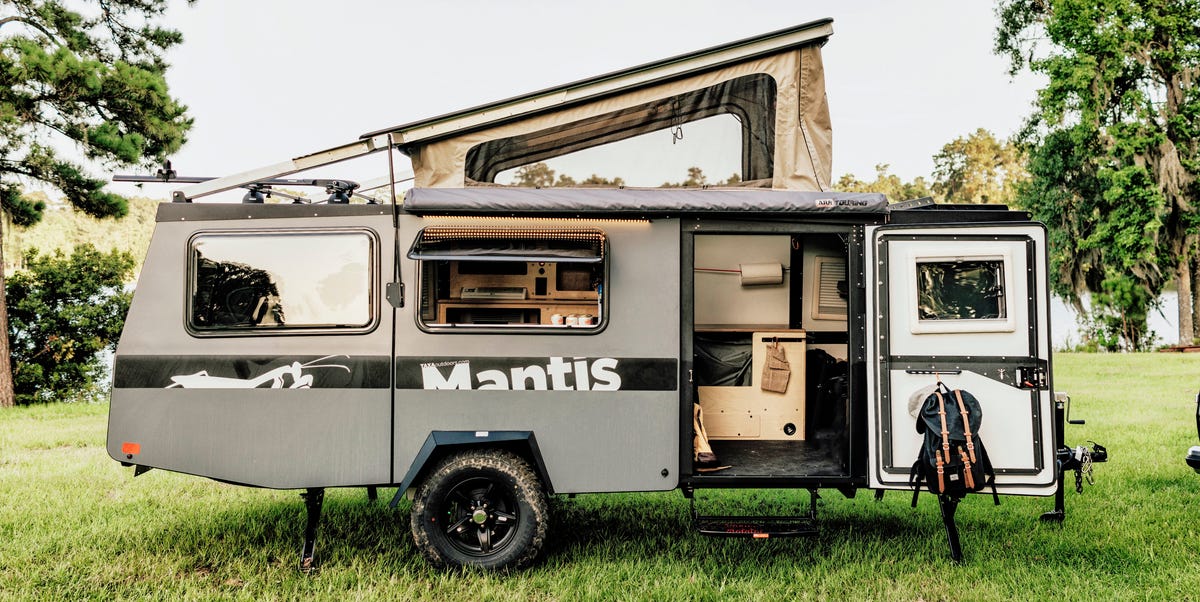
The Mantis Camper is not the kind of travel trailer that politely fades into the campground background. It looks like a tiny lunar base, parks like a compact adventure trailer, and behaves like a clever cabin that has been folded into a 19-foot box by someone who really, really enjoys puzzles. That is not an accident. The Mantis is built by TAXA Outdoors, a company known for lightweight, design-forward campers inspired by human-habitat thinking rather than old-school RV excess.
In plain English, the Mantis Camper is for people who want more comfort than a tent, less bulk than a giant travel trailer, and more personality than a beige box on wheels. It has a pop-up roof, sleeping space for four or more, a galley kitchen, heating and air conditioning, flexible storage, and enough rugged character to make your driveway look like it is preparing for a National Geographic assignment.
But is the TAXA Mantis actually practical? Who is it best for? What makes it different from other small campers? And does “garageable adventure trailer” mean your garage will welcome it with open arms, or will you spend Saturday afternoon measuring door trim while whispering nervous math? Let’s unpack the Mantis Camper in detail.
What Is the Mantis Camper?
The Mantis Camper, officially sold as the TAXA Mantis, is a compact pop-up travel trailer designed for adventure camping, family trips, and off-grid-style weekends. It is the largest towable habitat in TAXA’s lineup, sitting above smaller options like the Cricket and TigerMoth. Unlike many conventional RVs that try to imitate a miniature apartment, the Mantis is designed more like a field base: efficient, tough, flexible, and focused on getting you outside rather than trapping you inside behind wood-grain wallpaper.
The current Mantis measures about 19 feet long and has a dry weight of around 3,115 pounds in the standard edition. The Overland Edition and Mantis X add more trail-focused hardware and weight, with the X Series listed at roughly 3,746 pounds dry. It is important to remember that “dry weight” does not include all the real-world stuff you bring along: water, propane, batteries, food, camp chairs, bikes, tools, marshmallows, and that one cast-iron skillet that weighs more than a small planet.
The signature feature is the pop-up roof. Closed, the camper stays lower for towing and storage. Open, it creates standing room, ventilation, and a much airier interior. That single design choice gives the Mantis a rare combination: compact on the road, surprisingly livable at camp.
Why the Mantis Camper Stands Out
1. It Feels More Like Outdoor Gear Than a Traditional RV
Many travel trailers are designed around indoor luxury: big sofas, large TVs, fake fireplaces, and enough cabinetry to make a kitchen remodel jealous. The Mantis Camper takes a different route. It feels closer to premium outdoor equipment. The materials are practical. The shapes are intentional. The storage is modular. The interior is not trying to be your living room; it is trying to be your launchpad.
That makes it especially attractive to hikers, mountain bikers, paddlers, climbers, anglers, photographers, and families who spend most of the day outside. You do not buy a Mantis because you want to hide from nature. You buy it because you want a warm, dry, smartly organized place to sleep, cook, clean up, and regroup before going back outside.
2. The Pop-Up Roof Changes Everything
The pop-up roof is the Mantis Camper’s magic trick. When closed, the trailer is easier to store and tow. When opened, the interior becomes tall enough for standing, moving around, changing clothes, and cooking without performing the awkward “camper crouch” that makes everyone look like a suspicious raccoon.
The roof also improves airflow. Mesh windows in the tented upper section let breezes pass through, which helps reduce that stuffy trailer feeling. In warm weather, this matters. In scenic places, it matters even more, because the Mantis makes the campsite feel present. You are inside, but you are not sealed away from birds, trees, wind, and the smell of breakfast drifting from the skillet.
3. It Sleeps a Real Family
The Mantis Camper is marketed with sleeping space for four or more adults, depending on configuration. The rear area converts between dining, lounging, and sleeping, while the front couch/bunk system adds additional sleep space. For families moving up from tent camping, this is a big deal. Rainy nights become less dramatic. Cold mornings become less heroic. Kids get actual beds, and parents get a place to drink coffee without first crawling out of a nylon cave.
For couples, the extra sleeping zones can become gear space, pet space, or a flexible lounge. For solo travelers, the Mantis may feel almost luxurious, assuming your definition of luxury includes being able to store muddy boots somewhere other than directly beside your pillow.
Interior Layout and Daily Usability
The Mantis Camper’s interior is built around flexibility. The rear bed can convert into a cafe-style seating area or lounge, making the same square footage serve multiple roles. This is essential in a small camper. Every inch has a job, and in the Mantis, most inches seem to have a side hustle.
The galley kitchen includes core camping necessities such as a sink, two-burner stove, countertop space, shelving, and storage. Instead of trying to mimic a suburban kitchen, it gives you what you need to make practical camp meals: coffee, eggs, pasta, grilled vegetables, soup, tacos, and emergency pancakes when morale dips below acceptable levels.
Storage is one of the Mantis Camper’s smartest features. TAXA uses crate-friendly towers, under-bed storage, backsplash storage, tie-down points, and open organization zones. This approach works well for active campers because gear rarely fits neatly into decorative cabinets. Helmets, water shoes, dog leashes, recovery straps, rain jackets, and snack bins need flexible storage, not a tiny drawer labeled “miscellaneous doom.”
Kitchen, Bathroom, Heating, and Cooling
The Mantis Camper includes a galley kitchen and climate-control features that make it more comfortable than minimalist teardrop trailers. Current models list an 8,000 BTU air conditioner, furnace, and hot water system. These features help extend the camping season, especially for travelers who want to explore beyond perfect spring weekends.
The bathroom setup is compact but useful. Depending on model and configuration, the Mantis offers a wet bath, shower, cassette toilet, and exterior shower options. This is not a spa. No one is confusing it with a marble hotel bathroom unless they have spent several days backpacking and their standards have become beautifully realistic. But for rinsing off mud, cleaning sandy feet, handling nighttime bathroom needs, or making family camping easier, the setup is extremely valuable.
Water capacity varies by model year and edition, but the Mantis family commonly includes fresh and gray water systems suitable for short off-grid trips when used thoughtfully. As always with compact campers, water discipline matters. Long showers are not the assignment. Efficient rinsing is.
Towing the Mantis Camper
One major appeal of the Mantis Camper is towability. At roughly 3,115 pounds dry for the standard model, it can be towed by many properly equipped midsize SUVs and trucks. However, buyers should not stop at dry weight. The correct question is not “Can my vehicle tow the empty trailer on paper?” The better question is “Can my vehicle safely tow the loaded trailer with passengers, cargo, water, tongue weight, terrain, and weather included?”
That means checking your vehicle’s tow rating, payload rating, tongue weight limit, hitch setup, brake controller requirements, and loaded trailer weight. Adventure trailers encourage adventure gear, and adventure gear adds up fast. Two bikes, a cooler, full water, propane, batteries, camp tools, recovery gear, and weekend food can quickly turn a light trailer into a serious towing responsibility.
The Overland Edition and Mantis X are built for rougher terrain and remote campsites. These versions add features such as upgraded suspension, additional clearance, stronger protection, all-terrain tires, and off-road-focused hardware. They are excellent for people who actually use forest roads, desert tracks, and rocky access routes. If your “off-road adventure” is mostly a gravel driveway behind a winery, the standard Mantis may already be plenty brave.
Mantis vs. Mantis X: Which One Makes Sense?
The standard Mantis is the best fit for campers who want a lightweight, flexible, garage-friendly travel trailer with real amenities. It is ideal for state parks, national parks, weekend trips, family camping, and mild backroad adventures. It offers the core Mantis experience: pop-up roof, smart interior, kitchen, climate control, sleeping space, and modular storage.
The Mantis X is for buyers who want the most rugged version. It adds more off-road equipment and trail protection, including reinforced components, more capable suspension, beefier tires, skid protection, and other upgrades designed for remote travel. It costs more and weighs more, but it also opens the door to rougher destinations.
A simple way to decide is this: buy the camper that matches your real camping life, not your fantasy Instagram life. If you mostly visit developed campgrounds, the standard Mantis is sensible. If you regularly explore remote public lands, rough forest roads, and dispersed campsites where cell service goes to retire, the Mantis X becomes more compelling.
Who Should Buy the Mantis Camper?
The Mantis Camper is a strong match for active families, adventurous couples, and outdoor-focused travelers who want a compact trailer with genuine comfort. It is especially appealing if you are upgrading from tent camping but do not want a large RV. The Mantis still keeps you connected to the outdoors. It simply gives you a better bed, a better kitchen, a better bad-weather plan, and fewer arguments with tent poles.
It is also a good choice for homeowners who want to avoid paying for separate RV storage, provided their garage dimensions work. TAXA often highlights the Mantis as garageable, but buyers should measure carefully. Garage doors, ceiling racks, sloped driveways, roof accessories, and aftermarket add-ons can all affect real-world fit. A tape measure is cheaper than an awkward conversation with your garage door.
The Mantis is not the best choice for everyone. If you want a huge bathroom, a private bedroom, multiple slide-outs, a residential refrigerator, and a sofa that seats eight people, look elsewhere. The Mantis is compact, clever, and adventure-minded. It rewards people who pack intentionally and enjoy efficient spaces.
Pros and Cons of the Mantis Camper
Pros
The biggest advantage is smart design. The Mantis Camper uses space well, offers real sleeping capacity, includes useful amenities, and remains compact enough for many driveways and garages. The pop-up roof adds livability without making the trailer overly tall on the road. The modular storage is excellent for outdoor gear. The kitchen and climate systems make weekend trips more comfortable, and the rugged editions expand where you can camp.
Another major benefit is personality. The Mantis does not look like every other camper. It has a modern, angular, expedition-ready style that makes people ask questions at fuel stations. Whether that is a blessing or a curse depends on how much small talk you enjoy while holding a gas pump.
Cons
The Mantis Camper is not cheap. New models sit in premium small-camper territory, and off-road versions cost even more. Used prices can be more approachable, but they vary significantly by year, trim, condition, and dealer inventory.
The compact bathroom may not satisfy buyers who want residential comfort. The interior, while clever, still requires small-space habits. You will need to pack thoughtfully, convert spaces as needed, and accept that a 19-foot adventure trailer is not a rolling condominium. Also, because the Mantis has a distinctive design and specialized systems, buyers should inspect used models carefully and confirm parts, warranty status, maintenance history, and any modifications.
Buying Tips for New and Used Mantis Campers
Before buying a Mantis Camper, decide how you will actually camp. Weekend state park trips require different features than long dispersed adventures. Families should test the sleeping layout. Tall campers should stand inside with the roof raised. Anyone planning cold-weather trips should understand the heating system. Anyone planning hot-weather trips should think about shore power, battery setup, ventilation, and air conditioning use.
For used Mantis Campers, inspect the pop-up roof fabric, seals, hinges, windows, electrical system, water system, furnace, air conditioner, tires, suspension, brakes, frame, and underbody protection. Look for signs of leaks, hard off-road use, neglected maintenance, or creative DIY wiring that looks like it was completed during a thunderstorm.
Ask about included accessories. Awnings, rooftop tents, solar components, batteries, upgraded tires, storage crates, and hitch equipment can change the value. Also compare the exact trim. A standard Mantis, Mantis Overland, Mantis Trek, and Mantis X may have different weights, features, and resale values.
Real-World Experience: What Camping With the Mantis Feels Like
Imagine pulling into a wooded campsite late on a Friday afternoon. The sky is doing that dramatic golden-hour thing that makes everyone briefly believe they are a professional photographer. You level the Mantis Camper, open the rear hatch, unlatch the pop-up roof, and suddenly the trailer transforms from compact towable pod into a bright little basecamp. This is the moment the Mantis makes sense.
Inside, the first thing you notice is the airflow. With the roof up and windows open, the space feels less like a sealed RV and more like a screened porch with a bed, kitchen, and useful shelter. That matters after a long drive. Nobody wants to arrive at camp and sit inside a stale box that smells like road snacks and wet socks. The Mantis breathes.
Cooking is simple but satisfying. A typical first-night meal might be pasta, soup, tacos, or grilled cheese with tomato soup if the weather turns chilly. The two-burner stove handles normal camp meals well. The sink keeps cleanup civilized. The storage crates make it easy to pull out the “kitchen bin,” the “coffee bin,” or the mysterious “why did we pack three flashlights but no spatula” bin.
For families, the sleeping setup can be the difference between a relaxing trip and a nylon-flavored survival exercise. Kids can climb into bunks. Adults can convert the rear area into a bed. Rain on the roof becomes cozy instead of catastrophic. In the morning, the dinette returns, breakfast appears, and everyone can sit inside while waiting for the campground to warm up.
The Mantis also shines during messy adventures. After a muddy hike, sandy beach day, or bike ride through puddles that looked smaller from a distance, the exterior shower and flexible cleanup space become heroes. You can rinse shoes, legs, dogs, and gear before the mess invades the interior. This is where the camper’s practical design beats prettier but less useful trailers.
Storage discipline becomes part of the experience. The Mantis rewards people who use bins, crates, soft bags, and routines. Put headlamps in the same place every time. Keep cooking gear together. Store wet items near the door. Use under-bed space for bulkier items. When you treat the camper like a small expedition cabin, it works beautifully. When you treat it like a garage with cushions, chaos wins.
At night, the Mantis feels secure without feeling disconnected. The pop-up roof gives headroom and air. The insulated windows and screens help control light and bugs. The furnace can make chilly nights comfortable, while the air conditioner helps when campground power is available and summer decides to act personally offended.
The best experience, though, is the freedom to choose smaller, more interesting campsites. Because the Mantis is compact and maneuverable compared with larger trailers, it can fit into tighter spots and less intimidating roads. You still need to drive responsibly and respect the trailer’s limits, but the Mantis gives you options. And in camping, options are gold. Also, snacks. Snacks are gold too.
Final Verdict: Is the Mantis Camper Worth It?
The Mantis Camper is worth serious consideration if you want a compact adventure trailer with real comfort, smart storage, sleeping space for a small family, and a design that keeps you connected to the outdoors. It is not the cheapest small camper, and it is not the roomiest RV. But it is one of the more distinctive options for people who want camping to feel adventurous without giving up a warm bed, a practical kitchen, climate control, and a bathroom solution.
The standard Mantis is the practical all-around choice. The Mantis X is the more rugged pick for remote routes and rougher terrain. Both share the same core idea: less wasted space, more useful design, and a camping experience that feels closer to nature than a conventional travel trailer.
In short, the Mantis Camper is for people who believe the best room is still outside, but would also like that room to come with a roof, a stove, a mattress, and a place to make coffee when the weather gets dramatic.











