
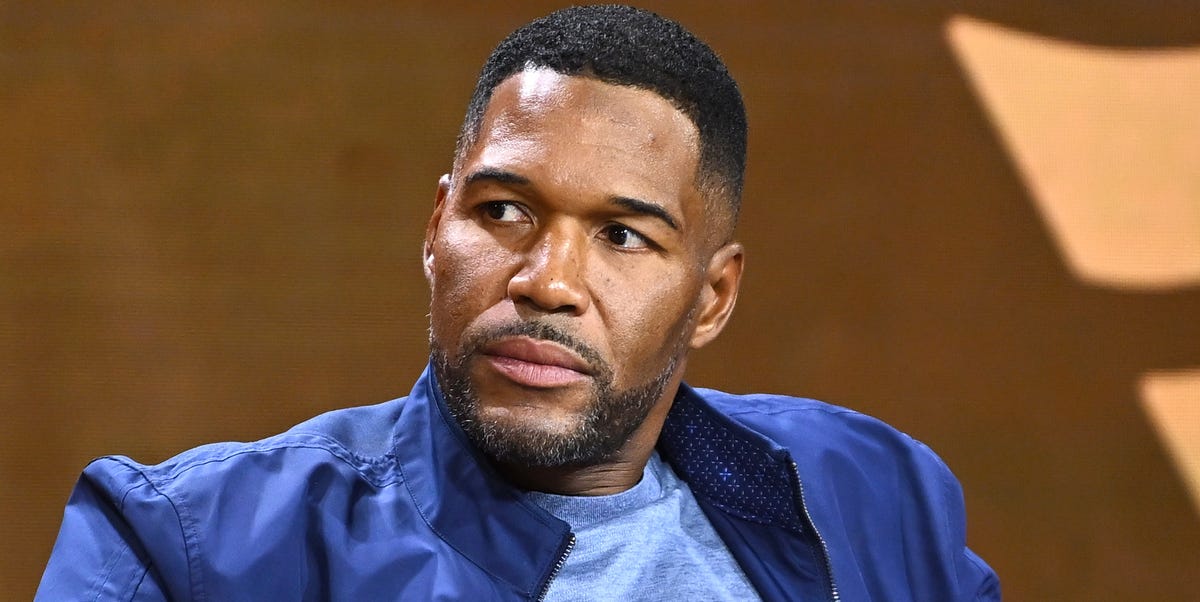
Michael Strahan has faced roaring stadiums, championship pressure, live television curveballs, and the unique occupational hazard of smiling through early-morning interviews before most people have located their coffee. But none of that prepared him for the private fear of watching his daughter, Isabella Strahan, fight brain cancer.
That is why the heartbreaking reason Michael Strahan won’t watch daughter Isabella’s vlog is not about disinterest, denial, or discomfort with the camera. It is much simpler, and much heavier: he lived those moments as a father. Watching them again means returning to hospital rooms, treatment days, scary symptoms, and the helpless ache of wanting to fix something no parent can fix with advice, money, fame, or Super Bowl toughness.
Isabella, the daughter of the former New York Giants star and “Good Morning America” co-anchor, began documenting her cancer journey on YouTube after being diagnosed with medulloblastoma, a malignant brain tumor, in October 2023. Her videos gave viewers an honest look at surgery, radiation, chemotherapy, recovery, scans, and the strange emotional math of trying to be a normal college student while dealing with something wildly unfair. For many people, her vlogs became inspiring. For Michael, they were also a replay button on the hardest season of his life.
Why Michael Strahan Has Not Watched Isabella’s Cancer Vlogs
Michael Strahan has said that he has not watched Isabella’s vlogs because it is too painful to relive the experience. That answer is easy to understand once you remember the role he played in the story. Viewers see a young woman bravely explaining her symptoms and treatment. Michael sees his child in pain.
There is a difference between watching a documentary and remembering the day behind the footage. A viewer may see a hospital clip and think, “She is so strong.” A parent may remember the smell of the room, the chair that was never comfortable, the nurse walking in with updates, the quiet moments between procedures, and the private prayers nobody records for YouTube.
That is what makes Strahan’s response so human. He supports Isabella’s decision to share her story. He recognizes the impact her videos can have on other patients and families. But being proud of her courage does not mean he is emotionally ready to sit down with popcorn and revisit the worst days. Frankly, popcorn would feel rude in that situation.
Isabella Strahan’s Diagnosis Changed Everything
Isabella was a freshman at the University of Southern California when her symptoms became impossible to ignore. She experienced headaches, dizziness, trouble walking straight, nausea, and eventually alarming symptoms that pushed her family to seek urgent medical care. What initially might have seemed like vertigo or stress turned out to be medulloblastoma, a fast-growing malignant tumor that develops in the cerebellum, the part of the brain involved in balance and coordination.
Her diagnosis came in October 2023, and she underwent emergency brain surgery around her 19th birthday. Instead of celebrating with the usual college-life checklistcake, friends, selfies, maybe one questionable dorm-room decorationIsabella was facing surgery, recovery, and the beginning of a life-altering medical journey.
After surgery, she went through rehabilitation, radiation, and chemotherapy. She also experienced setbacks, including fevers, additional procedures, weakness, pain, hair loss, and brain fog. In her videos, Isabella did not package cancer as a neat inspirational quote. She showed the hard parts, the weird parts, the boring parts, and the moments when humor becomes a survival tool because crying all day is exhausting and terrible for the skin.
What Medulloblastoma Is and Why Her Journey Was So Serious
Medulloblastoma is a cancerous brain tumor that begins in the central nervous system, usually in the cerebellum. It is more common in children than adults, but Isabella’s case showed how suddenly a young adult’s life can be interrupted. Treatment often involves surgery to remove as much of the tumor as possible, followed by radiation and chemotherapy depending on the patient’s diagnosis and care plan.
Because the cerebellum helps control balance and coordination, symptoms can include headaches, nausea, vomiting, dizziness, trouble walking, and vision or coordination problems. Those symptoms can sometimes look like other conditions at first, which is one reason Isabella later emphasized the importance of listening to your body and advocating for yourself.
Her story also highlighted a truth families learn quickly during serious illness: medicine is not just science; it is logistics, endurance, and emotional stamina. There are scans to schedule, results to wait for, side effects to manage, medications to remember, and long stretches where everyone tries to act normal while silently negotiating with the universe.
Why Isabella Chose to Share Her Story Publicly
Isabella’s YouTube vlogs were not polished celebrity content designed to look flawless. They were personal, candid, and often raw. She filmed treatment updates, hospital visits, physical therapy, medication routines, and emotional milestones. At times she joked. At times she cried. At times she looked like any other young person trying to make sense of something that should not be on a 19-year-old’s calendar.
Her decision to document the journey served a bigger purpose. She wanted to raise awareness about brain tumors and help other young patients feel less alone. That choice turned private pain into public comfort. It also required a kind of bravery that is different from athletic toughness. It is one thing to perform under stadium lights. It is another to let people see you when you are tired, scared, swollen from treatment, or learning how to trust your body again.
Michael has openly admired that strength. He has described Isabella as tougher than he ever expected, even tougher than her football-playing father. Coming from a man who spent 15 seasons in the NFL, that is not exactly a participation trophy compliment. That is a full-contact endorsement.
The Parent’s Pain Behind the Public Story
The most moving part of Michael Strahan’s reaction is the helplessness. Parents are used to solving problems. Hungry? Make food. Sad? Give comfort. Struggling at school? Find help. Bad day? Offer a hug and possibly an unnecessarily long motivational speech. But cancer does not respond to dad speeches, even when the dad is Michael Strahan.
Strahan has spoken about how difficult it was to sit beside Isabella and realize he could not simply fix what was happening. That helplessness is often one of the deepest wounds for parents of seriously ill children. They can show up, advocate, pray, drive, research, encourage, and hold hands. But they cannot take the pain away. They cannot trade places. They cannot fast-forward to the safe ending.
That is why watching the vlog would be more than watching content. For Michael, it would mean seeing his daughter suffer all over again while knowing exactly how powerless he felt in those moments. His choice not to watch is not avoidance in the shallow sense. It is emotional self-protection.
How Isabella’s Cancer-Free Update Brought Hope
In July 2024, Isabella shared the joyful news that she was cancer-free after clear scans. Her “Goodbye Hospital” vlog marked a major milestone, including the removal of her chemotherapy port and a final appointment at Duke Children’s Hospital & Health Center before a longer break from doctors. She described the scan results with relief and happiness, while also admitting she would miss the medical team that had helped her through treatment.
The update was not just a happy headline. It was the kind of news families replay in their minds for years. After months of fear, procedures, and uncertainty, hearing “cancer-free” can feel like the room finally exhales. Michael celebrated his daughter publicly, calling her a “superwoman” and expressing pride in her strength, determination, and smile.
Still, cancer-free does not always mean fear-free. Follow-up scans, recovery, lingering side effects, and the emotional aftershocks of treatment can remain part of life. Isabella has continued focusing on regaining strength, balance, weight, and routine. She has also returned to college, a milestone that carries more meaning after everything she went through.
Why Her Vlogs Resonated With So Many People
Isabella’s vlogs resonated because they were honest without being hopeless. She did not pretend treatment was easy. She talked about pain, weakness, exhaustion, and frustration. She also laughed, celebrated small wins, leaned on her family, and allowed viewers to see that courage can look messy.
That kind of storytelling matters. People facing cancer often hear big phrases like “stay strong” and “you got this.” Those phrases can help, but they can also feel a little like emotional confetti when someone is nauseous, scared, or tired of being poked with needles. Isabella’s videos offered something more grounded: companionship. She showed others, especially young patients, that they were not strange for feeling frightened, annoyed, bored, grateful, and furious all in the same afternoon.
Her twin sister Sophia also became an important part of the story, offering support, humor, and sisterly normalcy. Sometimes the best medicine is world-class care. Sometimes it is your twin making you feel like a regular teenager again, even when your life has been hijacked by appointments and medical terminology.
Michael Strahan’s Strength Looks Different Here
Michael Strahan built a public identity around strength. He was a dominant defensive end, a Super Bowl champion, a Pro Football Hall of Famer, and later a polished television personality. But this chapter revealed a quieter strength: admitting pain.
There is no weakness in saying something is too hard to watch. In fact, it may be one of the most honest things a parent can say. Society often expects parents to be endlessly brave, endlessly composed, and endlessly available for emotional replays. But parents are people, not phone chargers. They have limits. They can be proud and devastated at the same time.
Michael’s choice not to watch Isabella’s vlog does not diminish his support. If anything, it shows how deeply present he was when the cameras were not the point. He lived the hardest scenes before they became videos. He does not need to watch the upload to prove he was there.
The Bigger Lesson: Turning Pain Into a Message
One of the most powerful themes in Isabella’s story is the idea of turning pain into a message. Her vlogs helped raise awareness of medulloblastoma, the importance of early symptoms, and the emotional reality of cancer treatment for young people. She also showed that vulnerability can be useful, not just brave.
For viewers, the lesson is not that everyone must share their medical journey publicly. Privacy is valid. Silence is valid. Posting is valid. Crying in the car and then buying a snack is also valid. The real lesson is that people heal in different ways. Isabella found meaning in documenting her experience. Michael found that watching it again was too painful. Both responses can be true. Both can come from love.
Experience Section: What Families Can Learn From Isabella and Michael Strahan’s Story
Stories like Isabella Strahan’s stay with people because they are not only celebrity news. They reflect experiences many families understand too well: the phone call that changes the day, the test result that changes the year, and the strange new vocabulary that enters a home overnight. Suddenly, words like tumor, radiation, chemotherapy, port, scan, and remission become part of ordinary conversation. Nobody asks for that dictionary. It just arrives, rude and uninvited.
One experience many families relate to is the emotional split between the patient and the caregiver. The patient is doing the physical fighting, enduring the treatments, managing the symptoms, and trying to stay mentally steady. The caregiver is fighting a different battle: staying calm, organizing help, asking questions, watching for changes, and quietly absorbing fear so the patient does not have to carry all of it. Michael Strahan’s reaction captures that caregiver pain. He could cheer Isabella on, sit beside her, and celebrate victories, but he could not remove the suffering from her path.
Another lesson is the value of listening to symptoms. Isabella has spoken about learning to trust her body and advocate for herself. That message is especially important for young adults, who are often told they are too young to be seriously ill or too busy to slow down. College students are practically trained to ignore exhaustion. Headache? Study more. Nausea? Maybe cafeteria pasta. Dizziness? Drink water and pretend adulthood is going great. But persistent or unusual symptoms deserve attention. Seeking care early can make a real difference.
Families can also learn from the way Isabella used humor. Humor does not erase pain, but it can make a hard day slightly more survivable. In medical journeys, small jokes become tiny life rafts. A silly outfit, a favorite song, a weird hospital snack, or a sarcastic comment about yet another appointment can help people feel human again. Isabella’s vlogs often balanced honesty with levity, which made them feel real rather than staged.
Her story also shows why community matters. Support came from family, doctors, nurses, friends, viewers, and other patients. No single person can carry a cancer journey alone. Even the strongest families need help with meals, rides, encouragement, distractions, and the occasional reminder that life still exists outside hospital walls. Sophia’s role as Isabella’s twin sister was especially touching because she helped bring normal teenage energy into a very abnormal season.
For parents, Michael’s honesty offers permission to feel overwhelmed. A parent can be grateful and terrified. Hopeful and exhausted. Proud and brokenhearted. The world may see a strong public figure, but serious illness strips life down to its most basic truth: love makes people vulnerable. When Michael says watching the videos is too hard, he is really saying the memories are still tender. That tenderness is not failure. It is love with bruises.
Finally, Isabella’s journey reminds readers that recovery is not always a clean finish line. Ringing the bell, hearing good scan results, or returning to school are beautiful milestones, but healing can continue long afterward. Strength must be rebuilt. Fear must be managed. Life must be reassembled piece by piece. Isabella’s return to college and her desire to help others show that recovery can include joy, purpose, and a future that is not defined only by illness.
Conclusion
The heartbreaking reason Michael Strahan won’t watch daughter Isabella’s vlog is rooted in a father’s love. He is not looking away because he lacks pride in her courage. He is looking away because he was there, because he remembers, and because reliving those moments would reopen a wound that has not fully faded.
Isabella Strahan’s story is ultimately one of resilience, advocacy, family, and hope. Her decision to document her cancer journey helped others feel seen. Michael’s emotional honesty helped people understand the caregiver side of serious illness. Together, their story reminds us that bravery does not always look like watching every video, giving every speech, or smiling through every memory. Sometimes bravery is surviving the experience, supporting the person you love, and admitting that some chapters are too painful to replay.












