
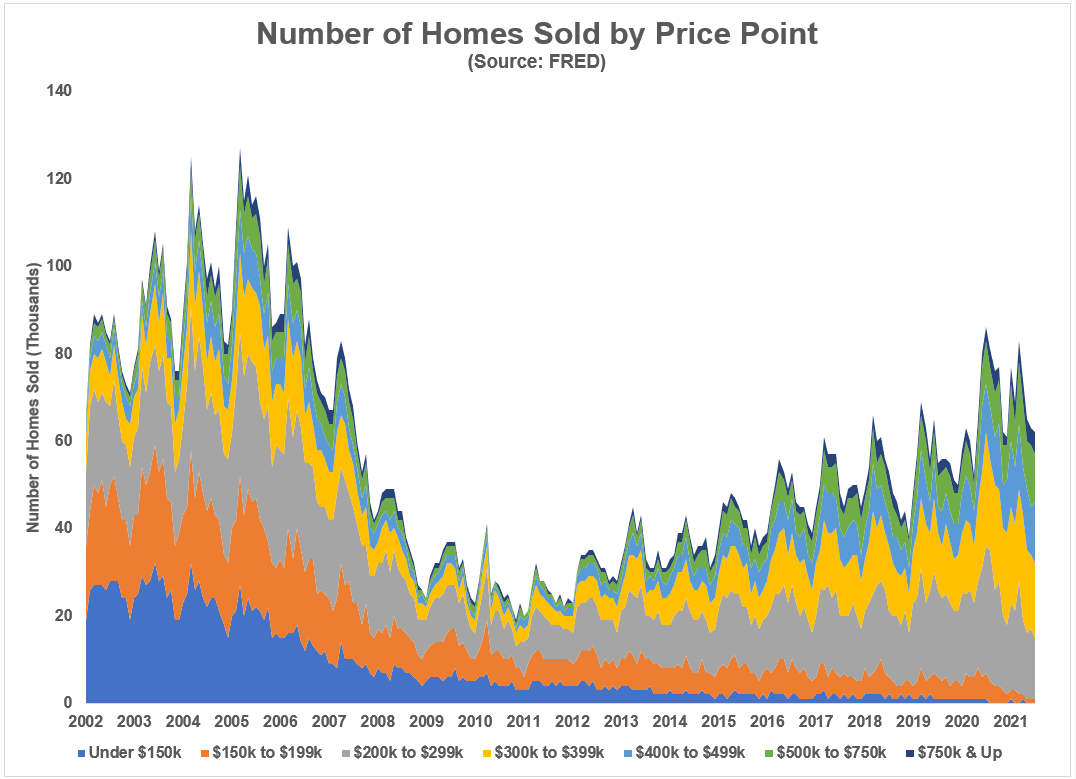
For generations, the starter home was the first rung on America’s property ladder: modest, imperfect, and affordable enough to buy before life became fully organized. Today, that rung has not vanished, but it has become narrower, costlier, and surprisingly hard to reach. First-time buyers are older, small houses attract oversized competition, and “entry-level” increasingly means a condo, townhome, manufactured home, or longer commute. So, is the starter home deador simply changing under pressure?
What Is a Starter Home?
A starter home is less an architectural style than a financial role. Traditionally, it meant a smaller, lower-priced property bought by a first-time owner who planned to build equity and later trade up. Think two bedrooms, one bathroom, a compact yard, an older kitchen, and at least one light switch that controls nothing.
Because housing prices vary dramatically, researchers often define starter homes as properties in the lower portion of a local market’s price range. The essential idea is simple: an entry-level home should offer a realistic path from renting to ownership without requiring a lottery win, an inheritance, or a family group chat titled “Emergency Down Payment.”
Why Starter Homes Became So Hard to Find
America Did Not Build Enough Housing
National shortage estimates differ by method, but they consistently run into the millions. Freddie Mac estimated a deficit of about 3.7 million homes through the third quarter of 2024, while a later Realtor.com analysis put the 2025 gap near 4 million. The message is the same: housing production has not kept pace with long-term demand.
When supply is tight, inexpensive homes face the fiercest competition. Higher-income households can shop down; moderate-income buyers cannot shop up. Everyone crowds the same narrow end of the market.
Small Homes Are Not Proportionally Cheap to Build
Every house needs land, utilities, permits, a foundation, a roof, a kitchen, bathrooms, heating and cooling, inspections, financing, and labor. Removing 600 square feet does not remove most of those fixed costs.
Builders also deal with expensive land, material and labor costs, loan expenses, impact fees, and approval delays. The National Association of Home Builders estimates that regulation represents roughly one-quarter of the final price of a new single-family house. That figure comes from an industry group, but the underlying problem is widely recognized: uncertainty and delay make lower-margin projects harder to justify.
Zoning Often Blocks Lower-Cost Formats
Many communities require large lots, wide setbacks, multiple parking spaces, or detached single-family construction. Those rules limit duplexes, cottages, townhomes, manufactured housing, and small-lot houses. When only one home may sit on costly land, builders usually choose the larger product with the safer profit margin.
New Homes Remain Relatively Large
U.S. Census Bureau data show that the median new single-family home sold in 2025 measured 2,194 square feet. Builders have begun offering smaller plans, narrower lots, and more townhomes, but truly inexpensive new construction remains difficult. In June 2026, the median new-home price was about $398,300, even as sales below $300,000 showed improvement.
Existing Owners Are Staying Put
Many homeowners bought or refinanced when mortgage rates were exceptionally low. Selling can mean replacing a cheap loan with a much more expensive one, so fewer owners move. That “lock-in effect” disrupts the normal chain in which a household sells its first house to buy a larger one.
The shortage is also worsened by limited downsizing options. Older owners may want a smaller, accessible home nearby but find that the available condo or townhome costs nearly as much as their current property. The bungalow stays occupied, and the aspiring buyer stays subscribed to rental-renewal emails.
Investors Add Pressure, but They Are Not the Whole Story
Investors compete for lower-priced homes in some markets, particularly properties that can be renovated and rented. Cash offers can also look safer than low-down-payment financing. Still, the national shortage cannot be explained by investors alone. Underbuilding, zoning, construction economics, aging housing stock, and low turnover all play major roles. The villain is less a single corporation than a committee meeting involving twelve separate problems.
Affordability Is More Than the Listing Price
The monthly payment is where the crisis becomes personal. Harvard’s Joint Center for Housing Studies reported that costs for a typical first-time-buyer loan with 3.5% down rose from about $1,200 per month in 2020 to more than $2,500 by mid-2025. Higher prices and higher mortgage rates arrived like two unfriendly personal trainers, each insisting the buyer could suffer a little more.
Property taxes, insurance, mortgage insurance, utilities, repairs, and closing costs come next. Down payments remain a major barrier as well. NAR reported a median 10% down payment among first-time buyers in its 2025 profile. Low-down-payment loans exist, but buyers still need cash for inspections, moving, reserves, and the water heater that will inevitably choose closing week to retire.
First-Time Buyers Are Entering Later
NAR reported that first-time buyers represented only 21% of purchasers in its 2025 survey, a record low, while their median age reached 40. In the 1980s, the typical first-time buyer was in the late twenties.
Buying later is not automatically a problem; education, marriage, careers, and lifestyle preferences have changed. Yet the shift also reflects a harder financial gate. Delayed ownership can mean fewer years of mortgage paydown and appreciation before retirement. Buyers with family assistance can bridge down-payment gaps, while equally responsible households without inherited wealth may rent for years longer.
Is the Starter Home Actually Dead?
Nobut the traditional definition is in serious condition.
Starter-home listings and sales improved in parts of 2025 as inventory rose and buyers became more price-sensitive. Redfin found that entry-level sales outperformed higher price tiers during portions of the year. Some affordability measures also stabilized as wage growth began to exceed home-price growth in selected markets.
That does not restore the old market. Zillow reported that 242 U.S. cities had starter-home values of at least $1 million by April 2026. These cities represent a small, expensive slice of the country, but the statistic captures the absurdity: “starter” now describes a local price tier, not a universally modest amount.
Affordable entry points still exist in portions of the Midwest, Great Lakes region, Northeast interior, and South. St. Louis, Cincinnati, Indianapolis, Pittsburgh, Cleveland, Detroit, and Buffalo often appear in affordability discussions, although taxes, insurance, employment, commute times, and property condition vary sharply by neighborhood.
The New Starter Home May Not Be Detached
Condos and Townhomes
In high-cost markets, attached homes may be the only ownership option within reach of moderate-income buyers. They use land efficiently and can sit closer to jobs and transit. Buyers should scrutinize association finances, insurance, reserves, rules, and special-assessment risk.
Manufactured and Modular Homes
Factory-built housing can reduce waste and shorten construction timelines. Modern manufactured homes follow federal standards, while modular homes generally follow state and local codes. Financing, land ownership, titling laws, zoning, and old stereotypes remain obstacles. The house may be ready; the policy environment sometimes arrives wearing concrete shoes.
Small-Lot Homes, Duplexes, and ADUs
Cottage courts, duplex units, accessory dwelling units, and compact houses can add supply within existing neighborhoods. They will not solve the shortage alone, but they create choices between a downtown apartment and a detached house on a half-acre lot.
Older Fixer-Uppers
Older houses may have lower prices, but renovation costs do not disappear because a television host completes the project before the commercial break. Specialized inspections, contractor estimates, and cash reserves are essential. Deferred maintenance can turn “affordable” into “expensive with exposed wiring.”
What Could Bring Starter Homes Back?
Allow More Types of Housing
Smaller lots, townhomes, duplexes, cottages, manufactured homes, and accessory units let communities create more homes on costly land. Zoning reform is not an instant affordability button, but banning lower-cost formats guarantees that they will not be built.
Make Permitting Predictable
Clear timelines, online reviews, preapproved plans, and by-right approval for code-compliant projects can reduce risk. Pew research has highlighted cities using preapproved designs to save thousands of dollars and make small infill projects more feasible. Housing affordability often improves through a stack of unglamorous savings.
Scale Factory-Built Construction
Modular, panelized, and manufactured housing can lower costs when production reaches scale. Governments can help by modernizing zoning and financing rules instead of treating factory-built homes as suspicious visitors from 1974.
Preserve Existing Modest Homes
Repair grants, renovation loans, tax incentives, and programs that transfer vacant properties to owner-occupants can preserve older entry-level housing. Without support, modest homes may be demolished, converted to rentals, or replaced by larger houses because the land is worth more than the structure.
Pair Buyer Assistance With Supply
Down-payment help, closing-cost support, credit counseling, and affordable mortgages can help qualified households. But subsidies work best alongside construction. Giving every buyer a larger paddle does little when the boat is still missing.
How First-Time Buyers Can Adapt
Compare total monthly costs, not just prices. A condo fee may still cost less than the insurance, maintenance, and commuting expenses of a detached house. A new townhome with a builder rate incentive may compete well with an older house needing immediate repairs.
Get fully underwritten when possible, protect cash reserves, and investigate programs from state housing agencies, cities, employers, and lenders. Expand the search area carefully, but calculate transportation honestly. Saving $300 on housing while spending $450 more on commuting is not a bargain; it is a spreadsheet wearing a fake mustache.
Homeownership is not a race. Renting can be rational when purchase costs are extreme, mobility matters, or suitable inventory is absent. A starter home should improve stability, not become a trophy for surviving an open house.
Experiences From the Modern Starter-Home Search
The following are composite experiences based on recurring patterns reported by buyers, agents, lenders, and housing researchers. They are not presented as the author’s personal transactions.
The “Affordable” House With a Surprise Budget
A first-time couple finds an older two-bedroom house below their target price. The inspection reveals an aging roof, outdated electrical panel, drainage trouble, and a furnace old enough to remember dial-up internet. None of the problems is extraordinary, but together they could require tens of thousands of dollars. The buyers learn that purchase price and ownership cost are distant cousins, not identical twins. They negotiate a credit, retain an emergency reserve, and postpone cosmetic updates. The kitchen remains aggressively beige, but the roof does not leak.
The Condo That Beat the Dream House
Another buyer begins with one firm rule: detached homes only. After months of touring properties far from work, the rule starts to wobble. A two-bedroom condo near transit costs less, shortens the commute, and needs no immediate exterior repairs. The association fee initially looks like financial villainy, but it covers building insurance, water, landscaping, and reserves. After reviewing the budget, minutes, insurance, and planned projects, the buyer sees a more predictable first step. It is not the childhood image of a white fence, but it builds equity without turning every Saturday into a gutter emergency.
The Family Gift That Changes the Competition
Two buyers with similar incomes may enter the market from completely different positions. One has saved independently and needs the seller to accept financing and an appraisal contingency. The other receives family help and can cover an appraisal gap. The second offer appears stronger, even though both households can manage the payment. This is why the starter-home crisis is also a wealth-transfer story. Family assistance does more than enlarge the down payment; it increases the amount of risk a buyer can absorb during negotiations.
The Long Commute That Looked Cheap Online
A buyer expands the search radius and finds a newer house $60,000 below similar homes near the city. Then come fuel, tolls, vehicle depreciation, parking, and ten additional commuting hours each week. The “cheap” house begins charging rent in time. The buyer ultimately chooses a smaller townhome closer to work. Location costs are not limited to a mortgage; transportation, childcare logistics, and access to services belong in every affordability calculation.
The Buyer Who Waited Without Standing Still
One household decides not to buy during a period of high payments and poor selection. Instead of trying to predict the perfect rate drop, they improve credit, reduce expensive debt, automate savings, study local taxes, and tour enough homes to understand condition differences. Later, inventory improves modestly and their finances are stronger. They do not buy at the bottomnobody sends a calendar invitation for thatbut they purchase with reserves and realistic expectations. Waiting works best as an active strategy, not a frustrated pause.
Conclusion: The Starter Home Is Being Redefined
The traditional starter home is not extinct, but it is no longer a dependable mass-market product. Underbuilding, high land and construction costs, restrictive zoning, mortgage-rate lock-in, and intense competition have turned a common stepping-stone into a scarce local opportunity.
The solution is not mysterious: build more homes, allow smaller and attached formats, speed approvals, preserve modest existing properties, improve factory-built financing, and pair buyer assistance with supply. No single policy will resurrect the inexpensive bungalow with a short commute. Together, these changes can rebuild an entry-level market suited to modern incomes and cities.
The starter home of the future may be a compact house, condo, townhome, duplex unit, or manufactured home on owned land. What matters is not whether it resembles a nostalgic advertisement. What matters is whether ordinary households can buy it, maintain it, and still afford to live.












