
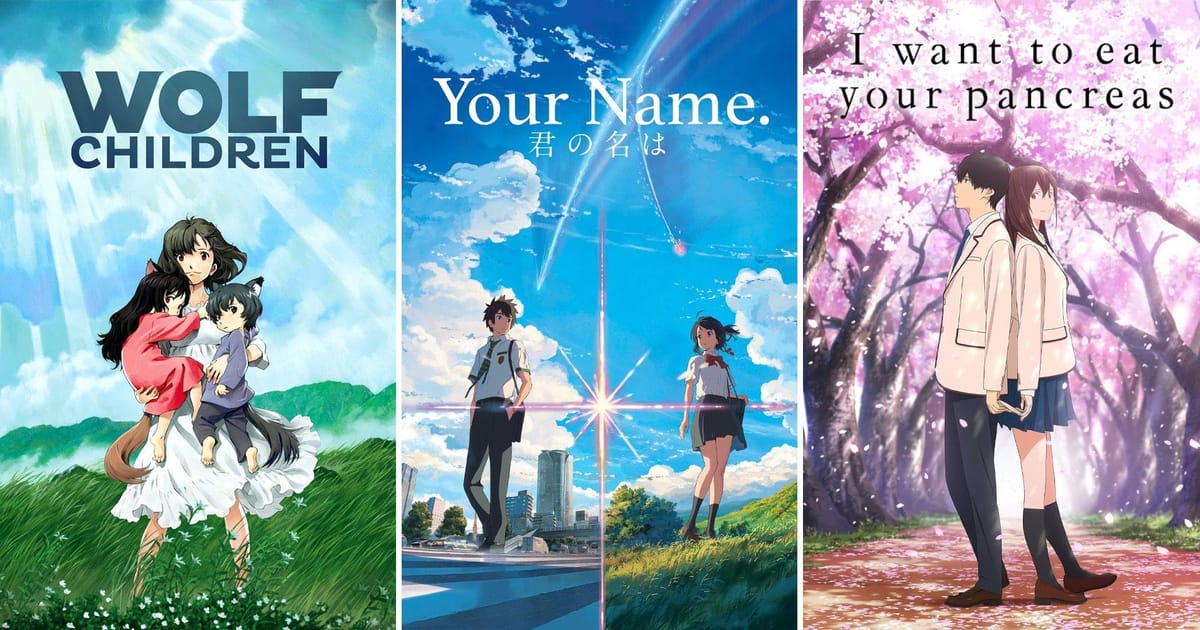
The 2010s were a ridiculous decade for anime moviesin the best way. This is the era where emotional gut-punch dramas
went mainstream, Studio Ghibli kept proving it can casually make art, and directors like Makoto Shinkai turned weather
into a full-time supporting character.
Below is a fan-first ranking of the best 2010s anime films (2010–2019), built around what audiences
actually rewatch, recommend, meme, cry over, and aggressively text friends about at 1:00 a.m. (“You HAVE to see this.
No, I’m not okay.”).
How This Fan Ranking Was Built (Without Pretending We Live in a Perfect Spreadsheet)
“Ranked by fans” can mean a lot of things. For this list, the order reflects a blended view of:
fan-vote culture (popular polls and community rankings), user ratings on major
U.S.-facing entertainment platforms, and how consistently these titles appear as favorites across
reputable pop-culture outlets. In other words: if people love it loudly, rewatch it often, and keep putting it on
“best of” lists, it climbs.
One quick note: availability changes constantly (streaming services love to play musical chairs). So think of this as
a ranking of the movies, not a ranking of “what’s easiest to find at 2:00 a.m. on a Tuesday.”
The Best 2010s Anime Movies, Ranked
12) From Up on Poppy Hill (2011)
Studio Ghibli’s gentler, grounded side shines here: a nostalgic coming-of-age story set in early-1960s Yokohama, where
teens fight to preserve their school clubhouseand discover a few complicated truths along the way. Fans love it
because it’s warm, humane, and beautifully observed, with that “everyday life is still cinematic” energy Ghibli does
so well. It’s not the loudest Ghibli, but it’s the kind you finish and immediately want to live inside for a week.
Best for: cozy drama lovers, Ghibli completists, and anyone who enjoys romance with a side of
community spirit.
11) Mirai (2018)
Mamoru Hosoda takes a deceptively simple premisejealous older sibling meets new babyand turns it into a heartfelt,
time-hopping exploration of family identity. Fans connect hard with its honest look at childhood emotions: the big
feelings, the confusion, the sudden flashes of empathy that feel like superpowers when you’re small. It’s imaginative
without losing its emotional anchor, and it’s one of the rare films that can make parents and kids both feel seen.
Best for: families, Hosoda fans, and anyone who’s ever thought, “Why is this tiny human running my life?”
10) The Night Is Short, Walk On Girl (2017)
This movie is like a romantic comedy sprinting through a surreal fever dreamexcept it’s charming, clever, and
unexpectedly sweet. Masaaki Yuasa’s style turns an ordinary night out into a playful odyssey where reality bends
for comedy, yearning, and the kind of chaos only a city at night can produce. Fans love it for its fearless
creativity, rapid-fire humor, and the warm message underneath all the wildness: life is short, so go live it.
Best for: night owls, animation nerds, and anyone who wants their romance served with extra sparkle and chaos.
9) Promare (2019)
If you’ve ever wanted an anime movie that feels like it’s powered by rocket fuel and pure “LET’S GOOOO,” this is it.
Promare is a maximalist action spectacle with bold designs, big themes, and a soundtrack that practically
bench-presses your speakers. Fans rally around it because it’s unapologetically hypeyet it still finds room for
heart, solidarity, and style that refuses to behave.
Best for: action lovers, Studio TRIGGER devotees, and people who think “subtle” is overrated.
8) The Boy and the Beast (2015)
Another Hosoda favorite, this one blends found-family emotion with a fantasy world of beast warriors. At its core,
it’s about mentorship: the messy, awkward, sometimes hilarious process of becoming who you are because someone chose
to show up for you. Fans adore the character growth, the comedic warmth, and how the film manages to be both epic and
intimate without losing momentum.
Best for: fans of training arcs with feelings, fantasy worlds, and heartfelt “we’re family now” vibes.
7) Maquia: When the Promised Flower Blooms (2018)
This is one of the decade’s most treasured “why did nobody warn me I’d be sobbing?” movies. Maquia explores
motherhood, time, and the ache of loving someone whose life moves faster than yours. Fans champion it because it treats
love as something brave and costlynot sentimental fluff. It’s tender, bittersweet, and quietly devastating in the way
only anime can be when it decides to aim directly at your soul.
Best for: emotional epics, fans of bittersweet fantasy, and anyone ready to feel too much (in a good way).
6) The Wind Rises (2013)
Hayao Miyazaki’s reflective drama about an aviation engineer is one of the most talked-about films of the decade,
partly because it’s beautiful and partly because it’s complicated. Fans respect its mature storytelling: the tension
between artistic ambition and the consequences of what our work becomes in the world. It’s less about action and more
about inner weatherdreams, guilt, love, and the fragile moment where inspiration meets history.
Best for: serious film fans, Ghibli lovers who want something grown-up, and anyone fascinated by creativity’s shadow.
5) The Tale of the Princess Kaguya (2013)
Visually, this film is breathtakinglike ink brush paintings that learned how to move. Emotionally, it’s a slow,
powerful wave. Fans celebrate it for its artistry and its haunting exploration of expectation, freedom, and what it
means to be “loved” in a world that tries to possess you. It’s not just one of the best 2010s anime movies; it’s one
of the decade’s most distinctive animated films, period.
Best for: art lovers, mythic storytelling fans, and anyone who wants animation that feels like living poetry.
4) Wolf Children (2012)
Wolf Children has been a fan favorite for years because it balances magical premise with emotional realism.
It’s about raising kids, letting them become themselves, and loving them through changeeven when change is scary.
Fans return to it because it’s tender without being sugary, and because it captures family life in a way that feels
deeply human (even when the kids can literally be wolves).
Best for: anyone who loves family stories, Hosoda fans, and people who cry at “they grow up so fast” montages.
3) In This Corner of the World (2016)
This film earns its place high on fan lists because it focuses on daily life with extraordinary care. Set in Japan
during World War II, it follows a young woman building a life amid enormous historical change. Fans praise its gentle
character work and its ability to show resilience without turning people into symbols. It’s thoughtful, deeply
researched in feel, and emotionally groundedmore intimate than epic, and that’s exactly why it hits.
Best for: viewers who like human-scale historical stories and animation that prioritizes quiet truth over spectacle.
2) A Silent Voice (2016)
Few 2010s anime films are as openly discussed, recommended, and emotionally remembered as A Silent Voice.
Fans connect with its themes of accountability, empathy, and learning how to live with what you’ve doneand what was
done to you. It’s beautifully directed, deeply character-driven, and unafraid of discomfort. Many viewers consider it
essential because it treats emotional pain seriously while still offering the possibility of growth.
Content note: The film includes heavy themes related to bullying, depression, and self-harm. If any of
that feels too close to home, it’s okay to skip it or watch with someone you trust.
Best for: character-driven drama fans and anyone who values stories about change that actually feels earned.
1) Your Name (2016)
The “fan phenomenon” crown of the 2010s almost has to go here. Your Name wasn’t just popularit became a
cultural event, pulling in people who “don’t even watch anime” and sending them out into the world like newly
converted disciples of gorgeous skies and emotional plot twists. Fans love the blend of romance, comedy, mystery, and
big-scale feeling, plus the meticulous visuals that make even a staircase look like it deserves its own award.
Why fans rank it #1: unforgettable mood, high rewatch value, and a story that keeps revealing new
emotional layers once you know where it’s going.
Honorable Mentions (Because the 2010s Were Stacked)
If you’re building a watchlist of top anime movies from 2010–2019, these deserve a loud shout-out:
- Weathering With You (2019): Shinkai’s rain-soaked follow-up with huge feelings and gorgeous atmosphere.
- Liz and the Blue Bird (2018): a quiet, delicate music-and-friendship story with stunning direction.
- Okko’s Inn (2018): warm, bittersweet, and surprisingly profound.
- Dragon Ball Super: Broly (2018): fan-service done rightbig fights, great energy, and surprisingly solid character work.
- The Garden of Words (2013): shorter, lyrical, and visually mesmerizing (classic Shinkai moodcraft).
Quick Tips for Watching Like a Fan (Not Like Homework)
Pick the vibe you want first
- Need catharsis? A Silent Voice, Maquia, Wolf Children.
- Want romance + wonder? Your Name (and then chase that feeling forever).
- Want artistry? Princess Kaguya is basically a museum that makes you feel things.
- Want chaos and color? Promare, no question.
Dub vs. sub: do what makes you happiest
Fandom debates can get intense, but your goal is to enjoy the movie, not win an argument on the internet. If reading
subtitles makes you miss the animation, try the dub. If you love the original performances, go sub. The best choice
is the one that keeps you watching.
of Fan Experience: Why 2010s Anime Movies Hit Different
Watching the best 2010s anime movies as a fan isn’t just “press play, receive art, become enlightened.” It’s a whole
lifestylesometimes a messy one, like a living room full of friends arguing over whether Your Name is a romance,
a sci-fi mystery, or a conspiracy by animators to make us cry about sunsets.
The decade’s biggest superpower was shared emotional whiplash. Fans didn’t just like these films;
they felt personally rearranged by them. Someone would say “Let’s watch Wolf Children,” and the group would
agree like it’s a nice cozy choice. Two hours later, everybody’s quietly staring at the credits, pretending the room
isn’t suddenly full of feelings. One person goes, “So… snacks?” and everyone nods like snacks can fix existential
tenderness (they can’t, but we respect the effort).
The 2010s also turned anime movies into event viewing. A lot of fans saw titles like Your Name in
theaters or at special screenings, and that communal energy matters. Big moments land harder when you hear the entire
audience react at oncelike a synchronized gasp that says, “Okay, yes, we are all emotionally invested now.” Even
streaming at home became a mini-ritual: lights off, phone down (mostly), good headphones, and the unspoken agreement
that you’re going to let the movie do its thing without multitasking. It’s harder to scroll through your feed when
Shinkai is painting a sky that looks like it has its own soundtrack.
Another fan experience: the rewatch spiral. Some movies are one-and-done; these aren’t. Fans rewatch to
catch foreshadowing, admire background details, or just relive the vibe. The Night Is Short, Walk On Girl becomes
funnier because you start noticing how cleverly it stacks its running jokes. Princess Kaguya becomes more haunting
because you’re watching the story’s beauty and sadness braid together in slow motion. And A Silent Voice often
becomes a “watch when you’re ready” filmsomething fans return to at different ages because it speaks differently
depending on who you are when you hit play.
Finally, fandom turns these movies into recommendation love letters. Fans don’t just suggest them; they
curate them. “If you liked that, try this.” “If you want something gentler, pick this.” “If you want to be destroyed
emotionally but in a tasteful way, I have a list.” The best anime films of the 2010s created communities of viewers
who bond over specific scenes, specific songs, and the universal truth that animation can be the most powerful way to
tell a human story. That’s why this decade’s top anime movies don’t fadethey stick, they spread, and they become part
of how fans talk about life itself.
Final Take
If you’re building a “best 2010s anime movies” watchlist, start with the top three, then branch out by vibe: Ghibli
for artistry, Hosoda for heart, Yuasa for inventive chaos, and Shinkai when you want weather to emotionally
body-slam you (politely, with great lighting). The 2010s proved one thing beyond doubt: anime films aren’t a niche
they’re a full-on cinematic force.












