
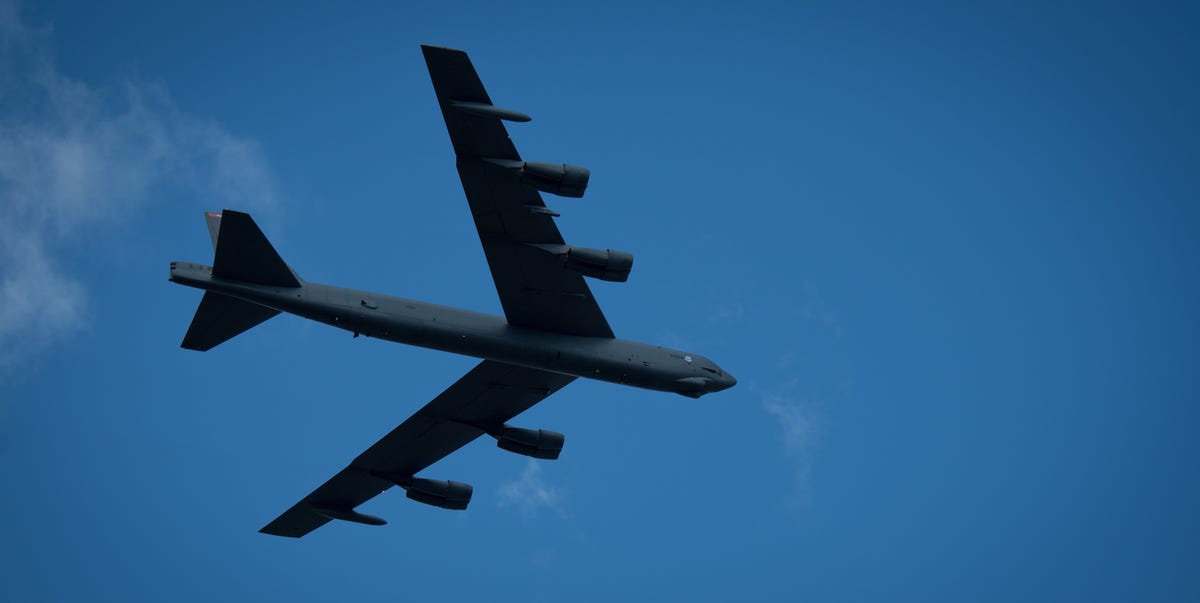
The B-52 Stratofortress is the aviation equivalent of a cast-iron skillet: old, heavy, not fashionable, and somehow still the thing everyone reaches for when the job matters. Designed in the Cold War, born before smartphones, moon landings, GPS, stealth bombers, and most of today’s pilots, the B-52 is still not done. In fact, the U.S. Air Force plans to keep it flying into the 2050s, giving the legendary bomber a service life that will approach a full century.
That sounds ridiculous until you look closely. The B-52 is not surviving because the Pentagon forgot to buy anything newer. It is surviving because its basic design remains unusually useful: long range, massive payload, aerial refueling compatibility, global basing flexibility, and enough internal space to accept upgrades without needing to reinvent the airplane from scratch. The aircraft may look like it belongs in a black-and-white newsreel, but beneath the skin it is being rebuilt for a digital, networked, long-range strike era.
The next version, commonly known as the B-52J, will combine new Rolls-Royce F130 engines, modern radar, improved avionics, upgraded electrical systems, better communications, and new weapons integration. In other words, the old bomber is not just getting a fresh coat of paint. It is getting the aerospace equivalent of a heart transplant, new glasses, a better nervous system, and a gym membership.
Why the B-52 Still Matters
The B-52H Stratofortress is a long-range, heavy bomber built by Boeing and operated by the U.S. Air Force. Its job is simple to describe and hard to replace: carry a lot of weapons a very long distance and deliver them when national command authorities say so. It can carry conventional or nuclear weapons, launch cruise missiles, support combatant commanders, reassure allies, and remind adversaries that the United States has a very long memory and an even longer reach.
According to U.S. Air Force information, the B-52 has an unrefueled combat range of more than 8,800 miles and can carry approximately 70,000 pounds of mixed ordnance. With aerial refueling, its range is limited more by crew endurance than by fuel. That is the sort of specification that makes military planners smile and logistics officers reach for coffee.
Unlike stealth aircraft, the B-52 is not designed to sneak through the densest modern air defenses. Its value increasingly comes from standoff power. That means it can launch long-range weapons from outside the most dangerous threat zones while other aircraft, satellites, cyber systems, tankers, and command networks help create the broader combat picture. The bomber does not have to be invisible to be relevant. Sometimes the smartest move is not walking into the dragon’s cave; it is sending a very accurate spear from a long way away.
The 100-Year Bomber: How the Math Works
The B-52 family traces its first flight to 1952, while the B-52B entered service in 1955. The last B-52H was delivered in 1962. If the fleet remains in service into the 2050s, the type will have served for roughly a century from its early operational debut. Even the youngest B-52H airframes will be close to 90 years old by then. That is not normal in military aviation. Fighter jets age like athletes. Bombers, apparently, can age like redwoods.
The reason is partly structural. Large bombers are built with long fatigue lives, and the B-52 has spent much of its career flying high-altitude profiles rather than enduring the punishing maneuvers common to tactical fighters. The aircraft is big, roomy, and adaptable. Its cavernous fuselage and broad wings make it easier to install new systems than on smaller, tightly packed aircraft.
Another reason is strategic economics. Designing and building a completely new heavy bomber fleet is expensive, slow, and risky. The B-21 Raider will bring next-generation stealth and penetrating strike capability, but that does not mean every mission requires a stealth aircraft. For many missions, especially standoff conventional strike and visible deterrence, a modernized B-52 remains extremely useful. Keeping it alive allows the Air Force to balance cost, capability, and capacity.
From B-52H to B-52J: The Biggest Upgrade Yet
The B-52J modernization effort is not one upgrade. It is a package of upgrades that changes how the aircraft performs, how it is maintained, and how it connects to modern warfare. The biggest headline is the Commercial Engine Replacement Program, often shortened to CERP. The current Pratt & Whitney TF33 engines are 1960s-era powerplants. They have served for decades, but they are becoming harder to sustain. Parts, maintenance demands, and fuel efficiency all become bigger concerns as time marches on.
The replacement is the Rolls-Royce F130 engine, a military derivative of a proven commercial engine family. The Air Force selected it to power the B-52 fleet for decades to come. Each B-52 has eight engines, so the re-engining effort is not a casual afternoon project with a wrench and a positive attitude. It requires changes to nacelles, pylons, cockpit controls, electrical generation, hydraulic systems, pneumatic systems, software, displays, and maintenance procedures.
In 2026, the B-52J engine replacement program reached a critical design milestone, clearing the way for the first aircraft modifications and test work. Boeing is the prime integrator, while Rolls-Royce provides the F130 engines. The first modified aircraft will be used to validate the design before full-rate modernization expands across the fleet. This cautious approach matters because installing new engines on an old bomber is less like swapping car tires and more like teaching a retired elephant to tap dancepossible, impressive, and absolutely not something to rush.
New Engines, New Range, Less Maintenance Drama
The F130 engines are expected to improve fuel efficiency, reliability, maintainability, and mission endurance. They should also reduce the sustainment burden on maintenance crews. That matters because readiness is not just about whether an aircraft looks impressive in a photograph. Readiness is about whether it can launch, complete the mission, return safely, and do it again without turning the maintenance schedule into a horror novel.
Modern engines can also improve electrical power generation, which is increasingly important for new sensors, communications equipment, cockpit displays, electronic systems, and future weapons. In older aircraft, power and cooling can become hidden bottlenecks. You can install fancy digital systems only if the airplane can feed them electricity and keep them alive. The B-52J upgrade addresses those behind-the-scenes issues so the bomber can operate as part of a modern combat network.
There is also a symbolic point. Re-engining the B-52 is a public declaration that the Air Force is not merely nursing the bomber along. It is investing in the platform as a future combat aircraft. The B-52J is not a museum piece with Wi-Fi. It is a planned combat system for the 2030s, 2040s, and beyond.
The Radar Modernization Program: Better Eyes for the BUFF
The B-52’s radar modernization is another major piece of the puzzle. The old radar system dates from a very different era of aviation. The new radar is an Active Electronically Scanned Array system, commonly called AESA. This type of radar is more reliable, more precise, and better suited for modern navigation, targeting, weather avoidance, and situational awareness.
The modern radar is developed by Raytheon and integrated by Boeing. It gives the bomber improved all-weather capability and helps the aircraft detect, track, and target more effectively. For a bomber that may launch long-range precision weapons, radar quality matters. Good sensors help crews understand the battlespace, avoid hazards, and execute missions with greater confidence.
The radar upgrade also supports the B-52’s future as a networked aircraft. Modern warfare is not simply platform versus platform. It is network versus network. Aircraft, satellites, ships, ground units, command centers, and unmanned systems share data, cue weapons, and coordinate effects. A B-52 with better radar, communications, and digital architecture becomes more than a bomb truck. It becomes a long-range node in a larger combat web.
Weapons: The B-52’s Real Superpower
The B-52 has always been valuable because it can carry a wide range of weapons. Over the decades, it has dropped gravity bombs, launched cruise missiles, delivered precision-guided munitions, and supported conventional campaigns from the Gulf War to operations against ISIS. Its large payload and long endurance make it especially useful when commanders need sustained airpower over vast distances.
Looking ahead, the B-52J is expected to remain a key platform for long-range standoff weapons. The Long-Range Standoff missile, or LRSO, is intended to replace the aging air-launched cruise missile in the nuclear deterrence mission. Conventional standoff weapons will also remain central to the B-52’s role, especially in the Pacific, where distances are enormous and airbase access can be complicated.
This is where the old bomber’s design continues to pay dividends. A B-52 does not need to dogfight. It does not need to pull dramatic airshow maneuvers. It needs to get to the right launch area, communicate with the force, survive, and release weapons accurately. In modern combat, range is a weapon. Payload is a weapon. Persistence is a weapon. The B-52 has all three.
The B-52 and the B-21: Rivals or Teammates?
Some people ask why the Air Force needs the B-52 when the B-21 Raider is entering the picture. The answer is that they do different jobs. The B-21 is designed for stealthy penetration into heavily defended airspace. It represents the future of survivable strike against advanced threats. The B-52J, by contrast, is likely to specialize in standoff strike, visible deterrence, large weapons carriage, and missions where stealth is not the deciding factor.
Think of the B-21 as the quiet professional who enters through a locked side door. Think of the B-52 as the giant truck outside loaded with tools, fuel, and a sign that says, “We can stay here all day.” Both have value. Together, they give national leaders more options.
This mix matters because future conflict may require both exquisite stealth platforms and large numbers of long-range weapons. A small fleet of advanced aircraft cannot do every job alone. The B-52 gives the Air Force capacity. It can carry many weapons, fly long missions, and operate from established bomber bases. That makes it a useful partner for newer aircraft rather than a competitor.
Visible Deterrence: Sometimes Being Seen Is the Point
Stealth is useful when you want to disappear. The B-52 is useful when you want to be noticed. Bomber Task Force missions send B-52s to Europe, the Indo-Pacific, and other regions to train with allies and demonstrate global reach. These missions are not random sightseeing tours with larger-than-average luggage. They are signals.
When B-52s fly with NATO aircraft, integrate with Indo-Pacific partners, or deploy to forward locations, they show that U.S. long-range airpower can move quickly and operate with allies. That visible presence can reassure friendly nations and complicate adversary planning. Deterrence is not only about having power; it is about making sure others understand that the power can be used if necessary.
The B-52 is especially effective in this role because it is recognizable. Even people who do not follow military aviation know the shape. Its enormous wings, eight engines, and distinctive profile make it an icon. In diplomacy, icons matter. A B-52 arriving in theater says something without requiring a press conference, although someone will probably schedule one anyway.
The Hard Part: Keeping an Old Aircraft Young
Modernizing the B-52 is not easy. Old airframes bring old wiring, old structures, old assumptions, and old documentation. Engineers must integrate new technology into a platform designed before modern digital architecture existed. That creates challenges in testing, certification, software integration, supply chains, and maintenance training.
There are also program risks. Major defense upgrades can face cost growth, schedule delays, and technical surprises. New engines affect airflow, handling, cockpit indications, power systems, and maintenance workflows. New radar affects cooling, power, displays, software, and testing. New weapons require clearance, carriage tests, separation tests, and operational evaluation. Nothing about this is automatic.
Still, the Air Force has a strong incentive to make it work. The B-52 remains one of the most cost-effective ways to preserve long-range strike capacity while the B-21 fleet grows. If modernization succeeds, the result will be a bomber that combines old-school payload and range with modern sensors, engines, and weapons.
Why the B-52 Refuses to Retire
The B-52’s secret is not that it is the fastest, stealthiest, or most glamorous aircraft. It is none of those things. Its secret is that it is useful. Military history is full of systems that looked futuristic and disappeared quickly. The B-52 looks ancient and keeps getting invited back because it solves real problems.
It can fly far. It can carry a lot. It can be upgraded. It can launch weapons from long distances. It can support nuclear deterrence and conventional combat. It can train with allies. It can show up where needed. And perhaps most importantly, it can evolve without asking taxpayers to fund a completely new aircraft for every new decade.
The result is one of the strangest success stories in aviation history. The B-52 began as a Cold War nuclear bomber and became a conventional strike workhorse, cruise missile carrier, close-air-support platform, test aircraft, deterrence symbol, and now future B-52J. It is not one aircraft frozen in time. It is a platform that keeps absorbing new missions.
Experiences and Lessons from the B-52’s Long Life
To understand the B-52, it helps to imagine the experience of seeing one up close. Photographs do not quite capture it. The aircraft is huge, but not in the sleek, spaceship way people expect from modern military aviation. It has a long, narrow fuselage, bicycle-style landing gear, outrigger wheels near the wingtips, and wings so wide they seem to have their own weather system. Standing near one feels less like standing beside an airplane and more like standing beside a steel bridge that has decided to fly.
For aircrews, the B-52 experience is also different from the fighter-pilot mythology that dominates pop culture. This is not a single-seat cockpit with a pilot making dramatic barrel rolls while guitar music plays in the background. A B-52 mission is a team event. Aircraft commander, pilot, navigator, radar navigator, and electronic warfare officer all have roles. Long missions require discipline, communication, planning, and patience. The glamour is not in sudden motion; it is in endurance.
For maintainers, the B-52 is both a challenge and a familiar old friend. Keeping a 1960s airframe operational requires practical intelligence. Mechanics must understand legacy systems, aging materials, inspection requirements, corrosion control, wiring, hydraulics, fuel systems, and the never-ending reality that old aircraft have personalities. Some machines whisper their problems. Others bang a wrench against the hangar wall and demand attention. The B-52, by reputation, does both.
For communities around bases such as Barksdale and Minot, the bomber is part of local identity. Generations of families have heard it, watched it, worked on it, flown it, guarded it, or lived near it. The sound of eight engines is not subtle. It rolls across the landscape like mechanical thunder. To some people, it is noise. To others, it is the soundtrack of national defense.
The B-52 also offers a broader lesson for technology. New is not always better by default. Old is not automatically obsolete. The winning formula is usefulness plus adaptability. A tool that can be upgraded, maintained, and reimagined may outlast a more glamorous invention that solves only one narrow problem. That is why the B-52 keeps returning to the conversation. It is not sentimental nostalgia. It is practical durability.
There is even a human lesson hidden inside the bomber’s story. Reinvention matters. The B-52 has survived because people kept finding new ways to use it. Engineers updated it. Crews mastered it. Maintainers preserved it. Strategists redefined its role. The aircraft did not remain relevant by accident. It remained relevant because generations of people refused to treat age as the same thing as uselessness.
That is why the phrase “The B-52 will fly and fight for 100 years” feels less like exaggeration and more like a warning label attached to history. The bomber is old, yes. But it is also evolving. It is proof that in aviation, as in life, sometimes the toughest competitor is not the newest arrival. Sometimes it is the veteran who has seen everything, adapted to most of it, and still has plenty of fuel in the tanks.
Conclusion: The Future Is Old, Loud, and Heavily Armed
The B-52 Stratofortress should not still be this important. By ordinary standards, it should be retired, polished, parked in museums, and admired by school groups. Instead, it is being transformed into the B-52J, a modernized bomber expected to serve into the 2050s. With new engines, modern radar, improved avionics, better sustainment, and advanced weapons, the aircraft is preparing for a future its original designers could barely have imagined.
The B-52’s century-long career is not just a story about one airplane. It is a story about strategic patience, engineering flexibility, and the enduring value of range and payload. Stealth matters. Speed matters. Networks matter. But so does the ability to carry a massive load across the planet and launch weapons from a distance. That is why the B-52 remains relevant.
The old bomber may never win a beauty contest against a sleek fifth-generation fighter or the futuristic B-21 Raider. But beauty contests do not deter adversaries. Capability does. And after nearly seven decades in uniform, the B-52 is preparing for one more act. The BUFF is not leaving the stage. It is changing costumes, clearing its throat, and getting ready to perform well into its second century.
Editorial note: This article is based on publicly available information from U.S. Air Force fact sheets and official updates, Air Force Life Cycle Management Center reporting, Air Force Global Strike Command updates, Boeing modernization information, Rolls-Royce F130 program information, and congressional reporting on U.S. strategic bombers.











