
Note: This article is written for web publication and synthesizes verified public information from reputable U.S. defense, policy, and news sources. It focuses on strategy, logistics, defense cooperation, and public-interest analysis rather than operational weapon-use guidance.
When the U.S. Army returned two Iron Dome air defense batteries to Israel, the move looked simple on the surface: take a system originally built in Israel, bought by the United States, and send it back where it was urgently needed. But behind that tidy headline sits a much bigger story about modern air defense, wartime logistics, congressional pressure, military procurement, and the awkward truth that even high-tech defense systems can become expensive “wrong tools” when they do not fit the user’s long-term architecture.
The two Iron Dome batteries had been purchased by the U.S. Army as an interim solution for short-range air and missile defense. In plain English: the Army needed something quickly while it worked on a longer-term system. Iron Dome was already proven in Israel, widely known, and backed by years of U.S.-Israeli defense cooperation. On paper, that sounded like a very practical bridge. In reality, the batteries never became a comfortable fit for the Army’s future plans.
Then came October 2023. After Hamas launched a large attack on Israel and continued firing rockets, Israel’s need for air defense capacity became immediate. The Biden administration moved to support Israel with interceptors and other military assistance, and the U.S. Army’s two Iron Dome batteries became part of that broader support package. The systems were not merely sitting in a warehouse collecting dust like an expensive gym membership; they were assets that could help reinforce Israel’s layered defense network at a moment of intense pressure.
What Actually Happened?
The U.S. Army had acquired two Iron Dome batteries from Israel several years before the 2023 conflict. These were the only Iron Dome batteries in Army service. The purchase was intended to help close a gap while the Army developed a more permanent defense capability against rockets, drones, cruise missiles, and other short-range threats.
By late October 2023, U.S. defense officials confirmed that the Department of Defense was preparing to provide those batteries to Israel. The arrangement was described publicly as a lease, meaning the United States retained ownership while making the systems available to Israel. That detail matters because it shows the transfer was not simply a donation or a sale; it was a fast-moving security assistance decision built around urgency.
Army acquisition officials later explained that the lease structure was chosen because it was the fastest way to move the batteries and related missiles to Israel. In defense logistics, speed is often its own kind of strategy. If a system is needed today, a perfectly elegant bureaucratic solution arriving six months late is not exactly a victory parade.
Why Iron Dome Matters
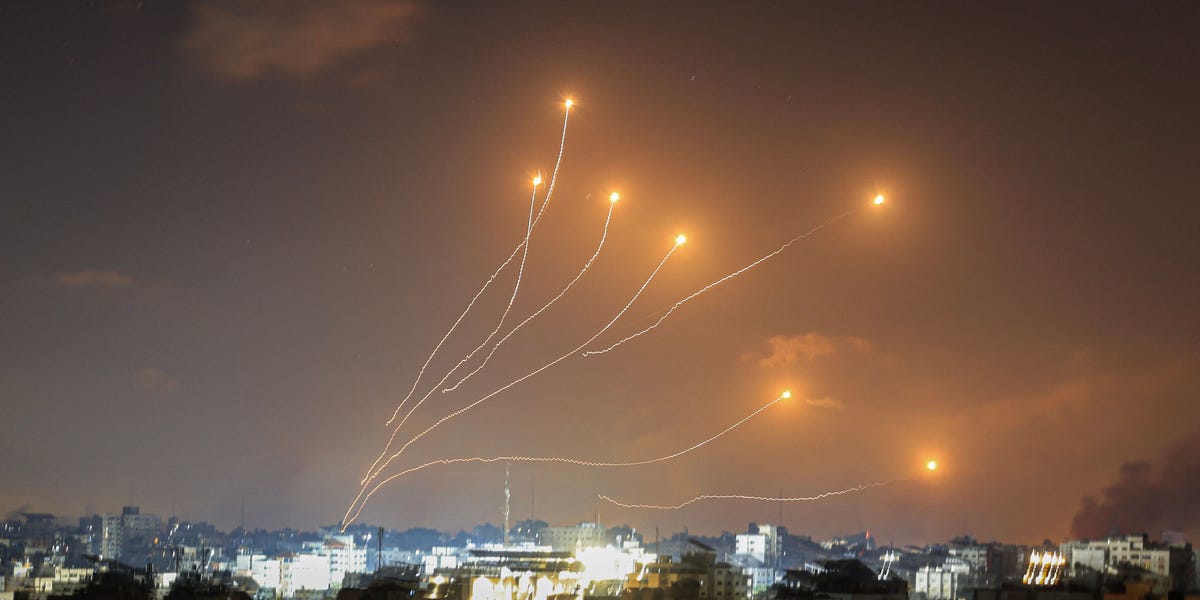
Iron Dome is one of the most recognizable air defense systems in the world because its purpose is easy to understand: it is designed to detect and intercept short-range rockets and similar aerial threats before they hit populated areas. For Israel, a country that has faced repeated rocket fire from Gaza and concerns about threats from Lebanon and elsewhere, Iron Dome is not a luxury item. It is part of everyday national security planning.
The system became operational in Israel in 2011 and has since become a central piece of the country’s layered air defense network. It sits alongside other systems that are designed for different kinds of threats. Think of Israel’s air defense as a very serious security team at a very chaotic concert: one guard watches the front door, another watches the balcony, another checks the VIP entrance, and everyone hopes nobody throws anything from the cheap seats.
Iron Dome’s value lies not only in interception but also in prioritization. The system is designed to assess whether an incoming projectile is likely to threaten a populated area. If it appears headed toward an open field, the system can conserve interceptors. That matters because interceptors are expensive, supplies are limited, and no country wants to fire costly defense missiles at every object headed toward empty dirt.
Why Did the U.S. Army Buy Iron Dome in the First Place?
The U.S. Army bought the two Iron Dome batteries because it needed an interim capability. Congress had pushed the service to acquire a system quickly while the Army worked on a more integrated, long-term solution for indirect fire protection. Iron Dome had a real combat record and strong political support in Washington, so it became an attractive short-term option.
However, “available now” does not always mean “perfect forever.” The Army’s broader modernization plan depended on systems that could plug into its future command-and-control architecture. Iron Dome, while effective in its intended role, created integration challenges for the Army. U.S. officials and defense analysts pointed to concerns involving software access, cybersecurity, and the difficulty of connecting the system smoothly to the Army’s planned air defense network.
That is the procurement lesson hiding in the headlines: a system can be excellent and still not be the right long-term fit. A sports car is fantastic until you need to haul lumber, three kids, and a muddy dog. Iron Dome was highly relevant for Israel’s threat environment, but the U.S. Army had different requirements, different geography, and a different vision for future air defense.
Why Returning the Batteries Made Strategic Sense
Returning the two Iron Dome batteries to Israel made sense for three main reasons: Israel already operated the system, Israel faced immediate rocket threats, and the U.S. Army had not deeply integrated the batteries into its own force structure.
1. Israel Could Use Them Immediately
Because Iron Dome is Israeli-developed and already fielded across Israel, the country had the operational ecosystem to absorb additional batteries more naturally than a military starting from scratch. That includes trained personnel, maintenance familiarity, command practices, and existing defense planning. In emergency terms, Israel was not being handed a mystery gadget with a 400-page manual and a missing charger.
2. The Army Was Moving in Another Direction
The U.S. Army had already signaled that it did not intend to buy more Iron Dome batteries or make them the centerpiece of its long-term air defense architecture. The service had other programs in development for its future needs. Sending the batteries to Israel therefore did not remove a system that had become essential to the Army’s daily operations.
3. It Reinforced a Key U.S. Partner
The transfer was also a diplomatic signal. U.S. security assistance to Israel has long included air and missile defense support. By providing additional Iron Dome capability, Washington showed that its support was not limited to speeches, visits, or carefully worded press releases. It involved hardware, logistics, and fast decisions.
The Bigger Picture: Air Defense Is Becoming More Important Everywhere
The Iron Dome transfer also reflects a wider global trend: air defense is no longer a niche military topic. Drones, rockets, cruise missiles, and other aerial threats have reshaped how countries think about protection. Conflicts in the Middle East and Europe have shown that modern militaries need layered defenses, deep interceptor inventories, resilient supply chains, and the ability to move equipment quickly.
For years, air defense was often treated like insurance: important, expensive, and easy to underappreciate until disaster knocks on the door wearing steel-toed boots. Now, governments are rediscovering that defensive systems can be just as strategically important as offensive platforms. A country that cannot defend its airspace, cities, bases, ports, and energy infrastructure can be pressured even without a traditional ground invasion.
Iron Dome is not a universal shield. No air defense system is. Large barrages can strain even advanced defenses, and every interceptor fired must eventually be replaced. Still, the system’s record has made it a symbol of how technology, doctrine, and supply chains can reduce damage from repeated rocket attacks.
The Role of U.S. Industry and Supply Chains
The Iron Dome story is also an American industrial story. The system was developed by Israel’s Rafael Advanced Defense Systems with significant U.S. support, and RTX/Raytheon has been involved in production and related U.S. variants. Over time, more Iron Dome-related manufacturing has been connected to the United States, including production efforts in Arkansas for Tamir interceptors and the U.S. SkyHunter variant.
That supply chain matters because modern defense support is not just about moving existing equipment. It is about keeping production lines alive, expanding output, and making sure allies do not run short during long conflicts. A battery without enough interceptors is like a printer without ink: technically present, emotionally frustrating, and not very useful when the deadline arrives.
The U.S. and Israel have therefore treated air defense production as a long-term partnership. The transfer of two batteries was one chapter in a larger book that includes development funding, interceptor replenishment, manufacturing capacity, and future systems such as laser-based defenses.
Was This a Win for the U.S. Army?
From one angle, returning the batteries might look like an admission that the Army’s purchase did not work out as planned. That is partly true. The Army bought the systems under pressure to address a real capability gap quickly, but the batteries never became a clean match for the service’s long-term modernization plan.
From another angle, however, the transfer was a practical recovery of value. Instead of leaving the batteries underused in the United States, the Army enabled them to support a partner that already knew the system and needed more air defense capacity. That is not failure; that is adaptation. In government procurement, adaptation is sometimes the closest thing to poetry.
The bigger lesson for the Army is that interim solutions should be evaluated not only for performance but also for integration. A system can shoot well, test well, and still create complications if it cannot connect to the broader network. In modern defense, the network is often as important as the platform itself.
Was This a Win for Israel?
For Israel, the answer is more straightforward. Additional Iron Dome batteries and interceptors meant more capacity during a period of high demand. Even if the systems arrived through a temporary lease, they strengthened Israel’s ability to defend against short-range attacks.
Israel’s challenge is not simply owning air defense systems; it is maintaining enough of them, with enough interceptors, in the right places, during prolonged conflict. Every additional battery can provide more coverage flexibility. Every additional interceptor can matter during a surge of launches. In that sense, the returned batteries were valuable not because they were magical, but because they were available, familiar, and relevant.
Public Debate and Political Context
The transfer also sparked broader debate in Washington. Before the batteries were sent to Israel, some lawmakers and analysts had discussed whether they could be sent to Ukraine. That idea was complicated by Israeli involvement in the system’s design and technology, as well as Israel’s own policy considerations. After the October 2023 attacks, attention shifted toward Israel’s immediate defense needs.
The debate highlighted a difficult reality: even when the United States owns a system, transferring it to another country can involve technical rights, diplomatic relationships, export approvals, and strategic tradeoffs. Military aid is rarely as simple as “put it on a truck and wave goodbye.” There are layers of legal, political, and operational complexity hiding under every headline.
What This Means for Future U.S. Air Defense
The Iron Dome episode will likely influence future U.S. Army decisions. The service needs systems that can defend against drones, rockets, cruise missiles, and other threats while integrating into American command networks. That means future purchases will be judged not only by battlefield reputation but also by compatibility, data access, cybersecurity, production capacity, and long-term sustainment.
For readers who follow defense policy, this is the real takeaway: the best system for one country may not be the best system for another. Geography, threat type, military doctrine, budget, and technology architecture all matter. Iron Dome fits Israel’s needs because Israel faces frequent short-range threats over a relatively compact area. The United States faces a broader and more varied set of defense challenges across global bases, allies, territories, and oceans.
Experiences and Lessons From the Iron Dome Transfer
The story of the Army returning two Iron Dome batteries to Israel offers several practical lessons for anyone interested in defense policy, crisis management, or large-scale technology decisions. The first lesson is that urgency changes everything. In peacetime, organizations debate requirements, roadmaps, budgets, and integration plans. In crisis, the question becomes brutally simple: what can help right now?
That does not mean planning becomes irrelevant. In fact, planning becomes more important. The reason the batteries could be transferred at all was that they existed, had been purchased, and were maintained within a defense framework. Even if they were not central to the Army’s future, they were still real assets. This is a useful reminder that spare capacity can become strategic capacity when events change quickly.
The second lesson is that compatibility matters. Many organizations, not just militaries, buy tools because they are famous, powerful, or recommended by influential people. Then the tools sit half-used because they do not fit the existing workflow. Companies do this with software. Schools do it with learning platforms. Governments do it with defense systems. The Iron Dome batteries were not useless; they simply did not fit the Army’s long-term plan as neatly as hoped.
The third lesson is that partnerships are built before emergencies. The U.S. and Israel had years of cooperation around Iron Dome before the 2023 transfer. That made rapid assistance more realistic. Trust, manufacturing relationships, legal agreements, and technical familiarity do not appear overnight. They are built slowly, usually through meetings that look boring until history suddenly makes them important.
The fourth lesson is that supply chains are strategy. A modern air defense system is not just a launcher, radar, and command unit. It is training, spare parts, software support, transport, maintenance, and interceptor production. If any one of those pieces breaks down, performance suffers. The push to expand production of Tamir interceptors in the United States shows that Washington and industry understand the importance of replenishment. A defense system is only as strong as the pipeline that keeps it supplied.
The fifth lesson is that defense decisions carry symbolic weight. The two batteries were not enough to transform the entire regional balance by themselves, but their transfer sent a message. It showed that the United States was willing to move actual equipment, not just issue statements. In international politics, symbols backed by logistics are much louder than symbols backed only by microphones.
The sixth lesson is that “temporary” solutions deserve serious scrutiny. The Army bought Iron Dome as an interim capability, but interim programs can still cost hundreds of millions of dollars and create long-term policy questions. Temporary does not mean cheap, simple, or consequence-free. When governments buy stopgap systems, they should plan from the beginning for what happens if the stopgap does not become permanent.
Finally, the Iron Dome transfer shows that practicality often beats perfection. The arrangement was not elegant. The Army did not fully integrate the batteries. The lease raised questions about ownership and long-term disposition. The politics were complicated. Yet in a crisis, the systems went where they were more immediately useful. That may be the most realistic lesson of all: in national security, the perfect answer is often unavailable, so leaders must choose the useful answer quickly and responsibly.
Conclusion
The Army’s return of two Iron Dome air defense batteries to Israel was more than a routine equipment transfer. It was a case study in how defense systems move through politics, procurement, alliance management, and wartime urgency. The United States bought the batteries as a bridge capability, found them difficult to integrate into its future plans, and then used them to support an ally that already operated the system and urgently needed more defensive capacity.
For Israel, the batteries added valuable reinforcement. For the U.S. Army, the move helped resolve an awkward procurement chapter while still extracting strategic value from the systems. For defense observers, the episode underlines a clear lesson: modern air defense is not just about impressive technology. It is about fit, timing, supply chains, alliances, and the ability to act before the window closes.












