
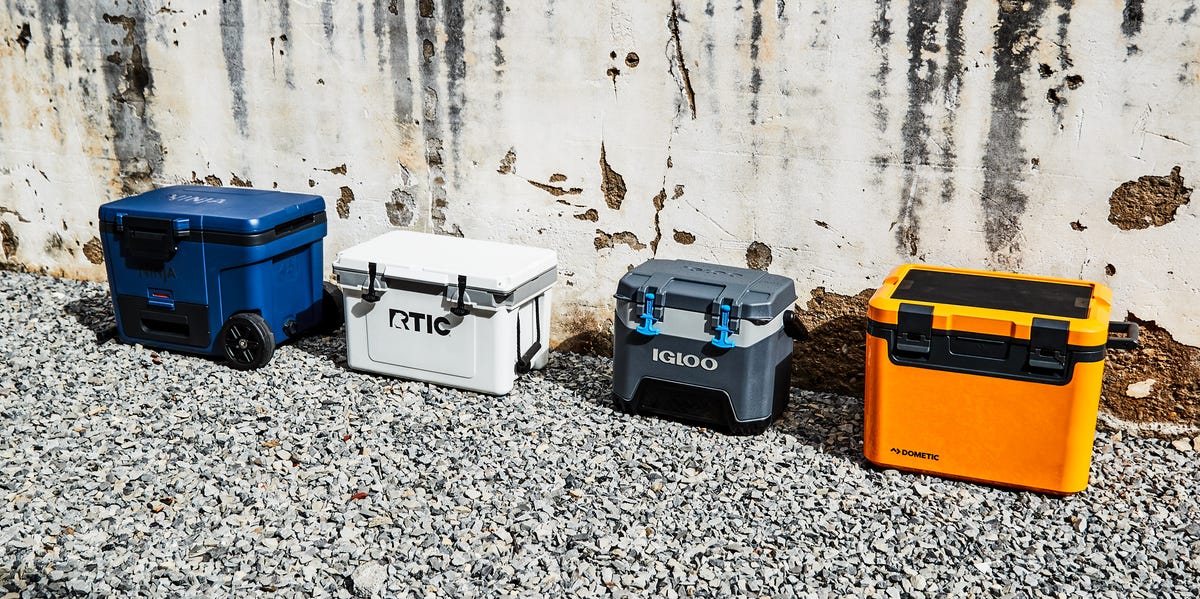
Buying a cooler used to be simple: find a plastic box, add ice, and hope your potato salad survived the afternoon. In 2025, the best coolers are engineered more like outdoor equipment. They use thick insulation, freezer-style gaskets, rugged latches, oversized wheels, leak-resistant zippers, and even refrigerated dry-storage drawers.
That innovation is useful, but it also makes shopping confusing. A premium rotomolded cooler may keep ice longer than a basic chest, yet it can weigh nearly as much as the food packed inside it. A lightweight cooler is easier to carry, but it may not be the best choice for a week at a remote campsite. Meanwhile, a rolling cooler with every accessory imaginable can be delightful on a boardwalk and hilariously awkward in the trunk of a compact car.
To identify the seven best coolers of 2025, we compared independent temperature-retention tests, durability assessments, portability, usable capacity, construction, organization, manufacturer specifications, and overall value. The winners below cover everything from quick beach trips to multiday camping adventures.
The Best Coolers of 2025 at a Glance
| Cooler | Best For | Type | Capacity | Price Class |
|---|---|---|---|---|
| YETI Tundra 45 | Best overall | Hard-sided | Medium | Premium |
| RTIC 52 QT Ultra-Light | Best value | Hard-sided | Large | Midrange |
| Coleman Classic 70-Quart | Best budget cooler | Hard-sided | Extra-large | Budget |
| Igloo ECOCOOL Trailmate Journey 70 | Best all-terrain wheeled cooler | Wheeled hard cooler | Extra-large | Midrange |
| Ninja FrostVault 50QT | Best for food organization | Hard-sided with dry drawer | Large | Premium |
| YETI Hopper Flip 18 | Best soft cooler | Soft-sided | Day-trip size | Premium |
| Oyster Tempo | Best compact high-performance cooler | Vacuum-insulated | Compact | Luxury |
1. YETI Tundra 45: Best Overall Cooler
The YETI Tundra 45 remains the benchmark against which many premium hard coolers are measured. Its rotomolded shell feels exceptionally solid, while thick polyurethane insulation, a freezer-quality gasket, durable rubber latches, and nonslip feet create a dependable package for camping, boating, fishing, and road trips.
At approximately 24.6 pounds empty, the Tundra 45 is not light. However, it is more manageable than many larger expedition coolers and is compact enough for two adults to lift comfortably when loaded. Its exterior measures roughly 25.6 inches wide, 15.9 inches deep, and 15.5 inches tall. YETI lists room for 54 cans when no ice is included, although real-world packing capacity will naturally be lower once you add an appropriate amount of ice.
The greatest strength of the Tundra is consistency. It closes securely, drains easily, tolerates rough handling, and maintains cold temperatures reliably when packed correctly. It is also compatible with dry ice, making it useful for specialized trips where ordinary cubed ice is not enough.
What We Like
Outstanding durability, reliable insulation, replaceable components, a useful dry-goods basket, and a size that works for many different activities.
What Could Be Better
The premium price is difficult to ignore, and its weight becomes noticeable when the cooler is packed with drinks. Buyers who primarily need a cooler for backyard parties may not benefit from its expedition-level construction.
Verdict
Choose the YETI Tundra 45 when long-term durability matters as much as cold retention. It is expensive, but it is built for people who expect to use the same cooler for years rather than replacing a cracked bargain chest every other summer.
2. RTIC 52 QT Ultra-Light: Best Value Cooler
The RTIC 52 QT Ultra-Light offers an appealing middle ground between inexpensive recreational coolers and heavy rotomolded models. It uses an injection-molded construction designed to reduce weight without abandoning thick closed-cell foam insulation or a freezer-style gasket.
RTIC describes the Ultra-Light as up to 30% lighter than comparable rotomolded coolers. It holds as many as 76 cans without ice and provides enough usable room for a family camping weekend, a fishing trip, or a serious tailgate. Its molded handles, nonslip feet, drain system, tie-down points, and integrated bottle opener add useful functionality without turning the cooler into an outdoor kitchen appliance with an identity crisis.
The company advertises up to seven days of cold retention when its packing instructions are followed. As with every manufacturer ice-retention claim, actual results depend on ambient temperature, ice ratio, how often the lid is opened, and whether the cooler was prechilled.
What We Like
Generous capacity, lower weight than many premium competitors, strong insulation, and a price that delivers excellent performance per dollar.
What Could Be Better
The shell does not have quite the tank-like feel of the heaviest rotomolded coolers. It is also large enough to become a two-person lift once fully packed.
Verdict
The RTIC 52 QT Ultra-Light is one of the best coolers for buyers who want premium-style features without paying the highest premium-style price. For most families, it offers a better balance of space, weight, and cost than an oversized expedition cooler.
3. Coleman Classic 70-Quart: Best Budget Cooler
Not every picnic requires a cooler capable of surviving an encounter with a bear, a pickup truck, and an overenthusiastic gear reviewer. Sometimes you simply need plenty of cold storage at a reasonable price. That is where the Coleman Classic 70-Quart cooler excels.
This traditional hard cooler offers enough room for approximately 50 cans plus 35 pounds of ice, or up to 109 cans without ice. The fully insulated lid and body are rated by Coleman to retain ice for as long as three days in temperatures up to 90 degrees Fahrenheit. Its lid can also support up to 250 pounds, giving campers an extra seat when folding chairs mysteriously disappear around the fire.
The stain-resistant liner and smooth lid are easy to clean, and the cooler is far lighter than most rotomolded models of similar capacity. That matters when loading it into a vehicle or carrying it from the garage to the backyard.
What We Like
Excellent capacity for the price, low empty weight, simple cleaning, built-in seating, and widespread availability.
What Could Be Better
Cold retention is more dependent on careful packing than it is with thick premium coolers. The hinges, handles, and overall shell are suitable for ordinary recreation but are not designed for repeated expedition-level abuse.
Verdict
The Coleman Classic is the sensible choice for parties, weekend camping, youth sports, and family cookouts. It proves that a useful large cooler does not need to cost as much as the groceries inside it.
4. Igloo ECOCOOL Trailmate Journey 70: Best All-Terrain Wheeled Cooler
A 70-quart cooler becomes extremely heavy once it is full. Igloo addresses that problem with oversized wheels and a telescoping handle that make the Trailmate Journey easier to pull over grass, gravel, packed dirt, and uneven campground paths.
The Trailmate is sometimes described as the Swiss Army knife of coolers, and the comparison is fair. In addition to its 70-quart capacity, it includes dry storage, bottle openers, cup holders, a serving tray, tie-down points, accessory holders, and an elevated design that keeps the main cooler body away from hot ground.
Igloo uses THERMECOOL insulation, a cleaner formulation intended to deliver practical temperature retention while reducing environmental impact. Independent testing has also praised the Trailmate for mobility and its ability to remain stable when parked.
What We Like
Excellent mobility, high capacity, thoughtful accessories, convenient dry storage, and a handle that reduces the strain of moving a fully loaded cooler.
What Could Be Better
The exterior is bulky, and all those accessories require storage space. The wheels perform well on many outdoor surfaces, but deep, loose beach sand can still turn any heavily loaded cooler into an improvised strength-training device.
Verdict
This is the best cooler for large gatherings where the parking area and destination are not neighbors. It is especially useful for festivals, campsites, parks, sporting events, and beaches with firm access paths.
5. Ninja FrostVault 50QT: Best Cooler for Food Organization
The Ninja FrostVault solves one of the oldest cooler problems: food that needs to stay cold but should not spend the weekend floating in melted ice. Its separate Cold Dry Zone drawer sits beneath the main compartment and receives cold air without allowing loose ice or water to soak sandwiches, cheese, fruit, or packaged meat.
Ninja states that the drawer can hold food below 40 degrees Fahrenheit for days when the cooler is packed and used correctly. The 50-quart main compartment has room for drinks and ice, while the drawer gives delicate food its own refrigerated space. This layout can also reduce unnecessary lid opening because snacks can be retrieved without exposing the entire ice compartment to warm air.
The thick insulated body provides competitive multiday performance, although it also contributes to a substantial empty weight. This is a cooler designed for car camping and organized group trips rather than long hand-carried journeys.
What We Like
Innovative dry drawer, strong insulation, easy food separation, durable construction, and a design that reduces soggy packaging.
What Could Be Better
It is heavier and more expensive than a conventional cooler of similar capacity. The drawer also occupies exterior space that buyers focused entirely on beverage capacity may prefer to use differently.
Verdict
The FrostVault is a standout cooler for campers who pack real meals rather than six dozen beverages and one lonely bag of baby carrots. Families, overlanders, and organized meal planners will appreciate the separation between wet ice and refrigerated food.
6. YETI Hopper Flip 18: Best Soft Cooler
Hard coolers are excellent until you need to carry one down a long trail, across a crowded beach, or through a theme park parking lot. The YETI Hopper Flip 18 delivers serious insulation in a softer, shoulder-friendly package.
The Hopper Flip 18 holds up to 30 cans without ice and weighs approximately five pounds empty. Its wide-mouth opening makes packing straightforward, while the waterproof zipper and welded shell help prevent leaks. The exterior fabric is designed to resist punctures, mildew, and abrasion, making the Hopper tougher than an ordinary insulated lunch bag.
Its rectangular shape is more stable and easier to organize than many floppy soft coolers. The top opens fully, so users do not have to conduct an archaeological dig every time someone requests the beverage packed at the bottom.
What We Like
Excellent portability, durable materials, dependable insulation, leak-resistant construction, and a practical size for day trips.
What Could Be Better
The zipper can feel stiff and needs occasional lubrication. The cooler is also expensive for its capacity, and it cannot be used with dry ice because its airtight design does not provide appropriate ventilation.
Verdict
The Hopper Flip 18 is ideal for beach days, road trips, fishing outings, and picnics where mobility matters more than maximum volume. It is one of the few soft coolers that feels like genuine outdoor equipment rather than a disposable lunch tote wearing hiking boots.
7. Oyster Tempo: Best Compact High-Performance Cooler
The Oyster Tempo approaches cooler design differently. Instead of relying on thick foam-filled walls, it uses vacuum insulation and an aluminum body. The result is a slim cooler with more interior room relative to its exterior footprint.
The Tempo weighs about 12.1 pounds with its handle and can carry up to 36 cans with reusable cold packs. Because it is designed around cold packs rather than a large quantity of loose ice, more of the interior can be devoted to food and beverages. The aluminum construction also transfers cold efficiently throughout the interior.
Its clean, modern appearance makes it equally suitable for a boat, camper van, upscale picnic, or backyard dinner. However, its premium materials and unusual construction place it firmly in the luxury category.
What We Like
Exceptional space efficiency, low weight for its performance, no need for a mountain of loose ice, premium construction, and a distinctive design.
What Could Be Better
The purchase price is substantial, and reusable cold packs require advance freezer space and planning. The aluminum exterior can also show cosmetic marks more readily than textured plastic.
Verdict
The Oyster Tempo is best for buyers who value compact dimensions, innovative insulation, and efficient packing. It is not the economical choice, but it may be the most interesting cooler in the group.
How We Evaluated the Best Coolers
A cooler should be judged by more than the number of days printed on its packaging. Manufacturer retention claims are typically achieved under controlled conditions, while real-world coolers are opened repeatedly, left in sunny vehicles, filled with warm drinks, and occasionally used as emergency furniture.
Our evaluation focused on five practical categories:
Cold Retention
We considered independent temperature testing, insulation thickness, gasket quality, closure design, and whether the cooler could keep perishable food below the USDA safety threshold of 40 degrees Fahrenheit.
Portability
Empty weight is only half the story. We also examined handle comfort, wheel size, balance, exterior dimensions, and whether one person could realistically move the cooler after packing it.
Usable Capacity
Advertised quart capacity does not always reflect practical storage. Thick insulation, baskets, drawers, wheel wells, and tapered interiors can reduce usable room. A well-shaped 45-quart cooler may be more useful than a poorly organized larger model.
Durability
Shell construction, hinges, latches, zippers, handles, drain plugs, feet, and replaceable parts all affect long-term value. A cooler that retains ice beautifully but loses a handle during its second camping trip is simply a very insulated storage box.
Value
The best value is not automatically the least expensive product. We compared performance, capacity, expected service life, portability, warranty coverage, and useful features against the general price category.
How to Choose the Right Cooler
Choose the Correct Size
A cooler between 20 and 35 quarts usually works for one or two people on a day trip. Models around 40 to 55 quarts are versatile enough for family weekends. Coolers between 60 and 100 quarts are better for large groups, hunting trips, fishing, and multiday events, but they quickly become too heavy to carry without wheels or a second person.
Match the Cooler to the Trip
A rotomolded hard cooler makes sense for rough travel and extended camping. A soft cooler is more comfortable for a picnic or beach day. Wheeled models are excellent for large loads, while vacuum-insulated coolers appeal to shoppers who want high performance without sacrificing excessive interior space to foam.
Do Not Ignore Empty Weight
Water weighs about 8.3 pounds per gallon, and ice, drinks, and food add up quickly. A 30-pound cooler can become a 90-pound cooler before anyone has packed the mustard. Consider how far it must travel after leaving the vehicle.
Look Beyond Advertised Ice Retention
Ice retention varies with air temperature, sunlight, opening frequency, ice quality, and packing technique. Treat advertised maximums as ideal-condition estimates rather than guaranteed everyday results.
Field Experience: What Using a High-Performance Cooler Is Really Like
The biggest lesson from real-world cooler use is that preparation often matters as much as the logo on the lid. Even an excellent cooler struggles when it begins a trip at garage temperature and is immediately filled with warm soda. Prechilling the interior the night before can produce a noticeable improvement. A few frozen water bottles or reusable ice packs can cool the walls without creating a puddle that must be drained before packing.
For a weekend camping trip, separating food and drinks is one of the most effective strategies. The drink cooler will be opened constantly, usually by someone who needs several minutes to decide what flavor they want. A food cooler can remain closed except during meal preparation. This reduces warm-air exposure and helps meat, dairy products, and prepared dishes stay at safer temperatures.
Large rotomolded coolers provide confidence, but their weight changes how a trip must be planned. A Tundra 45 or similar cooler is manageable when empty, yet a full load of ice, food, and beverages may require two people. Loading the cooler into the vehicle before filling it can save both effort and an awkward conversation with your lower back.
Wheeled coolers are easier to move, but the surface matters. Large wheels roll comfortably over campground paths, pavement, and firm soil. Deep sand is less cooperative. Pulling a 70-quart cooler through loose beach sand may technically be possible, but it can also reveal muscles you were previously unaware existed. On soft terrain, wider pneumatic-style wheels generally perform better than small hard-plastic wheels.
Organization features become more valuable as a trip gets longer. Baskets prevent cheese and produce from sinking into meltwater. A dry drawer, such as the one in the Ninja FrostVault, is particularly helpful for sandwiches, chocolate, fruit, and vacuum-sealed meat. It also makes packing feel less like arranging groceries inside a cold bathtub.
Soft coolers are far more convenient for short outings. A shoulder strap keeps both hands available for chairs, towels, fishing equipment, or children who have suddenly decided walking is optional. The trade-off is reduced capacity and less structural protection. Soft coolers should be packed carefully so sharp packaging, bottle caps, and tools do not repeatedly press against the liner.
Drain design deserves more attention than it usually receives. A tethered plug is harder to lose, and a well-positioned channel allows meltwater to escape without lifting the cooler. Still, draining every drop is not always desirable during a trip. Cold water can help maintain temperature, provided food packaging is waterproof and the remaining ice is not floating in contaminated liquid.
Cleaning immediately after use is another practical habit. Meltwater mixed with food residue can create odors impressive enough to qualify as a scientific discovery. Mild soap, warm water, and complete air-drying are normally sufficient. Closing a damp cooler and storing it in a hot garage is an excellent way to begin cultivating an ecosystem.
Finally, the best cooler is the one that fits the activity. Premium insulation is useful, but it should not come at the expense of portability, capacity, or budget. A Coleman may be perfect for a backyard cookout, an RTIC for family camping, a YETI for rough long-term use, an Igloo Trailmate for a large mobile gathering, and a Hopper Flip for a day when the destination is farther than ten steps from the car.
Final Verdict
The YETI Tundra 45 earns our best overall recommendation because it combines dependable insulation, exceptional durability, practical dimensions, and proven long-term usability. The RTIC 52 QT Ultra-Light is the smarter value for buyers who need more capacity with less weight, while the Coleman Classic 70-Quart remains the budget champion.
For specialized needs, the Igloo Trailmate Journey offers superior mobility, the Ninja FrostVault protects food from meltwater, the YETI Hopper Flip 18 delivers excellent portable performance, and the Oyster Tempo provides an innovative compact alternative to thick foam coolers.
No single model is perfect for every trip. Choose according to how long you need to keep food cold, how far the cooler must travel, how many people it must serve, and whether you genuinely need expedition-grade construction. Your sandwiches do not care about brand prestige. They would simply prefer not to become soup.
Editorial note: Model specifications reflect the 2025 product lineup and information available from independent testing organizations and manufacturers. Prices, colors, warranties, capacities, and availability may change over time.











