
Superheroes must evolve. Costumes date, audiences change, and even the most dependable crime fighter occasionally needs something fresher than another fistfight beside an exploding laboratory. Reinvention can produce masterpiecesbut it can also produce an armed angel, a patriotic hero in a plunging neckline, and a pulp detective whose head is attached to a giant robot.
The funniest superhero reinventions usually began with reasonable ambitions. Publishers wanted aging characters to feel contemporary, writers wanted new storytelling possibilities, and artists wanted designs that would leap off crowded newsstands. Unfortunately, creative courage and common sense do not always share an office.
These six comic book makeovers are based on genuine published storylines. Some eventually earned cult appreciation, while others were quietly escorted out of continuity like guests who had mistaken the punch bowl for a swimming pool.
6. Wonder Woman Becomes a Mod Kung-Fu Adventurer
The reinvention that removed nearly everything “Wonder”
Wonder Woman is an Amazon champion with divine abilities, a magic lasso, an invisible aircraft, and one of the most recognizable costumes in comics. Naturally, DC once decided that what readers really wanted was a powerless boutique owner learning martial arts from a mysterious mentor.
Beginning in 1968, Diana Prince surrendered her Amazon powers so she could remain in the human world while her people traveled to another dimension. She adopted fashionable clothing, trained under a blind martial-arts master named I Ching, opened a mod boutique, and entered espionage-flavored adventures. The result resembled a fashionable television spy series that happened to have “Wonder Woman” printed on its cover.
The experiment was intended to modernize Diana and present her as a capable, self-reliant woman. Yet taking away the abilities of comics’ most famous female superhero created an obvious contradiction. She could defeat criminals without divine strength, but readers had already seen her wrestle gods. Watching her manage a boutique after that was like hiring an astronaut to supervise a mall kiosk.
The classic powers and costume eventually returned after the depowered era attracted criticism from feminists, including Gloria Steinem. The martial-arts period remains fascinating, stylish, and unintentionally funny because the modernization plan removed the qualities that had made Wonder Woman revolutionary.
5. The Punisher Becomes an Angelic Demon Hunter
Frank Castle receives a promotion from Heaven
The Punisher’s premise is brutally simple. Frank Castle is a traumatized veteran who wages a one-man war against violent criminals. He has no superpowers, no cheerful sidekick, and no interest in discussing whether a skull logo might hurt his public image.
In the 1998 Punisher: Purgatory miniseries, Marvel sent that grounded concept flying into the supernatural. After dying, Castle was revived by the angel Gadriel and supplied with mystical weapons capable of destroying demons. His new campaign offered him a chance at redemption and, perhaps, reunion with his murdered family in Heaven.
The emotional motivation made sense. Almost everything surrounding it looked as though a heavy-metal album cover had become legally authorized to write comic books. Frank carried glowing supernatural guns, fought infernal creatures, and operated between Heaven and Hell. The Punisher had gone from hunting mobsters in warehouses to performing armed customer service for the afterlife.
The reinvention also softened the character’s essential moral ugliness. Castle was no longer merely choosing endless vengeance; celestial forces had given his violence an official mission. That made him more conventionally heroic but less recognizably the Punisher.
Marvel abandoned the angelic direction after another supernatural crossover involving Wolverine. Garth Ennis and Steve Dillon subsequently returned Frank to street-level crime with impressive speed. Castle’s explanation was essentially that he had quit working for angelsan appropriately grouchy exit interview.
4. The Hulk Becomes a Well-Dressed Team Administrator
Professor Hulk is ready to smash quarterly targets
Bruce Banner and the Hulk traditionally represent conflict: intellect against rage, restraint against destruction, and ordinary shirts against impossible chest expansion. In The Incredible Hulk #377, writer Peter David and artist Dale Keown dramatically changed that formula.
With help from Doc Samson, Banner’s fractured identities appeared to merge. Banner’s intelligence, the gray Hulk’s confidence, and the green Hulk’s enormous body combined into the Merged Hulk, commonly called Professor Hulk. He was articulate, powerful, emotionally stable, and capable of wearing a tailored suit with the structural integrity of a suspension bridge.
This was not a brief visual gimmick. The intelligent Hulk joined the Pantheon, a secret organization of superpowered operatives, and eventually became its leader. He planned missions, handled responsibilities, maintained relationships, and generally behaved like the world’s largest middle manager. Imagine receiving a late expense report reminder from a man capable of folding your automobile.
The concept initially appears to eliminate the character’s central problem. If Bruce can retain his intelligence, enjoy Hulk’s strength, and remain in control, why ever become physically human again? Peter David used that apparent solution to explore deeper psychological instability, leadership, trauma, and the possibility that the “perfect” merger was not as healthy as it seemed.
Professor Hulk therefore became more successful than several entries on this list. He was still unintentionally amusing, however, whenever the formerly inarticulate monster discussed strategy while dressed for a board meeting.
3. Storm Enters Her Punk-Rock Era
A goddess discovers leather, motorcycles, and a mohawk
Storm originally carried herself with the serene dignity of a goddesswhich, in parts of her early history, people believed she was. She controlled the weather, spoke with regal formality, and looked capable of calming a hurricane by giving it a disappointed glance.
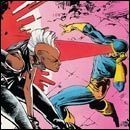
Then Uncanny X-Men #173 gave her a mohawk, black leather clothing, metal accessories, and a far more confrontational attitude. The visual transformation followed her adventures with the free-spirited Yukio and expressed Ororo Munroe’s desire to escape the controlled identity she had maintained for years.
The sudden contrast was delightful. One issue presented a majestic elemental queen; the next seemed to ask whether she had joined a punk band that exclusively performed during thunderstorms. Yet the change was more substantial than a haircut. Storm became tougher, more decisive, and increasingly independent.
After losing her weather powers to a weapon designed by Forge, she remained with the X-Men and proved that her authority did not depend on lightning. She later defeated Cyclops in a contest for team leadership despite being powerless. The woman who could once summon a tornado demonstrated that she could command a room without producing so much as a light breeze.
Unlike most notorious comic book redesigns, punk Storm became beloved. The humor comes from the abruptness and unmistakable 1980s styling, not from creative failure. What looked like a trend-chasing makeover grew into one of the character’s defining periods.
2. The Shadow Becomes a Giant Robot
The master of psychological terror receives mechanical upgrades
Long before Batman frightened Gotham’s criminals, the Shadow haunted pulp magazines and radio dramas. His trademarks included a dark cloak, broad-brimmed hat, eerie laughter, twin pistols, and the unsettling ability to know what evil lurked inside suspiciously specific hearts.
DC’s late-1980s The Shadow series, written by Andy Helfer and illustrated during much of its run by Kyle Baker, pushed the character into violent contemporary satire. The stories became progressively stranger until the Shadow was killed and later returned as a living head.
That alone would have secured the run a respectable place in comic book oddity. Issue #19 went further by attaching the Shadow’s head to a massive robotic body in a story appropriately titled “Full Metal Shadow.” The new chassis possessed tremendous strength, built-in weapons, electronic targeting, and enough polished metal to make a kitchen-appliance showroom feel insecure.
The mismatch was magnificent. The Shadow traditionally won by manipulating fear, disguising himself, and appearing mysteriously in dark rooms. A towering metal body made subtle infiltration difficult. When a seven-foot machine crashes through a wall, criminals no longer wonder who knows what evil lurks in their hearts. They wonder whether their insurance covers cyborg damage.
The series ended with that nineteenth issue, leaving the robotic Shadow as both a climax and a spectacularly strange dead end. Few superhero reinventions have traveled so efficiently from “gritty update” to “the fedora is now attached to military hardware.”
1. Captain America Trades Patriotism for Nomad’s Cape
The man without a countryand briefly without a sensible costume
Captain America is more than a man wearing a flag. At his best, Steve Rogers represents American ideals rather than unquestioning loyalty to American institutions. Writer Steve Englehart tested that distinction during the politically charged “Secret Empire” storyline of the 1970s.
After uncovering a conspiracy that reached the presidency, Rogers became deeply disillusioned. The villainous Number One was strongly implied to be President Richard Nixon, although his face was not shown. Shaken by the corruption he had witnessed, Steve abandoned the Captain America identity.
The underlying story was thoughtful and unusually relevant to the Watergate era. The comedy arrived when Rogers decided to continue fighting crime as Nomad. Captain America’s shield and practical uniform were replaced by a dark costume featuring yellow gloves, a dramatic cape, a wide-open chest, and roughly the amount of fabric expected at a superhero-themed nightclub.
In Captain America #180, Steve debuted the Nomad identityand promptly tripped over his cape. This was not a later parody written by a comedian. The comic itself immediately understood what it had done.
Nomad lasted only a handful of issues before Rogers reclaimed the Captain America mantle. The experience clarified that his loyalty belonged to democratic principles, not individual officials. It was meaningful character development wrapped in an outfit that could lose a fight with an escalator.
That combination places Nomad at the top of the funniest superhero reinventions: intelligent political analysis, sincere personal crisis, and a costume apparently designed during a regional cape surplus.
Why These Superhero Makeovers Became So Funny
Each reinvention collided with the character’s central appeal. Wonder Woman lost her powers, the Punisher gained divine authorization, the Hulk achieved apparent emotional stability, the Shadow became impossible to conceal, and Captain America abandoned the symbols that made him instantly recognizable.
Yet failure is not the whole story. Punk Storm became iconic. Professor Hulk supported years of ambitious storytelling. Nomad strengthened the idea that Steve Rogers serves principles rather than governments. Even the strangest superhero redesign can reveal something valuable when creators take the character seriously enough to risk embarrassment.
Comic continuity is forgiving. A disastrous costume can be burned, a robot body can be forgotten, and employment with Heaven can be terminated. The embarrassing reinvention may disappear, but the panels remainwaiting patiently to make another generation ask, “Who approved the angel guns?”
The Reader Experience: Revisiting These Reinventions Today
Old comics become accidental time machines
Reading these superhero reinventions decades later is a different experience from encountering them during publication. Modern readers already know that Wonder Woman regained her powers, Steve Rogers returned as Captain America, and the Punisher did not spend the rest of his career processing demonic arrest warrants. That knowledge turns apparent disasters into wonderfully safe historical detours.
The most enjoyable approach is to read complete story arcs instead of judging isolated costume images. Nomad’s outfit is undeniably funny, but the political crisis behind it is sophisticated. Professor Hulk can look like a green executive attending an unusually aggressive shareholders’ meeting, yet Peter David’s stories use him to examine identity and untreated trauma. Context rarely makes the visuals less amusing; it simply gives the laughter something intelligent to sit beside.
Not every strange redesign is genuinely bad
Storm provides the clearest lesson. A quick description“the dignified weather goddess gets a mohawk and leather wardrobe”sounds like shameless trend chasing. On the page, however, the transformation represents rebellion, confidence, and personal independence. Many readers now regard the punk design as one of Storm’s greatest looks. What initially appears dated can become timeless when the character development underneath it is convincing.
The depowered Wonder Woman stories inspire similarly mixed reactions. Removing her abilities was a questionable decision, especially when powerful female heroes were already rare. Nevertheless, the era featured distinctive fashion, international adventure, martial arts, and striking artwork. Readers can criticize the premise while appreciating the craft. Comic history becomes much more interesting when “good” and “bad” are allowed to occupy the same panel.
Finding humor without ignoring creative ambition
There is an easy temptation to treat older comics as exhibits in a museum of terrible decisions. That misses the risk involved in producing monthly serialized fiction. Creators had deadlines, changing audiences, editorial demands, and no guarantee that an experiment would age gracefully. They could not consult decades of internet reaction before deciding whether the Shadow needed a robot body.
The best reading experience balances affection with disbelief. Laugh when Nomad trips over his own cape; the comic invites it. Admire the audacity of attaching a pulp hero’s head to a mechanical torso. Notice how angel Punisher tries to solve a legitimate narrative problemFrank’s spiritual emptinesseven if the solution feels like supernatural equipment was purchased during a clearance sale.
What modern superhero stories can learn
Successful reinvention changes a character’s circumstances without erasing the dramatic engine. Storm can lose her powers because leadership remains central to her identity. Captain America can abandon his title because the resulting crisis investigates what patriotism means. Problems emerge when a makeover removes the tension audiences came to experience and replaces it with novelty alone.
For readers, these six experiments make comic history feel alive. Famous heroes were never delivered to us in finished form. They were revised, challenged, dressed badly, repaired, and occasionally rebuilt from the neck down. Their embarrassing eras are evidence that long-running characters survived because creators kept gambling on new ideaseven when the roulette wheel landed on “giant robot detective.”













