
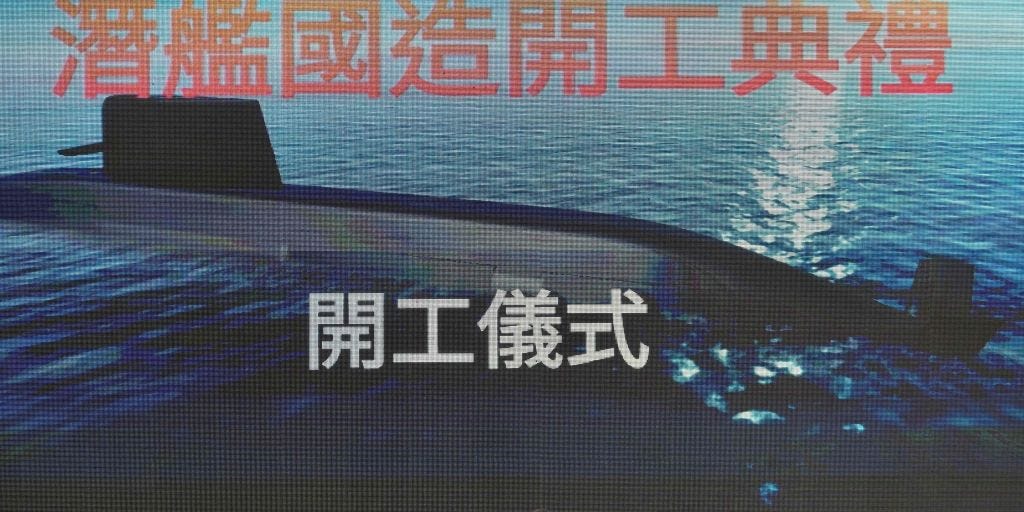
Taiwan is building eight new submarines, and no, this is not a plotline from a very serious Netflix thriller where everyone whispers in windowless rooms. It is one of the most important defense stories in the Indo-Pacific: a small island democracy trying to create an undersea deterrent against one of the world’s largest militaries.
The program centers on Taiwan’s Indigenous Defense Submarine effort, led by CSBC Corporation in Kaohsiung. Its first boat, Hai Kun, also known in English as Narwhal, is the prototype for a planned class of diesel-electric attack submarines. If the program succeeds, Taiwan’s navy would move from a tiny, aging submarine force to a far more credible undersea fleet designed to complicate any Chinese blockade, invasion, or coercive campaign.
In simple terms, Taiwan is trying to make the Taiwan Strait much less comfortable for hostile ships. Submarines are not flashy like fighter jets. They do not look dramatic at parades. They are more like the quiet person at a dinner party who says very little but somehow knows where everyone parked. That quietness is the whole point.
Why Taiwan Wants Eight New Submarines
Taiwan’s geography is both a blessing and a headache. The island sits at the center of the first island chain, facing China across the Taiwan Strait and looking east into the wider Pacific. Any military crisis around Taiwan would likely involve sea control, sea denial, shipping routes, ports, and the movement of invasion forces. That is where submarines matter.
A diesel-electric submarine operating close to home can be extremely difficult to detect, especially in crowded and noisy coastal waters. Taiwan does not need a massive blue-water navy to match China ship for ship. It needs weapons that can make any attack costly, slow, uncertain, and politically dangerous. That is the logic of, uncertain, and politically dangerous. That is the logic of asymmetric defense: do not wrestle the bear; make the bear step on Legos.
China’s navy is far larger than Taiwan’s. Beijing has aircraft carriers, destroyers, submarines, amphibious ships, long-range missiles, and the industrial base to keep building more. Taiwan cannot win a numbers contest. But it can invest in systems that exploit geography, mobility, concealment, and precision. Submarines fit that recipe.
The Hai Kun: Taiwan’s First Home-Built Submarine
The first submarine in the program, Hai Kun, was launched for testing in Kaohsiung in September 2023. That moment was symbolically huge because Taiwan had spent decades trying to acquire modern submarines from abroad, only to run into diplomatic pressure from Beijing. Many countries were reluctant to sell Taiwan the technology, hull designs, or sensitive systems needed for undersea warfare.
So Taiwan did what determined island societies often do: it started building the thing itself. The project took years of design, foreign technical assistance, political argument, budget fights, and industrial learning. The result is a diesel-electric attack submarine reported at roughly 2,300 to 2,500 tons, built by CSBC and equipped with modern combat and sensor systems.
Hai Kun is not just a boat; it is a proof of concept. If the prototype passes testing and enters service, it gives Taiwan the confidence to move forward with seven additional submarines. If it stumbles, critics will have plenty of ammunition, and not the fun torpedo kind.
What Makes These Submarines Strategically Valuable?
They Threaten Invasion Shipping
A Chinese invasion of Taiwan would require moving troops, armor, supplies, fuel, engineering equipment, air-defense systems, and follow-on forces across the water. That is not a weekend ferry ride. It is one of the hardest military operations imaginable. Submarines can threaten high-value vessels involved in such an operation, forcing China to devote more resources to escort, detection, minesweeping, and anti-submarine warfare.
They Complicate a Blockade
China might also choose a blockade or quarantine strategy rather than an immediate amphibious assault. In that scenario, submarines would help Taiwan contest the surrounding waters and threaten ships enforcing maritime pressure. A blockade only works smoothly if the blockading force feels confident. Submarines are confidence reducers.
They Add Uncertainty
The most useful submarine is often the one the enemy cannot find. Even a small number of hidden boats can force a larger navy to slow down, spread out, and spend time hunting shadows. In military planning, uncertainty is expensive. It consumes aircraft, ships, sonobuoys, patrol time, and commander attention. Taiwan’s planned eight-submarine fleet is designed to create exactly that kind of headache.
Weapons, Systems, and the U.S. Connection
Hai Kun is expected to carry U.S.-made MK 48 heavyweight torpedoes, a serious weapon used for anti-submarine and anti-surface warfare. The submarine is also associated with American-linked combat systems and sensor technology. For Taiwan, this is important because a submarine is not just a metal tube that goes underwater. It is a floating orchestra of sonar, fire control, batteries, navigation, weapons handling, communications, safety systems, and crew training.
The MK 48 matters because it gives Taiwan’s submarine force a credible way to threaten major surface ships and hostile submarines. It is the kind of weapon that naval planners respect because it can change the risk calculation for any ship moving through contested waters.
Still, buying or integrating advanced systems is not the same as mastering submarine warfare. Crews must train. Maintenance pipelines must mature. Spare parts must arrive. Safety culture must be unforgiving. Submarines are glamorous from a distance and very demanding up close, rather like owning an exotic sports car that also needs to survive enemy depth charges.
The Timeline: Ambitious, Delayed, Still Moving
Taiwan has described the broader goal as an eight-submarine program. Hai Kun is the first. The next challenge is building the remaining seven at a pace that makes strategic sense and a cost that lawmakers can defend. Taiwan has said it hopes to field at least two domestically developed submarines by 2027, while later boats could incorporate improvements learned from the prototype.
That timeline has already faced delays. Hai Kun was originally expected to move faster toward delivery, but submarine development is not known for being polite to calendars. Delays have involved testing, systems integration, and the general difficulty of building a submarine industry under diplomatic pressure. The good news for Taiwan is that sea trials and submerged tests show the project is not just a model on a podium. It is a real vessel moving through real water.
The bad news is that every delay invites political scrutiny. Opposition lawmakers and defense skeptics question whether Taiwan should commit billions to follow-on boats before the prototype is fully proven. Supporters argue that waiting too long risks losing industrial momentum and wasting the hard-won supply chain Taiwan has assembled.
The Budget Debate: Deterrence Is Not Cheap
Taiwan’s submarine program is expensive, but the more useful question is: expensive compared with what? Compared with doing nothing, it may be cheap. Compared with missiles, drones, mines, and mobile coastal defenses, submarines are costly and complicated. Compared with the price of losing sea access in a crisis, they may look like a bargain.
This is the central defense debate. Taiwan needs many tools: anti-ship missiles, air defense, drones, sea mines, hardened command systems, reserve training, cyber resilience, and mobile artillery. Submarines are only one piece of the porcupine strategy. A porcupine with one giant quill and no others is not a strategy; it is a very confused toothpick.
The strongest argument for the submarines is that they cover a unique mission. Shore-based missiles can threaten ships, but launchers may be tracked or targeted. Drones can gather intelligence, but they may be jammed or shot down. Mines can restrict movement, but they are static. Submarines move, hide, wait, and strike from uncertainty. That makes them special.
Why China Is Paying Attention
Beijing has criticized Taiwan’s submarine program because it sees the boats as part of a broader effort to resist unification by force. Chinese military activity around Taiwan has increased in recent years, including large exercises, air and naval patrols, and blockade-style drills. Against that backdrop, Taiwan’s undersea program is not just a procurement story. It is a signal.
The signal is this: Taiwan is preparing for a long, difficult, multi-domain defense, not a symbolic show. Submarines tell Beijing that even if China can dominate the air and surface picture in some scenarios, the undersea environment may remain dangerous. For a navy planning amphibious movement, logistics support, or blockade enforcement, that is a serious concern.
China also has its own expanding submarine and anti-submarine capabilities, so Taiwan’s boats will not operate in a magic invisibility cloak. The People’s Liberation Army Navy is improving sensors, aircraft, surface escorts, seabed awareness, and integrated maritime operations. Taiwan’s submarines will face a hard operating environment. But deterrence does not require perfection. It requires enough credible risk to make an adversary hesitate.
The Industrial Story: Taiwan Builds More Than a Boat
One overlooked part of the story is industrial learning. By building Hai Kun, Taiwan is developing local skills in naval architecture, pressure-hull construction, systems integration, submarine maintenance, and project management. These capabilities matter even beyond the first boat.
Submarine programs create ecosystems. Engineers learn from tests. Shipyards learn from mistakes. Suppliers learn tolerances. Navy crews learn what designers need to fix. The first submarine is often the hardest because everyone is climbing the learning curve while also pretending not to sweat through the official ceremony.
That is why the follow-on submarines could be more important than the prototype. If Taiwan can turn Hai Kun’s lessons into faster, quieter, more reliable boats, the program becomes more than a national trophy. It becomes a durable defense industry.
What Could Go Wrong?
Technical Problems
Submarines are unforgiving machines. Small defects can become major safety issues. Noise problems can reduce stealth. Battery or propulsion issues can delay operations. Combat system integration can take longer than expected. A submarine that looks complete from the outside may still need years of refinement inside.
Budget Pressure
Taiwan has limited defense resources and many urgent needs. Every dollar spent on submarines is a dollar not spent elsewhere. If costs rise, lawmakers may slow procurement or demand additional proof before funding later boats.
Supply Chain Vulnerability
Taiwan’s diplomatic isolation makes foreign components politically sensitive. Beijing can pressure companies, governments, and contractors. Even when help is available, it may arrive quietly, slowly, or with restrictions. Submarine supply chains are not like ordering office chairs. There is no “add to cart” button for a pressure hull.
Bottom Line: Eight Subs Could Change the Strait
Taiwan’s plan to build eight new submarines is ambitious, risky, expensive, and strategically logical. It reflects the reality that Taiwan cannot match China platform for platform, but it can create layers of denial that make aggression harder. Hai Kun is the first test of whether Taiwan can turn that theory into steel, sonar, batteries, torpedoes, trained crews, and operational confidence.
If the program succeeds, Taiwan will gain an undersea force that can threaten invasion fleets, complicate blockades, and strengthen deterrence. If it fails, Taiwan will still have learned hard lessons about domestic defense production, but at a steep price. Either way, the submarine program shows that Taiwan is not waiting passively for the future to arrive. It is welding, testing, arguing, budgeting, and diving toward it.
Experience-Based Reflections: What This Story Feels Like Up Close
To understand why Taiwan’s submarine program matters, imagine standing near Kaohsiung Harbor on a humid morning, watching the gray outline of Hai Kun sit against the water. It does not look like a revolution at first glance. It does not roar. It does not flash. It does not do the fighter-jet thing where everyone points their phone upward and pretends they understand thrust-to-weight ratios. A submarine looks quiet, almost shy. But that quiet shape carries years of anxiety, ambition, secrecy, engineering, and national will.
For many Taiwanese citizens, the submarine program is not just about naval hardware. It is about agency. Taiwan has spent decades in a strange strategic position: wealthy, democratic, technologically advanced, but diplomatically constrained. When it wants certain weapons, politics often enters the room wearing heavy boots. The decision to build submarines at home says, in effect, “If the door is blocked, we will build a workshop.” That attitude is familiar in Taiwan, where semiconductor factories, mountain roads, night markets, and typhoon repairs all seem to share the same national motto: difficult does not mean impossible.
There is also a personal dimension for anyone who follows defense news in the region. The Taiwan Strait can feel abstract on a map, just a blue strip between two landmasses. But for people living in Taipei, Taichung, Tainan, or Kaohsiung, it is not abstract. It is the water beyond the beaches, ports, fishing boats, ferries, and shipping lanes. When Chinese aircraft cross median-line areas or warships conduct drills nearby, the news is not happening in another universe. It is happening around the edges of daily life.
That is why Hai Kun has emotional weight. It represents a kind of underwater insurance policy. Nobody buys insurance because they want a disaster. They buy it because the cost of being unprepared is worse. Taiwan’s submarines are similar. Their best day may be the day they never fire a torpedo because their existence helped prevent a war.
Of course, pride should not become fantasy. Submarines are not magic sea dragons. Eight boats will not erase China’s military advantage. They will require crews who can operate under extreme pressure, mechanics who can fix problems nobody sees, and commanders who know when silence is more powerful than action. The program will probably face more delays, more criticism, and more budget drama. That is normal. In defense procurement, “smooth process” is usually what people say right before a spreadsheet catches fire.
Still, the experience of watching Taiwan build Hai Kun is a reminder that deterrence is not only measured in missiles and tonnage. It is also measured in persistence. A country that can build a submarine after being told for years that it cannot is sending a message deeper than the hull itself. The message is not loud. It does not need to be. Like a submarine, it works best below the surface.
Conclusion
Taiwan is building eight new subs because the future of the Taiwan Strait may depend on making aggression too risky to attempt. The Hai Kun submarine is the first and most visible step in that plan, but the real goal is a fleet that can survive, hide, and threaten hostile ships at the worst possible moment for an attacker. The program is not perfect. It is expensive, politically debated, technically demanding, and behind its earliest hopes. Yet it gives Taiwan something every smaller defender needs: a way to make a larger opponent pause.
In the years ahead, the success of Taiwan’s submarine program will depend on testing, funding, training, and whether the seven follow-on boats can move from plan to production. If they do, Taiwan’s undersea fleet could become one of the most consequential deterrents in East Asia. Quietly, of course. Submarines are dramatic like that.












