
Note: The original 2010 tabletop headline used the wording “Höganas Keramiks.” The brand is more commonly styled as Höganäs Keramik, named after the ceramic-making town of Höganäs in southern Sweden.
A good tabletop does more than hold dinner. It sets the mood, gives the pancakes somewhere glamorous to land, and quietly tells guests whether they should expect linen napkins or paper towels rescued from the trunk of a car. Few collections understand this better than the modern stoneware designed by Swedish design group Front for Höganäs Keramik.
Released in 2010, the Front collection gave a familiar Swedish ceramic tradition a refresh without sanding away its personality. The pieces looked contemporary, but they still carried the sturdy, practical spirit of Höganäs stoneware: rounded forms, durable clay, earthy glazes, and objects designed to survive actual breakfast rather than merely pose for it on a shelf.
This is the story of how a small Swedish town built around clay became part of Scandinavian design history, how Front reinterpreted a classic ceramic identity, and why the resulting tabletop collection still feels relevant in kitchens that prefer useful beauty over fussy decoration.
Why the Höganäs Keramik Tabletop Story Still Matters
The popularity of Scandinavian tableware is often explained with a few predictable words: minimal, clean, calm, natural. Those descriptions are not wrong, but they can make Nordic design sound like a person who owns only one beige sweater and has never laughed loudly in a restaurant.
Höganäs Keramik tells a richer story. Its design language has long balanced restraint with warmth. A mug can be simple without feeling sterile. A bowl can be earthy without looking like it was dug up behind a barn. A plate can have a bold glaze and still work with toast, soup, roasted vegetables, or the mysterious leftovers everyone agrees not to identify.
The Front collection captured that balance. Rather than treating tableware as miniature sculpture that must be admired from a safe distance, the designers focused on everyday rituals. Coffee, tea, shared meals, storage, serving, and small pauses between larger tasks all became part of the design brief.
That approach remains especially appealing today. Many people want home objects that feel considered but not precious. They want a table setting that photographs beautifully but does not collapse emotionally when someone drops a spoon. Höganäs stoneware offers exactly that middle ground: tactile, practical, colorful, and quietly confident.
Höganäs: A Swedish Town Built from Clay
To understand Höganäs Keramik, start with the place itself. Höganäs is located in Skåne, in southern Sweden, near the Kullaberg Peninsula and the coast. The area became known for coal mining and clay-rich ground, a combination that helped support a long local tradition of brickmaking and pottery.
By the nineteenth century, clay connected to the mining industry was being used for ceramic production. Salt-glazed pottery became an important household material in Sweden, particularly for storage vessels and durable everyday wares. In other words, long before modern tabletop design had mood boards and product launches, Höganäs was already making objects meant to work hard in ordinary homes.
The distinctive Höganäs crock, often called a Höganäskrus, became a recognizable Swedish household object. These sturdy jars and vessels were not created to chase trends. They were meant for practical life: storing food, holding liquids, surviving kitchens, and generally behaving like the dependable relative who always remembers to bring extra chairs.
Höganäs Keramik developed from this regional craft and industrial tradition. Early production focused on household goods, flowerpots, and practical ceramic forms. Over time, the company expanded its collections and worked with artists and designers who helped move the brand toward modern Swedish tableware.
The famous Old Höganäs tableware, launched in the 1950s, drew inspiration from earlier yellow pottery traditions. Later decades brought brown tableware, colorful mugs, oven-safe dishes, decorative pieces, and the recognizable chunky forms that many vintage Scandinavian pottery collectors still love.
From Traditional Crocks to Modern Swedish Tableware
Höganäs Keramik is interesting because it never completely abandoned its roots. Even as the company moved into modern design, the material itself remained central. Stoneware has visual weight. It feels substantial in the hand. It holds warmth well, which matters when coffee is involved and nobody wants to rehearse the sad experience of a lukewarm cup.
Stoneware also gives designers room to play with glaze. A glossy finish can make color feel vivid and cheerful. A matte glaze can make the same form feel softer and more architectural. Slight variations in surface and tone can make a group of cups look more inviting than a perfect army of identical porcelain soldiers.
By the late twentieth century, Höganäs Keramik had become associated with Swedish everyday design: functional forms, honest materials, and colors that felt linked to the landscape. Its products were not built around elaborate ornament. Their character came from proportion, surface, weight, and the small pleasure of using a well-made object repeatedly.
After the Swedish factory closed in 2008, the Höganäs Keramik name continued as part of a wider Scandinavian homeware portfolio. By 2014, it had become a product line under the Rörstrand brand, preserving the design identity while changing its organizational home.
Front’s 2010 Collection: Familiar, But Not Stuck in the Past
The Front collection for Höganäs Keramik arrived in 2010 with a clever challenge: how do you modernize a deeply familiar Swedish ceramic tradition without turning it into a museum souvenir?
Front, the Stockholm-based design group known for its experimental and story-driven work, approached the project through memory and daily use. The collection took inspiration from the classic Höganäs crock and translated its sturdy, rustic character into a more contemporary tabletop language.
The result included mugs, tea cups, espresso cups, bowls, a teapot, candleholders, and other functional pieces. The collection played with rounded shapes, softly irregular-looking profiles, and vivid glazed colors. It was designed for everyday use, but it did not behave like boring everyday use. It had personality.
Instead of treating a tea mug as a generic cylinder with a handle stapled on at the end, Front used form to create a sense of friendliness. The pieces looked approachable. They were modern without being chilly, rustic without pretending every customer lived in a red cottage beside a forest lake.
The collection was especially notable for its color palette. Graphite gray, apple red, pebble gray, and sea green reflected the natural tones associated with Skåne and the Kullabygden area near Höganäs. The colors were not shy, but they were not cartoonish either. They worked as a mixed family rather than a matching uniform.
The Coffee Cup and Wooden Saucer
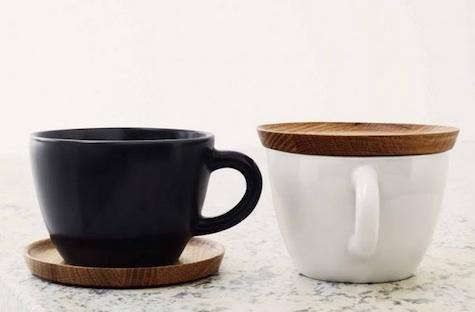
The most memorable Front-designed Höganäs piece may be the coffee cup with its wooden saucer. The cup itself is stoneware, while the saucer is made from wood. This pairing creates a small but important contrast: cool glazed ceramic meets warm natural grain.
The wooden saucer is not just decorative. It can protect the tabletop from drips and heat, and it can also function as a lid. That is the sort of practical detail that makes people think, “Why do all mugs not do this?” before realizing that most mugs have been coasting on very low expectations for years.
The coffee cup was offered in different sizes, including coffee, tea, and espresso variations. Its practical construction made it suitable for daily rituals, while the combination of stoneware and wood made it feel more special than an ordinary café mug.
Color as a Tabletop Ingredient
One of the strongest ideas in the Front collection is that color should support food and conversation, not compete with them. A sea-green mug can make black coffee look richer. A graphite gray bowl can make soup feel more dramatic. An apple-red cup can wake up a pale breakfast table faster than a motivational podcast.
Because the forms are simple, the colors have room to breathe. You can use matching pieces for a quiet, coordinated table setting, or mix tones for a more relaxed Scandinavian dining look. The collection encourages the second approach. Perfect matching is optional; visual harmony is enough.
What Makes Höganäs-Inspired Tableware Work So Well?
Great tabletop design is not about stuffing a table with objects until it resembles a lifestyle catalog. It is about helping meals feel easier, warmer, and more intentional. Höganäs-inspired stoneware works because it gets several fundamentals right.
It Feels Good in the Hand
Stoneware has presence. A mug with some weight feels reassuring during a cold morning. A deep bowl feels capable of holding noodles, soup, oatmeal, or the emergency ice cream people claim is “just a small serving.” The physical experience matters because tableware is touched more often than it is visually analyzed.
It Makes Everyday Food Look Better
Neutral and earthy glazes make simple food feel more composed. Toast on a warm gray plate looks intentional. A salad in a sea-green bowl looks fresher. A scrambled egg suddenly gains enough confidence to be served to guests.
It Accepts Imperfection
The charm of stoneware is that it does not demand a flawless lifestyle. Small differences in glaze, visible texture, and handcrafted-looking forms add warmth. The table can look polished without becoming overly formal.
It Mixes Easily with Other Materials
Höganäs-inspired pieces pair naturally with wood, linen, clear glass, brushed metal, woven placemats, and simple flowers. A wooden table makes the ceramics feel earthy. White linen makes them look crisp. Dark metal cutlery gives them a more modern edge.
How to Create a Höganäs Keramik-Inspired Table Setting
You do not need a complete collection to create the mood. Start with a few stoneware pieces and let them do the heavy lifting.
For a Relaxed Breakfast Table
Use a mix of coffee mugs in two or three related colors. Add small plates in sand, gray, or soft white. Place jam, butter, fruit, and bread in simple bowls rather than leaving everything in store packaging. This is not about impressing anyone. It is about making a Tuesday morning feel slightly less like a scheduling problem.
For a Casual Dinner
Choose deep stoneware plates or bowls for a meal such as roasted chicken, pasta, grain bowls, or stew. Use a linen napkin in a neutral tone and place a low candleholder in the center of the table. Keep the centerpiece modest; nobody needs to navigate a jungle of eucalyptus just to pass the salt.
For Coffee and Dessert
This is where the Höganäs cup-and-saucer idea shines. Serve espresso, tea, or coffee in stoneware cups, and use the wooden saucers for small cookies, dark chocolate, or a slice of cake. The saucer becomes both a practical base and a tiny serving tray, which is design efficiency at its most charming.
Collecting Vintage Höganäs Keramik
Vintage Höganäs Keramik is widely collected because it combines Scandinavian modern style with real utility. Older pieces may include brown crocks, colorful mugs, handmade-looking bowls, serving dishes, canisters, and tableware designed by notable Swedish artists.
When shopping for vintage pieces, look at the stamp or mark on the underside. Check for cracks, chips, crazing, stains, and repairs. A small amount of wear can be normal for an older mug or plate, especially when it has clearly lived an active life. A hairline crack, however, is less charming than sellers sometimes suggest.
Consider how you will use the piece. A decorative crock can work beautifully as a utensil holder, vase, or kitchen storage jar. A vintage mug may be best for display or occasional use if its glaze, handle, or interior condition is uncertain. Older pieces may not have the same safety or dishwasher guidance as current products, so treat them thoughtfully.
Care Tips for Höganäs-Style Stoneware
Stoneware is durable, but it is not indestructible. Avoid sudden temperature changes, such as moving a dish directly from a hot oven to a cold countertop or filling a chilled mug with boiling liquid. Thermal shock is the quickest way to turn a favorite bowl into an accidental mosaic project.
Wash wooden saucers by hand and dry them promptly. Do not leave them soaking in water, because wood dislikes long baths almost as much as a cat does. Ceramic parts may be dishwasher-safe depending on the product, but gentle washing and prompt rinsing after strongly colored foods can help preserve the glaze.
For modern Höganäs ceramic products, retailer care guidance commonly recommends avoiding rapid temperature changes and notes oven tolerance up to about 250 degrees Celsius for certain pieces. Always confirm the care instructions for the exact item you own, particularly when buying vintage or discontinued tableware.
A Tabletop Experience: Coffee, Conversation, and the Useful Beauty of Swedish Stoneware
Imagine a slow Saturday morning with no urgent plans, no meeting reminders, and no one asking where the charging cable went. The table is simple: a wooden surface, a folded linen napkin, a small plate with buttered bread, and a graphite-gray Höganäs-style coffee cup resting on a wooden saucer.
The first thing you notice is the weight. The cup is not featherlight porcelain. It sits solidly in your hand, warm from the coffee inside. The surface has a soft sheen, not too glossy, not too matte. It feels calm, but it is not boring. There is a quiet pleasure in holding an object that seems designed for human hands rather than product photography.
The wooden saucer changes the little ritual. Instead of being a decorative afterthought, it becomes useful. You can set down the cup without worrying about a wet ring on the table. You can place a biscotti or a square of chocolate beside it. You can use it as a lid while the coffee cools, which makes the cup feel oddly clever without requiring an instruction manual or a Bluetooth connection.
At lunch, the same tabletop mood continues. A deep sea-green bowl holds a vegetable soup with crusty bread. The bowl’s color makes the carrots and herbs look brighter. There is no elaborate table styling, just a few objects chosen well. The stoneware gives the meal a sense of occasion, even though the soup came from a pot that was washed in a hurry.
Later, friends arrive for dinner. The table is mixed rather than perfectly matched: one apple-red mug, two graphite-gray bowls, a pale plate, clear drinking glasses, and candles in simple holders. The room does not look staged. It looks lived in. That difference matters. A beautifully set table should invite people to sit down, not make them nervous about touching anything.
During the meal, the ceramics quietly do their job. Bowls hold food generously. Plates frame the meal without stealing attention. The colors create contrast, but the forms remain practical. Nobody comments on design theory, because nobody needs to. They simply enjoy the meal, refill their drinks, and reach for another piece of bread.
That may be the strongest argument for Front’s approach to Höganäs Keramik. The design does not force a performance. It supports everyday life. It makes small rituals feel more deliberate without becoming precious. It brings together old Swedish ceramic character, modern color, tactile materials, and useful details in a way that still feels fresh.
In a world full of objects designed to be replaced, photographed, forgotten, and replaced again, a good stoneware cup has a refreshingly modest ambition. It wants to hold your coffee. It wants to look good doing it. And, with any luck, it wants to remain on your table long after the trend report has moved on to something involving beige mushrooms.
Final Thoughts
Front’s collection for Höganäs Keramik is more than a stylish Swedish tabletop line. It is a thoughtful continuation of a ceramic tradition rooted in utility, local materials, and everyday domestic life. The 2010 designs respected the sturdy identity of classic Höganäs stoneware while making it feel brighter, softer, and more adaptable for contemporary homes.
Whether you are collecting vintage Swedish ceramics, planning a Scandinavian-inspired table setting, or simply looking for a coffee cup with more personality than a corporate break room, the Höganäs approach offers a useful lesson: the best tableware does not need to shout. It only needs to feel good, work well, and make an ordinary meal feel worth sitting down for.












