
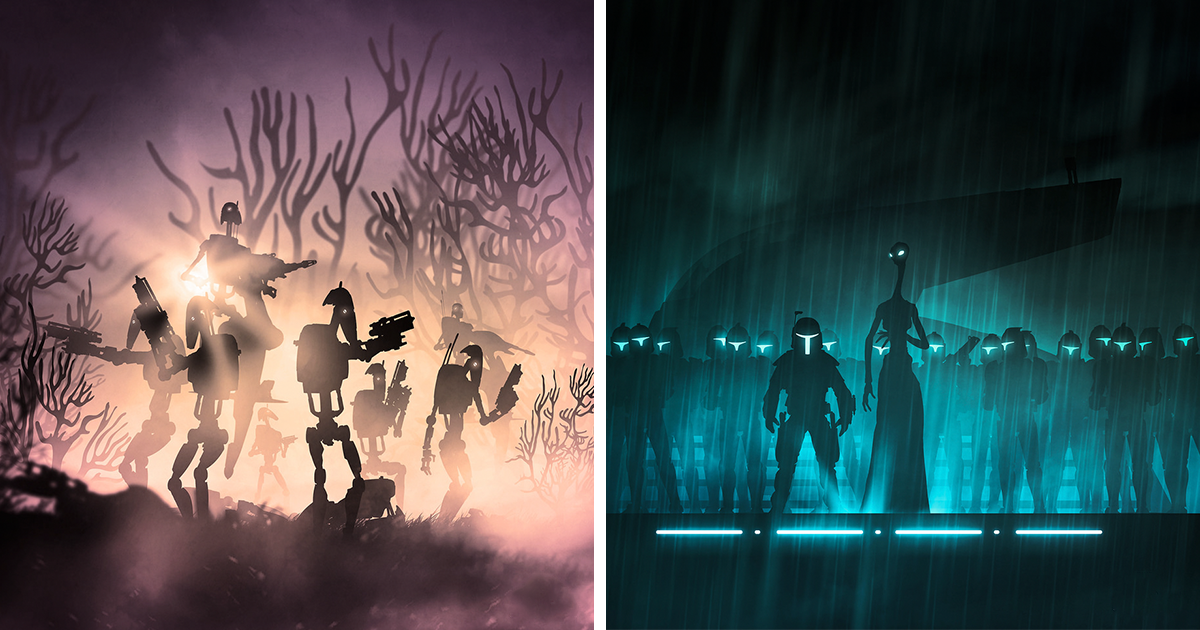
Some people see a bag of flour, a houseplant, and a cracked old baking tray. I see a distant galaxy with questionable weather, unstable politics, and at least one stormtrooper who is about to fall face-first into a miniature swamp.
For Part 2 of my Star Wars action figure photography series, I went bigger, messier, and slightly more suspicious to anyone who walked into my room and found toy soldiers standing in a bowl of salt. The goal was not to build museum-perfect replicas of famous Star Wars locations. The goal was to create believable cinematic moments using action figures, household objects, practical effects, and a camera angle low enough to make a kitchen counter feel like an entire planet.
That is the secret sauce of miniature photography: the camera does not care whether your mountain is a real mountain or a wrinkled towel covered in moss. It only cares about light, perspective, texture, and whether you remembered to remove the coffee mug from the background before taking the picture.
Why Star Wars Action Figure Photography Works So Well
Star Wars has always felt larger than life because every world has its own personality. Tatooine is dry, dusty, and full of people who apparently think one moisture vaporator is enough to support an entire family. Hoth is freezing, bright, and aggressively unfriendly to anyone who forgot gloves. Mustafar is basically a lava-filled anger-management seminar. Each location gives a photographer a clear visual language to play with.
Action figures are perfect for this kind of storytelling because they already come with recognizable costumes, dramatic poses, tiny weapons, and expressions that remain stoically neutral no matter how much flour you sprinkle on their heads. A six-inch figure can become a full-sized hero when the lens is placed near ground level. A bit of shallow depth of field can soften the background, hide the edges of the set, and make a small scene feel surprisingly vast.
The best part is that this kind of Star Wars toy photography does not require a studio the size of a hangar bay. A smartphone, a desk lamp, a few figures, and an unreasonable amount of patience can take you surprisingly far. You do not need to own a fog machine, although owning one does make you feel like you are one unpaid assistant away from directing a prestige science-fiction series.
My Tiny Galactic Photography Kit
Before building the worlds, I gathered a small collection of useful props: black foam board, white poster board, aluminum foil, baking soda, flour, sand, aquarium gravel, cotton batting, artificial moss, LED lights, spray bottles, and a few pieces of broken packaging that looked suspiciously like alien architecture.
I also used action figure stands, removable adhesive putty, tweezers, and a small paintbrush. The paintbrush was especially useful for cleaning dust off helmets, shaping fake snow, and pretending that I had any control over my life after opening a container of static-charged packing foam.
For most images, I placed the camera low and close to the action figures. This gave the figures visual authority and helped the foreground props appear much larger than they really were. I kept the background simple, used strong directional lighting, and framed out anything that looked too obviously human. Nothing destroys the illusion of a jungle moon faster than a television remote lurking behind Chewbacca.
1. Hoth: Snow, Silence, and an Extremely Cold Stormtrooper
Hoth was the easiest world to recognize and the hardest to keep tidy. The classic ice planet needs bright snow, cold shadows, and a sense that every character is one bad decision away from becoming a frozen decorative lawn ornament.
I used a mix of flour and baking soda across a tray, then shaped small ridges with a spoon. The flour gave the surface a soft powdery appearance, while the baking soda created brighter highlights under a strong side light. A white foam board behind the set became the distant horizon. It was not a glacier, but through the camera it was convincing enough to make an AT-AT look like it had wandered into a serious weather emergency.
How I Made the Scene Feel Bigger
I placed the largest snow mound closest to the lens and kept smaller shapes farther away. This created forced perspective, making the tray look much wider than it actually was. A blue-toned LED light off to the side added a cold cast to the snow. For a little drama, I flicked a tiny amount of flour into the air just before pressing the shutter. The result looked like blowing snow. The result also looked like my desk had lost a fight with a bakery.
2. Dagobah: The Swamp Planet That Smelled Like a Plant Store
Dagobah is the ideal planet for photographers who enjoy moss, mud, mystery, and the possibility that a small green Jedi might judge their life choices. Its murky swamps and tangled vegetation make it wonderfully forgiving because the world is supposed to look damp, overgrown, and slightly unsettling.
I built the ground with dark potting soil, damp moss, bark chips, and bits of fern. A shallow plastic container became the swamp water, tinted with a few drops of brown and green washable paint. I placed Yoda, Luke, and R2-D2 at different depths in the scene, making sure R2 was positioned near the water like he had just discovered that swamp vacations are not for everyone.
Lighting a Swamp Without Making It Look Like a Backyard
The trick was keeping the light low and directional. I used a greenish light from one side and a soft warm light from behind to suggest humid sunlight filtering through trees. A spray bottle added tiny droplets to the leaves and gave the scene a wet shine. For mist, I placed stretched cotton batting near the background rather than directly around the figures. This made the atmosphere feel hazy without turning Yoda into a fuzzy green cloud.
3. Mustafar: Lava, Rage, and the Least Relaxing Vacation Destination
Mustafar is not subtle. It is fire, rock, smoke, tragedy, and several million gallons of “perhaps we should not stand so close to the lava.” To create this world, I started with black foam board, crumpled aluminum foil, broken charcoal-colored packaging, and red-orange LED lights placed beneath thin sheets of translucent plastic.
The foil became jagged volcanic rock after I painted it black and dry-brushed the raised areas with gray. The translucent plastic glowed from below, creating lava channels without requiring actual fire. This was important because I wanted cinematic realism, not a conversation with my smoke alarm.
Making Miniature Lava Look Dangerous
I placed Darth Vader and Obi-Wan on separate rock platforms, keeping the lightsaber colors visible against the fiery background. A low-angle light created hard shadows and made the rough surfaces appear more dramatic. I also added a faint haze using cotton batting placed well behind the figures. The final frame had enough orange and red light to suggest heat without making every photograph look like it had been filtered through a bowl of tomato soup.
4. Scarif: Tropical Beaches, Imperial Architecture, and Absolutely No Relaxation
Scarif is proof that even paradise can become stressful when an Imperial data vault is nearby. The planet’s tropical appearance gave me a chance to use brighter colors, clear water effects, and clean white structures. It was a refreshing change after making both a swamp and a volcanic nightmare on the same table.
I used pale sand from a craft store, blue cellophane layered over a mirror for shallow water, and cut pieces of white foam board for the Imperial complex. A small blue backdrop made the scene feel open and sunny. To sell the scale, I placed a figure in the foreground and positioned smaller objects farther back, including a tiny tower shape made from stacked bottle caps.
How I Created a Beach Battle Look
A spray bottle helped make the cellophane water sparkle. I lit the scene from high and slightly behind the figures to mimic strong tropical sunlight. For movement, I scattered a little sand near the boots of a running Rebel soldier. It looked like an explosion had just hit the beach. It also looked like I had dropped a sugar packet, which is the risk every miniature photographer must bravely accept.
5. Endor: The Forest Moon Where Every Stick Became a Tree
Technically, Endor is a forest moon rather than a planet, but nobody is inviting me to a galactic geography quiz after I have spent an hour arranging twigs around a tiny speeder bike. Endor is one of the most enjoyable Star Wars environments to recreate because nature provides nearly everything you need.
I collected small branches, moss, pinecones, leaves, and bits of bark from outside. A patch of real grass became a forest floor, while tall houseplant stems created the illusion of enormous trees. The key was selecting materials that looked believable at action-figure scale. A full-sized leaf can look like a giant alien sail, but a tiny sprig of moss can become an entire woodland ecosystem.
Adding Endor’s Woodland Energy
I placed an Ewok figure near the foreground and used a low camera angle so the plants towered overhead. Warm light from the side suggested late-afternoon sunlight. A darker card behind the trees created depth and helped hide the room beyond the set. The final effect felt like a quiet forest ambush, although the real danger was me kneeling beside the set and discovering that I had placed my elbow in wet soil.
6. Crait: Salt Flats, Red Dust, and a Surprisingly Dramatic Baking Dish
Crait has one of the boldest visual identities in Star Wars: a pale white surface that breaks apart to reveal deep red mineral dust beneath it. This makes it a dream for action figure photography because the color contrast does most of the emotional heavy lifting.
I made the ground with a layer of red powdered chalk beneath coarse salt. Then I carefully dragged the feet of a small speeder across the surface, exposing the red layer in streaks. The effect was immediate and dramatic. Even before adding figures, the set looked like it had already suffered a very expensive battle.
Why Contrast Matters in Miniature Photography
The white salt reflected light, while the red chalk created strong visual trails. I kept the backdrop dark and used a single soft light from above. This made the surface appear vast and lonely. A Resistance pilot in the frame gave the image scale and emotion. The challenge was not making the scene look cinematic. The challenge was keeping the salt out of every camera bag pocket I owned.
7. Jakku: Desert Wreckage and the Art of Making Trash Look Galactic
Jakku is a desert world filled with scavengers, sun-blasted ruins, and the skeletons of old starships. It is also the perfect excuse to raid your recycling bin in the name of art.
I built wreckage from broken electronics packaging, bottle caps, cardboard strips, plastic gears, and pieces of a retired toy vehicle. After coating everything in gray, tan, and rust-colored paint, I buried parts of the structure in sand. The goal was not to make an exact starship replica. The goal was to make the wreckage feel old, huge, and mysterious.
How I Added a Sense of History
Rey stood near the wreckage with a small bag slung over her shoulder. I positioned the figure against a low horizon and used a warm backlight to create a dusty sunset look. A little sand tossed between the camera and the figure created depth. The photograph suggested a much larger story: a scavenger crossing the remains of a war that ended long before she arrived.
8. Kamino: Rain, Clones, and a Bathroom Mirror That Became an Ocean
Kamino is all smooth white buildings, endless ocean, thunderclouds, and rain so persistent it probably has its own employee badge. Recreating it required a cleaner, more futuristic approach than the natural sets.
I used white plastic containers, curved packaging, and glossy panels to build the cloning facility. A dark blue-gray backdrop created storm clouds, while a mirror became the ocean. I added water droplets to a clear plastic sheet placed in front of the camera. The droplets softened the scene and made it feel as though the viewer was standing in the rain with the clone troopers.
Keeping the Rain Convincing
The biggest challenge was preventing the water effect from becoming distracting. I used only a few droplets and focused on the clone troopers rather than the plastic sheet. A cool blue light created a stormy atmosphere, while a white light reflected off the glossy set pieces. The finished image felt sterile, wet, and slightly unsettling, which is exactly what you want from a planet where people are grown in laboratories like expensive science-fiction houseplants.
What These Miniature Worlds Taught Me
Building Star Wars planets with action figures taught me that realism is not about owning perfect props. It is about choosing the right details and hiding everything else. A few grains of sand, a low horizon, a strong light source, and a well-placed figure can make a small setup feel enormous.
It also taught me to think like a storyteller. Every scene needs a reason for the character to be there. Is the Rebel running from danger? Is the Jedi searching for answers? Is the stormtrooper quietly wondering why his manager assigned him to a volcano? When a photo suggests a story beyond the frame, the viewer is more willing to believe that a tabletop set is a real world somewhere in a galaxy far, far away.
Behind the Lens: My Experience Making These Star Wars Worlds
Making these Star Wars-inspired action figure photographs was equal parts creative adventure, tiny engineering project, and household cleanup operation. I began each scene with a rough idea, but the best results usually appeared after something went wrong. A piece of moss would fall into the frame, a light would cast an unexpectedly dramatic shadow, or a figure would lean at just the right angle and suddenly look less like a collectible and more like a character caught in the middle of a life-changing moment.
The first lesson was to slow down. When working with full-sized people and locations, it is easy to change your position or ask someone to move. Action figures are less cooperative. They cannot bend naturally, they refuse to balance when you need them to, and they have a strange talent for falling over one second before you press the shutter. I learned to use stands, putty, tweezers, and patience. Lots of patience. Enough patience to make a Jedi Master proud, though probably not enough to sit through another meeting of the Galactic Senate.
I also became more aware of how light changes a scene. A bright white light turned Hoth into a clean, icy battlefield. A greenish light made Dagobah look damp and mysterious. Warm orange light transformed crumpled foil into a dangerous volcanic landscape. The same action figure could look heroic, lonely, frightened, or ridiculous depending on where I placed a lamp. That was exciting because it meant I did not need expensive gear to make a scene emotional. I needed intention.
Perspective became another favorite tool. Shooting from low to the ground made tiny plants look massive and made a few inches of gravel feel like a rocky valley. Placing the camera close to the action figure and keeping the background farther away helped disguise the true scale of the set. I stopped thinking of the table as a table. It became a location. The edge of a tray became a cliff. A wrinkled cloth became a dune field. A broken plastic container became the ruins of a long-forgotten Imperial facility.
The process also reminded me that imperfections can make miniature photography more believable. Perfectly smooth sand looks fake. A little mess, a crooked rock, a smudge of dust, or an uneven patch of snow adds history. Real places are not arranged by someone with a ruler. They are shaped by weather, conflict, time, and whatever strange creature happens to be digging underground. Letting the set look imperfect often made it feel more alive.
Most of all, I enjoyed the playful side of the project. There is something deeply satisfying about turning ordinary materials into imaginary worlds. It makes you look at your surroundings differently. Suddenly, a sponge has alien terrain potential. A bag of salt has battle-scene potential. A houseplant has forest-moon potential. The world becomes a prop room, and your action figures become a tiny cast waiting for their next scene.
That is why I love photographing Star Wars action figures. The final image may look cinematic, but the process stays wonderfully human: a camera, a few toys, a ridiculous amount of imagination, and one person trying very hard not to spill fake snow all over the floor again.
Final Thoughts
Star Wars action figure photography is not about copying a movie frame perfectly. It is about using familiar worlds as inspiration and finding inventive ways to build atmosphere on a tiny scale. Whether you are creating Hoth from flour, Endor from houseplants, or Kamino from glossy packaging, the same principle applies: make the viewer forget the room around the set.
Start with one figure, one planet, and one simple idea. Keep the camera low, let the light do some storytelling, and do not panic when the set looks silly from above. The Force is not in the prop budget. It is in the angle.











