
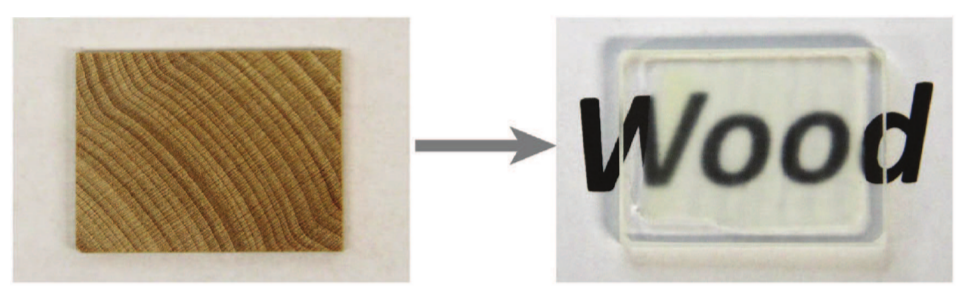
For decades, science fiction has teased us with miracle materials: invisible shields, self-healing hulls, and of course, Star Trek’s legendary transparent aluminum. Now, real-world materials science has delivered something that sounds just as impossible at first: transparent wood. Yes, wood. The same basic material that makes up cabins, cutting boards, guitars, and that one chair in your house that squeaks like it is filing a formal complaint.
Transparent wood is not magic, and it is not a Hollywood prop. It is an engineered wood composite created by modifying wood’s natural structure so light can pass through it. Researchers have explored it for energy-efficient windows, solar panels, touchscreens, privacy glazing, lighting, and stronger alternatives to plastic or glass. The result is a material that looks futuristic but starts with one of humanity’s oldest building resources: trees.
The best part? Transparent wood keeps many of wood’s natural advantages. It can be lightweight, tough, insulating, renewable, and surprisingly good at managing light. It is not ready to replace every window in America tomorrow morning, but it is far beyond a cute laboratory trick. This is the kind of material that makes engineers grin, architects lean forward, and science-fiction fans whisper, “Scotty would approve.”
What Is Transparent Wood?
Transparent wood is a modified form of natural wood that allows visible light to pass through. Ordinary wood is opaque because its components scatter and absorb light. Lignin, the natural polymer that helps make wood rigid and brownish, plays a major role in that opacity. To make wood transparent, scientists usually remove or alter some lignin, then fill the remaining porous cellulose structure with a transparent substance whose optical properties help reduce light scattering.
Think of wood as a tiny city of aligned tubes. In a living tree, those channels help move water and nutrients. In transparent wood, that same architecture can guide light. Instead of destroying the natural structure, researchers use it like a built-in optical framework. That is the clever twist. Nature already did the complicated manufacturing; scientists simply persuade it to behave like a window.
How Scientists Make Wood Transparent
Step 1: Choose the Right Wood
Many transparent wood studies use low-density woods such as balsa or linden because their cellular structures are easier to modify. Thin veneers are especially useful because light travels through less material. The wood’s grain direction also matters. Cut the wood one way and it behaves more like a clear panel; cut it another way and it becomes hazier, scattering light like a privacy screen.
Step 2: Remove or Modify the Lignin
Early methods often removed much of the lignin, leaving behind a pale cellulose scaffold. Newer methods may keep more of the lignin structure while removing the color-producing parts. This matters because lignin contributes to strength. Remove too much and you may create something beautiful but fragile, like a glass slipper with a gym membership problem.
Step 3: Fill the Pores
After treatment, the wood’s empty spaces are filled with a transparent polymer or other material. Epoxy has been widely used in research because it restores strength and improves clarity. More recent work explores natural or biodegradable ingredients to reduce dependence on petroleum-based plastics. That is important because a futuristic material should not solve one environmental problem while quietly creating another.
Step 4: Tune the Final Properties
The final transparent wood can be engineered for different goals: high clarity, high haze, better thermal insulation, UV blocking, improved toughness, or even electrical conductivity. In other words, transparent wood is not one single product. It is a family of materials, and researchers are still learning how to tune the recipe.
Why Transparent Wood Feels Like Star Trek Material Science
Star Trek IV: The Voyage Home made “transparent aluminum” famous as a futuristic material stronger and lighter than conventional transparent materials. In the real world, aluminum oxynitride, often called ALON, has brought part of that concept to life as a transparent ceramic used in armor and optical applications. Transparent wood belongs to the same delightful category of technologies that sound fictional until a lab technician calmly places a sample on the table.
Transparent wood is not transparent aluminum. It is not metal, and it is not designed primarily as armor. But the comparison is irresistible because both materials challenge our basic assumptions. Aluminum should not be see-through. Wood should not be a window. Yet materials science keeps reminding us that “should not” is often just an invitation with better funding.
Transparent Wood vs. Glass: The Window Showdown
Glass is everywhere because it is clear, durable, and relatively inexpensive. But glass has drawbacks. It can be brittle, heavy, energy-intensive to manufacture, and poor at insulation unless enhanced with coatings, gas fills, or multi-pane assemblies. Windows are also a major pathway for unwanted heat loss and heat gain in buildings.
Transparent wood may offer a different path. Research has shown that certain transparent wood samples can transmit high levels of visible light while providing better thermal insulation than standard glass. Some studies have reported transparent wood with light transmission close to glass, much higher toughness than standard glass, and lower thermal conductivity. That combination matters because the future of buildings is not just about seeing outside. It is about letting in useful daylight without turning your living room into a greenhouse in July or an icebox in January.
Another advantage is haze. In everyday language, haze sounds bad, like a dirty windshield or a suspicious hotel mirror. In optical materials, haze can be useful. A hazy transparent wood panel can scatter sunlight more evenly, reducing glare and creating softer indoor lighting. That means a room could receive daylight without the harsh laser-beam effect that makes you squint at your laptop and question your life choices.
Real Applications for Transparent Wood
Energy-Efficient Windows
The most obvious use is windows. Transparent wood could potentially help buildings reduce heating and cooling demand while still allowing natural light indoors. Because wood naturally has better insulating properties than glass, a transparent wood composite could become part of future window systems designed for energy efficiency and comfort.
Privacy Panels and Interior Design
Transparent wood can be engineered to be translucent rather than perfectly clear. That makes it appealing for privacy glazing, office partitions, bathroom windows, room dividers, and decorative panels. Imagine a wall that glows with daylight but does not broadcast your entire morning routine to the neighbors. That is not just futuristic; that is civilized.
Solar Cells and Light Management
Because transparent wood can transmit and scatter light, researchers have explored its potential for solar energy applications. A material that lets light in but keeps it bouncing around could help solar cells absorb more light. The natural channels in wood also offer a built-in way to guide light, which could be useful in energy and optical devices.
Smartphone Screens and Electronics
Transparent wood has been proposed as a possible alternative for strong screens, touch-sensitive displays, and electronic surfaces. This does not mean next year’s phone will look like a cutting board. It means the material’s strength, light weight, and optical behavior make it interesting for future electronics, especially if researchers can make it conductive, durable, and scalable.
Lighting and Architecture
Transparent wood could also be used in soft lighting fixtures, skylights, facades, and architectural features. Its natural grain can remain visible, giving designers a rare combination: the warmth of wood and the light transmission of glass. That is a big deal in architecture, where materials are not just structural choices but emotional ones. People love wood because it feels warm, organic, and human. Transparent wood keeps that personality while adding a sci-fi plot twist.
The Sustainability Question
Transparent wood sounds green because it starts with trees, but sustainability depends on the full recipe. A panel made from renewable wood but saturated with non-biodegradable polymer is not automatically an environmental superhero. It may still be useful, but the life-cycle story matters.
This is why newer research into natural, biodegradable, or lower-impact fillers is important. Scientists are experimenting with more environmentally friendly ingredients that can preserve strength and transparency while making the final material easier to recycle or biodegrade. The goal is not simply to make wood see-through. The goal is to create a material that competes with glass and plastic while reducing energy use, waste, and carbon impact.
Responsible sourcing also matters. If transparent wood becomes commercial, manufacturers would need sustainable forestry, efficient production, low-toxicity chemicals, and realistic end-of-life plans. A material is not truly futuristic if it behaves like yesterday’s pollution in a lab coat.
The Challenges Holding Transparent Wood Back
Transparent wood is promising, but it is not perfect. Scaling up from small lab samples to large, affordable building panels is difficult. Wood varies by species, growth conditions, grain, density, and moisture content. That variation is beautiful in furniture, but it can be annoying when you need industrial consistency.
Durability is another concern. Real windows face rain, UV radiation, temperature swings, scratches, impacts, and years of cleaning sprays. A transparent wood window must survive all of that without yellowing, swelling, clouding, cracking, or turning into an expensive science fair memory.
Cost is also a major hurdle. Glass manufacturing is mature and massive. To compete, transparent wood production must become efficient, scalable, and compatible with existing manufacturing methods. Researchers have made progress, including approaches designed for larger-scale fabrication, but commercialization still requires engineering, testing, certification, and market confidence.
Why This Material Matters Now
The timing is not accidental. Buildings consume huge amounts of energy, and windows are one of the weakest points in the building envelope. At the same time, industries are looking for renewable materials that can replace plastics and reduce carbon emissions. Transparent wood sits at the intersection of those needs: daylight, insulation, strength, renewable sourcing, and design appeal.
It also represents a larger trend in material science: upgrading natural materials rather than replacing them entirely. Instead of inventing everything from scratch, scientists are learning to modify cellulose, lignin, and other biological structures. Wood is already strong, light, abundant, and complex. Transparent wood asks a simple but powerful question: what else can wood do if we stop treating it as old-fashioned?
Transparent Wood and the Future of Everyday Life
Picture a house with softly glowing wooden window panels that keep rooms bright but private. Imagine office buildings that reduce glare without heavy blinds. Think of solar panels that use wood-based layers to trap light more effectively. Consider car interiors with durable, translucent wood surfaces that feel warmer than plastic and less fragile than glass.
The future may not arrive as a shiny chrome spaceship. It may arrive as a pale, honey-colored sheet of modified wood sitting quietly in a window frame. That is the charm of transparent wood. It feels both ancient and advanced, like a cabin built by elves who took graduate-level polymer chemistry.
Experience Section: Living With the Idea of Transparent Wood
The easiest way to understand transparent wood is to imagine holding a small sample in your hand. At first, your brain argues with your eyes. The surface has the warmth and faint grain of wood, but light passes through it. It does not behave like a normal plank, yet it also does not feel like ordinary glass. That contradiction is the experience that makes transparent wood so memorable. It is familiar and alien at the same time.
In a home, transparent wood would likely create a different mood than glass. Standard glass gives you a sharp view, but it also brings glare, heat, and the occasional feeling that your living room has become a public aquarium. Transparent wood, especially the hazier versions, would feel softer. It could brighten a room without exposing every detail. Morning sunlight might spread across the floor instead of forming one blinding rectangle that your cat immediately claims as sovereign territory.
For designers, the experience would be playful. Transparent wood could make a wall feel lighter without making it cold. A restaurant could use it for glowing dividers. A library could use it to bring daylight deeper into quiet reading areas. A spa could use it for privacy panels that look natural instead of clinical. In each case, the material would not merely perform a function; it would shape the atmosphere.
For builders and engineers, the experience would be more practical and probably involve fewer poetic sighs. They would ask tough questions: How does it age? Can it be cut on site? What happens around fasteners? How does it handle moisture? Can it meet building codes? Is it affordable at scale? These questions are not obstacles to innovation; they are the path innovation must walk before it gets keys to the front door.
For science-fiction fans, transparent wood delivers a special thrill. It is not the exact material Scotty described, but it belongs to the same imaginative family. It proves that the future often arrives sideways. We expected transparent metal; researchers handed us transparent wood. We imagined starship windows; the first practical uses may be energy-saving building panels. We dreamed of impossible substances; scientists looked at trees and said, “Actually, this old thing still has a few tricks.”
That is the real experience transparent wood offers: surprise. It reminds us that advanced technology does not always look like circuitry, lasers, or glowing blue reactors. Sometimes it looks like a piece of nature that has been carefully re-tuned. It is a bridge between forest and future, between craft and chemistry, between the cabin and the starship. And if that does not sound like material science worth getting excited about, check your tricorder.
Conclusion
Transparent wood is one of those rare innovations that sounds like a joke until the science starts making sense. By modifying lignin, preserving cellulose structures, and filling wood’s natural pores with transparent materials, researchers have created a material that can transmit light, scatter glare, insulate better than glass, and potentially serve in windows, solar devices, screens, and architectural design.
It is not commercially everywhere yet, and plenty of work remains before transparent wood becomes a normal building material. But the direction is exciting. The world needs materials that are strong, efficient, renewable, and pleasant to live with. Transparent wood offers a glimpse of that future, and it does so with style. Star Trek gave us the dream of impossible materials. Transparent wood shows that the real world may be just as strange, just as clever, and possibly a little more charming.












