
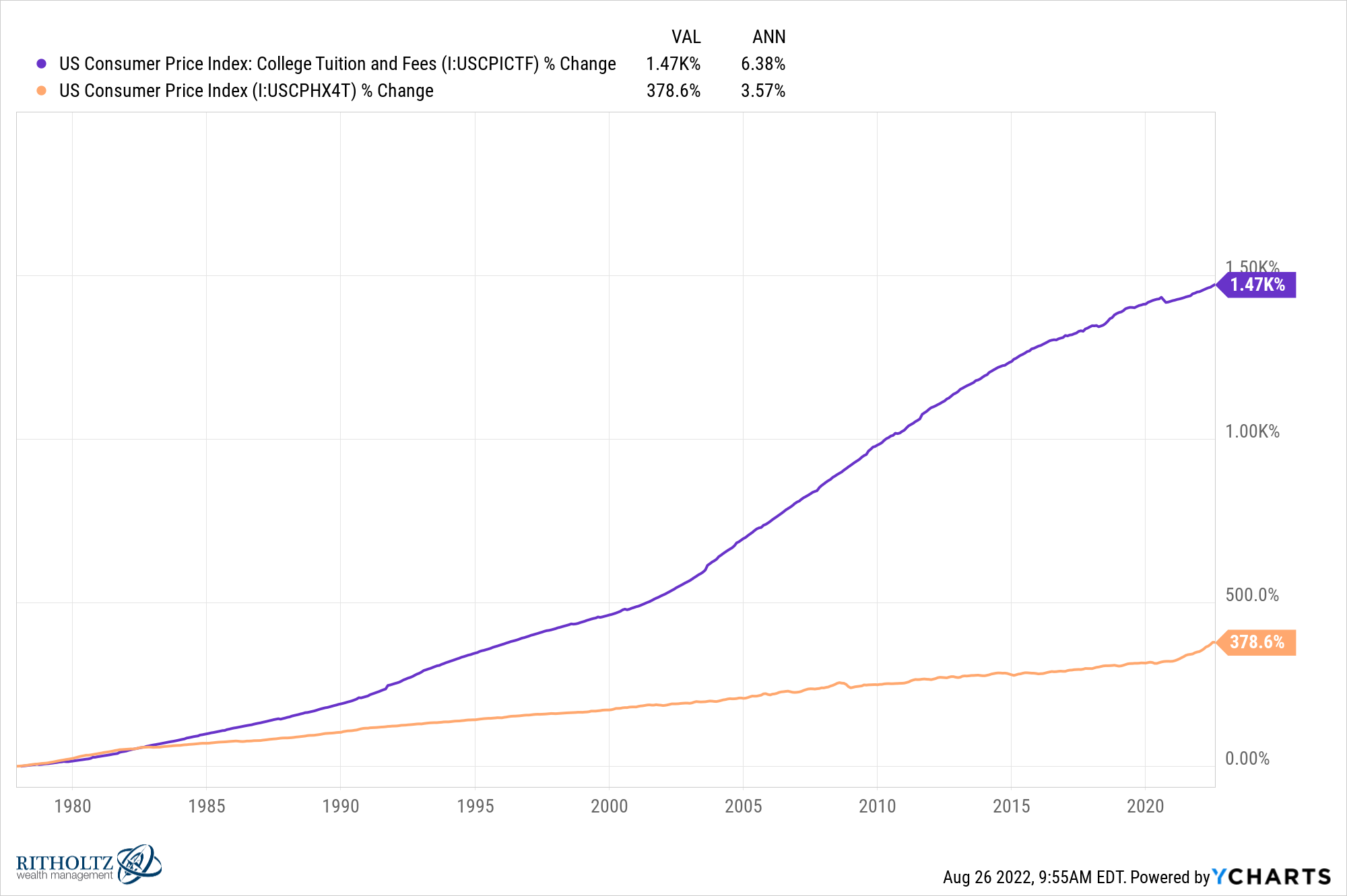
Student loan forgiveness is the political equivalent of assembling furniture with a missing instruction sheet: everyone agrees something is wrong, but nobody agrees which piece should go where. Supporters describe debt relief as an overdue correction to a costly, confusing higher education system. Critics see it as an expensive transfer that rewards some borrowers while sending the bill to people who never attended college, selected cheaper schools, or already repaid their loans.
Both sides have a point. The federal student loan portfolio now covers about 42.8 million recipients and totals roughly $1.7 trillion. A problem that large cannot be reduced to “borrowers made a promise” or “cancel everything.” It involves college prices, family wealth, labor markets, government administration, institutional accountability, interest accumulation, and the uncomfortable reality that an 18-year-old can sign for a five-figure education loan more easily than many adults can finance a used hatchback.
My view is neither “forgiveness is always good” nor “forgiveness is always unfair.” I like student loan forgiveness when it is targeted, predictable, legally durable, and connected to a clearly defined public purpose. I dislike it when it becomes a substitute for fixing the system that produces unaffordable debt in the first place.
First, Student Loan Forgiveness Is Not One Policy
The phrase student loan forgiveness is often used as though it describes a single government button marked “erase debt.” In reality, federal debt relief includes several programs with different purposes. Public Service Loan Forgiveness, or PSLF, rewards qualifying government and nonprofit workers after the equivalent of 120 qualifying monthly payments. Income-based programs may discharge a remaining balance after a long repayment period. Other forms of relief cover total and permanent disability, school closure, institutional misconduct, death, and certain teaching careers.
There have also been proposals for broad, one-time cancellation. The best-known recent plan would have canceled up to $10,000 for eligible borrowers and up to $20,000 for qualifying Pell Grant recipients. In 2023, the Supreme Court held that the HEROES Act did not authorize the Department of Education to implement that approximately $430 billion program. Whatever one thinks of the policy itself, the ruling demonstrated that the legal route matters almost as much as the relief amount.
The repayment landscape continues to move. Beginning July 1, 2026, the federal government made the new Repayment Assistance Plan, or RAP, available alongside a tiered standard option. RAP bases payments on income, prevents qualifying unpaid monthly interest from piling up when required payments are made, and may discharge a remaining balance after 360 on-time monthly payments. Borrowers previously enrolled in SAVE are being directed to select another available plan. In other words, federal repayment policy remains less of a peaceful pond and more of a washing machine with one sneaker inside.
What I Like About Student Loan Forgiveness
It Can Correct Specific Failures and Broken Promises
The strongest case for forgiveness appears when the government or a school has failed to deliver what was promised. A borrower whose college closed before completion, falsely certified eligibility, or misrepresented employment outcomes is not simply experiencing buyer’s remorse. That borrower may have paid for an educational product that was defective or never delivered.
The same principle supports relief for borrowers with total and permanent disabilities and for public servants who completed the work and payments required under PSLF. These are not surprise giveaways invented at the finish line. They are contractual or statutory forms of relief built around defined conditions.
I especially like the public-service concept. Teachers, nurses, firefighters, public defenders, military personnel, social workers, and local government employees often accept salaries below what similarly educated workers might earn elsewhere. Forgiveness can operate as deferred compensation for socially valuable work. Research on teacher loan forgiveness also suggests that eligibility and awareness can influence employment decisions in high-need schools.
Relief Can Help Borrowers Who Never Received the Full Economic Benefit of College
The public conversation often imagines a borrower with a framed diploma, a comfortable salary, and an oat-milk latte large enough to require its own cupholder. That borrower exists, but so does the person who borrowed $8,000, left school without a credential, and struggles to make progress because of low earnings, fees, missed payments, and accumulated interest.
Borrowers who do not complete their programs frequently face worse financial outcomes than graduates. Their balances may be smaller, yet their repayment difficulties can be more severe because they did not receive the earnings boost associated with a degree. Targeted cancellation for long-term delinquent borrowers, people defrauded by schools, and borrowers with debt but no credential can therefore produce more meaningful relief per dollar than wiping the same amount from the balance of a high-income professional.
It May Improve Financial Mobility
Student debt affects more than one line on a monthly budget. It can influence job choices, credit access, household formation, retirement saving, home purchases, and willingness to start a business. Federal Reserve research has linked rising student debt to part of the decline in homeownership among young adults. Surveys also show that many borrowers would use payment savings to reduce other debt or prepare for a home purchase rather than immediately ordering a speedboat and naming it Taxpayer Tears.
Research on borrowers who received cancellation after default has found improvements beyond the student loan account, including faster repayment of other debts and changes in income or employment. A newer National Bureau of Economic Research study found that forgiveness affected earnings, labor supply, and subsequent borrowing, although the results also show that cancellation does not automatically translate into simple, dollar-for-dollar economic growth.
Thoughtful Targeting Can Reduce Unequal Burdens
Student debt is not distributed evenly across American households. Federal Reserve data show that Black families hold a disproportionate share of student loan debt relative to their share of families. Borrowers from families with less wealth are also more likely to depend on loans because parents cannot simply produce a tuition check from savings, home equity, or a mysterious drawer labeled “college money.”
That does not mean every cancellation proposal automatically closes racial or economic wealth gaps. Design matters. Research from the Urban Institute found that linking additional relief to previous Pell Grant receipt could better reach borrowers from lower-income backgrounds, borrowers of color, and students who left college without a credential. Targeting by Pell history, persistent low income, noncompletion, disability, or long repayment duration can make debt relief more progressive than an unlimited balance wipeout.
What I Don’t Like About Student Loan Forgiveness
It Does Not Fix the Price of College
My biggest objection is simple: canceling old debt without changing future financing is like mopping the kitchen while the faucet is still running. The floor may look better briefly, but everyone should keep their socks on.
Broad cancellation does not automatically reduce tuition, improve graduation rates, punish low-performing programs, increase grant aid, or prevent families from borrowing unreasonable amounts next year. In fact, repeated expectations of future forgiveness could weaken pressure on colleges and borrowers to consider price, completion rates, and likely earnings. Debt relief should therefore be paired with stronger institutional accountability, better consumer information, more need-based grants, realistic borrowing limits, and affordable alternatives such as community colleges, apprenticeships, and transfer pathways.
Broad Forgiveness Can Be Poorly Targeted
Some of the largest student loan balances belong to graduate and professional degree holders. Many of these borrowers initially appear financially stretched because they are early in their careers, but doctors, lawyers, dentists, and other advanced-degree holders may eventually earn far more than the typical taxpayer. Canceling six figures for a future high earner is difficult to justify when the same public money could support Pell Grants, early childhood programs, workforce training, or borrowers who never completed college.
Research organizations disagree about how regressive broad cancellation would be because results change depending on whether analysts measure current income, lifetime earnings, household wealth, race, loan balance, or expected repayment. Still, studies from Brookings, the Urban Institute, and NBER have consistently warned that unlimited or poorly targeted cancellation may direct substantial benefits toward borrowers with graduate education and relatively strong lifetime earning prospects.
The Fairness Objection Is Real
It is too easy for supporters to dismiss fairness concerns as bitterness. Consider the worker who did not attend college, the family that selected a lower-cost campus, the graduate who delayed buying a home to repay loans, or the parent who worked extra shifts to avoid borrowing. These people may reasonably ask why their choices receive no comparable recognition.
That objection does not prove that forgiveness is wrong. Public policy regularly helps people facing a current problem without reimbursing everyone who avoided it. We do not reject disaster aid because one homeowner bought a house outside the flood zone. Still, policymakers should openly acknowledge the unequal treatment instead of pretending no trade-off exists. Conservative policy analysts have emphasized this transfer from taxpayers and nonborrowers, and the criticism deserves a serious answer rather than an eye roll and a reaction GIF.
Forgiveness Has a Budget Cost
Canceling a government-held loan does not require the Treasury to write a giant novelty check, but it does eliminate payments the government expected to receive. That is a genuine fiscal cost. The Congressional Budget Office estimated that the blocked 2022 cancellation plan would have increased federal student loan costs by roughly $400 billion on a present-value basis. CBO separately estimated that the income-driven repayment proposal developed in 2023 could have increased costs by about $230 billion over a decade if implemented as proposed.
Historical estimates should not be treated as price tags for every future policy. A tightly targeted disability discharge is not equivalent to nationwide cancellation. Nevertheless, every dollar used for student debt relief has an opportunity cost. The correct question is not merely, “Would borrowers benefit?” Of course they would. The harder question is, “Would this form of relief create more public value than other uses of the same resources?”
Constant Policy Changes Punish Ordinary Borrowers
Borrowers should not need the investigative instincts of a forensic accountant to determine whether a payment qualifies. Yet programs have repeatedly changed through waivers, court orders, regulations, settlements, servicer transfers, and new legislation. GAO has documented longstanding problems involving communication, oversight, servicing accuracy, and PSLF administration. Its 2026 review found continuing gaps in federal oversight of contracted loan servicers.
Legal instability also creates emotional and financial whiplash. Borrowers may plan careers and household budgets around a program, only to encounter a rule change several years later. Broad, durable policy should come through clear legislation whenever possible. Executive improvisation may be faster, but speed is not especially useful when a court later removes the road.
The Tax Rules Can Create an Unpleasant Surprise
The broad federal exclusion that generally made many forms of student loan forgiveness tax-free applied to discharges from 2021 through 2025. Beginning in 2026, federal tax treatment again depends more heavily on the type of discharge and applicable statutory exceptions. Some programs, including qualifying public-service relief, disability-related discharges, and certain employment-based programs, may receive special treatment, while other canceled balances may be taxable. State rules can also differ. Borrowers should verify the current treatment before celebrating a five-figure discharge by immediately purchasing a five-figure hot tub.
What a Better Student Debt Relief Policy Would Look Like
Make Legitimate Forgiveness Automatic
Borrowers should not have to repeatedly prove information the government already possesses. When federal records confirm qualifying public employment, disability status, school closure, Pell receipt, income, or decades of repayment, relief should be processed with minimal paperwork. Automation should include strong privacy protections and an easy way to correct errors.
Focus First on Financial Distress
Priority should go to borrowers in persistent default, people with low incomes relative to debt, borrowers who did not complete a credential, victims of institutional misconduct, older borrowers carrying debt into retirement, and people who have made required payments for many years without reducing principal. A reasonable per-borrower cap can provide broad help while limiting windfalls to high earners with enormous professional-school balances.
Make Repayment Understandable
An affordable repayment plan should protect basic living expenses, prevent unpaid interest from causing balances to balloon when required payments are made, and clearly state when discharge occurs. Borrowers should receive one accurate annual statement showing qualifying payments, projected payoff dates, interest waived, and estimated tax consequences.
Require Colleges to Share Responsibility
Schools with high borrowing, low completion, weak earnings, or excessive default rates should not be allowed to deposit tuition checks and vanish behind a decorative campus fountain. Policymakers could require institutions to repay part of the federal loss when programs consistently produce poor outcomes, while protecting schools that serve high-risk students and demonstrate meaningful value.
Prevent Tomorrow’s Debt Crisis
More grant aid, transparent net-price information, better transfer agreements, completion support, limits on excessive graduate and parent borrowing, and stronger oversight of low-value programs would reduce the need for future forgiveness. Debt cancellation can treat an injury. College affordability reform is how we stop repeatedly stepping on the same rake.
Borrower Experiences That Explain Why This Debate Is So Difficult
The following are composite examples based on common borrower circumstances rather than accounts of specific identifiable people.
The School Counselor Who Planned Around PSLF
Imagine Maria, a school counselor who borrowed $48,000 for undergraduate and graduate study. She could probably earn more in a private-sector human resources role, but she works in a public middle school where a surprising portion of her day involves lost backpacks, family crises, attendance problems, and explaining that deodorant is not an optional eighth-grade elective.
Maria submits employment forms, selects a qualifying repayment plan, and organizes her career around PSLF. After ten years, forgiveness is not a random prize. It is part of the compensation package that influenced where she worked. I like relief in this situation because the rules were stated in advance and Maria delivered the public service requested of her. Denying forgiveness because of administrative confusion would amount to changing the bargain after the work was completed.
The Borrower With a Small Balance and No Degree
Now consider Jamal, who borrowed $9,000 for a certificate program but left when his mother became ill. He never received the credential, works unpredictable hours, and has already paid several thousand dollars over the years. His remaining balance is not enormous by national standards, but it is large relative to his income.
A $9,000 discharge for Jamal could eliminate the entire problem. It might improve his credit, help him secure stable housing, and allow him to return to school through a better program. This example is why judging need solely by balance size is misleading. A surgeon with $150,000 in loans may be financially safer than a warehouse worker with $7,000.
The High-Earning Professional With a Very Large Balance
Then there is Evan, a medical specialist earning $260,000 and carrying $180,000 in federal loans. Evan’s debt is unquestionably large. His monthly payments may feel unpleasant, particularly after years of training. However, his lifetime earning potential is also far above average.
Unlimited forgiveness for Evan is harder for me to support. A manageable income-based plan makes sense, especially during residency or periods of lower earnings. Disability protection and public-service benefits should remain available under the same rules as for other borrowers. But canceling the full balance merely because it is intimidating would direct a large subsidy to someone with substantial repayment capacity.
The Graduate Who Already Repaid Everything
Denise borrowed $24,000, lived with roommates, drove an aging car, and paid off her loans over 11 years. When she hears about cancellation, she experiences two reactions at once. She understands that today’s borrowers face high housing and education costs, but she also wonders whether her sacrifices counted for anything.
Denise’s frustration should not control policy, but it should influence policy design. Targeted forgiveness tied to hardship, public service, institutional failure, or long-term repayment is easier to explain to past borrowers than a sweeping cancellation based only on having a current balance. Government cannot make every past choice equally rewarding, but it can show that relief responds to measurable need rather than political luck.
The Borrower Trapped in Administrative Uncertainty
Finally, picture Alex, who enrolled in an income-driven plan, received notices about court cases, watched interest rules change, and then learned that another repayment selection was required. Alex is not asking for a mansion, a yacht, or a personal chef specializing in artisanal toast. Alex wants one reliable monthly amount and a clear statement of what happens after years of payment.
This experience exposes the weakest part of federal student loan policy: unpredictability. Even a generous benefit loses value when borrowers cannot understand it or trust that it will remain in place. Stability, accurate servicing, and plain-language communication may be less exciting than announcing billions in relief, but they are essential to a system people can actually use.
Conclusion: Relief Should Be a Tool, Not the Entire Toolbox
There are good reasons to support student loan forgiveness and equally good reasons to question how it is designed. I like relief that honors public-service commitments, assists borrowers harmed by schools or administrative failures, protects people with disabilities, and helps those facing persistent hardship. I also support repayment rules that prevent responsible borrowers from watching their balances grow despite making required payments.
I do not like unlimited cancellation that heavily benefits high earners, ignores people who never attended college, bypasses Congress, or leaves future students walking into the same expensive system. Nor do I like policies that are so complicated that forgiveness depends on choosing the correct form from a government website eight years earlier during a full moon.
The most defensible approach combines targeted student debt relief with affordable repayment, automatic administration, institutional accountability, need-based aid, lower-cost education pathways, and legal durability. Forgiveness can provide a valuable second chance. It just should not become our national plan for avoiding a first solution.












