
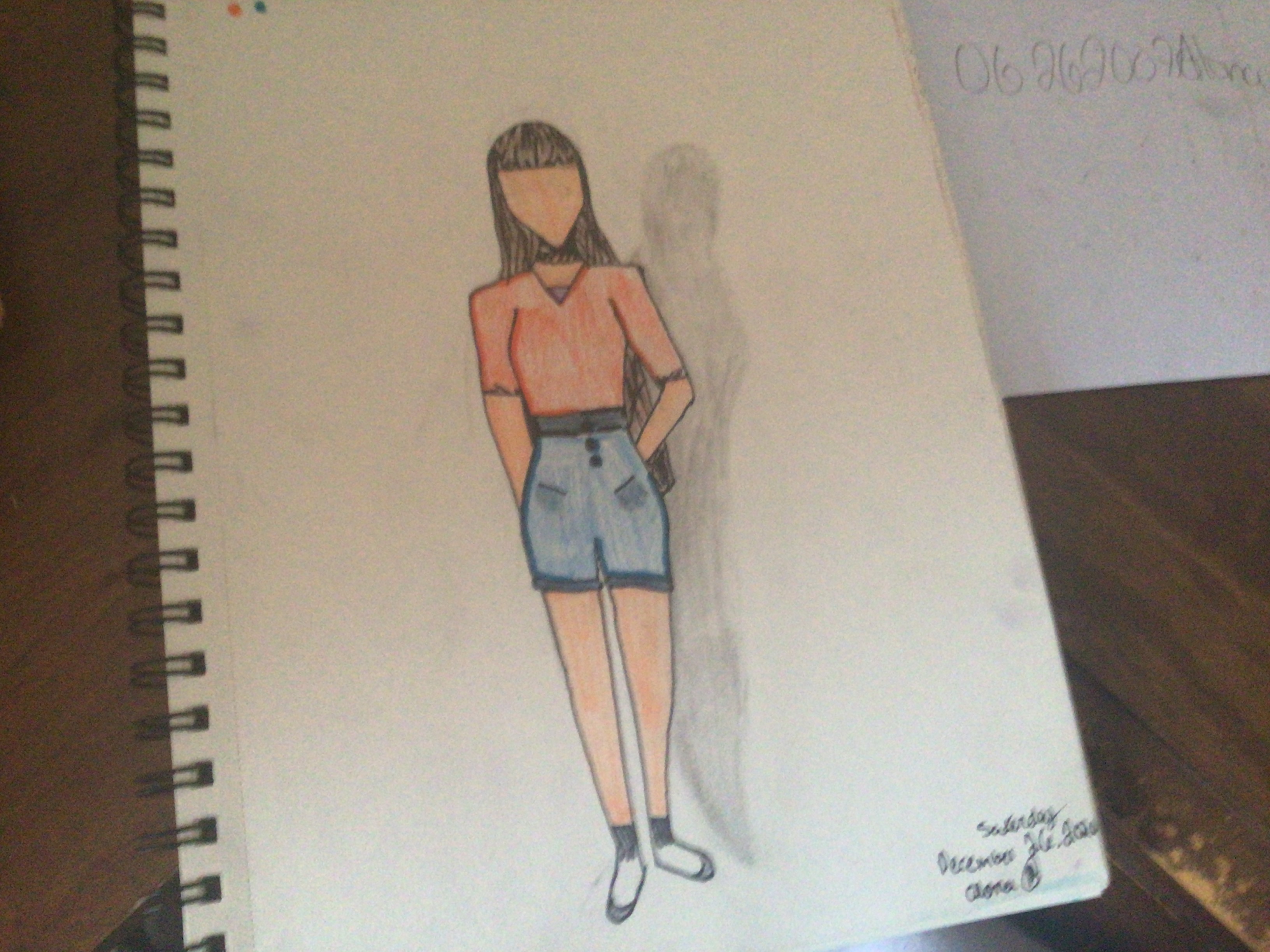
You know that moment when you finish a drawing, lean back like a proud little goblin, and then immediately think, “Wait… is this actually good?” That’s the birthplace of the classic internet sentence: “So guys I drew some things and wanted y’all opinion.”
It’s casual. It’s brave. It’s also a little chaoticbecause “opinion” can mean anything from “love the vibes” to “your anatomy is doing parkour.” This article is your friendly, no-drama guide to getting useful art feedback on your drawings, whether you’re sharing sketches for fun or building a portfolio that screams, “Hire me, I know where elbows go.”
What “Wanted Y’all Opinion” Really Means (And Why It’s a Power Move)
Asking for an art critique isn’t the same as asking for compliments. Compliments feel great (and yes, you deserve them), but critique is the stuff that makes you better. When you post your work and invite comments, you’re doing three smart things at once:
- You’re borrowing other people’s eyeballs. Fresh eyes spot issues you’ve become blind to after hours of staring.
- You’re testing communication. If your drawing is meant to feel “cozy,” does it actually read that way?
- You’re accelerating learning. A good critique can save you weeks of guessing.
The trick is making sure the feedback you get is specific, constructive, and actionablenot just “nice” or “meh.” (We’ll handle the “meh” people, don’t worry.)
Where to Share Your Drawings for Opinions (Pick Your Difficulty Level)
Not every corner of the internet gives the same kind of drawing critique. Some places are great for encouragement, some are great for technical notes, and some are basically a gladiator arena with Wi-Fi. Here’s how to choose the right spot based on what you want.
Level 1: Low-Stakes Feedback (Confidence-Friendly)
- Friends and small group chats: Great for motivation and vibe-checking (“Does this character look friendly?”).
- Private Discord servers: Often the best mix of kindness + honesty.
- Small creator communities: People tend to be more thoughtful when it’s not a giant feed.
Level 2: Community Critique (Skill-Building Mode)
- Portfolio platforms: Places like Behance, Dribbble, and ArtStation can bring feedback from working creatives.
- Learning communities: Education-focused spaces (courses, critique groups, mentorship communities) are built for growth.
- Topic-specific groups: “Character design,” “urban sketching,” “comic panels,” etc. The more niche, the better the advice.
Level 3: High-Volume Public Posting (Thick-Skin Recommended)
- Huge social platforms: More reach, more randomness. You might get brilliant notesor a comment like “bro why.”
- Open critique forums: Can be amazing for rapid improvement, but set boundaries and ask for what you need.
Quick safety note: if you post on public portfolio platforms, make sure you’re sharing work you created (or have permission to post), and avoid uploading anything that violates a platform’s content rules. It’s not just about “getting in trouble”it’s about protecting your reputation.
How to Post Your Drawing So People Can Actually Help
If you want better art feedback, don’t just post an image and toss out “Thoughts?” like a message in a bottle. Give people something to work with. The best critiques happen when you make the assignment clear.
1) Tell people what you were aiming for
In one or two sentences, share your goal. Examples:
- “I’m practicing lightingdoes the shadow direction make sense?”
- “Trying a manga styledo the facial proportions read okay?”
- “This is for a children’s book vibedoes it feel warm and friendly?”
2) Ask for specific feedback (your future self will thank you)
Try picking two or three focus areas instead of “anything.” Useful prompts include:
- Anatomy: “Do the arms look too long compared to the torso?”
- Composition: “Where does your eye go first, and is that what you’d expect?”
- Values: “Are my darks and lights separated enough?”
- Color: “Does this palette feel moody or just muddy?”
- Readability: “If you glance for one second, can you tell what’s happening?”
3) Share process when it matters
A single final image can hide the real problem. If you can, add:
- A rough sketch or thumbnail
- A line-art version
- A value study (even a quick grayscale)
- Reference images (optional, but helpful)
This doesn’t have to be fancy. Even two progress shots can turn “cool!” into “Your values are collapsing in the mid-tonestry pushing the contrast.” That’s the kind of sentence that levels you up.
A Simple Critique Framework That Keeps Comments Useful
When critique gets messy, it’s usually because people jump straight to judgment. A cleaner approach is a four-part structure used in many arts classrooms:
- Description: What do we literally see? (No opinions yet.)
- Analysis: How does it work? (Composition, contrast, line, shape, color, balance.)
- Interpretation: What does it feel like or mean? What story comes through?
- Evaluation: What’s working, what’s not, and what could improvebased on the artist’s goal.
This is gold whether you’re giving critique or asking for it. If your comments section is full of “I like it” and “idk,” invite structure: “Could you describe what you notice first? Then tell me what’s confusing?”
How to Receive Feedback Without Spiraling (Because It’s Your Baby)
Let’s be real: critique can sting. Even when it’s kind. Especially when you stayed up late drawing hands and now someone says, “The hands look… adventurous.” Here’s how to keep your brain from turning one comment into a full documentary called “I Should Quit Art Forever: The Series.”
Separate taste from technique
Not all opinions are equal, and not all opinions are about correctness.
- Taste: “I don’t like this style.” (That’s fine. Style is subjective.)
- Clarity: “I can’t tell what’s happening.” (That’s actionable.)
- Technique: “The light source seems inconsistent.” (Also actionable.)
Use the “pattern rule”
One person says your background feels empty? Note it. Three unrelated people say it? That’s a signal. Repeated feedback is usually pointing to a real issue (or at least a real perception problem).
Ask follow-up questions (politely, not defensively)
If someone says, “The pose feels stiff,” you can ask, “Is it the shoulders, the weight distribution, or the gesture line?” That transforms a vague comment into a mini lesson.
How to Give Constructive Criticism Without Making People Vanish
If you’re the one leaving comments: congratulations, you’re holding a tiny piece of someone’s courage in your hands. You don’t have to sugarcoatbut you also don’t have to swing a hammer.
1) Make sure critique is welcome
If someone asks for opinions, great. If they’re celebrating a finished piece and didn’t request critique, consider asking first: “Would you like feedback, or are we in celebration mode?”
2) Be specific, not mystical
“Make it pop” is not feedback. It’s a riddle. Try:
- “The focal point could be stronger if you increase contrast around the face.”
- “The silhouette would read clearer if you separate the arm from the torso.”
- “Your mid-tones are very closetry pushing your darkest darks a bit.”
3) Critique the work, not the person
“You’re bad at anatomy” is a personality attack. “The forearm length feels off compared to the upper arm” is a helpful observation. Same issue, totally different impact.
4) Use a “supportive sandwich,” but don’t fake it
Many creatives use a simple structure: say what’s working, address what needs improvement, then end with encouragement. The key is sincerity. Nobody wants a compliment that reads like customer service.
Turn Random Opinions Into an Actual Improvement Plan
The comments are in. Now what? Here’s how to turn a pile of feedback into progress (instead of a folder named “critique pain” that you never open again).
Step 1: Sort feedback into three buckets
- Quick fixes: Tangent lines, tiny proportion tweaks, value separation.
- Skill gaps: Anatomy, perspective, lighting, color harmonystuff that needs practice beyond one drawing.
- Style choices: Things you may keep because they’re intentional (even if some people don’t love them).
Step 2: Make one “next drawing goal”
Not ten goals. One. Example: “Next piece: stronger values and clearer focal point.” When you try to fix everything at once, you end up fixing nothing and stress-cleaning your room instead.
Step 3: Repost a revision (if you’re comfortable)
You’ll be shocked how much you learn by showing version A and version B. It also invites more precise feedback because people can point to what changed.
Common “Opinion Traps” (And How to Dodge Them)
- Trap: Asking for “honest opinions” with no direction.
Fix: Ask for two areas: “Lighting + composition notes appreciated.” - Trap: Taking one harsh comment as truth.
Fix: Look for patterns and credibility. Not every critic is a coach. - Trap: Fixing your drawing based on every comment.
Fix: Choose feedback that matches your goal. You’re the director, not the suggestion box. - Trap: Posting low-quality photos of traditional art (glare city!).
Fix: Even lighting, straight-on angle, crop cleanly. Make it easy to see what you made.
Mini Examples: Better Ways to Ask for Art Feedback
Example 1: The classic “Thoughts?” post
Instead of: “So guys I drew some things and wanted y’all opinion.”
Try: “I’m practicing character design. Do the proportions read adult, and is the pose balanced? Any notes on the hands are welcome.”
Example 2: The “Be brutal” request
Instead of: “Be brutal.”
Try: “I can handle critique, but please keep it actionable. I’d love notes on values and whether the focal point is clear.”
Example 3: The portfolio-minded version
Try: “This piece is for my portfolio. Does it show strong fundamentals? What would you change before I call it ‘final’?”
These tiny edits work because they guide viewers toward the kind of feedback you can actually use. You’re not begging for validation; you’re running a mini art workshop in the comments.
Conclusion: Ask Like a Pro, Learn Like a Sponge, Keep Your Joy
“So guys I drew some things and wanted y’all opinion” is more than a casual captionit’s a doorway. With the right setup, you can turn random comments into real improvement: clearer questions, better critique, stronger skills, and a healthier relationship with feedback.
Post the sketch. Share the goal. Invite the kind of critique you want. And when the opinions arrive, remember: you’re not collecting judgmentyou’re collecting data. Keep what helps, toss what doesn’t, and keep drawing anyway.
Experiences Artists Commonly Have When They Post “Wanted Y’all Opinion” (About )
The first experience many artists describe is the refresh-button workout. You post your drawing, set your phone down, then pick it up again seven seconds later like it’s going to hatch. When comments finally appear, they often come in three flavors: the hype friend (“THIS IS FIRE”), the quiet observer (“nice”), and the one person who actually explains something (“Your shadows are cool, but the cast shadow direction changes near the feet”). The emotional whiplash is realbecause you’re absorbing both validation and correction at the same time.
Another common experience is the unexpected consensus. You might think the face is the best part, but multiple people mention the background. That’s usually not bad newsit’s a clue. Viewers tend to comment on what interrupts their understanding, not what you personally enjoyed drawing. Artists often realize, “Oh… I’m the only one who knew what this was supposed to look like.” That moment can sting, but it’s also a shortcut to clarity.
Then there’s the “taste vs. technique” discovery. Someone might dislike your style, and someone else might love it, while a third person points out a specific issue like stiff gesture or muddy values. Over time, artists learn to treat style opinions like weather (“Good to know, but I’m still going outside”) and treat technical notes like GPS (“Turn left here and you’ll get where you’re going faster”). This shift is often what helps people keep posting without losing confidence.
Many artists also experience the revision glow-up. They take one or two pieces of actionable feedbackmaybe pushing contrast, separating silhouettes, or adjusting perspectiveand post an updated version. The second post usually gets more focused critique because people can see progress. It creates momentum. Artists often say this is when critique starts feeling less like judgment and more like collaboration.
Of course, there’s also the occasional drive-by comment that adds nothing (“mid,” “cringe,” “lol”). Most artists eventually develop a personal rule: if the comment doesn’t explain what isn’t working or why, it doesn’t get to live rent-free in your head. This is a learned skilllike anatomy, but for emotions.
The most encouraging experience is when artists notice their requests getting sharper over time. Early posts ask, “Is it good?” Later posts ask, “Is the focal point clear?” or “Does this color temperature support the mood?” That change signals growth. You’re not just getting better at drawingyou’re getting better at seeing. And that’s the kind of upgrade that sticks with you long after the comments scroll away.











