
Neck tension has a talent for showing up at the worst possible time: during a work deadline, after a long drive, right when you finally sit down to relax, or five minutes after you proudly announce, “I’m going to stop looking down at my phone so much.” The good news is that a gentle self neck massage can be a simple, low-cost way to ease everyday muscle tightness, support relaxation, and help you feel less like a human coat hanger.
This guide walks you through simple ways to give yourself a neck massage in 10 steps, using your hands, a towel, a tennis ball, heat, breathing, and smart posture habits. It is designed for common neck stiffness related to stress, desk work, screen time, sleeping awkwardly, or general muscle tension. It is not meant to replace medical care, physical therapy, or professional massage for serious pain, injury, nerve symptoms, or chronic conditions.
Before we begin, one tiny but important rule: your neck is not a stubborn jar lid. Do not twist it, yank it, crack it aggressively, or attack it with superhero-level pressure. A good neck massage should feel soothing, warm, and relievingnot sharp, electric, dizzying, or scary.
Why Self Neck Massage Can Help
Neck pain and stiffness often come from muscle tension, posture habits, stress, and long periods of holding the head in one position. When the head leans forward for hourshello, laptops and phonesthe muscles in the neck and upper shoulders work overtime. Over time, they may become tight, tender, and irritated.
Gentle massage may help by encouraging relaxation, increasing local circulation, calming overactive muscles, and reducing the feeling of tightness. When combined with heat, stretching, posture breaks, and light movement, self massage can become part of a practical neck care routine.
Safety First: When Not to Massage Your Neck
Skip self massage and seek medical advice if your neck pain started after a fall, car accident, sports injury, or blow to the head or neck. You should also contact a healthcare professional if you have numbness, tingling, weakness in the arm or hand, fever, severe headache, dizziness, trouble walking, trouble swallowing, trouble breathing, swollen glands, unexplained lumps, or pain that does not improve with self-care.
Avoid pressing on the front of the neck, the throat, the sides where major blood vessels run, directly on the spine, or over swollen areas. If you use a massage gun, do not use it on the neck. Percussive tools are better kept for larger muscle areas, not delicate structures near the throat, arteries, nerves, and bones.
Simple Ways to Give Yourself a Neck Massage: 10 Steps
Step 1: Set Up a Calm, Comfortable Position
Start by sitting or standing tall with your feet flat on the floor. Let your shoulders drop away from your ears. Keep your jaw relaxed and your chin level, as if a string gently lifts the crown of your head toward the ceiling.
A good position matters because massage works better when your muscles are not already bracing. If you hunch over like a shrimp at a keyboard, your neck muscles may tighten faster than you can loosen them.
Try this setup: sit in a supportive chair, place both feet on the floor, rest your elbows lightly on a desk or pillow, and breathe slowly for 30 seconds before beginning. This tells your nervous system, “We are not fighting a bear. We are just relaxing the neck.”
Step 2: Warm the Neck Before You Massage
Heat can help loosen tight muscles before massage. Place a warm towel, heating pad on a low setting, or warm compress over the back of your neck and upper shoulders for 10 to 15 minutes. The goal is gentle warmth, not “fresh pizza roof-of-mouth burn.”
If your neck pain is very new and related to a sudden strain, cold may feel better during the first day or two. For typical tightness from stress or posture, warmth is often more relaxing. Always protect your skin with a cloth barrier and avoid falling asleep on a heating pad.
Step 3: Begin With Light Shoulder Squeezes
Place your right hand on your left upper shoulder, where the neck meets the shoulder. Gently squeeze the muscle between your fingers and palm. Hold for two to three seconds, then release. Repeat five to ten times, then switch sides.
This area often carries tension from typing, driving, stress, and lifting your shoulders without realizing it. Light squeezing warms up the tissue and helps you identify tender spots before deeper work. Keep your pressure at a comfortable levelabout a 4 or 5 out of 10.
Step 4: Use Your Fingertips Along the Back of the Neck
Place the fingertips of both hands at the base of your skull, just to the left and right of the spine. Make small circles with your fingers, moving slowly downward along the muscles on either side of the neck. Do not press directly on the bones of the spine.
Use slow circles, not frantic scrubbing. Imagine polishing a delicate antique, not sanding a deck. Spend 30 to 60 seconds working from the base of the skull down toward the upper shoulders.
If your arms get tired, support one elbow with the opposite hand or rest your elbows on a table. Self massage should not create a second problem called “now my arms hurt too.”
Step 5: Try Gentle Knuckle Glides
Make loose fists and place your knuckles on the muscles at the back of your neck, again staying to either side of the spine. Gently glide downward toward the shoulders. Repeat five to eight times.
This technique works well when your fingers feel tired or when you want broader pressure. Keep the movement slow and smooth. If you feel sharp pain, dizziness, tingling, or discomfort that radiates into your arm, stop immediately.
Step 6: Find and Release Trigger Points Carefully
Trigger points are small, tender, tight areas in muscle tissue that may feel like knots or tiny marbles under the skin. They are common in the upper trapezius muscles, which run from the neck across the shoulders.
To work on one, place your fingers or thumb on the tender spot and apply steady, gentle pressure for 20 to 30 seconds. Breathe slowly. The sensation should feel like “good discomfort,” not pain that makes your eyebrows file a complaint.
After holding the point, release and gently roll your shoulder. You can repeat this two or three times. Avoid digging hard, bruising yourself, or staying on one spot too long.
Step 7: Use a Towel for a Simple Neck Massage
A towel can help massage the back of the neck without tiring your hands. Roll a medium towel lengthwise. Hold one end in each hand and place the middle of the towel behind your neck. Gently pull the ends forward so the towel supports the neck, then move it slowly side to side or up and down.
Keep the pressure mild. This is not a tug-of-war with your own head. The towel should glide over the muscles and provide a comforting rubbing motion. Spend about one minute here, then pause and notice how your neck feels.
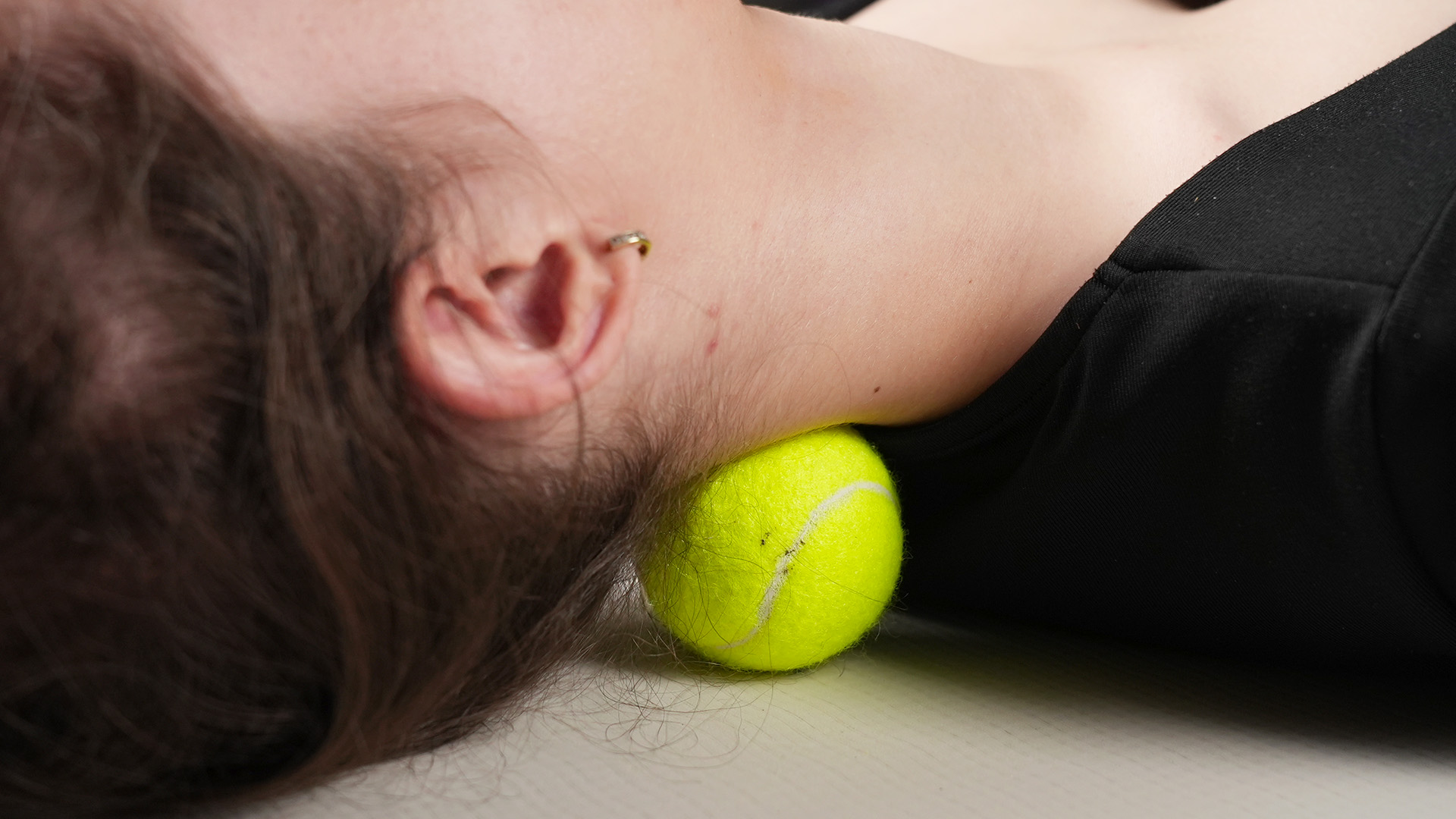
Step 8: Use a Tennis Ball Against the Wall
For upper shoulder and upper back tension, a tennis ball can be helpful. Stand with your back against a wall and place the ball between the wall and the muscle area above your shoulder blade. Do not place the ball directly on the spine or the front or side of the neck.
Bend your knees slightly and move your body slowly so the ball rolls over tight areas. When you find a tender spot, pause for 10 to 20 seconds and breathe. This method is especially useful for people who sit at a desk and feel tightness between the neck, shoulder, and upper back.
If a tennis ball feels too intense, use a softer ball or place the ball inside a sock so you can control it more easily. Your goal is relief, not winning a toughness contest against sporting equipment.
Step 9: Add Gentle Neck Stretches After Massage
Massage and stretching work well together when done gently. After massaging, try a slow side stretch. Sit tall, lower your right ear toward your right shoulder, and keep both shoulders relaxed. Hold for 10 to 20 seconds, then switch sides.
Next, try a chin tuck. Look straight ahead, then gently draw your chin backward as if making a small double chin. Hold for three to five seconds and release. Repeat five to ten times. This movement can help counter forward-head posture from screens.
Stretching should never be forceful. Do not pull your head aggressively. If the stretch causes pain, tingling, or symptoms down the arm, stop.
Step 10: Finish With Breathing and Posture Reset
End your self neck massage with three slow breaths. Inhale through your nose for four counts, let your ribs expand, then exhale slowly through your mouth. Drop your shoulders with each exhale.
Then do a quick posture reset: ears over shoulders, shoulders over ribs, ribs over hips. Move your screen to eye level, bring your phone up instead of bending your head down, and take movement breaks throughout the day.
A neck massage can feel wonderful, but if you return immediately to the same posture that caused the tension, your neck may send another strongly worded email within the hour.
How Often Should You Give Yourself a Neck Massage?
For mild everyday tension, a short self massage session of five to ten minutes may be enough. You can do it once a day or a few times per week, depending on how your body responds. More is not always better. Too much pressure or too much repetition can irritate the area.
A helpful routine might look like this: warm the neck for 10 minutes, massage for five minutes, stretch for two minutes, then adjust your posture and move around. This balanced approach is more effective than randomly poking at your neck while reading emails with one eye twitching.
Best Tools for Self Neck Massage
Your Hands
Your hands are the safest and most controllable tools for neck massage. You can instantly adjust pressure, speed, and location. Fingertips are best for small circles, thumbs are useful for shoulder knots, and knuckles provide broader pressure.
A Warm Towel
A towel is excellent for gentle rubbing and support. It is affordable, easy to control, and unlikely to overdo pressure when used carefully.
A Tennis Ball
A tennis ball works well for the upper back and shoulder muscles near the neck. Use it against a wall, not on the front or side of the neck.
A Foam Roller
A foam roller may help the upper back and shoulder area, but avoid rolling directly on the neck unless instructed by a qualified professional.
What to Avoid
Avoid hard tools, aggressive scraping, intense percussive massage guns on the neck, deep pressure over blood vessels, and any technique that causes symptoms beyond mild muscle discomfort.
Common Mistakes to Avoid
Pressing Too Hard
Pain is not proof that massage is working. Gentle to moderate pressure is usually enough. If you bruise, feel sore for days, or dread doing it again, you are using too much force.
Massaging the Front of the Neck
The front of the neck contains delicate structures, including the throat and major blood vessels. Stay focused on the back of the neck, upper shoulders, and upper back.
Ignoring Nerve Symptoms
Tingling, numbness, weakness, shooting pain, or symptoms traveling down the arm are signs to stop and seek professional guidance. These symptoms may involve nerves and should not be handled with random pressure.
Forgetting Ergonomics
Massage can help you feel better, but your daily habits matter. Raise your screen, avoid cradling your phone between your ear and shoulder, take breaks, and keep your head balanced over your spine.
Experience-Based Tips: What Self Neck Massage Feels Like in Real Life
The first thing most people notice when they begin a self neck massage routine is that the tight spot is rarely just one spot. You may think, “My neck hurts,” but once your fingers start exploring the upper shoulders, the base of the skull, and the muscles beside the spine, you may discover a whole little neighborhood of tension. There is the knot from sleeping weird, the desk-work band of tightness, the stress shoulder that lives permanently near your ear, and the mysterious tender point that seems to remember every email you have ever received.
A realistic self massage experience is not dramatic. You may not go from stiff robot to graceful ballet dancer in one session. Instead, the improvement often feels subtle: your shoulders drop a little, turning your head feels easier, your jaw unclenches, and you suddenly realize you have been breathing like a normal person again. That is a win.
Many people get the best results when they treat self massage like brushing their teeth rather than like emergency repair. A few minutes after work, after driving, or before bed can keep tension from building into a full neck rebellion. The key is consistency. Five gentle minutes done regularly usually beats one aggressive 30-minute session that leaves you sore and suspicious of your own thumbs.
Another useful experience-based tip is to start lower than you think. Neck tension often connects with the upper shoulders and upper back. If you only rub the exact painful spot, you may miss the surrounding muscles that are contributing to the problem. Start with the tops of the shoulders, move to the base of the skull, then work along the back of the neck. This broader approach usually feels more complete.
Breathing matters more than people expect. If you hold your breath while pressing on a knot, your body may tighten against the pressure. Slow breathing helps the muscles soften. Try exhaling as you apply pressure and relaxing your jaw at the same time. The jaw and neck are surprisingly close coworkers; when one is tense, the other often joins the committee.
It also helps to pay attention to timing. Self neck massage before bed can be calming, especially when paired with heat and gentle stretches. During the workday, a shorter version may be better: shoulder squeezes, a few circles at the base of the skull, two chin tucks, and a posture reset. This keeps the routine practical instead of turning your lunch break into a spa documentary.
If you sit at a computer, the most powerful lesson is that massage should be paired with movement. Stand up every 30 to 60 minutes, roll your shoulders, look away from the screen, and change positions. Your neck likes variety. It does not want to hold the same angle for six hours while you convince yourself you are “almost done.”
Finally, listen to your body. A good self massage should leave you feeling looser, calmer, and more comfortable. Mild tenderness can happen, but pain, dizziness, tingling, weakness, or worsening symptoms are signals to stop. The best self care is not the most intense techniqueit is the one that helps you feel better safely and consistently.
Conclusion
Giving yourself a neck massage can be simple, soothing, and surprisingly effective for everyday stiffness. Start with a comfortable posture, warm the muscles, use gentle hand techniques, work the upper shoulders, try towel or tennis ball methods carefully, add light stretching, and finish with better posture habits. The secret is not brute force. It is patience, consistency, and knowing when your neck needs care instead of pressure.
For occasional tension from stress, screens, or sleep position, these 10 steps can help you build a safe neck relaxation routine at home. For severe, persistent, injury-related, or nerve-related symptoms, professional evaluation is the smarter path. Your neck does a big job every day. Treat it kindly, and it may stop acting like it has been personally betrayed by your laptop.
Note: This article is for general educational and wellness purposes only and is not a substitute for medical diagnosis, treatment, or professional care.












