
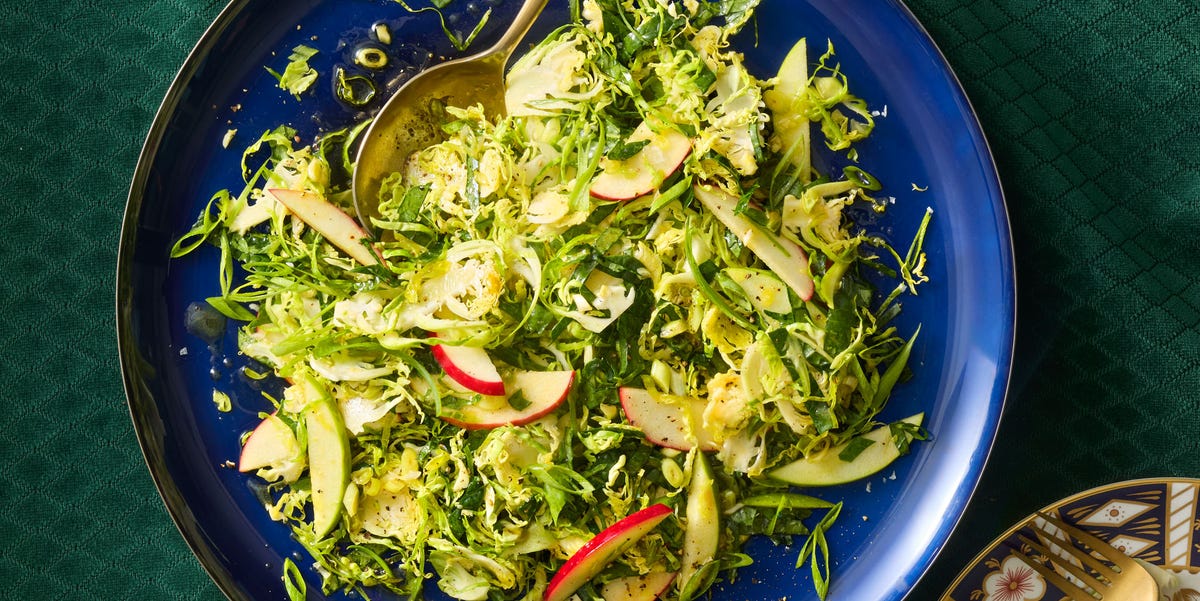
Some salads are delicate little flowers that collapse the moment dressing enters the room. This shaved Brussels sprout and kale salad is not one of them. It is crunchy, sturdy, colorful, and perfectly capable of holding its own beside roasted chicken, holiday turkey, baked salmon, or a bubbling pan of macaroni and cheese.
The salad combines finely sliced Brussels sprouts and kale with crisp apple, toasted pecans, dried cranberries, and Parmesan cheese. A maple-Dijon lemon vinaigrette brings everything together with acidity, sweetness, and just enough mustardy attitude. The result is a fresh winter salad that tastes substantial without feeling heavy.
Better yet, the hearty greens improve after spending a little time in the dressing. Instead of wilting into a sad green puddle, the Brussels sprouts and kale gradually become more tender and flavorful. That makes this recipe practical for meal prep, potlucks, holiday dinners, and weekday lunches.
Why This Shaved Brussels Sprout and Kale Salad Works
Raw Brussels sprouts are essentially tiny, tightly packed cabbages. When sliced into thin ribbons, they lose their intimidating bowling-ball personality and become a crisp, slaw-like salad base. Kale contributes deeper flavor and a pleasantly chewy texture, especially after it has been massaged with dressing.
The real magic comes from contrast. The greens are earthy and slightly bitter, so the remaining ingredients pull the salad in several useful directions:
- Apple adds fresh sweetness and juicy crunch.
- Dried cranberries provide concentrated sweet-tart flavor.
- Toasted pecans contribute richness and a second layer of crunch.
- Parmesan adds saltiness and savory depth.
- Lemon and apple cider vinegar brighten the sturdy vegetables.
- Maple syrup and Dijon mustard round out the vinaigrette without making it sugary.
Every forkful contains several textures and flavors, which is the difference between eating a salad and completing a leafy chore.
Recipe Overview
- Prep time: 25 minutes
- Resting time: 15 minutes
- Total time: 40 minutes
- Yield: 6 side-dish servings or 4 lunch servings
- Difficulty: Easy
Ingredients
For the Salad
- 12 ounces fresh Brussels sprouts
- 1 medium bunch lacinato or curly kale, about 6 packed cups before slicing
- 1 crisp sweet-tart apple, such as Honeycrisp, Pink Lady, or Fuji
- 3/4 cup pecan halves
- 1/2 cup dried cranberries
- 1/2 cup finely grated or thinly shaved Parmesan cheese
- 2 tablespoons finely chopped fresh parsley, optional
For the Maple-Dijon Lemon Vinaigrette
- 1/4 cup extra-virgin olive oil
- 3 tablespoons fresh lemon juice
- 1 tablespoon apple cider vinegar
- 1 1/2 tablespoons pure maple syrup
- 2 teaspoons Dijon mustard
- 1 small shallot, finely minced
- 1 small garlic clove, finely grated
- 1/2 teaspoon kosher salt, plus more as needed
- 1/4 teaspoon freshly ground black pepper
How to Make Shaved Brussels Sprout and Kale Salad
Step 1: Toast the Pecans
Place the pecans in a dry skillet over medium-low heat. Toast them for 4 to 6 minutes, stirring frequently, until they smell nutty and become slightly darker. Transfer them to a cutting board immediately so they do not continue cooking in the hot pan.
Once cool, roughly chop the pecans. Try not to “test” half of them while preparing the remaining ingredients. This is difficult advice to follow, but optimism is free.
Step 2: Prepare the Brussels Sprouts
Rinse the Brussels sprouts and dry them thoroughly. Trim off the dry stem ends and remove any yellow, bruised, or loose outer leaves.
Slice each sprout as thinly as possible. A sharp chef’s knife works well, although a food processor fitted with a slicing disk is faster when making a large batch. A mandoline also creates beautifully thin ribbons, but always use its hand guard and stop slicing before your fingers get close to the blade.
Separate any large pieces with your fingers and place all the shaved Brussels sprouts in a large mixing bowl.
Step 3: Slice and Massage the Kale
Remove the thick center stems from the kale. Stack several leaves, roll them loosely, and cut them crosswise into narrow ribbons. Add the sliced kale to the bowl with the Brussels sprouts.
Whisk the olive oil, lemon juice, apple cider vinegar, maple syrup, Dijon mustard, shallot, garlic, salt, and black pepper in a small bowl. The dressing should taste bright and slightly intense when sampled alone. The sturdy greens will mellow it considerably.
Pour approximately two-thirds of the vinaigrette over the kale and Brussels sprouts. Using clean hands, gently squeeze, lift, and rub the greens for 1 to 2 minutes. The kale should darken slightly and become more flexible, but it should not look crushed or soggy.
Step 4: Add the Remaining Ingredients
Core the apple and cut it into thin matchsticks or bite-size slices. Leaving the peel on provides extra color and saves you from performing an unnecessary kitchen task.
Add the apple, dried cranberries, Parmesan, parsley, and most of the toasted pecans to the bowl. Toss thoroughly. Taste and add more vinaigrette, salt, pepper, or lemon juice as needed.
Step 5: Let the Salad Rest
Allow the dressed salad to rest for about 15 minutes before serving. This short pause gives the acid and salt time to soften the raw vegetables while allowing the flavors to mingle.
Transfer the salad to a serving bowl and scatter the reserved pecans and a little extra Parmesan over the top. Serve cool or at room temperature.
How Thin Should the Brussels Sprouts Be?
Aim for slices approximately as thin as shredded cabbage in coleslaw. Thin slices absorb the vinaigrette and become pleasantly tender. Thick slices remain dense and can make the salad feel as though it is fighting back.
Do not worry if every ribbon is not identical. A mixture of fine shreds and slightly larger leaves creates appealing texture. Just avoid leaving large chunks of the firm core in the bowl.
Should You Massage Both Kale and Brussels Sprouts?
Kale benefits most from massaging because its leaves can be fibrous when raw. Brussels sprouts need less persuasion, but tossing and squeezing them briefly with the vinaigrette helps separate their layers and distribute the seasoning.
The key is moderation. Massage until the greens become glossy and slightly relaxed. If you continue until they resemble cooked spinach, the salad has experienced entirely too much personal growth.
Ingredient Substitutions and Variations
Change the Fruit
Replace the apple with a firm pear, fresh orange segments, pomegranate seeds, or thinly sliced persimmon. During warmer months, sliced grapes or fresh cherries offer a lighter seasonal direction.
Try a Different Nut or Seed
Walnuts, almonds, hazelnuts, pistachios, pepitas, or sunflower seeds all work well. Toasting them first is strongly recommended because heat improves their aroma and crispness.
Swap the Cheese
Pecorino Romano delivers a sharper, saltier flavor than Parmesan. Crumbled goat cheese creates a creamier salad, while feta contributes a tangy bite. For a dairy-free version, omit the cheese and add extra toasted nuts or a spoonful of nutritional yeast.
Make It More Filling
Turn the salad into a complete meal by adding grilled chicken, roasted salmon, chickpeas, white beans, crispy tofu, cooked quinoa, farro, or roasted sweet potatoes. Keep the additions simple so the bright vinaigrette remains the main source of flavor.
Add a Savory Extra
Crisp bacon, prosciutto, or roasted mushrooms can add a deeper savory note. Use these additions sparingly; the salad should still taste fresh rather than becoming a deli counter with kale supervision.
Make-Ahead and Storage Tips
This Brussels sprout and kale salad is unusually cooperative when prepared in advance. The vinaigrette can be made up to three days ahead and refrigerated in a sealed container. Let it return to room temperature and shake or whisk it before using.
The Brussels sprouts and kale can be washed, dried, and sliced one day ahead. Store them in an airtight container lined with a dry paper towel. Keep the apple whole until assembly so it does not brown.
For the freshest presentation, combine the greens and dressing up to four hours before serving. Add the apple, pecans, cranberries, and cheese closer to mealtime. That said, fully assembled leftovers are still enjoyable the next day because the hearty vegetables maintain much of their structure.
Store leftovers in a covered container in the refrigerator for up to three days. Before eating, refresh the salad with a squeeze of lemon juice, a pinch of salt, and a small handful of newly toasted nuts.
What to Serve With This Winter Salad
The crisp, acidic character of this shaved Brussels sprout and kale salad makes it particularly useful beside rich main dishes. Serve it with roast chicken, pork tenderloin, glazed ham, turkey, meatloaf, baked pasta, or creamy soup.
For a vegetarian dinner, pair it with butternut squash risotto, mushroom lasagna, baked mac and cheese, lentil loaf, or a grain bowl. It also fits naturally into Thanksgiving and Christmas menus because the cranberries, pecans, apple, and maple vinaigrette echo familiar holiday flavors without copying the stuffing.
Common Mistakes to Avoid
Using Wet Greens
Water clinging to the vegetables dilutes the vinaigrette and prevents it from coating the leaves. Dry the kale and Brussels sprouts thoroughly after washing.
Slicing the Vegetables Too Thickly
Large pieces remain tough and do not absorb enough dressing. Use a sharp knife and take the extra few minutes needed to create fine ribbons.
Skipping the Resting Time
The salad may taste sharp and overly chewy immediately after mixing. A 15-minute rest allows the dressing to season and soften the greens.
Forgetting to Taste Before Serving
Kale, Brussels sprouts, cheese, and dried fruit can vary in bitterness, saltiness, and sweetness. Taste the finished salad and adjust it. More lemon corrects flatness, maple syrup softens excessive bitterness, and salt helps all the flavors become more distinct.
Adding All the Crunchy Toppings Too Early
Pecans retain their best texture when added shortly before serving. Reserve a few for the top so the finished bowl looks intentionally styled rather than recently transported through turbulence.
Experiences and Lessons From Making This Salad
The first lesson this recipe teaches is that slicing technique matters more than culinary drama. There is no complicated cooking process, flambé moment, or sauce requiring three pans and emotional support. The quality of the salad depends primarily on how thinly the vegetables are cut. When the Brussels sprouts are shaved into delicate ribbons, they absorb the dressing and feel light. When they are chopped into thick coins, every bite becomes a prolonged negotiation.
A food processor is extremely helpful when preparing the salad for a party. It can turn a mound of Brussels sprouts into uniform shreds in less than a minute. For a smaller family dinner, however, a sharp chef’s knife offers better control and creates fewer dishes. The knife method also produces a mix of fine slices and loose leaves, which gives the salad a more handmade texture.
The second major discovery is that kale does not need to be punished into tenderness. Early attempts at massaged kale salad often involve squeezing the leaves as though they owe the cook money. That can make the kale limp and slightly watery. A minute or two of gentle rubbing with an acidic dressing is enough. The kale should soften while retaining a little chew.
Testing the salad with different apples also demonstrates how one ingredient can change the entire bowl. Honeycrisp creates a juicy, noticeably sweet result. Pink Lady adds stronger acidity, while Fuji makes the salad milder and more approachable for people who claim not to like bitter greens. A soft apple is less successful because it disappears among the firmer vegetables. Crispness is the assignment.
The nuts deserve more attention than they usually receive. Untoasted pecans taste fine, but toasted pecans become fragrant, crisp, and almost buttery. They also make the salad feel finished. The easiest method is a dry skillet, but the nuts must be watched carefully. They can travel from pale to perfectly toasted to “tiny pieces of charcoal” during one distracted glance at a phone.
Another useful experience is learning not to overdress the salad immediately. Begin with about two-thirds of the vinaigrette, massage the greens, and then evaluate. The vegetables gradually release a little moisture, while the cheese and fruit change the flavor balance. Adding every drop at the beginning can leave dressing pooled at the bottom of the bowl. It is easier to add more than to persuade olive oil to return to its bottle.
This salad also performs surprisingly well at gatherings. It can sit on a buffet longer than a delicate lettuce salad, and it does not require last-second assembly while guests are circling the kitchen. Preparing the greens and vinaigrette earlier in the day leaves only the apple, nuts, cheese, and final tossing for later. That is useful during holiday cooking, when the oven is occupied, the gravy needs attention, and somebody is asking where the serving spoons live.
Perhaps the best lesson is that a sturdy salad can appeal to people who are suspicious of both kale and Brussels sprouts. The vegetables are not hidden, but they are surrounded by enough acidity, sweetness, salt, and crunch to feel balanced. Several diners may begin with a cautious spoonful and return for more. This does not guarantee that every vegetable skeptic will become a kale enthusiast, but it gives the greens a fair and delicious opportunity.
Finally, leftovers make an excellent next-day lunch. Add cooked grains, chickpeas, chicken, or tofu and pack the salad in a sealed container. Because the base is made from hardy vegetables, it remains recognizable after refrigeration. A squeeze of lemon and a few fresh pecans restore its brightness and crunch. Unlike a conventional lettuce salad, it does not emerge from the refrigerator looking as though it has received terrible news.
Final Thoughts
This shaved Brussels sprout and kale salad recipe succeeds because it respects what sturdy winter vegetables do best. Instead of trying to make them behave like tender lettuce, it uses their crunch, durability, and bold flavor as advantages.
Thin slicing and a brief massage create tenderness. Apple, cranberries, and maple syrup balance bitterness. Parmesan and toasted pecans bring savory richness, while lemon and apple cider vinegar keep the entire salad lively. The finished dish is colorful enough for a holiday table, practical enough for meal prep, and flavorful enough to make the salad bowl one of the first dishes emptied.











