
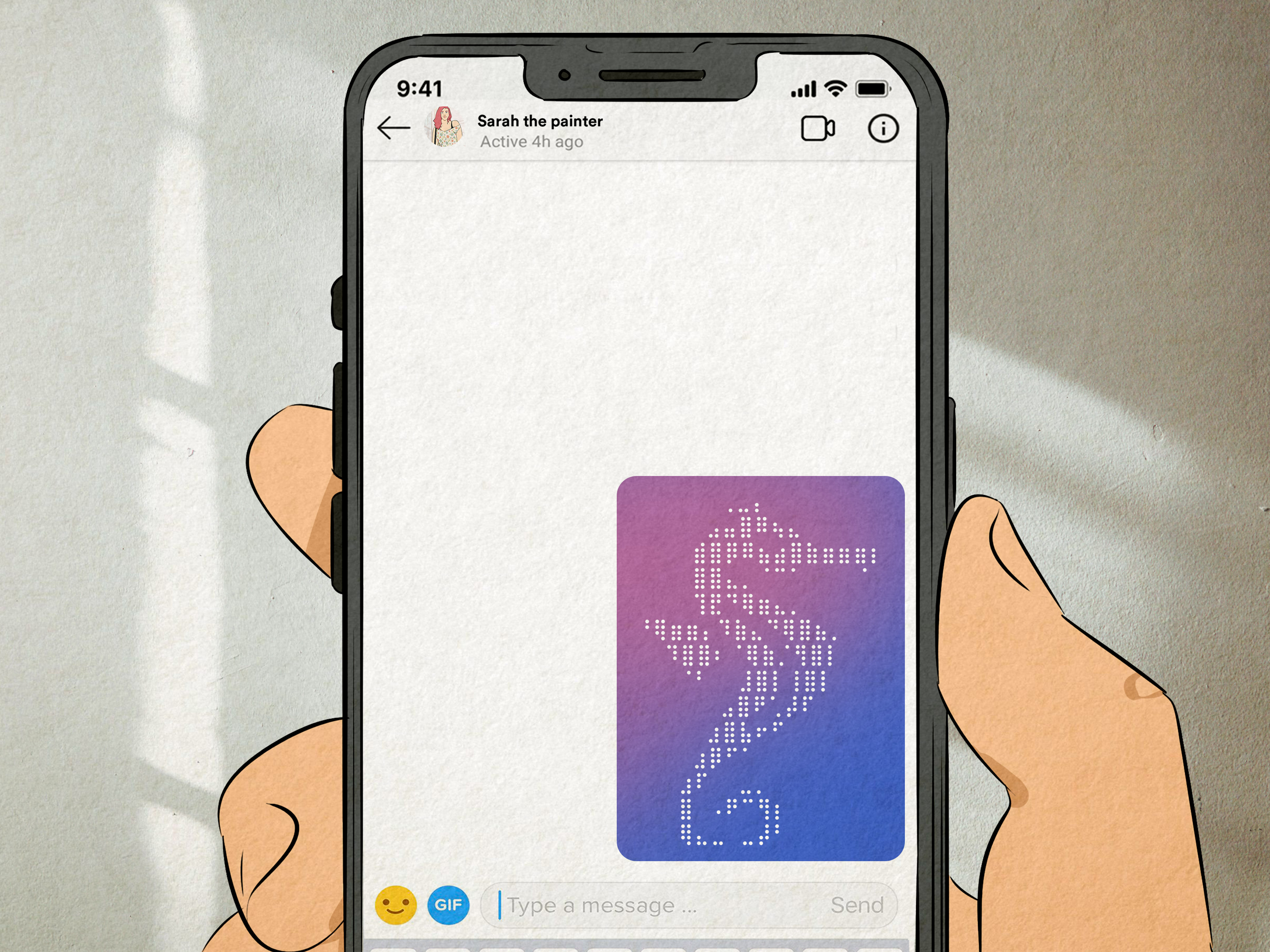
Some mysteries feel small until the internet gets its tiny digital claws into them. The seahorse emoji is one of those mysteries. People swear they have seen it. Others insist they used it in old texts, beach captions, aquarium posts, or romantic messages with a suspicious amount of ocean energy. Yet when they open the emoji keyboard and search “seahorse,” nothing appears. No curled tail. No horsey little face. No miniature sea-dad floating proudly in Unicode glory.
So, did the seahorse emoji ever exist? The clear answer is: No, there has never been an official Unicode seahorse emoji. It was not secretly removed from iPhone. It was not retired by Android. It is not hiding in a forgotten keyboard drawer next to the fax machine emoji. As of current Unicode emoji documentation, the seahorse remains absent from the official emoji set.
But the story is more interesting than a simple “no.” The seahorse emoji rumor sits at the intersection of emoji history, false memory, platform design, AI confusion, marine-animal cuteness, and the strange way our brains autocomplete the world. In other words, it is the perfect internet rabbit holeor perhaps the perfect ocean stable.
Is There a Seahorse Emoji?
No official seahorse emoji exists. If you search your phone’s emoji keyboard, you may find ocean-themed alternatives such as the fish emoji, tropical fish emoji, blowfish emoji, dolphin emoji, whale emoji, octopus emoji, jellyfish emoji, coral emoji, or the newer orca emoji. But none of these is a standalone seahorse.
This matters because emoji are not just cute pictures. Official emoji are standardized characters. The Unicode Consortium approves and maintains the system that allows a character to be recognized across platforms. Once an emoji becomes part of the Unicode Standard, Apple, Google, Microsoft, Samsung, WhatsApp, and other vendors can create their own visual designs for that character. The designs may look different, but the underlying character is the same.
That is why the smiling face emoji can look slightly different on an iPhone, Android phone, Windows device, or social media platform but still travel correctly from one device to another. A seahorse sticker, custom image, AI-generated icon, or app-specific graphic may look like an emoji, but it is not the same thing as a Unicode emoji.
Did the Seahorse Emoji Ever Exist in the Past?
No. The seahorse emoji did not exist in old iOS, old Android, early Japanese emoji sets, or previous Unicode emoji versions. This is the part that surprises people, because the memory feels so believable. A seahorse seems like it belongs in the emoji keyboard. We already have a horse, fish, shell, coral, jellyfish, lobster, crab, shrimp, octopus, dolphin, whale, shark, and even mythical creatures. Surely a seahorse must have been there at some point, right?
That “surely” is doing a lot of heavy lifting. The official record does not show a seahorse emoji as an approved character. Unicode’s current emoji lists include many marine animals, and Unicode 17.0 added an orca to the Animals & Nature category, but no seahorse was included. Emojipedia, one of the most widely used emoji reference sites, also states that there is no official seahorse emoji and that there has never been one.
Why Do So Many People Remember a Seahorse Emoji?
The easiest explanation is the Mandela effect, a term used when many people remember something that did not happen the way they think it did. Famous examples include people misremembering brand names, movie lines, book titles, and cartoon details. The seahorse emoji fits neatly into that category because it feels visually obvious and emotionally familiar.
Our brains are not perfect filing cabinets. They are more like enthusiastic interns with glitter pens. They connect patterns, fill in gaps, and confidently hand us memories that feel complete even when they are stitched together from similar images. If you have seen seahorse stickers, aquarium icons, children’s illustrations, beach graphics, clip art, or emoji-style images, your brain may have stored the idea as “seahorse emoji.”
Another reason is category expectation. The emoji keyboard contains plenty of ocean creatures. When users see fish, tropical fish, blowfish, dolphin, whale, shark, octopus, lobster, crab, shrimp, coral, and jellyfish, they naturally assume a seahorse should be nearby. The absence feels like a missing puzzle piece, and the brain says, “I remember that piece!” even when the official emoji never existed.
Was a Seahorse Emoji Ever Proposed?
Yes, a seahorse emoji was previously proposed, but it was declined. That detail may be one reason the rumor keeps resurfacing. When people hear that a seahorse emoji was “proposed,” the story can easily mutate into “there used to be one.” Those are very different things.
Unicode emoji proposals are formal submissions. They need to show evidence of expected usage, distinctiveness, compatibility, multiple meanings, and demand beyond a small fan group. A proposal also has to explain why existing emoji are not enough. In the case of the seahorse, supporters could argue that it is visually distinct, scientifically fascinating, and useful for ocean, aquarium, beach, conservation, romance, uniqueness, and parenting themes. Still, a proposal does not guarantee approval.
Unicode’s process is careful because each approved emoji becomes part of a global standard. That standard has to work across languages, devices, operating systems, fonts, apps, and accessibility tools. In short, the emoji keyboard is not a chaotic sticker drawer. It is more like a tiny international airport where every symbol needs a passport.
Why Would Unicode Decline a Seahorse Emoji?
Unicode does not always publish a dramatic “Dear Seahorse, it’s not you, it’s us” breakup letter. However, based on emoji selection factors, we can understand possible reasons. A candidate may be declined if expected usage is too narrow, if the concept overlaps with existing emoji, if the image is hard to read at small sizes, or if the proposal does not provide enough evidence of frequency and long-term relevance.
A seahorse is distinctive, but it also creates design challenges. Emoji must work at tiny sizes. A seahorse’s most recognizable featurescurled tail, upright posture, long snout, ridged bodycan become visual oatmeal when squeezed into a small keyboard icon. Designers could make it cute, of course, but “cute” alone is not an official selection factor, even if the internet would like to file a formal complaint.
Another issue is usage range. Emoji with broad metaphorical uses often have stronger cases. A heart means love, support, health, style, and emphasis. A flame means heat, excitement, excellence, or actual fire. A seahorse could symbolize the ocean, uniqueness, patience, delicate beauty, fatherhood, marine conservation, or “I went to an aquarium and bought a magnet.” Those are real uses, but Unicode may have judged that they were not strong enough at the time.
Why the Seahorse Deserves Its Own Emoji Anyway
Even though it has not been approved, the seahorse makes a surprisingly strong emotional case. Seahorses are among the most recognizable marine animals in the world. Their shape is unlike almost anything else in the ocean. They swim upright, hold onto seagrass with prehensile tails, change color for camouflage, and have a famously unusual reproductive system in which males carry and give birth to young.
That last fact alone gives the seahorse serious symbolic power. A seahorse emoji could be used for parenting, pregnancy, gender-role reversal, ocean conservation, aquariums, coastal travel, marine biology, fantasy aesthetics, delicate strength, and “look at this tiny creature that appears to have been designed by a committee of poets.”
It would also fill a gap in the marine emoji set. We have animals that swim, crawl, pinch, float, and look vaguely annoyed. But the seahorse is different. It is not a generic fish. It is a fish wearing a medieval helmet, carrying babies, and holding onto seaweed like it just realized rent is due. That kind of personality is emoji gold.
Best Alternatives to the Seahorse Emoji
Until Unicode gives us the real thing, users must improvise. The best substitute depends on what you are trying to say.
For Ocean or Aquarium Posts
Use 🐠, 🐟, 🪸, 🐙, 🪼, 🐬, or 🐋. These create a strong sea-life mood and work well for captions about aquariums, snorkeling, marine biology, beach trips, or underwater photography.
For “Seahorse” as a Visual Idea
Use 🐴 + 🌊 or 🐎 + 🐠 if you want a playful approximation. Is it scientifically elegant? Not exactly. Is it funny? Absolutely. A horse plus a wave is the emoji equivalent of building a seahorse from spare parts in a garage.
For Romance or Loyalty
Use 💙, 🌊, 🪸, or 🐠. Seahorses are often associated with pair bonding and gentle ocean imagery, so blue hearts and reef symbols can carry a similar emotional tone.
For Marine Conservation
Use 🌊, 🪸, 🐠, ♻️, and 💚. These symbols work well for posts about ocean protection, habitat loss, reef health, and coastal ecosystems.
Why AI Sometimes Gets the Seahorse Emoji Wrong
The seahorse emoji has become a funny test case for AI systems because some models have confidently claimed that one exists. This usually happens because the idea is highly plausible. The phrase “seahorse emoji” naturally points toward existing emoji patterns: sea animals, horse emoji, aquatic symbols, and cute pictographs. A model may predict that the requested emoji should exist because similar things exist.
That does not make the claim true. It shows the difference between pattern prediction and verified lookup. The correct method is simple: check the Unicode emoji list or a reputable emoji database. If the character is not there, it is not official. No amount of confidence, poetic description, or “here it is: 🐠” can turn a tropical fish into a seahorse. The fish has suffered enough.
How to Check Whether an Emoji Is Real
If you want to know whether an emoji truly exists, do not rely only on memory or a screenshot. Use a reliable emoji reference. Search the official Unicode emoji chart, check Emojipedia, or look up the character name and code point. Real emoji have standardized names, code points or sequence data, and documented release versions.
Also remember that platform support can lag. A newly approved emoji may exist in Unicode before it appears on your phone. That does not mean your device is broken. It usually means Apple, Google, Microsoft, Samsung, or another vendor has not yet rolled out its design. But in the seahorse’s case, the issue is not delayed support. The character itself has not been approved.
Could We Get a Seahorse Emoji in the Future?
Yes, it is possible. Unicode continues to accept emoji proposals during submission windows, and a future seahorse proposal could be reconsidered if it meets the criteria. A strong proposal would need to show search demand, common usage, cultural relevance, visual distinctiveness, and practical value beyond a novelty request.
A successful seahorse emoji proposal would probably emphasize marine biodiversity, educational use, conservation communication, aquarium and tourism contexts, parenting symbolism, and the animal’s unmistakable shape. It would also need a sample design that remains readable at small sizes. The ideal seahorse emoji would be simple, charming, and instantly recognizablenot a microscopic curly noodle with identity issues.
Conclusion: The Seahorse Emoji Never Existed, But the Demand Is Real
The official answer is simple: the seahorse emoji did not ever exist as a Unicode emoji. It was not removed, hidden, banned, or swallowed by a jealous blowfish. People likely remember seahorse stickers, custom icons, emoji-style artwork, or simply assume the emoji should exist because the marine emoji family feels incomplete without it.
Still, the confusion tells us something useful. Emoji are not just decorations. They are cultural shorthand. When people keep asking for a seahorse emoji, they are pointing to a real communication gap. The seahorse is iconic, expressive, scientifically fascinating, and visually unique. It deserves a place in the conversation, even if it has not earned a place on the keyboard yet.
Until that day arrives, we will keep using 🐠, 🪸, 🌊, and 🐴 in creative combinations. It is not perfect, but it gets the message across. And honestly, “horse plus ocean” has a chaotic charm of its own.
Experiences Related to the Seahorse Emoji Mystery
One of the strangest experiences with the seahorse emoji mystery is how quickly a casual question becomes a full investigation. Someone says, “Wait, where did the seahorse emoji go?” and suddenly everyone in the group chat becomes a digital archaeologist. People search their keyboards. Someone checks an old iPhone. Another person posts a fish emoji and says, “Was it this one?” Then the debate begins. Was it blue? Yellow? Facing left? Did it have a curled tail? Was it next to the dolphin? Did Apple remove it? Did Android have it first? By the end, nobody has found the emoji, but everyone is emotionally invested.
That experience feels familiar because modern communication relies heavily on tiny symbols. We use emoji to soften messages, decorate captions, add humor, and express feelings that would otherwise require several awkward sentences. A seahorse emoji seems like it should exist because it would be useful in many ordinary situations. Visiting an aquarium? Seahorse. Posting about ocean life? Seahorse. Talking about a gentle, strange, beautiful creature? Seahorse. Making a joke about dads doing the parenting work? Absolutely seahorse.
Another common experience is confusing stickers with emoji. Messaging apps, social platforms, and phone keyboards often display visual assets side by side. A person might use a seahorse sticker in one app, then later remember it as an emoji. This is especially easy when the sticker has a clean, emoji-like style. Over time, the memory loses the app context and keeps only the image. The brain files it under “emoji I used once,” which is not exactly a certified Unicode category.
The seahorse rumor also shows how expectation shapes memory. If someone asks, “Is there a camel emoji?” the answer is yes. If they ask about a lobster, shark, jellyfish, coral, or flamingo, those exist too. So when the question becomes “Is there a seahorse emoji?” many people instinctively answer yes before checking. It feels too obvious to be missing. That is the trap. The emoji keyboard is large enough to feel complete but quirky enough to have surprising gaps.
For writers, marketers, educators, and social media managers, this missing emoji can even become a small creative challenge. If you are writing a post about marine conservation, you may need to build a seahorse mood with surrounding symbols: waves, coral, fish, blue hearts, and maybe a sparkle for personality. If you are making aquarium content, you might use a custom image or sticker instead. If you are writing about the Mandela effect, the absent seahorse becomes the perfect example because it is harmless, funny, and easy to test.
The best lesson from the seahorse emoji experience is not just “check your facts,” although yes, please do that before accusing Apple of deleting a tiny ocean horse. The bigger lesson is that digital culture creates memories from patterns. We remember what feels likely, not always what actually existed. The seahorse emoji feels real because it belongs. It fits the ocean category, it has personality, and it would be genuinely useful. That is why the myth keeps swimming back.
Note: This article is written for web publishing and intentionally does not include source links inside the body content. The factual claims were checked against current emoji-standard references and marine-science resources available as of June 2026.













