
Seven years is a long time in technology. In seven years, phones gain enough cameras to make a spider jealous, laptops lose ports in the name of “courage,” and perfectly good gadgets become “legacy” because someone in a boardroom discovered a new connector. Yet somehow, the humble RTL-SDR donglethe little USB radio receiver born from cheap DVB-T TV tuner stickshas not only survived, but become one of the most beloved tools in the radio hobbyist world.
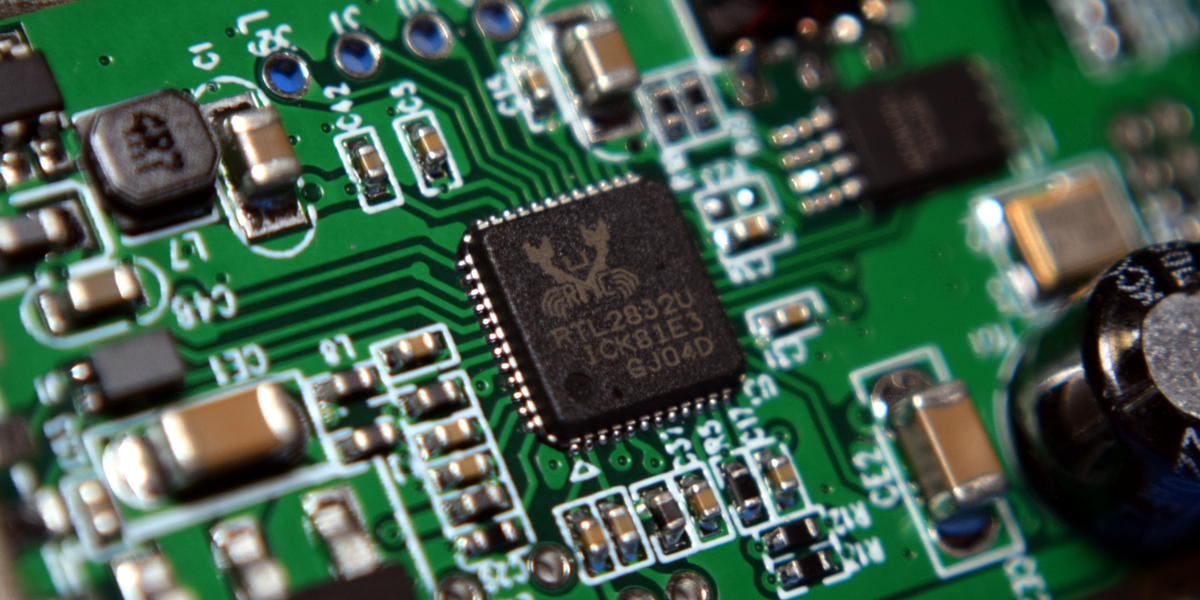
RTL-SDR is short for a family of low-cost software defined radio receivers built around the Realtek RTL2832U chipset. Originally meant for digital television reception, these dongles were discovered to be capable of sending raw radio signal data to a computer. That accidental superpower turned a budget TV accessory into a wideband receiver for experimenters, students, amateur radio operators, aviation watchers, weather satellite fans, and curious people who simply wondered what invisible signals were flying through the room.
Seven years later, the story is not just that RTL-SDR still works. The bigger story is that it changed expectations. Before RTL-SDR, exploring radio often meant buying dedicated receivers, scanners, or test equipment. After RTL-SDR, a beginner could plug in a dongle, install software, attach an antenna, and see the spectrum come alive. That lowered barrier did more than save money. It invited a new generation to learn radio by seeing it, hearing it, and experimenting with it in real time.
What Made RTL-SDR So Important?
The genius of RTL-SDR was never perfection. Nobody confused a $30 USB stick with a laboratory-grade receiver, unless that laboratory also used duct tape as a procurement strategy. The genius was access. RTL-SDR gave ordinary users a practical way to receive a wide range of radio frequencies with inexpensive hardware and free or low-cost software.
Instead of turning knobs on a traditional receiver and hoping for the best, users could view a waterfall display, tune visually, adjust gain, record signals, demodulate broadcasts, and compare different modulation types. The computer did much of the work that used to require specialized hardware. That is the heart of software defined radio: more of the radio’s behavior is handled by software, which means the same device can be reconfigured for many different tasks.
For beginners, this visual approach is powerful. Radio stops being abstract. FM broadcast stations appear as bright blocks. NOAA Weather Radio sits neatly around 162 MHz in the United States. Aircraft ADS-B signals pop around 1090 MHz. Local repeaters, pager-like data bursts, public broadcasts, and satellite downlinks become easier to identify. The experience feels a bit like turning on night vision for the electromagnetic world.
From Cheap TV Dongle to Serious Learning Tool
Early RTL-SDR users often dealt with rough edges. Some dongles had tiny MCX antenna connectors. Others ran hot, drifted in frequency, or arrived with antennas that were better suited for decorating a desk than receiving weak signals. Driver setup could be annoying, especially on Windows. A beginner might spend more time arguing with USB drivers than listening to radio.
But the ecosystem improved quickly. Purpose-built RTL-SDR models added metal enclosures, SMA connectors, better oscillators, improved shielding, thermal pads, bias tee support for powered accessories, and better front-end filtering. Software also matured. Tools such as SDR#, SDR++, GQRX, SDRangel, GNU Radio, CubicSDR, and OpenWebRX made it easier to tune, decode, visualize, and share radio signals.
That evolution matters because it changed RTL-SDR from a clever hack into a dependable entry point. Today, a modern RTL-SDR setup is not just a novelty. It can be part of an aviation tracking station, a weather monitoring project, a classroom demonstration, a satellite listening setup, or a portable field kit. It still has limitations, but those limitations are understandable, workable, and often educational.
The Hardware: Better, Cooler, and Less Weird
The biggest hardware improvements over the years have addressed stability, connectors, heat, and frequency coverage. A temperature compensated crystal oscillator, often called a TCXO, helps keep tuning stable. That is especially useful when listening to narrowband signals where even a small frequency drift can make reception worse. SMA connectors are sturdier and more standard than the tiny connectors found on many old TV dongles. Metal cases help reduce interference and make the device feel less like a free toy from a cereal box.
Some newer RTL-SDR models also support HF reception through direct sampling or built-in upconversion designs. HF coverage opens the door to shortwave listening, amateur radio bands, time signals, and long-distance propagation experiments. It is still not the same as owning a high-end HF receiver with excellent dynamic range, but it makes the first step into HF far more affordable.
Bias tee support is another useful feature. A bias tee sends power through the coaxial cable to accessories such as low-noise amplifiers or active antennas. For applications like ADS-B reception or satellite work, an amplifier placed near the antenna can make a noticeable difference. Of course, gain is not magic. Too much amplification can overload the receiver, especially in urban areas full of strong FM, cellular, and broadcast signals. In radio, as in hot sauce, more is not always better.
The Software: Where the Magic Actually Happens
RTL-SDR became popular because the hardware was cheap, but it stayed popular because the software ecosystem became rich. A dongle by itself is just a tiny receiver. The software turns it into a spectrum analyzer, FM radio, aircraft tracker, satellite receiver, signal recorder, digital mode decoder, or web-accessible radio station.
SDR# and SDR++
SDR# remains one of the most familiar options for Windows users because it is approachable and widely documented. SDR++ has become a favorite for many users who want a clean, fast, cross-platform interface. Its waterfall display, hardware support, and modular design make it appealing for both casual listening and more serious exploration.
GNU Radio
GNU Radio is less of a simple radio app and more of a toolbox for building radios. It lets users connect processing blocks to create receivers, filters, demodulators, and experiments. The learning curve is steeper, but the reward is huge. Instead of merely using a radio, you begin to understand how a radio is assembled from mathematical and signal-processing pieces.
OpenWebRX
OpenWebRX pushed RTL-SDR into the browser. With a small computer, an SDR device, and a network connection, users can host a receiver that other people access through a web browser. That turns a local radio setup into a shared listening post. For clubs, classrooms, and remote monitoring, it is an elegant way to let many users explore the spectrum without installing software on every machine.
Popular RTL-SDR Projects Seven Years Later
The best proof of RTL-SDR’s staying power is the variety of projects people still build with it. These are not theoretical uses copied from a product brochure. They are practical, repeatable projects that show up in hobby forums, classrooms, makerspaces, and weekend workbenches.
1. ADS-B Aircraft Tracking
ADS-B is one of the most satisfying RTL-SDR projects because results appear quickly. Many aircraft broadcast position, altitude, speed, and identification data. With an RTL-SDR tuned around 1090 MHz, suitable decoding software, and a decent antenna, users can plot nearby aircraft on a map. Add a Raspberry Pi and the setup can run continuously as a home aircraft tracking station.
This project teaches antennas, line-of-sight propagation, filtering, gain control, and data decoding. It also rewards better antenna placement. Move the antenna from a desk to a window and the map improves. Move it outdoors with a proper 1090 MHz antenna and suddenly the receiver starts hearing aircraft far beyond the neighborhood. Few hobbies offer such a clear lesson in “height matters” without requiring a ladder speech from your dad.
2. NOAA Weather Radio Monitoring
In the United States, NOAA Weather Radio broadcasts on seven VHF frequencies between 162.400 MHz and 162.550 MHz. An RTL-SDR can receive these broadcasts easily in many areas. This makes it a useful beginner project because the signals are strong, predictable, and practical.
Listening to NOAA Weather Radio helps new users learn frequency entry, FM demodulation, squelch, bandwidth, and antenna positioning. It also demonstrates that radio is not just a hobby for hobby’s sake. Weather radio is part of the public information ecosystem, especially during storms and emergencies. An RTL-SDR should not replace a dedicated emergency weather radio, but it can teach users how these broadcasts work.
3. Weather Satellite Reception
Receiving images from weather satellites is one of the most exciting RTL-SDR projects because the result feels almost impossible the first time. With the right antenna and software, hobbyists can receive satellite signals during overhead passes and decode images of cloud cover. It is science fiction, except the equipment costs less than a fancy dinner and the satellite does not care whether your desk is clean.
This project introduces Doppler shift, pass prediction, antenna polarization, recording, and decoding. It is also a healthy reminder that antennas matter more than many beginners expect. A tiny stock antenna may work for local FM radio, but satellite reception benefits from a purpose-built V-dipole, turnstile, or quadrifilar helix antenna. The dongle is only one part of the station.
4. Amateur Radio Listening
RTL-SDR is receive-only, which makes it a friendly way to explore amateur radio without transmitting. Users can listen to local repeaters, digital modes, satellite downlinks, and club activity where reception is legal. For people studying for an amateur radio license, an RTL-SDR can connect textbook concepts to actual signals.
It is important to remember that amateur radio transmitting requires proper licensing and rule compliance. RTL-SDR does not transmit, so it is not a shortcut to getting on the air. Instead, it is a listening and learning tool. That is one reason it remains so valuable: it lets beginners build confidence before buying transmit-capable equipment.
5. Spectrum Awareness
One underrated use of RTL-SDR is simply learning what different parts of the spectrum look like. A user can compare FM broadcast, weather radio, pager-like bursts, aviation signals, digital modes, and local interference. Over time, the waterfall display becomes a map. Signals develop personalities. Some are steady and polite. Others stomp across the screen like they own the place.
This kind of spectrum awareness is useful for makers, event technicians, students, and anyone working with wireless devices. Even if you never decode a single packet, seeing interference and signal strength in real time can help explain why wireless systems behave unpredictably.
What Still Holds RTL-SDR Back?
RTL-SDR is excellent for the money, but it is not magic. The main limitations are bandwidth, dynamic range, frequency accuracy, front-end overload, and receive-only operation. Most RTL-SDR dongles provide only a few megahertz of usable instantaneous bandwidth. That is enough for many projects, but not enough for wideband monitoring across large chunks of spectrum.
Dynamic range is another constraint. In areas with strong local transmitters, the receiver can overload. When that happens, users may see ghost signals, noise, or reduced sensitivity. Filters can help. A broadcast FM notch filter, an ADS-B bandpass filter, or careful gain reduction can transform a frustrating setup into a clean one.
The antenna is often the real bottleneck. Beginners sometimes blame the dongle when the real problem is a poor antenna, bad coax, indoor placement, or unrealistic expectations. Radio is wonderfully honest in that way. It will reveal every compromise in your setup, usually while you are trying to impress someone.
RTL-SDR vs. More Expensive SDRs
Compared with devices such as Airspy, SDRplay, HackRF, LimeSDR, or USRP hardware, RTL-SDR is less capable. Higher-end SDRs may offer better dynamic range, wider bandwidth, lower noise, transmit capability, better clocks, or stronger software integration for advanced work. But that does not make RTL-SDR obsolete.
The better comparison is not “cheap versus expensive.” It is “right tool for the job.” RTL-SDR remains one of the best tools for learning, scanning, ADS-B, weather radio, casual VHF/UHF listening, basic satellite reception, and portable experiments. If a user eventually outgrows it, that is a success story. A $30 receiver that teaches enough radio to justify a better radio has done its job beautifully.
Why RTL-SDR Still Matters
Seven years later, RTL-SDR matters because it continues to turn curiosity into capability. It is small enough to toss in a laptop bag, cheap enough for classrooms and clubs, and flexible enough to support hundreds of experiments. It makes the invisible world visible. That alone is a big deal.
It also supports a healthier kind of technical learning. Instead of hiding radio behind sealed consumer devices, RTL-SDR invites users to experiment. You can change antennas, adjust gain, test filters, compare software, record samples, and study modulation. Mistakes are part of the process. Sometimes the mistake is educational. Sometimes the mistake is discovering that your laptop charger creates more noise than a raccoon in a trash can.
The RTL-SDR community is another reason the platform endures. Tutorials, forums, GitHub projects, YouTube guides, blog posts, and open-source tools have turned a cheap receiver into a shared learning platform. A beginner rarely has to start from zero. Someone has probably tried the same project, made the same mistake, and written a guide with screenshots, driver warnings, and at least one sentence beginning with “After three hours of pain…”
Practical Buying Advice
For most users, the best first RTL-SDR is not the absolute cheapest anonymous dongle. A slightly better model with a stable oscillator, metal enclosure, SMA connector, and known driver support is worth the small extra cost. If the goal is ADS-B, choose or build a proper 1090 MHz antenna and consider a bandpass filter. If the goal is HF listening, make sure the model supports HF reception in a way that matches your expectations.
A starter kit with a basic dipole antenna can be useful, but do not expect one antenna to do everything well. Antennas are frequency-sensitive. A setup that works for FM broadcast may not perform well for ADS-B. A satellite antenna may look strange but work beautifully for overhead passes. In RTL-SDR, the dongle gets attention, but the antenna often decides whether the project feels magical or mildly haunted.
Experiences Related to “RTL-SDR: Seven Years Later”
The most memorable RTL-SDR experience is usually the first waterfall display. You plug in a device that looks like a chunky flash drive, launch the software, and suddenly the screen fills with moving signals. At first, it looks like digital rain. Then you tune to a local FM station and hear music. That simple moment explains the appeal better than any spec sheet. You are not just reading about radio anymore. You are inside it.
Another common experience is the antenna lesson. Many beginners start with the tiny included antenna and assume the receiver is weak. Then they extend the dipole, place it near a window, move it outdoors, or build a simple antenna for a specific frequency. The improvement can be dramatic. RTL-SDR teaches that radio performance is not just about electronics. It is about placement, length, orientation, cable loss, noise, and patience.
ADS-B tracking is often the project that turns a casual user into a regular experimenter. Watching aircraft appear on a local map creates instant feedback. You change gain and see aircraft counts shift. You raise the antenna and range improves. You add a filter and the noise drops. It feels like a game, except the scoreboard is real-world radio propagation.
Weather satellite reception creates a different kind of excitement. You plan a satellite pass, set the frequency, start recording, and wait while the signal rises from the noise. The first decoded image may be imperfect, tilted, noisy, or streaked, but it is yours. It came directly from a spacecraft passing overhead. That experience has converted many people from “radio sounds old-fashioned” to “wait, I can receive pictures from space?” in a single afternoon.
There is also the frustration side, and it is part of the charm. Drivers fail. Software chooses the wrong audio device. The gain is too high. The antenna connector is loose. The signal is not where the tutorial said it would be. But each small problem builds skill. Seven years later, that may be RTL-SDR’s greatest gift: it makes radio approachable without making it shallow. It is cheap enough to invite play, deep enough to reward study, and stubborn enough to teach humility.
For students, makers, and hobbyists, RTL-SDR remains one of the best “first instruments” for understanding the wireless world. Not every project needs expensive gear. Sometimes the best classroom is a USB dongle, a wire antenna, a laptop, and the realization that the air around us is full of stories waiting to be tuned in.
Conclusion
RTL-SDR has aged remarkably well because it solved a real problem: radio experimentation used to feel expensive, specialized, and intimidating. The RTL-SDR dongle made it cheap, visual, flexible, and fun. Seven years later, it is still not the most powerful SDR on the market, but it remains one of the most important.
Its lasting value is not just in what it receives. It is in what it teaches. RTL-SDR teaches spectrum awareness, antenna behavior, signal processing, aviation data, weather monitoring, satellite reception, and the practical limits of inexpensive hardware. It turns passive curiosity into active learning. In a world full of sealed gadgets, that is refreshing.
If you are new to software defined radio, RTL-SDR is still a smart place to begin. If you used one years ago and left it in a drawer, it may be time to plug it back in. The software is better, the hardware is better, and the airwaves are still busy. Seven years later, the little dongle still has plenty to say.












