
Note: This article is intentionally formatted as body-only HTML for easy publishing and copying.
Modern computers are so quiet, fast, and smug that they barely seem to be doing anything at all. You tap a key, a billion transistors whisper to one another in microscopic silence, and your laptop calmly pretends this is no big deal. A relay computer, on the other hand, has all the subtlety of a drawer full of silverware tumbling down a staircase. It clicks. It clacks. It buzzes. It occasionally sounds like it is thinking out loud. And that is exactly why people still love building them.
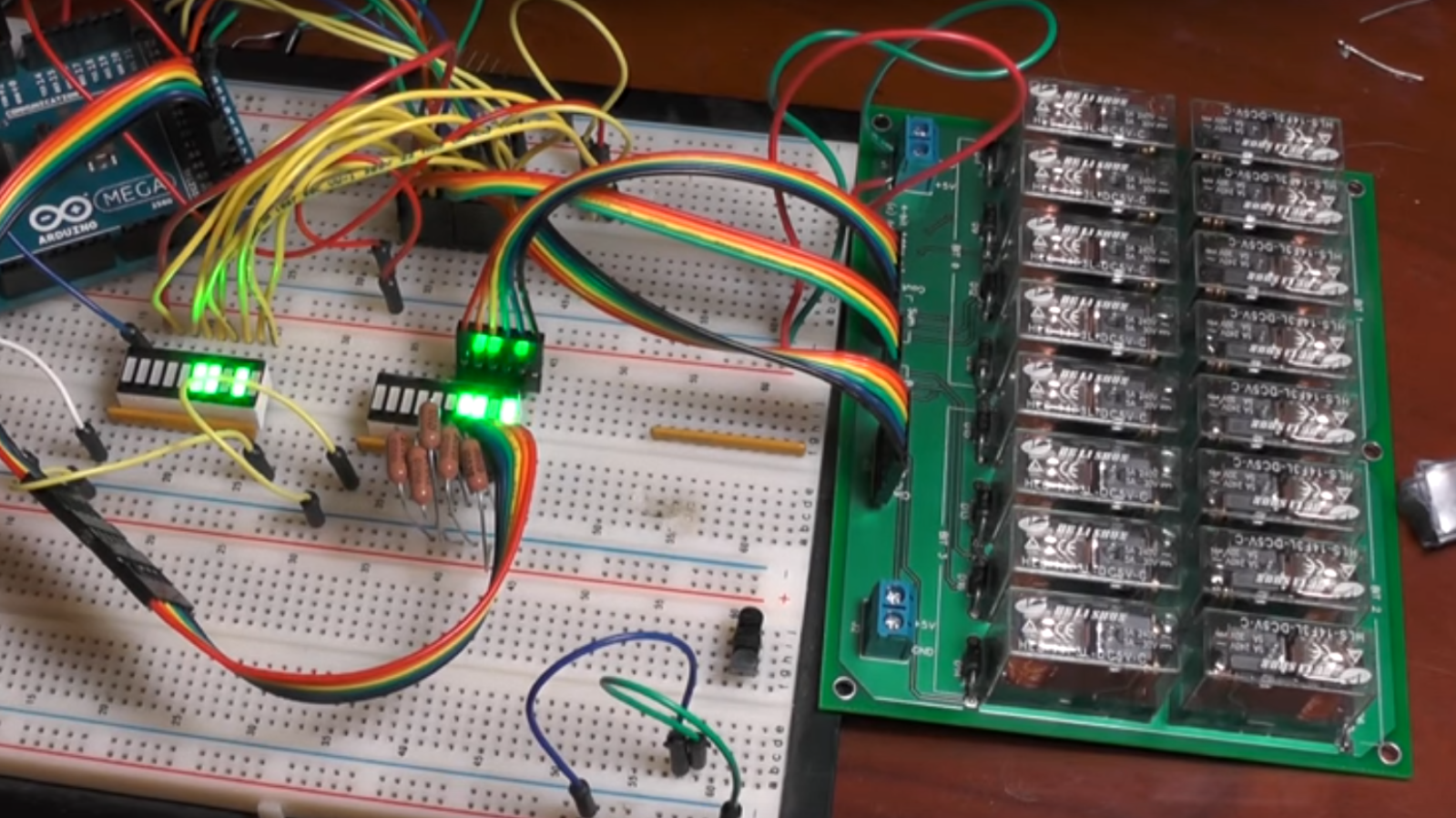
The phrase “Relay Computer Starts With An Adder That Makes A Racket” captures the whole romance of the thing. Before you have memory, instruction decoding, branching, or anything that deserves the word “computer,” you need arithmetic. And before you can perform arithmetic on multiple bits, you need an adder. In relay logic, that adder is not hidden inside a black chip. It is physical. Audible. Gloriously inefficient. It turns binary math into a tiny electromechanical drum solo.
That loud beginning matters. A relay computer is one of the clearest ways to understand what computation really is. Strip away the polished case, the glowing screen, and the marketing fluff, and a computer is still just a machine that represents states, follows logic, and moves information from one place to another. A relay adder makes that visible in a way a modern processor never will. When the carry bit travels, you can almost hear it packing a suitcase.
Why an Adder Comes First
If you want to build a relay computer from scratch, starting with an adder is not just sensible, it is practically unavoidable. Addition sits at the heart of digital logic. Once you can add, you are already halfway to subtraction, comparison, counting, address calculation, and the arithmetic side of an ALU, or arithmetic logic unit. In plain English, an adder is the machine’s first real proof that it can think in numbers rather than just blink lights for dramatic effect.
The simplest version is the half adder, which adds two one-bit inputs. If both inputs are 0, the result is 0. If one input is 1 and the other is 0, the result is 1. If both are 1, the sum becomes 0 and a carry of 1 moves to the next column. That alone is a neat little lesson in binary arithmetic. But a real computer cannot stop there, because once numbers grow past one bit, every position must also deal with a carry coming in from the previous position.
That is where the full adder enters, wearing a slightly more complicated hat. It accepts three inputs: bit A, bit B, and carry-in. It then produces a sum bit and a carry-out bit. Chain several full adders together and you get a ripple-carry adder, where the carry travels from the lowest bit to the highest one. In silicon, that is ordinary. In relays, it becomes an event. You are not merely calculating; you are listening to logic ripple through metal contacts.
What a Relay Computer Really Is
A relay computer uses electromechanical relays as switches. Each relay contains an electromagnet that moves a contact when energized. That motion opens or closes a circuit, allowing the relay to represent binary states and implement logic. In other words, a relay can behave like a yes-or-no decision point, which is exactly what digital computing needs.
Compared with transistors, relays are bulky, slow, and dramatic. They are physical parts with moving contacts, not silent semiconductor structures. That means they have strengths and weaknesses that feel almost theatrical. On the positive side, they make logic easy to see, wire, and debug. On the negative side, they are slower by orders of magnitude, larger than any sane engineer would prefer, and capable of producing the kind of clicking soundtrack that makes nearby pets suspicious.
And yet relays matter deeply in computer history. Before fully electronic machines took over, relays formed an important bridge between mechanical calculation and electronic computation. They were easier to understand than vacuum tubes for many builders, and they made it possible to create practical automatic calculators and early computers from technology that already existed in telephony and control systems.
A Short History of Loud Thinking
Relay computers belong to a fascinating stretch of computing history that feels too late to be Victorian and too early to be modern. In the late 1930s, George Stibitz used relays to build a demonstration adder sometimes called the Model K, reportedly assembled on a kitchen table. That experiment led to the Bell Labs Model I Complex Calculator, one of the early relay-based computing milestones.
Around the same period, Konrad Zuse was building relay-based machines in Germany. His work helped push programmable computation toward reality, even though wartime destruction erased some of the most important physical evidence. Then came larger and more famous machines, especially the Harvard Mark I, developed with IBM and completed in the mid-1940s. It was massive, relay-rich, and astonishing for its time, even though its speed now looks charmingly leisurely. Adding two numbers in seconds is not exactly the stuff of esports, but it was revolutionary.
What makes this history so compelling is that relay machines were not dead ends. They were transitional technologies that proved digital logic could be organized at meaningful scale. They connected theory to hardware. They demonstrated programmability, sequencing, and automation. Most of all, they made the abstract ideas of logic and arithmetic physically testable.
Why the Adder Makes Such a Racket
The noise is not a bug in the story. It is the story.
In a relay adder, every logical transition may involve one or more tiny electromechanical switches moving under magnetic force. When current energizes a relay coil, the armature moves and contacts change state. That motion produces the familiar click. Now multiply that by several relays implementing AND, OR, or XOR behavior, then multiply again by several bit positions, and suddenly a simple addition sounds like a telegraph office having a minor emotional episode.
Some of that sound comes from the relay action itself. Some comes from contact bounce and timing differences. Some comes from the fact that multiple stages do not settle at exactly the same instant. In a ripple-carry design, the carry does not magically appear at the far end. It propagates. Bit 0 resolves first, then bit 1 reacts, then bit 2, and so on. In a relay machine, that sequential settling can be heard as a burst of chatter. You are listening to delay.
This is one reason relay arithmetic is so educational. In modern electronics, propagation delay is real but invisible. In relay logic, delay becomes a sound effect. The machine teaches timing with percussion.
How the Logic Works Without Turning Into a Textbook Ambush
Half Adder: The Friendly Doorway
A half adder answers one tiny question: what happens when you add two one-bit values? The sum output behaves like XOR. The carry output behaves like AND. If only one input is on, the sum is on. If both are on, the carry is on. That is the entire trick.
Full Adder: The Necessary Upgrade
A full adder handles three inputs instead of two: A, B, and carry-in. The sum output is high when an odd number of inputs are high. The carry-out becomes high when at least two inputs are high. Once you understand that, binary addition stops looking mystical and starts looking inevitable.
Ripple-Carry Adder: Small Idea, Big Consequences
Connect one full adder per bit, and the carry-out from each stage becomes the carry-in for the next. That creates a ripple-carry adder. It is simple, modular, and perfect for relay construction because it does not require elaborate timing tricks or advanced optimization. The downside is speed. The highest bit cannot be trusted until the carry has worked its way across every previous stage. In relay hardware, that means waiting for a whole chain of physical actions to finish.
So yes, the design is wonderfully straightforward. It is also gloriously noisy, wonderfully slow, and absolutely honest about how arithmetic happens.
From a 4-Bit Board to a Real Relay Computer
Hobbyist builders often start small and modular. That is the smartest way to avoid losing both your wiring sanity and your will to live. A single relay logic gate becomes a test. Several gates become a half adder. Two half adders and some extra logic become a full adder. A handful of full adders becomes a 4-bit adder. Stack or combine those modules, and suddenly you are staring at the outline of a 16-bit arithmetic unit.
This modular approach is exactly what makes relay computing feel so rewarding. Every stage works as a milestone. You do not need to finish an entire CPU before anything interesting happens. You can hear progress. You can test one board, then another. You can watch LEDs confirm the logic while the relays provide the soundtrack. It is the computing equivalent of building a cathedral one noisy brick at a time.
Once the adder is stable, the rest of the relay computer starts to feel possible instead of mythical. Builders move on to registers, latches, flip-flops, buses, control logic, and instruction sequencing. The adder is not the whole computer, but it is the moment when the project stops being a collection of switches and starts acting like a machine with arithmetic ambition.
Why People Still Build Relay Computers in the Age of Ridiculous Speed
Nobody builds a relay computer because it will outperform a phone, a smartwatch, or a suspiciously smart toaster. People build them because relay computers reveal computation at human scale.
First, they are superb teaching tools. Logic gates cease to be abstractions. Carry propagation becomes visible. Timing becomes audible. Binary arithmetic becomes something you can troubleshoot with a multimeter instead of merely accepting on faith.
Second, relay computers are deeply satisfying maker projects. They combine electronics, mechanical behavior, layout discipline, debugging, and historical appreciation. They reward patience more than glamour, which is refreshing in a world where every gadget promises instant magic.
Third, they reconnect computing with its physical roots. We often talk about software as though it floats in a cloud of pure thought. Relay logic reminds us that every computation must ultimately be embodied somewhere in matter, energy, and timing. Even the fanciest AI still depends on switches. Relays just happen to be switches with stage presence.
The Drawbacks Are Real, and That Is Part of the Charm
Relay computers are educational, beautiful, and historically rich. They are also terrible in all the practical ways that modern engineers have spent decades trying to avoid.
They are slow. They are large. They wear out. They consume space that could otherwise be used for normal activities like sitting down. Their contacts can bounce. Their timing can drift. Their wiring can become a spaghetti monument to optimism. When compared to transistor logic, relays are not merely outdated; they are almost comically outclassed.
But that is precisely why they are powerful as learning machines. Every limitation teaches something. Slowness teaches timing. Size teaches architecture. Noise teaches physical causality. Contact behavior teaches why later engineers chased faster and more reliable switching methods. A relay computer is not a competitor to modern hardware. It is a living explanation of why modern hardware looks the way it does.
Common Experiences Builders and Visitors Remember Most
Spend time around a relay adder, and the first surprise is how emotional the machine feels. Not emotional in the science-fiction sense where it asks about your dreams, but emotional in the way any visible, audible mechanism seems alive because it responds with motion and sound. The first time someone toggles inputs and hears a burst of clicks produce the correct sum, the reaction is usually half triumph, half disbelief. You know the result should happen. What surprises you is that logic can feel so tangible.
Many builders describe the early phase as equal parts engineering and detective work. A relay adder looks straightforward on paper: inputs, outputs, coils, contacts, carry paths. In practice, one swapped wire or one misunderstood contact arrangement can turn your elegant binary math into nonsense with confidence. The machine is brutally honest. If the output is wrong, it is wrong for a physical reason. There is no vague software shrug to hide behind. Somewhere, a contact did not close, closed too soon, or was wired to the wrong place. Debugging becomes strangely intimate. You are not “running diagnostics”; you are chasing a click that should have happened but did not.
Then there is the sound. Videos never quite capture it. In person, a relay adder does not make one neat click per answer. It creates patterns. A simple addition might produce a fast little burst. A more complex transition, especially one that forces carry propagation across several bits, can sound like a short cascade. People quickly learn to distinguish behaviors by ear. A clean operation has one rhythm. A troublesome stage may chatter oddly. At that point, you realize you are not just observing a computer. You are listening to it in the same way mechanics listen to engines.
Another common experience is how the machine changes your sense of speed. Modern processors hide almost everything behind impossible scale. A relay adder slows arithmetic down to human tempo. You can watch lamps settle. You can anticipate the carry. You can understand the relationship between cause and effect without needing a timing analyzer that costs more than your desk. That slowness does not feel primitive after a while. It feels generous. The machine gives you time to think with it.
There is also a genuine historical thrill. When a relay adder works, even in miniature, it creates a direct mental bridge to the era when relay-based calculators and computers marked the frontier of automation. You begin to understand why early engineers were so proud of machines that today would lose a race to a microwave oven clock. Those machines were astonishing because they made logic automatic. A homebuilt relay adder lets you feel that astonishment instead of merely reading about it.
Finally, there is the deep satisfaction of hearing something you assembled with patience and stubbornness clicking its way toward the right answer. That experience is hard to fake and easy to remember. A relay adder does not merely compute. It performs computation as a visible craft. It makes a racket, yes, but it also makes the invisible world of logic suddenly, wonderfully real.
Conclusion
A relay computer that begins with an adder is not starting small. It is starting correctly. The adder is the first serious promise that the machine can do more than switch lights and impress your friends with industrial percussion. It is the beginning of arithmetic, the gateway to an ALU, and the clearest demonstration that binary logic can become working hardware.
The racket is part of the appeal. Each click is a reminder that computing is not magic. It is structure, timing, state, and signal, all embodied in real parts that must move, settle, and agree. That is why relay computers still fascinate engineers, hobbyists, and history lovers. They take the hidden inner life of a computer and put it onstage, complete with sound effects.
In a world full of sealed devices and invisible processes, a relay adder feels refreshingly honest. It does not whisper. It announces every thought. And maybe that is why it remains so memorable: because when a relay computer starts with an adder that makes a racket, it also starts with a lesson you can hear.











