
Water has a strange talent for turning ordinary moments into lifelong memories. A quick dip in a backyard pool becomes a private universe. A wave folding over your shoulders becomes a moving ceiling of glass. Sunlight breaks into ribbons, skin changes color, bubbles rise like tiny escape plans, and suddenly the world above feels far awaystill there, but muffled, softened, and temporarily less bossy.
That is the emotional current behind realistic underwater paintings inspired by memories of water. These artworks are not just technical exercises in painting wet hair, floating fabric, and shimmering reflections. They are visual time capsules. They capture how water feels: weightless, protective, mysterious, and just dramatic enough to make even a peaceful swimmer look like the main character in a very elegant movie trailer.
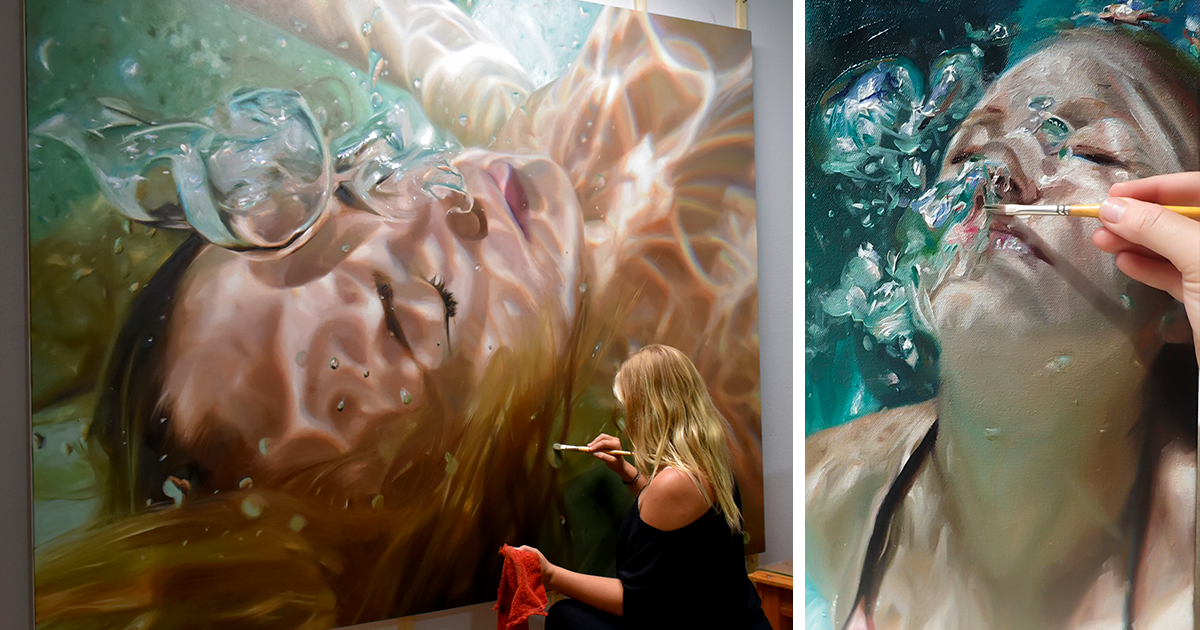
Contemporary artist Reisha Perlmutter is one of the names most closely associated with this theme. Known for large-scale paintings of figures immersed in water, she brings together classical figurative painting, underwater photography, personal memory, and a deep interest in the relationship between body and environment. Her work reminds viewers that water is never just a background. It is a collaborator. It bends light, blurs edges, alters color, and makes the human body appear both powerful and vulnerable at the same time.
Why Underwater Paintings Feel So Alive
Realistic underwater paintings fascinate people because they sit between two worlds. On one hand, they look photographic. Every ripple, highlight, shadow, bubble, and distortion seems carefully observed. On the other hand, they feel dreamlike. A figure underwater is recognizable, yet transformed. The face softens. Hair floats like sea grass. Limbs lose their usual gravity. Light flickers across the body as if the sun has decided to practice calligraphy.
This blend of realism and dream is what makes underwater art so powerful. Viewers are not only looking at a painted body; they are remembering the sensation of being suspended. Even people who have never been serious swimmers know the feeling of ducking beneath the surface and hearing the world turn quiet. That silence is part of the painting’s emotional pull.
The Magic of Light Below the Surface
Ask any painter what makes water difficult, and they may laugh the nervous laugh of someone who has stared at one highlight for three hours. Water is transparent, reflective, moving, and color-shifting all at once. It refuses to sit still for its portrait.
Underwater, light behaves differently than it does on land. Warm colors such as reds and oranges fade quickly with depth, while blues and greens travel farther. That is why underwater scenes often lean toward cool tones, even when the subject itself might be warm in natural daylight. A painter who understands this can create a convincing illusion: skin becomes pearly, shadows turn turquoise or violet, and the brightest highlights appear almost liquid.
In realistic underwater paintings, light is not decoration. It is structure. It tells the viewer where the surface is, how deep the figure might be, whether the water is calm or disturbed, and what mood the scene carries. Soft, scattered light suggests peace. Sharp, broken light suggests movement. Dark, deep tones suggest mystery. In other words, light is the narrator, and water is the unreliable but beautiful translator.
Memories of Water as Artistic Inspiration
Many artists return to water because it is tied to memory in a uniquely physical way. We remember water with the whole body. We remember the sting of salt, the smell of sunscreen, the echo of pool tiles, the cold shock of a lake, the rhythm of waves, the strange bravery required to open your eyes underwater, and the small panic of losing a flip-flop to the ocean. Rest in peace, brave sandal.
For an artist, these memories become more than nostalgia. They become visual language. A childhood near the ocean can turn into paintings filled with ripples and refracted light. A memory of floating can become an image of emotional release. A quiet swim can become a study of identity, femininity, healing, and transformation.
That is why underwater paintings inspired by memory often feel intimate. They are not simply saying, “Look how well I can paint water.” They are saying, “This is what it felt like to disappear for a moment and come back changed.”
The Human Body in Water: Strength, Softness, and Freedom
One of the most compelling features of realistic underwater paintings is the way they reshape how we see the body. On land, the body is constantly judged by posture, clothing, size, symmetry, and social expectations. Underwater, those rules loosen. The body floats. Hair expands. Skin becomes patterned with light. Movement slows. Instead of being posed for approval, the figure seems held by the environment.
This is especially meaningful in paintings of women underwater. Rather than treating the body as an object on display, many contemporary underwater works present it as a living, sensing presence. The figure is not performing for the viewer. She is resting, drifting, thinking, escaping, returning to herself. The water becomes a protective space where beauty is not polished into perfection but released into motion.
That shift matters. A realistic painting can show every detail and still avoid cold perfection. The best underwater figurative art uses precision to create empathy. It invites viewers to notice vulnerability without exploiting it, strength without exaggerating it, and beauty without turning it into a sales pitch for moisturizer.
Photorealism, Hyperrealism, and the Underwater Challenge
Realistic underwater painting often overlaps with photorealism and hyperrealism. Photorealism emerged as a style known for extreme detail, precision, and a strong relationship with photographic reference. Hyperrealism pushes that effect even further, often heightening reality until the image feels more intense than a photograph.
Underwater scenes are especially suited to this approach because the eye expects complexity. Water naturally creates distortions that are hard to fake casually. Reflections scatter. Edges wobble. Highlights fracture into bright shapes. Bubbles form tiny lenses. A hand near the surface may appear stretched or broken by refraction. A face may seem peaceful and strange at the same time.
For painters, the challenge is not merely copying a reference photo. It is translating a physical sensation into paint. A camera can capture a split second, but a painting can slow that second down. It can make the viewer linger on the soft blur of an arm, the silver line of an air bubble, or the way blue shadow gathers under the chin. Realism becomes emotional because it gives memory a surface.
What Makes Reisha Perlmutter’s Water Paintings Stand Out
Reisha Perlmutter’s paintings stand out because they combine technical control with a strong sense of feeling. Her figures are often submerged, surrounded by shifting blue-green light, and painted with an attention to flesh, shadow, and motion that makes the viewer pause. Yet the paintings are not cold demonstrations of skill. They feel warm, even when the palette is cool.
Her work explores the intersection of body, water, and environment. It also draws from her experience with underwater photography and freediving, which gives the paintings a lived-in quality. The figures do not appear randomly placed in water; they seem to belong to it for a moment. The water is not scenery. It is atmosphere, emotion, and metaphor.
In the AQUA series, the inspiration comes from memories of water, sensation, and the complexity of light. That combination is key. Memory gives the paintings their emotional depth. Sensation gives them physical immediacy. Light gives them visual drama. Together, they create images that feel both personal and universal, like remembering a swim you never actually took.
Water as a Symbol of Healing
Water has long been associated with cleansing, renewal, and healing. In art, it can symbolize birth, transformation, danger, freedom, grief, or peace. The same ocean that calms one person can terrify another. The same pool that suggests luxury in one painting can suggest isolation in another. Water is generous like that; it contains multitudes and occasionally a suspicious pool noodle.
In realistic underwater paintings, healing often appears through suspension. The figure is not running, posing, or fighting. She is held. That visual stillness can feel restorative. It suggests a moment outside ordinary pressure, where the body is allowed simply to exist. For viewers, that can be surprisingly moving. We live in a world that constantly asks bodies to improve, perform, hustle, and explain themselves. A floating figure says, “Not right now. I am busy being weightless.”
Water in Art History: From Reflections to Immersion
Artists have always been drawn to water, but each era sees it differently. Impressionists such as Claude Monet studied reflections, color, atmosphere, and the changing surface of ponds and rivers. In his waterscapes, the surface becomes a living field of color where sky, plants, and architecture mingle. The water is not a mirror in the simple sense; it is an active painterly space.
Later artists explored water through glass, pools, photography, abstraction, installation, and ecological themes. Janet Fish’s paintings of water-filled glasses, for example, show how transparent objects can explode into color through reflection and refraction. David Hockney’s swimming pool paintings made water a symbol of California light, leisure, desire, and modern life. Contemporary artists continue to push the subject further, using water to discuss identity, climate, memory, and the fragile relationship between humans and the natural world.
Realistic underwater paintings belong to this larger conversation. They take the reflective surface and move beneath it. Instead of looking at water from the shore, they ask what happens when the viewer enters the element itself.
How Artists Create the Illusion of Being Underwater
A convincing underwater painting usually depends on several visual strategies working together. The first is color temperature. Cool blues, greens, violets, and muted flesh tones help suggest submersion. The second is edge control. Underwater, not every contour is sharp. Some forms dissolve gently while others snap into focus where light catches them.
The third strategy is distortion. Water bends what we see, especially near the surface. A realistic painter may slightly warp the shape of a shoulder, face, or hand to mimic refraction. The fourth is rhythm. Ripples create repeated patterns across skin and fabric, so the painting needs a kind of visual music. Too regular, and it looks artificial. Too chaotic, and it becomes visual soup. Delicious? Maybe. Useful? Not always.
Finally, there is atmosphere. The background cannot be treated like empty space. Even clear water has density. Particles, light falloff, and color shifts create depth. The viewer should feel that the figure is surrounded by water, not pasted on top of a blue backdrop.
Why Viewers Connect With Underwater Realism
People connect with underwater realism because it activates memory before analysis. You do not need an art history degree to understand the feeling of floating. You do not need to know the science of refraction to enjoy sunlight breaking into patterns. The image reaches the senses first.
At the same time, these paintings reward deeper looking. The longer you study them, the more you notice: the slight tension in a hand, the direction of bubbles, the way a shadow curves across the ribs, the difference between reflected light and actual skin tone. Realistic underwater paintings invite both emotional response and technical admiration. They are easy to enter and hard to leave.
Experience: Remembering Water Through the Eyes of a Viewer
The first thing I remember about being underwater is the sound. Not silence exactly, but a thick, padded quiet. The world above still existed, but it became less demanding. Voices turned into muffled shapes. Laughter became vibration. Even my own thoughts seemed to slow down, as if they had to swim instead of sprint. Looking at realistic underwater paintings brings back that feeling immediately. The best ones do not merely show water; they restore the sensation of being inside it.
I remember opening my eyes in a pool as a child and discovering that everything familiar could become strange in one second. My hands looked pale and wavy. The ladder shimmered like it was made of liquid metal. Sunlight danced on the floor in bright broken nets. Someone’s legs passed by, enormous and distorted, like a friendly sea creature wearing swim trunks. It was funny, beautiful, and a tiny bit mysteriousthe perfect recipe for memory.
That is why paintings inspired by memories of water feel so personal. They do not need to show a specific beach or pool from my life. They only need to capture the clues: the blue-green glow, the floating hair, the bubbles escaping upward, the sense that gravity has briefly taken a coffee break. Suddenly I am back in that underwater world where time stretched out and every movement felt important.
There is also an emotional honesty in water. On land, people arrange themselves. We fix our hair, stand straighter, choose flattering angles, and pretend we did not just trip over absolutely nothing. Underwater, control becomes softer. Hair does whatever it wants. Fabric floats. The face relaxes or concentrates. The body becomes less like a statue and more like a current. That natural loss of control can feel freeing, and realistic underwater paintings capture it beautifully.
When I look at a figure submerged in painted water, I often think about how memory works the same way. Memory bends facts. It sharpens one detail and blurs another. It changes color depending on emotional depth. A summer afternoon from years ago may survive only as a flash of light on water, a cold shock on the skin, or the smell of wet concrete after swimming. Like water, memory edits without asking permission.
That may be the real reason these paintings stay with us. They are not only about swimming, beauty, or technical skill. They are about returning to a state we recognize but cannot hold for long. Water lets us float for a moment, then sends us back to the surface. A painting, however, can keep that moment suspended. It lets the breath pause, the light ripple, and the memory remain visible.
Conclusion
Realistic underwater paintings inspired by memories of water are powerful because they combine skill, science, emotion, and sensory memory. They show how light behaves beneath the surface, how color changes with depth, and how the human body transforms when held by water. More importantly, they remind us that water is never just a place. It is an experience, a memory, a mirror, and sometimes a very stylish therapist with excellent lighting.
Whether viewed through the lens of Reisha Perlmutter’s immersive figurative paintings, the history of water in art, or our own private memories of swimming, these works invite us to slow down and look again. Beneath the surface, realism becomes more than accuracy. It becomes a way of remembering how it feels to be weightless, quiet, and completely alive.












