
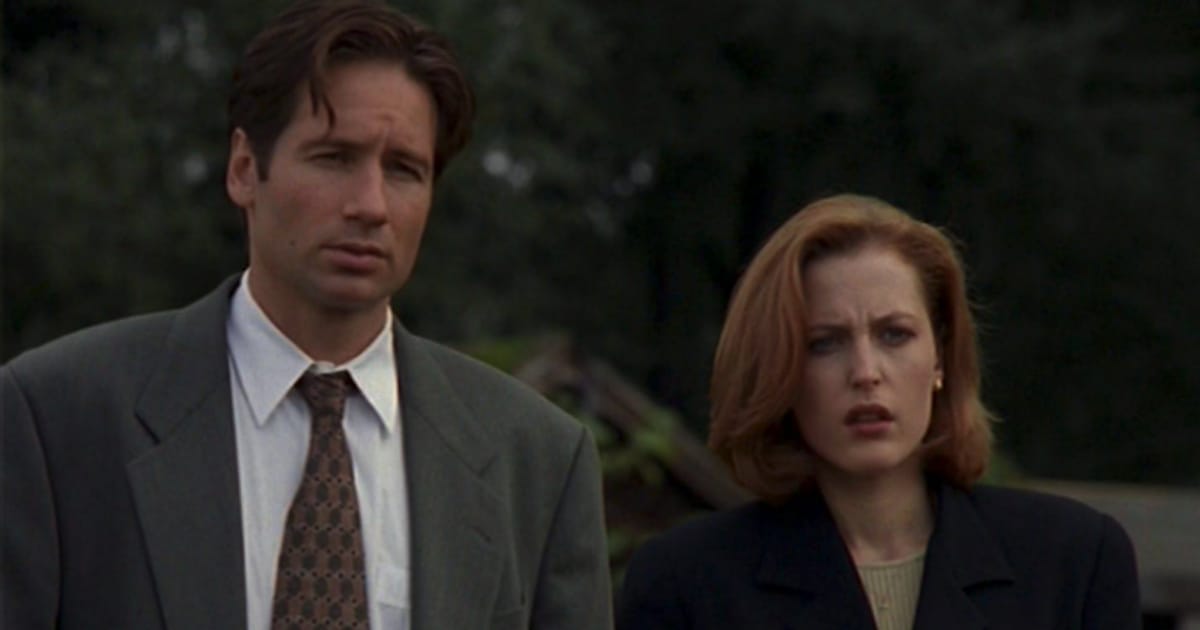
The X-Files did not become a television legend by inventing fear from scratch. It did something sneakier: it opened America’s junk drawer of UFO reports, Cold War secrets, government experiments, strange lights, missing time, cryptid rumors, and official documents with suspicious black bars across them. Then it handed the mess to Fox Mulder and Dana Scully and said, “Good luck, agents. Also, the basement office has terrible lighting.”
The result was a series that felt fictional and oddly familiar at the same time. Viewers knew the alien colonization plot was television. Yet many of the ingredients behind it came from real history: Project Blue Book, Roswell, Area 51, CIA psychic research, MKULTRA, alien abduction accounts, and decades of public distrust shaped by Watergate and Cold War secrecy. The show’s genius was not saying, “This is all true.” It was asking, “What happens when enough strange stories pile up that people stop laughing?”
This guide explores the real X-Files: true stories that inspired the show, the documented government programs behind the paranoia, and the folklore that gave the series its goosebumps. Bring a flashlight. The basement is open.
Why The X-Files Felt So Real
Created by Chris Carter and launched in 1993, The X-Files paired two perfect opposites: Fox Mulder, the believer chasing hidden truths, and Dana Scully, the scientist trained to ask for evidence before the dramatic music swells. That tension made the show more than a monster-of-the-week thriller. It became a weekly debate between faith and skepticism, folklore and science, witness testimony and official denial.
Its timing was perfect. By the early 1990s, Americans had inherited a thick stack of reasons to question authority: Vietnam, Watergate, intelligence scandals, Cold War secrecy, and a growing fascination with UFO culture. Talk radio, tabloids, paperback paranormal books, and early internet communities helped spread stories that once lived on the fringe. The X-Files took that energy and gave it a badge, a flashlight, and two very stylish trench coats.
But the series was not based on one single true case. Instead, it blended real reports, declassified documents, urban legends, conspiracy theories, and classic science-fiction influences. Think of it as a stew. Project Blue Book is the broth, Roswell is the seasoning, alien abduction stories are the mystery meat, and government secrecy is the lid that keeps rattling on the pot.
Project Blue Book: America’s Official UFO Files
No real-life inspiration looms larger over the idea of “X-files” than Project Blue Book, the U.S. Air Force’s best-known official UFO investigation program. Active from 1952 to 1969, Project Blue Book collected and evaluated thousands of reports involving unidentified flying objects. Most sightings were explained as aircraft, balloons, weather events, stars, planets, or misidentified objects. A smaller number remained unresolved, which is exactly the kind of phrase that makes Mulder sit up like someone just whispered “classified appendix.”
Project Blue Book’s official conclusions were cautious. The Air Force stated that investigated UFO reports showed no evidence of a national security threat, no proof of technology beyond known science, and no evidence of extraterrestrial vehicles. That did not end public fascination. If anything, the phrase “unidentified” did what it always does: it created a small, glowing space where imagination could move in and start paying rent.
How Blue Book Shaped the Show’s DNA
The X-Files borrowed Project Blue Book’s basic dramatic shape: unusual reports, official investigators, skeptical explanations, missing data, and witnesses who often felt ignored. In real life, investigators were not chasing shape-shifting bounty hunters through cornfields. Still, the existence of official UFO files made the show’s premise feel grounded. The government really had investigated strange aerial sightings. The records really existed. The mystery was not whether people reported odd things; the mystery was what those reports meant.
The show pushed that premise into darker territory. What if official conclusions were not the end of the story? What if explanations were incomplete? What if some files were buried not because they were silly, but because they were dangerous? That is where history ends and great television begins.
Roswell: The Crash That Would Not Stay Buried
The Roswell incident is practically the prom king of American UFO lore. In July 1947, debris found near Roswell, New Mexico, triggered a wave of headlines and speculation. The military initially described the recovered object in language that fueled “flying disc” excitement, then later identified it as a weather balloon. Decades later, the U.S. Air Force connected the debris to Project Mogul, a classified balloon program designed to detect Soviet nuclear tests.
For skeptics, Roswell is a case study in Cold War secrecy, confused reporting, and mythmaking. For believers, it remains Exhibit A in the argument that the government knows more than it says. For The X-Files, Roswell offered something even more valuable than a simple answer: a cultural template. A remote desert. A military recovery. A changed story. Witnesses. Rumors. Classified programs. It is basically a pilot episode wearing cowboy boots.
The Power of the Cover-Up Story
Roswell helped popularize the modern UFO cover-up narrative. Whether one accepts the official explanation or not, the story shows how secrecy can create a vacuum. Once the public believes information is being withheld, even a reasonable explanation can arrive wearing a fake mustache. The X-Files understood that perfectly. The show did not need every mystery to prove aliens. It needed the feeling that someone, somewhere, had already shredded the most important page.
Area 51: Secret Aircraft, Strange Lights, and Desert Fever
Area 51 became one of the most famous “secret” places in the world, which is a funny achievement for a place people were supposedly not supposed to discuss. Located in Nevada, the site was used for classified aircraft testing, including Cold War reconnaissance programs such as the U-2 and A-12 OXCART. High-altitude test flights, unusual aircraft shapes, and extreme secrecy helped feed UFO rumors for decades.
This is where the real world becomes wonderfully complicated. Many “UFO sightings” around secret test ranges may have involved human-made aircraft that were simply unknown to the public. That does not make the stories boring. It makes them more X-Files. The truth was not little green pilots; it was advanced technology hidden behind national security walls. Still mysterious, just with more engineers and fewer intergalactic parking tickets.
Area 51 and the Aesthetic of Secrecy
The X-Files loved the visual language of restricted spaces: fences, warning signs, hangars, empty roads, anonymous men, and rooms where nobody ever turns on a comfortable lamp. Area 51 gave American pop culture a real location where secrecy felt physical. It was not just a rumor; it was a place on a map, wrapped in silence. The show transformed that mood into a recurring theme: the more official the denial, the stronger the suspicion.
Alien Abduction Stories: The Hills and the Birth of a Genre
Modern alien abduction lore owes a great deal to the story of Betty and Barney Hill. In 1961, the New Hampshire couple reported a terrifying nighttime encounter after seeing a strange light while driving. Their account later included missing time and memories recovered under hypnosis. The story became widely known through books, media coverage, and later dramatizations, helping define many familiar abduction motifs: bright lights, lost hours, medical examination imagery, and beings with large eyes.
The Hills’ story remains controversial. Skeptics have pointed to memory distortion, hypnosis concerns, cultural influence, and possible misidentification. Believers argue that the emotional intensity and details deserve serious attention. The X-Files did not have to settle the debate. It used the emotional architecture: ordinary people encounter something impossible, lose control of their own story, and spend the rest of their lives trying to understand what happened.
Why Abduction Narratives Worked So Well on TV
Alien abduction stories are not only about aliens. They are about vulnerability, memory, authority, and the terrifying idea that reality can have missing scenes. That made them ideal for The X-Files. Mulder’s personal search for his sister, Samantha, gave the show’s mythology an emotional engine. The alien mystery was not just “What is in the sky?” It was “Who took someone I loved, and why will no one tell me the truth?”
MKULTRA: The Real Government Program That Made Paranoia Reasonable
Some conspiracy fears are invented. Others have paperwork. Project MKULTRA belongs to the second category. Beginning in the 1950s, the CIA sponsored research into behavior modification, drugs, interrogation, and mind control. Later investigations revealed that some experiments involved people who did not give informed consent. Many records were destroyed, but enough survived to make MKULTRA one of the most disturbing confirmed intelligence scandals in American history.
For The X-Files, MKULTRA helped make the show’s darker government plots feel less ridiculous than they should have. Secret experiments? Real. Intelligence abuses? Real. Files destroyed? Real. Once those facts are on the table, a fictional shadow conspiracy does not have to work very hard to feel plausible. It simply walks into the room, adjusts its black tie, and says, “You already know this sort of thing can happen.”
The Difference Between Inspiration and Proof
It is important to separate documented history from fictional escalation. MKULTRA does not prove alien hybrid experiments, secret colonization deals, or any of the show’s mythology. What it does prove is that government agencies have, at times, operated in ways that violated public trust. That historical reality gave The X-Files its sharpest edge. The monsters were scary, but the paperwork was worse.
Project Stargate: Psychic Spies and Cold War Weirdness
If someone pitched Project Stargate as fiction, a studio executive might say, “Can we make it a little more believable?” Yet the U.S. government really did fund research into remote viewing: the claimed ability to perceive distant places or hidden targets using the mind. The program moved through different names and agencies over the years, including connections to the CIA, Army intelligence, and the Defense Intelligence Agency. It was eventually declassified and discontinued after reviews found it was not reliable enough for intelligence use.
That final conclusion did not erase the strangeness of the effort. The government spent years exploring whether psychic ability could be useful during the Cold War. That is pure X-Files energy: half laboratory, half séance, with a budget request attached.
Why Stargate Belongs in the Real X-Files
Project Stargate shows how the Cold War expanded the boundaries of “serious” research. If a rival power might be studying psychic phenomena, officials worried that ignoring it could be a strategic mistake. The result was a world where intelligence agencies looked at the paranormal not as campfire entertainment, but as a possible tool. Scully would raise an eyebrow. Mulder would ask for the files. Both would be correct.
Mothman, Monsters, and the Folklore Files
Not every inspiration behind The X-Files came from government archives. American folklore supplied plenty of creatures that seemed ready for a guest appearance. One of the most famous is Mothman, the winged, red-eyed figure reportedly seen around Point Pleasant, West Virginia, in the 1960s. The legend became tied to local identity, books, tourism, and the broader American fascination with cryptids.
Cryptid stories work because they live in the blurry zone between witness testimony, regional culture, fear, and fun. People may disagree about whether a creature exists, but the story itself becomes real in another way. It shapes towns, festivals, museums, documentaries, and late-night arguments. The X-Files understood that folklore is not just about monsters. It is about communities trying to explain the weird thing someone saw at the edge of the road.
Cattle Mutilations and Rural Panic
Reports of unexplained livestock deaths and alleged cattle mutilations spread through parts of the United States during the 1970s and beyond. Explanations ranged from predators and natural decomposition to cult rumors, government testing theories, and extraterrestrial speculation. Official investigations often found ordinary causes, but the pattern of fear became culturally powerful.
This type of case was perfect for The X-Files because it combined rural isolation, physical evidence, frightened witnesses, and competing explanations. A skeptical investigator might see scavengers and rumor. A believer might see a pattern nobody wants to acknowledge. The drama lives in that gap, where the flashlight beam stops and imagination takes over.
Watergate, Distrust, and the Birth of “Trust No One”
The show’s famous mood of suspicion did not come only from UFO culture. It also grew from American political history. Watergate showed the public that powerful people could lie, cover up wrongdoing, and abuse authority. Later revelations about intelligence operations deepened that distrust. By the time The X-Files arrived, “trust no one” did not sound like a wild slogan. It sounded like a bumper sticker printed by history itself.
That is why the Cigarette Smoking Man became one of television’s most memorable villains. He represented the fear that democracy has back rooms where unelected figures make decisions without public knowledge. The alien plot gave him scale, but the fear beneath him was human: secrecy without accountability.
Experiences: What It Feels Like to Chase the Real X-Files
Exploring the real X-Files is a strange experience because the trail rarely ends with a clean answer. It usually ends with a folder, a contradiction, a witness interview, and the faint suspicion that the printer jammed right before the best page came out. That is part of the fascination. These stories ask readers to live with uncertainty, which is not exactly humanity’s favorite hobby. We prefer answers. Preferably labeled, laminated, and available before lunch.
Imagine sitting down to research Project Blue Book. At first, the official conclusions seem clear: no proven alien spacecraft, no demonstrated national security threat, no confirmed technology beyond known science. Then you notice that some cases remained unidentified. That does not prove extraterrestrials, but it does keep the door open a crack. For a curious reader, that crack is enough to let in a whole weather system of questions.
Roswell creates a different experience. The official Project Mogul explanation is grounded in Cold War history, and it makes practical sense. Yet the story’s early confusion, military involvement, and decades of secrecy gave the public a reason to keep wondering. The lesson is not simply “aliens” or “no aliens.” The deeper lesson is that secrecy has a long afterlife. Once trust breaks, even a good explanation has to fight its way uphill wearing ankle weights.
Area 51 offers another feeling entirely: the thrill of discovering that some “wild” rumors were wrong in one way but right in another. No public evidence proves alien hangars, but declassified history shows that the desert really did hide astonishing aircraft. People saw strange things in the sky because strange things were flying there. They were human-made, but that hardly makes them dull. Sometimes the real explanation is not less interesting; it just has better engineering diagrams.
Reading about MKULTRA or Project Stargate can feel even more unsettling. These are not campfire tales. They are reminders that official institutions sometimes explored ideas that sound fictional, from behavior modification research to psychic intelligence experiments. A careful reader should not leap from those facts to every conspiracy theory on the menu. Still, it is easy to understand why The X-Files resonated. The show captured the feeling of looking at a confirmed secret and wondering how many others never made it into the archive.
The most rewarding way to approach these stories is with both Mulder and Scully in your head. Be curious, but do not surrender your standards. Respect witnesses, but examine evidence. Read official reports, but remember that institutions can be incomplete. Enjoy the folklore, but do not confuse atmosphere with proof. The truth may be out there, but it usually appreciates a good bibliography.
Conclusion: The Truth Was Complicated, and That Was the Point
The real stories that inspired The X-Files are powerful because they sit between fact and mystery. Project Blue Book really investigated UFO reports. Roswell really involved recovered debris and changing explanations. Area 51 really hosted secret aircraft programs. MKULTRA really exposed abuses of trust. Project Stargate really explored remote viewing. Alien abduction and cryptid stories really shaped American culture, even when their claims remain disputed.
The X-Files turned all of that into mythology. It did not need every rumor to be true. It needed the audience to understand why people keep asking questions. The show’s lasting magic comes from its balance: Mulder reminds us not to dismiss wonder too quickly, while Scully reminds us not to mistake a fog machine for evidence. Somewhere between them is the real lesson of the real X-Files: mystery is exciting, but the search for truth is better when curiosity and critical thinking share the same flashlight.
Note: This article is based on publicly available U.S. records, historical reporting, and documented cultural accounts. It treats confirmed programs, disputed reports, and folklore as separate categories and does not claim that any case proves extraterrestrial or paranormal activity.












