
Every teacher has met the student who walks into class with a backpack, a phone, three pencils, and absolutely no idea what was assigned. The book is unopened. The reading quiz is a surprise. The lab instructions might as well be ancient runes. This is not a new classroom comedy sketch; it is a persistent education problem that keeps showing up in surveys, test results, college-readiness reports, and faculty conversations across the United States.
The phrase “unprepared students” can sound harsh, as if the entire burden sits on young people who simply forgot to read Chapter 6. In reality, student preparedness is a much bigger puzzle. It includes academic readiness, reading stamina, study habits, attendance, executive function, digital distraction, mental health, course rigor, family support, and whether schools have given students enough practice doing difficult work before they are expected to do it alone.
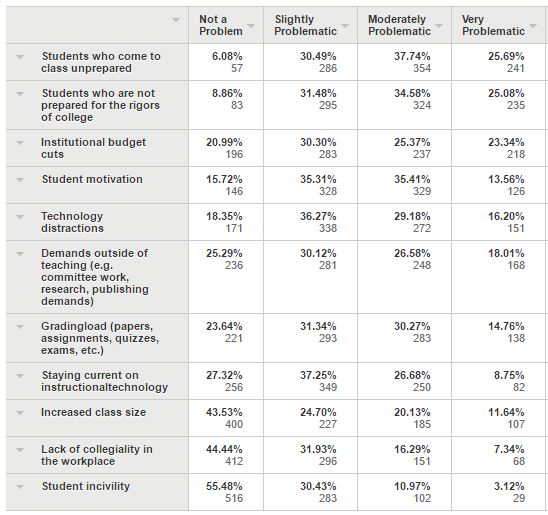
A reader survey reported by Faculty Focus found that students coming to class unprepared was a top day-to-day challenge for instructors for multiple years. That finding still feels current because the same issue appears in new forms today: college students feeling underprepared for courses, K-12 students struggling to recover from learning loss, and employers asking for graduates who can communicate, think critically, and manage responsibility without constant hand-holding.
What the Reader Survey Really Reveals
The survey’s key message is simple: unprepared students are not an occasional inconvenience. They are a repeated instructional barrier. Faculty members said students failing to complete readings, review materials, or arrive ready for discussion made teaching harder. Close behind was another concern: students who were not ready for the academic demands of college-level work.
That distinction matters. A student can be unprepared for today’s class because they skipped the reading. Another student can be unprepared for college because their high school experience did not build enough writing, math, reading, research, or time-management skills. The first problem is behavioral. The second is structural. Many classrooms contain both at the same time, which is why the issue feels so stubborn.
Why Students Arrive Unprepared
1. Reading Assignments Compete With Everything
Students are not just choosing between reading and doing nothing. They are choosing between reading, work shifts, family responsibilities, social media, sports, transportation problems, anxiety, sleep debt, and sometimes a part-time job that pays for groceries. That does not excuse skipping preparation, but it explains why “just read before class” is not always the simple command it appears to be.
Another challenge is reading stamina. Many students can decode words but struggle to stay with long, complex texts. A 40-page reading may be manageable for a practiced reader and a mountain climb for someone who has mostly consumed short-form digital content. When a student says, “I read it, but I did not understand it,” the issue may be comprehension, vocabulary, background knowledge, or lack of practice with academic language.
2. Pandemic Learning Loss Still Echoes
The pandemic did not create every preparedness gap, but it widened many of them. National assessment results show that many students remain below pre-pandemic achievement levels in reading and math. The Education Recovery Scorecard and similar analyses suggest that recovery has been uneven, with some students regaining ground and others falling further behind.
For teachers, this means a course roster may include students who technically passed the prerequisite but did not fully master the prerequisite skills. In college algebra, that might mean weak fraction sense. In freshman composition, it might mean trouble identifying a thesis. In biology, it might mean students can memorize terms but struggle to interpret data. The course title says “ready.” The actual skill profile says, “Please proceed carefully.”
3. Chronic Absenteeism Breaks the Preparation Chain
Preparedness depends on continuity. Students who miss too much school do not just miss a worksheet; they miss explanations, feedback, routines, peer discussion, and the small moments when confusing material finally clicks. Chronic absenteeism, commonly defined as missing 10 percent or more of the school year, has remained a major concern in U.S. education.
When attendance becomes irregular, preparation becomes fragile. A student who missed Monday’s introduction may not understand Wednesday’s activity. A student who missed two weeks may return to class physically present but academically lost. At that point, not doing the homework may be less an act of rebellion and more an act of surrender disguised as silence.
4. Students Often Lack Executive Function Skills
Many unprepared students are not lazy. They are disorganized. They underestimate how long work will take, forget deadlines, lose instructions, or wait until 11:47 p.m. to begin an assignment that requires three sources, two drafts, and a small miracle. Executive function skills such as planning, prioritizing, note-taking, self-monitoring, and asking for help are rarely glamorous, but they are the plumbing of academic success.
Schools sometimes assume students will pick up these habits naturally. Some do. Many do not. A student can be bright and still have no reliable system for tracking assignments. Intelligence is not a calendar. Motivation is not a study plan. Hope is not a printer with ink at midnight.
The College Readiness Gap
College readiness is more than admission. Getting accepted to college does not automatically mean a student is ready to read dense material, manage independent deadlines, write analytical papers, solve multi-step problems, or seek help before a crisis. ACT college-readiness benchmarks are designed to estimate whether students are likely to succeed in first-year credit-bearing courses. Recent ACT data show that many tested graduates meet some benchmarks, but far fewer meet all of them.
That matters because college courses often move quickly. A professor may expect students to read before class so class time can be used for analysis, application, debate, or lab work. When students arrive cold, the instructor faces an unpleasant choice: reteach the basics and slow down the course, or move forward and leave unprepared students behind. Neither option is ideal. One frustrates prepared students; the other deepens inequity.
How Unprepared Students Affect the Classroom
Unpreparedness changes the rhythm of teaching. Discussions become thin. Group work becomes uneven. Quizzes become autopsies. The instructor spends more time coaxing participation and less time extending ideas. Prepared students may feel annoyed when class is slowed by peers who did not do the work. Unprepared students may feel embarrassed, defensive, or invisible. The room becomes a tug-of-war between what the lesson was designed to do and what the class is actually ready to do.
There is also an emotional cost for educators. Teachers and professors often enter class with carefully planned activities, only to discover that half the room did not complete the foundation needed for the lesson. After enough of these moments, frustration can harden into cynicism. The best educators resist that cynicism, but let’s be honest: even a saint would sigh deeply after the fifth “Was there homework?” of the morning.
Why Blaming Students Alone Does Not Work
It is tempting to frame unpreparedness as a character flaw. Some students do make poor choices. Some ignore instructions. Some treat deadlines as gentle suggestions floating in the academic breeze. But blame by itself does not solve anything. If the same problem appears year after year, across grade levels and institutions, then the system needs better design.
A stronger approach asks better questions: Are assignments clear? Do students understand why preparation matters? Are readings appropriately challenging? Are early alerts used before students fail? Are study skills taught explicitly? Are courses aligned with prerequisite expectations? Are families and advisors included when attendance patterns begin to slip? Are digital tools helping students learn, or simply creating another dashboard no one checks?
What Schools and Colleges Can Do
Make Preparation Visible
Teachers should not assume students know what “come prepared” means. Preparation can be broken into visible actions: read pages 42–58, annotate two confusing passages, write one discussion question, complete five practice problems, bring notes, and be ready to explain one idea to a partner. Vague expectations produce vague effort. Clear tasks produce a better chance of completion.
Use Low-Stakes Accountability
Short reading checks, entry tickets, warm-up problems, and quick reflections can help students build habits without turning every class into a courtroom drama. The goal is not to punish students for being human. The goal is to make preparation matter before the major exam arrives wearing steel-toed boots.
Teach Study Skills Directly
Many students need explicit instruction in how to study. They need to learn how to preview a chapter, take useful notes, space practice over several days, test themselves, ask precise questions, and review feedback. “Study harder” is not a strategy. It is a bumper sticker. Schools should teach students what effective studying actually looks like.
Build Early Warning Systems
Attendance, missed assignments, low quiz scores, and lack of participation are signals. Schools and colleges should respond early, not after failure is practically laminated. Early alerts, tutoring referrals, advisor check-ins, and family communication can help students recover while recovery is still realistic.
Redesign Gateway Courses
Introductory college courses often serve as gatekeepers. They can either open doors or quietly sort students out. Redesigning these courses with supplemental instruction, embedded tutoring, active learning, co-requisite support, and transparent expectations can preserve rigor while giving more students a fair path to success.
What Students Can Do
Students also have power in this equation. Preparedness improves when students treat school like a daily practice rather than a series of emergencies. The basics still work: use a planner, read before class, start assignments early, attend office hours, form study groups, ask questions, and sleep enough to keep the brain from operating like a browser with 73 tabs open.
Students should also learn to recognize confusion early. Being confused on Monday is normal. Ignoring confusion until the night before the exam is how academic disasters are assembled. A prepared student is not someone who understands everything immediately. A prepared student is someone who notices what they do not understand and takes action.
What Families Can Do
Families can support preparedness by making attendance non-negotiable whenever possible, creating quiet study routines, asking specific questions about assignments, and encouraging students to communicate with teachers. Instead of asking, “Did you do your homework?” families can ask, “What is due tomorrow?” “What part was hardest?” or “What do you need to bring to class?” Specific questions make it harder for vague answers to sneak away wearing a tiny hat.
For older students, family support should shift from control to coaching. College students need independence, but independence does not mean isolation. A quick conversation about deadlines, stress, or course progress can help students stay connected without turning parents into unpaid academic detectives.
Career Readiness Is Part of the Same Conversation
Preparedness does not end at graduation. Employers increasingly emphasize communication, critical thinking, teamwork, professionalism, and self-development. These are not separate from academic readiness. A student who regularly prepares for class is also practicing workplace habits: meeting expectations, managing time, contributing to a group, and showing respect for shared work.
That is why the unprepared student problem matters beyond one quiz or one seminar. A student who never learns how to prepare may struggle in college, internships, jobs, and adult responsibilities. The workplace rarely provides a syllabus reminder that says, “Please read the client brief before the meeting.” It simply expects the work to be done.
Specific Classroom Examples
Consider a first-year writing class. The instructor assigns an article on climate policy and asks students to bring three annotated passages. If only a few students read, discussion collapses into summary. The instructor must explain the article instead of teaching argument analysis. Prepared students lose the chance for deeper debate, and unprepared students learn that skipping the reading results in the teacher rescuing the lesson.
Now consider a math class. Students are assigned practice problems on linear equations before the next session. When they arrive without attempting them, the teacher cannot see where misunderstandings occurred. Were students confused by slope? Did they make arithmetic errors? Did they understand the word problem but not the graph? No preparation means no diagnostic information. It is like asking a mechanic to fix a car that has been hidden under a tarp.
In a nursing program, preparation becomes even more serious. Students who do not review procedures before lab may slow down skills practice and increase safety concerns. In career and technical education, unpreparedness can affect equipment use, teamwork, and professional habits. In every setting, preparation is not busywork. It is the bridge between instruction and performance.
Experiences Related to Unprepared Students
One common experience teachers describe is the “silent room” problem. The instructor asks a discussion question, and the room becomes so quiet you can almost hear the fluorescent lights making career plans. This silence is not always apathy. Sometimes students did not read. Sometimes they read but did not understand. Sometimes they fear giving the wrong answer. The result looks the same from the front of the room: no one is ready to begin.
A practical response is to lower the first step without lowering the standard. Instead of opening with a broad question like, “What did you think of the reading?” a teacher might begin with, “Find one sentence that confused you and explain why.” This gives prepared students a way to go deeper and unprepared students a concrete entry point. Over time, students learn that preparation is not about performing brilliance on command. It is about bringing something usable to the table.
Another familiar experience happens during group projects. One student arrives with notes, sources, and a draft outline. Another arrives with “good vibes” and a phone at 12 percent battery. The prepared student becomes the emergency manager, while the unprepared student becomes a passenger. Teachers can reduce this problem by requiring individual checkpoints before group work begins. Each student might submit a source summary, a task plan, or a short progress memo. Group success should not depend on one responsible student dragging three academic suitcases through the airport.
In college settings, office hours reveal another pattern. Students often seek help after a poor exam, but when asked how they prepared, they say they reread notes the night before. Many have never been taught retrieval practice, spaced repetition, or how to use mistakes as study guides. Once students learn to quiz themselves, explain concepts aloud, and practice over several days, performance often improves. The problem was not a lack of intelligence. It was a lack of method.
High school teachers often see a different version of the issue: students who are capable but overwhelmed. They may have multiple advanced courses, extracurriculars, family duties, and constant digital noise. Their unpreparedness is not refusal; it is overload. In those cases, helping students prioritize can be more useful than another lecture about responsibility. A weekly planning routine, chunked deadlines, and clear rubrics can turn a foggy workload into something students can actually manage.
The most encouraging experience is that preparedness can improve quickly when expectations are consistent. When students know every class begins with a short task connected to the reading, more students read. When homework is used during class, more students see its purpose. When teachers explain not only what to do but why it matters, preparation becomes less like a hoop and more like a tool. Students are more likely to bring the hammer when they know there will be nails.
Conclusion: A Persistent Problem, Not a Hopeless One
The reader survey finding that unprepared students remain a persistent problem is not just a complaint from tired educators. It is a warning signal. Student preparedness affects learning quality, classroom energy, equity, retention, college success, and career readiness. The issue is persistent because it has many causes: missed learning, weak study habits, absenteeism, unclear expectations, digital distraction, and systems that sometimes wait too long to intervene.
But persistent does not mean permanent. Schools can make preparation clearer. Teachers can build low-stakes accountability. Colleges can redesign gateway courses. Families can support routines. Students can learn practical strategies that turn good intentions into completed work. The solution is not to shame students or lower standards. The solution is to teach preparation as a skill, support it as a habit, and expect it as part of serious learning.
In the end, prepared students are not born with magical highlighters in their hands. They are built through structure, practice, feedback, and responsibility. When schools treat preparedness as something teachable, the classroom changes. Discussions get better. Assignments improve. Students gain confidence. And teachers get to spend less time asking, “Did anyone do the reading?” which, frankly, may be the educational reform everyone can agree on.












