
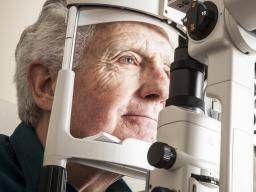
Your eyes come with natural lenses that focus light much like camera lensesexcept they cannot be wiped clean with the corner of your shirt, and they strongly object to being treated like smartphone screens. When one of these lenses becomes cloudy or no longer provides useful focus, an ophthalmologist may remove it and replace it with an artificial intraocular lens, commonly called an IOL.
Once an artificial lens has replaced the natural lens, the eye is described as pseudophakic, and the state is known as pseudophakia. The terminology sounds like a futuristic eye disorder, but pseudophakia is not a disease. It simply means that an implanted lens is now performing the focusing job previously handled by the natural lens.
Most people become pseudophakic after cataract surgery. However, a similar lens-replacement procedure may sometimes be performed for refractive purposes in carefully selected patients. Understanding why an IOL may be recommended, how the different lens types work, and what life is like afterward can make the decision far less intimidating.
What Is Pseudophakia?
Pseudophakia is the presence of an artificial intraocular lens after the eye’s natural lens has been removed. The term combines words meaning “false” and “lens.” Despite the name, a modern IOL is not a bargain-bin imitation. It is a precisely manufactured optical implant designed to focus light onto the retina.
The natural lens sits behind the iris, the colored portion of the eye. It changes shape when a younger person shifts focus between distant and nearby objects. Over time, the lens typically becomes less flexible, contributing to presbyopia, and it may also become cloudy, producing a cataract. During cataract surgery, the clouded lens material is removed and an IOL is usually placed inside the remaining lens capsule. The implant generally stays in the eye permanently and normally cannot be seen or felt by the patient.
Pseudophakia vs. aphakia
Pseudophakia should not be confused with aphakia. An aphakic eye has no natural lens and no replacement IOL. Aphakia may occur because of trauma, a congenital condition, or a surgical situation in which an implant cannot immediately be placed. Without a lens, the eye loses a substantial amount of focusing power and usually requires specialized glasses, contact lenses, or later IOL placement.
Pseudophakic IOL vs. phakic IOL
A pseudophakic IOL replaces the natural lens. A phakic IOL, by contrast, is implanted while the natural lens remains in place, usually to correct significant nearsightedness in selected people. In other words, “phakic” means the eye still owns its original lens; “pseudophakic” means an artificial lens has taken over the lease.
Why Might Someone Need an Intraocular Lens?
The most common reason is a cataract. A cataract develops when the natural lens becomes cloudy, preventing light from traveling cleanly through the eye. Cataracts often progress gradually, so a person may adapt to declining vision without realizing how much detail has disappeared. White shirts begin looking beige, headlights develop glowing halos, and menus apparently start printing themselves in microscopic ink.
Surgery is currently the only way to remove a cataract. New glasses, brighter lamps, magnifiers, and anti-glare strategies may help during the early stages, but they do not eliminate the cloudy lens. When cataract-related vision loss begins interfering with ordinary activities, an ophthalmologist may recommend removing the lens and replacing it with an IOL.
Other reasons for lens replacement
Some people undergo refractive lens exchange, a procedure similar to cataract surgery, to address severe refractive error or presbyopia before a visually significant cataract develops. This is elective surgery and requires careful evaluation because the natural lens is permanently removed.
An IOL may also be needed after lens damage from an eye injury or after treatment of certain congenital lens conditions. The implant strategy can be more complex when the normal lens capsule or supporting structures are weak or absent.
Signs You May Need Cataract Surgery and an IOL
Needing stronger reading glasses does not automatically mean you need an implant. Many conditions can produce blurry vision, including dry eye, retinal disease, glaucoma, corneal disorders, and changes in blood sugar. An eye examination is necessary to determine whether a cataract is actually responsible.
1. Cloudy, foggy, or blurry vision
Cataract-related blur may feel like looking through a smudged windshield. Details become softer, and glasses may no longer sharpen vision as effectively as they once did.
2. Increasing glare and halos
Streetlights, headlights, and bright indoor lighting may produce glare, starbursts, or rings. Night driving can become especially difficult because a cloudy lens scatters light rather than focusing it cleanly.
3. Colors look faded or yellowish
A cataract may gradually filter or distort incoming light. Colors can seem dull, whites may appear yellowed, and contrast may decline. Many patients do not realize how much color perception has changed until after the cloudy lens is removed.
4. Difficulty seeing in dim light
You may need stronger lighting to read, prepare food, use stairs, or locate objects. Restaurants with “romantic lighting” can suddenly feel less romantic and more like an unofficial vision test.
5. Frequent prescription changes
A cataract can alter the focusing power of the lens, leading to repeated eyeglass changes. Some people temporarily become more nearsighted and can read without their usual reading glasses, a phenomenon sometimes called second sight. Unfortunately, the upgrade usually comes with blurry distance vision and an expiration date.
6. Double vision in one eye
Monocular double visionseeing overlapping images even when the other eye is coveredcan occur with cataracts. Because double vision has several possible causes, it deserves a professional examination rather than a self-diagnosis.
7. Vision interferes with everyday life
The decision to have cataract surgery is generally based less on a particular eye-chart number and more on functional problems. Surgery may be reasonable when vision makes it difficult to drive safely, read, work, recognize faces, watch television, manage medications, enjoy hobbies, or move around without fear of falling.
Cataracts do not always require immediate surgery. If daily activities remain comfortable and safe, monitoring may be appropriate. Surgery may also be advised when lens clouding prevents an ophthalmologist from adequately examining or treating the retina.
How Doctors Decide Which IOL Power You Need
An IOL is not selected by grabbing something labeled “medium strength” from a shelf. Before surgery, the eye is measured using techniques such as optical biometry or ultrasound. These measurements evaluate factors including the length of the eye and the curvature of the cornea. The surgeon then uses an IOL calculation formula to estimate the lens power needed for the intended visual target.
Previous LASIK, PRK, radial keratotomy, corneal disease, severe dry eye, unusual eye length, and irregular astigmatism can make calculations more challenging. Patients should tell the surgeon about every previous eye procedureeven the one performed decades ago whose paperwork is now living in a mysterious drawer with expired coupons.
The visual target matters as well. One person may prioritize clear distance vision for driving, while another may prefer stronger intermediate vision for computer work. Some patients choose monovision, with one eye targeted more toward distance and the other more toward near or intermediate vision. A contact-lens trial may help determine whether the brain tolerates that arrangement.
Main Types of Intraocular Lenses
No single IOL is automatically best for everyone. The appropriate choice depends on eye health, visual priorities, occupation, hobbies, budget, tolerance for optical side effects, and willingness to use glasses after surgery.
Monofocal IOLs
A monofocal IOL is designed to provide its clearest focus at one main distance. Most patients select distance focus and use reading glasses for nearby tasks. The lens can instead be targeted for near or intermediate vision, although glasses would then usually be required for other distances.
Monofocal lenses have a long clinical history and typically produce strong contrast with fewer halo-related concerns than many presbyopia-correcting designs. They are often favored when a person has significant retinal, optic nerve, or corneal disease that may limit the benefit of a multifocal lens.
Toric IOLs
A toric IOL corrects regular corneal astigmatism as well as the focusing power lost when the natural lens is removed. It must be positioned along a specific axis inside the eye. If it rotates significantly, the astigmatism correction may become less effective, and repositioning may occasionally be needed.
Toric technology can be combined with monofocal, multifocal, trifocal, or extended-depth-of-focus optics. A toric lens does not automatically provide near vision; “toric” describes astigmatism correction, not the number of focusing distances.
Multifocal and trifocal IOLs
Multifocal IOLs distribute light among more than one focal range. Trifocal IOLs are designed to support distance, intermediate, and near vision. These lenses can reduce dependence on glasses, particularly when implanted in both eyes and when the eyes are otherwise healthy.
The trade-off is that dividing light into several focal zones can produce halos, glare, starbursts, reduced contrast, or difficulty in dim conditions. Many people adapt well, but someone who drives frequently at night or demands extremely crisp contrast may prefer another option.
Extended-depth-of-focus IOLs
An extended-depth-of-focus IOL, commonly shortened to EDOF, creates an elongated range of focus rather than several sharply separated focal points. It is generally designed to provide useful distance and intermediate vision, with variable near performance depending on the design and refractive target.
EDOF lenses may offer fewer or less intense halos than some multifocal designs, but they are not entirely free of optical symptoms. Reading glasses may still be necessary for small print or prolonged close work.
Enhanced monofocal IOLs
Enhanced monofocal, monofocal-plus, or extended-range monofocal lenses aim to preserve many characteristics of a standard monofocal while improving intermediate vision. They may be useful for people who want a little more range without choosing a full multifocal design. Near glasses are still commonly needed.
Light-adjustable lenses
A light-adjustable lens can be fine-tuned after surgery using controlled ultraviolet light treatments. This allows the ophthalmologist to modify the refractive result after the eye has started healing. Patients must follow a treatment schedule and wear prescribed UV-protective glasses until adjustments are completed and the lens power is locked in.
This technology may be appealing when exceptionally precise refractive targeting is important, including in some patients with previous refractive surgery. It is not a magical zoom lens, however, and candidacy depends on medical, lifestyle, and logistical factors.
Small-aperture IOLs
A small-aperture lens uses a central opening to extend depth of focus by filtering unfocused peripheral light. It may be considered in selected patients, including certain people with irregular corneas. Because this is a specialized option, detailed retinal, corneal, and visual-field assessment is important.
Accommodating IOLs
Accommodating IOLs attempt to provide a broader range of focus through movement or changes in lens position or shape. Results can vary, and reading glasses may still be required. Patients should ask what level of near, intermediate, and distance vision is realistically expected rather than relying on the category name alone.
Professional guidance emphasizes that monofocal, toric, multifocal, trifocal, EDOF, enhanced monofocal, and adjustable lenses each involve different balances among spectacle independence, contrast, visual range, cost, and possible light-related symptoms.
What Happens During IOL Surgery?
Modern cataract surgery is usually performed as an outpatient procedure. The eye is numbed, and medication may be given to help the patient relax. In the most common technique, phacoemulsification, the surgeon makes a small incision and uses an ultrasound-powered instrument to break the cloudy lens into pieces. The fragments are removed, and the folded IOL is inserted through the incision and positioned inside the lens capsule.
A femtosecond laser may be used for selected portions of some procedures, but an IOL still has to be placed after the natural lens is removed. Laser-assisted surgery and premium IOL technology are separate decisions; choosing one does not automatically require choosing the other.
The operation itself is often relatively brief, but the complete visit takes longer because of preparation and recovery. Patients generally need someone else to drive them home. When both eyes require treatment, surgery is commonly performed on separate dates.
Recovery After Becoming Pseudophakic
Vision may be blurry, bright, or slightly distorted during the first few days. Mild itching, dryness, light sensitivity, redness, or a scratchy sensation can occur. Colors may suddenly seem more vivid because the yellowed or cloudy natural lens is no longer filtering the view.
Patients are usually prescribed eye drops and may be advised to wear a protective shield while sleeping. Rubbing the eye, swimming, dusty environments, heavy lifting, and certain strenuous activities may be temporarily restricted. Exact instructions vary, so the surgeon’s directions should outrank anything found in a generic online checklist.
The brain also needs time to adapt, particularly with multifocal, trifocal, EDOF, or monovision strategies. Vision can fluctuate as the eye heals and the ocular surface stabilizes. Final glasses are generally prescribed only after the surgeon determines that healing and refraction are sufficiently stable.
Possible Risks and Long-Term Concerns
Cataract surgery is widely performed and serious complications are uncommon, but no eye operation is risk-free. Potential problems include infection, inflammation, bleeding, corneal swelling, increased eye pressure, cystoid macular edema, retinal tear or detachment, an incorrect refractive result, and movement or decentration of the IOL.
Posterior capsule opacification
Months or years after surgery, cells may cloud the thin capsule behind the IOL. This is called posterior capsule opacification, or PCO. People sometimes call it a “secondary cataract,” although the original cataract has not returned. PCO can often be treated in the office with a YAG laser capsulotomy that creates a clear opening behind the implant.
Dysphotopsias
Some pseudophakic patients notice halos, glare, arcs, shadows, streaks, or flashes related to how light interacts with the implant and the surrounding eye. These visual effects are known as dysphotopsias. They may improve as the eye and brain adapt, but persistent or severe symptoms should be evaluated.
Residual refractive error
An IOL calculation is a prediction, not a supernatural prophecy. Some patients remain mildly nearsighted, farsighted, or astigmatic after surgery. Depending on the situation, treatment may involve glasses, contact lenses, corneal laser enhancement, IOL repositioning, an additional lens, or an IOL exchange.
Patients with retinal disease, glaucoma, corneal abnormalities, optic nerve damage, amblyopia, or severe dry eye may have limited visual improvement even when the surgery and implant are technically successful. The IOL can replace the focusing lens, but it cannot repair every other part of the visual system.
When to seek urgent care after surgery
Contact the surgical team immediately for rapidly worsening vision, severe or increasing eye pain, marked redness, pus-like discharge, significant swelling, nausea or vomiting with eye symptoms, a sudden shower of floaters, repeated flashes of light, or a dark curtain or shadow crossing the visual field. New flashes, floaters, or a curtain-like shadow can signal a retinal tear or detachment and require urgent assessment.
How to Choose the Right IOL
The most useful question is not, “Which lens is the most advanced?” It is, “Which lens best matches my eyes and the way I live?” A high-tech lens can be disappointing when chosen for the wrong patient, while a straightforward monofocal lens can be excellent when expectations and visual targets are carefully aligned.
Discuss the following with the surgeon:
- Whether distance, computer, dashboard, reading, or hobby vision matters most.
- How often you drive at night or work in low-contrast conditions.
- Whether wearing reading or distance glasses would bother you.
- Whether you have corneal, retinal, macular, optic nerve, or glaucoma-related disease.
- Whether you previously had LASIK, PRK, radial keratotomy, or other eye surgery.
- How much astigmatism is present and whether it is regular enough for a toric lens.
- What visual side effects are possible with the proposed implant.
- Which portions of the procedure and implant are covered by insurance.
Ask for realistic probabilities rather than promises. Even premium IOLs do not guarantee complete freedom from glasses, perfect night vision, or the focusing ability of a healthy 20-year-old natural lens. The best consent conversation should cover benefits, compromises, alternatives, costs, and what can be done if the result misses the intended target.
Experiences With Pseudophakia: What the Adjustment Can Feel Like
The experience of becoming pseudophakic is different for every patient, but several practical themes appear repeatedly in clinical conversations. The following scenarios are illustrative composites rather than reports about specific individuals.
The “I did not know the world was that colorful” experience
Consider a retired teacher whose cataracts progressed slowly over several years. She could still read large print and assumed her dim vision was simply normal aging. After surgery on the first eye, she noticed that a white kitchen cabinet looked bright white through the pseudophakic eye but cream-colored through the untreated eye. Blue objects also appeared more vivid.
This difference can be surprising because cataracts may gradually add a yellow or brown tint to vision. When only one eye has been treated, the brain temporarily receives two noticeably different color versions of the world. The mismatch typically becomes less distracting as the brain adapts or after the second eye is treated.
The distance-vision success with reading-glasses reality
Another common experience involves a patient who chooses monofocal IOLs targeted for distance. After healing, road signs and television are clear without glasses, which feels like a major victory. Then he picks up a restaurant menu and discovers that his arms have not, in fact, become shorter overnightthe near print is simply out of focus.
This is not necessarily a failed result. A monofocal lens targeted for distance is expected to provide one principal focal range. Reading glasses restore the missing near focus. Patients who understand this before surgery are usually much happier than those who expected one lens to behave like a youthful natural lens at every distance.
The premium-lens adaptation experience
A patient with trifocal lenses may enjoy reading a phone, using a laptop, and seeing across a room with much less dependence on glasses. During the first few weeks, however, headlights may have rings around them. The halos can feel especially noticeable because the patient is actively searching for themrather like buying a new refrigerator and suddenly hearing every hum it makes.
For many patients, light-related effects become less intrusive as the brain adapts. Others continue noticing them, particularly in dark environments. The experience highlights why night-driving habits, personality, visual expectations, and tolerance for optical compromises should be discussed before selecting a multifocal or trifocal design.
The dry-eye surprise
Some patients expect crystal-clear vision immediately but experience fluctuating sharpness after surgery. One moment the television is crisp; after several blinks, it becomes hazy. The implant may be perfectly positioned while the eye’s tear film remains unstable.
Dry eye can affect preoperative measurements, postoperative comfort, and visual quality. Treating eyelid inflammation, tear-film instability, or ocular surface disease may improve the experience significantly. This is one reason surgeons may delay final conclusions about an IOL result until the eye has healed and the surface is healthier.
The posterior capsule opacification experience
A person may enjoy clear vision for a year and then notice that haze and glare are gradually returning. The immediate fear is often, “My cataract grew back.” It did not. Because the natural lens was removed, that cataract cannot regenerate. The more likely explanation may be posterior capsule opacification.
After an examination confirms PCO, a short YAG laser procedure may create a clear opening behind the IOL. Vision often improves once light can pass through the visual axis again. The experience is a useful reminder that later cloudiness should be examined rather than blamed on the artificial lens without evidence.
The lesson shared by nearly every experience
The happiest pseudophakic patients are not always the people who purchased the most expensive technology. They are usually the people whose implant choice matched their eye health, daily needs, and expectations. Someone who loves nighttime highway driving may prioritize contrast and tolerate reading glasses. A person who works at several screen distances may value intermediate range. An enthusiastic reader may accept occasional halos in exchange for greater near independence.
Pseudophakia is therefore not just a surgical status; it is a long-term optical arrangement. Good outcomes begin with accurate measurements and skilled surgery, but satisfaction also depends on choosing sensible goals, recognizing trade-offs, treating other eye conditions, and allowing the visual system time to adapt.
Conclusion
Pseudophakia means that an artificial intraocular lens has replaced the eye’s natural lens. It most commonly follows cataract surgery and is not itself an illness. Signs that an IOL may be needed include progressive cloudy vision, glare, faded colors, difficulty driving at night, frequent prescription changes, and vision loss that interferes with everyday activities.
Today’s IOL options include monofocal, toric, multifocal, trifocal, extended-depth-of-focus, enhanced monofocal, light-adjustable, small-aperture, and accommodating designs. Each offers a different balance of visual range, contrast, spectacle independence, cost, and potential side effects. A thorough eye examination and an honest discussion about lifestyle are more valuable than simply selecting the lens with the longest list of features.
The goal is not to chase a supposedly perfect implant. It is to choose the most appropriate optical tool for a particular pair of eyesand to understand clearly what that tool can and cannot do.












