
Some stories arrive on the internet like a polite tap on the shoulder. This one kicks the door in, steals your snacks, and asks whether revenge is ever really as delicious as people say it is.
That is exactly why the viral tale behind “Person Takes Sweet Revenge On Relentless Bully 15 Years Later, Making Him Say ‘Goodbye’ To His Engagement” caught so much attention. It has all the ingredients people love to click on: a school bully, a long memory, social media, a fake profile, a collapsing engagement, and the kind of karmic chaos that makes strangers on the internet whisper, “Well… technically, that’s terrible, but wow.”
Still, the reason this story sticks is not just the drama. It is the emotional truth underneath it. Bullying is not one of those things that conveniently expires at graduation. It can hang around for years like a bad ringtone in your brain. Sometimes people heal beautifully. Sometimes they rebuild slowly. And sometimes an old wound sees a Facebook engagement photo and says, “Oh, we are so not done here.”
This article digs into why that revenge story resonated so strongly, what it says about unresolved bullying trauma, how resentment can shape adult choices, and why the broken engagement may say more about the bully’s character than the avenger’s scheme. Because yes, this is a wild internet story. But it is also a surprisingly revealing case study in memory, pain, trust, and accountability.
The Viral Story: Revenge With a 15-Year Delay
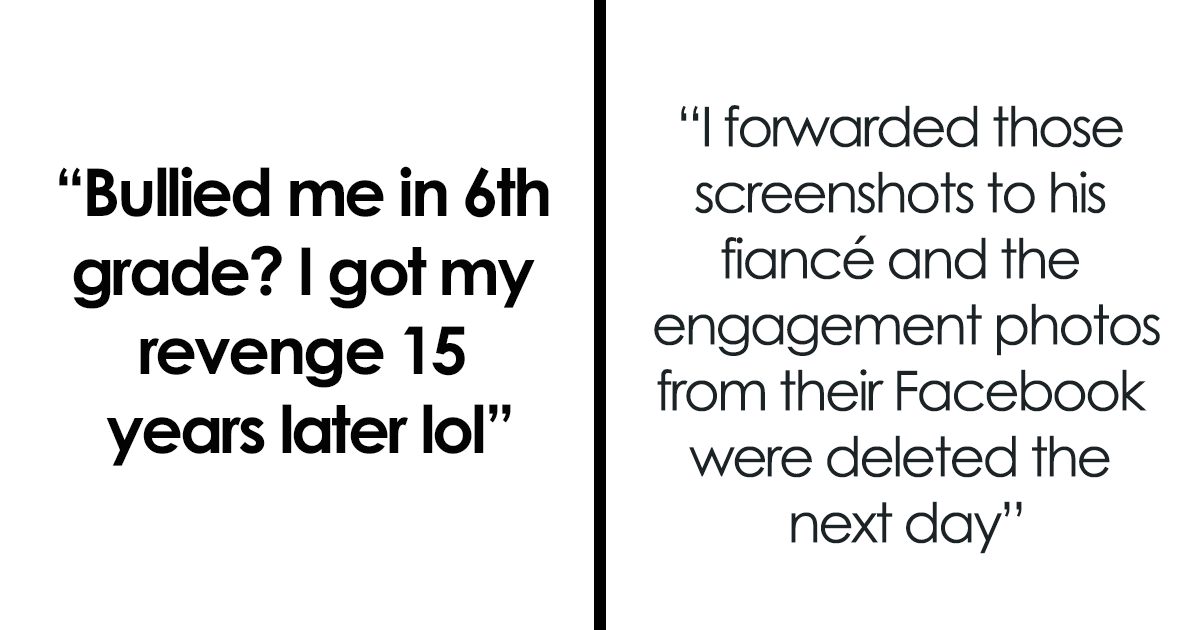
At the center of the story is a person who had been relentlessly bullied in school and never quite got over it. Years later, while scrolling through social media, they discovered that the former tormentor was engaged. For many people, that would be the moment to sigh, maybe roll their eyes, and keep scrolling. For this person, it became the opening scene of a very different movie.
Instead of walking away, they allegedly created a fake online persona and began messaging the former bully. The idea was simple, messy, and extremely internet-coded: test whether this supposedly grown-up, engaged adult had actually changed. Spoiler alert: apparently not. The bully reportedly took the bait, flirted, and revealed exactly the kind of behavior that fiancées tend to file under “absolutely not.” The engagement fell apart, and the internet applauded like it had front-row seats at a courtroom drama with better memes.
Now, was it petty? Absolutely. Was it ethical? That is where the room gets quieter. But was it understandable? For a lot of people who have lived through relentless bullying, the answer is also yes.
Why This Story Hit Such a Nerve
Bullying Does Not Always Stay in the Past
One reason this story exploded is that it validates something many adults know firsthand: childhood bullying can leave a very adult-sized shadow. People who were mocked, isolated, humiliated, or targeted for years do not always get a neat ending. There is no magical ceremony at age 18 where your nervous system says, “Congratulations, your pain has been archived.”
That is part of what makes revenge stories feel so emotionally satisfying. They offer the clean ending real life often refuses to provide. The bully is exposed. The victim gets power back. The universe finally answers its email.
But real life is less tidy. The emotional residue of bullying can show up later as distrust, hypervigilance, anxiety, anger, self-protection, social withdrawal, or a fierce need to finally be believed. So when people read a story like this, they are not just reacting to one broken engagement. They are reacting to years of unheard pain compressed into one dramatic moment of payback.
The Internet Loves Karma, But Also Recognition
Online audiences love justice stories, especially when the villain practically writes their own downfall. That is what makes this case so compelling. The revenge plot may have started the chain reaction, but the bully’s own choices reportedly finished it. He was not framed into being loyal. He was given an opportunity to behave well and apparently fumbled it like a sitcom character carrying too many grocery bags.
That distinction matters. Much of the public reaction centered on the idea that the engagement did not collapse because of one fake account alone. It collapsed because the groom-to-be revealed a serious trust problem before the wedding. In that sense, the revenge did not invent the red flag. It just turned on the flashlight.
What Bullying Can Do to a Person Long After School Ends
Stories like this can be entertaining, but they also point toward a harder truth: bullying can become part of how people interpret safety, relationships, and self-worth. When someone has been repeatedly humiliated, their brain often learns to scan for danger long after the original threat is gone. That does not make them weak. It makes them human.
Adults who were bullied when they were younger may struggle with trust, feel unusually reactive to rejection, avoid vulnerability, or keep old grudges alive far longer than they wish. Some become people-pleasers. Others become emotionally armored. Some laugh about their school years in public and still replay certain memories in private while brushing their teeth. Trauma is rude like that.
And here is the part people often miss: the bully does not always remember the harm with the same intensity. For the person who was targeted, the experience may have shaped their identity. For the person who did the targeting, it may have been dismissed as “just joking around” or “kids being kids.” That mismatch can be infuriating. One person carries scars. The other carries nostalgia. No wonder reunion culture can feel like emotional Russian roulette.
Why Revenge Feels Good in Theory
Revenge is appealing because it promises three things at once: control, closure, and symmetry. Someone hurt you when you were powerless. Now you get to act instead of endure. You get to be the plot twist instead of the punchline. You get to see the person who caused harm finally experience consequences.
Psychologically, that is a powerful fantasy. It restores a sense of agency. It tells the nervous system, “We are not trapped anymore.” That can feel amazing for about five seconds and a half-eaten granola bar.
But revenge is a notoriously unreliable therapist. It may deliver adrenaline, satisfaction, even temporary relief. What it does not always deliver is peace. The fantasy says, “Once I get even, I will finally stop thinking about this.” Reality often says, “Interesting theory. Anyway, here is a fresh batch of intrusive thoughts.”
That is why this story sparks debate instead of universal applause. Some readers see justice. Others see unresolved pain acting out in digital form. Both readings can be true at the same time.
Did the Bully Ruin His Own Engagement?
Honestly, yes, that is the most important part.
The fake profile may have opened the door, but the former bully reportedly chose to walk through it while engaged. Nobody forced loyalty out of the room. Nobody hypnotized commitment into disappearing. If a person is weeks or months away from marriage and still willing to flirt with a stranger online, the engagement was already sitting on a weak foundation.
That does not necessarily turn the avenger into a saint. Catfishing is deceptive, messy, and capable of causing collateral damage. But the ex-fiancée in this story was not saying goodbye to a healthy engagement ruined by random bad luck. She was saying goodbye to a partner who allegedly demonstrated unfaithfulness before the wedding invitations had probably finished drying.
From that angle, the story becomes less about revenge and more about exposure. It is the emotional equivalent of pulling the fire alarm because you smell smoke and then discovering, yes, the building really was on fire.
The Real Villain Here Is Not Just One Guy
It is tempting to reduce the entire situation to one awful bully getting karmically drop-kicked by fate. But the bigger issue is the culture that keeps minimizing bullying until it blooms into adult dysfunction.
Too often, bullying gets packaged as a rite of passage. People call it teasing, roughhousing, social drama, or “kids figuring things out.” Meanwhile, the target is skipping school, losing confidence, developing anxiety, or learning that social spaces are dangerous. By the time adulthood arrives, the damage may be quieter, but it is not always smaller.
What makes the viral revenge story feel so intense is that it exposes that lie. Bullying is not always a tiny chapter that gets left behind. Sometimes it becomes a long-running subplot that affects relationships, memory, stress, and identity. The revenge may be dramatic, but the wound behind it is painfully ordinary.
What Accountability Would Have Looked Like Instead
Imagine an alternate version of this story. The former bully grows up, reflects on the harm he caused, reaches out years later with a sincere apology, and takes responsibility without making excuses. No “we were just kids.” No “you’re too sensitive.” No “that was so long ago.” Just honesty, remorse, and respect.
That kind of accountability does not erase what happened. But it can interrupt the bitterness cycle. It can help the injured person feel seen instead of rewritten. It can replace the old power imbalance with something more human: acknowledgment.
Unfortunately, many people never get that apology. And when accountability does not show up, resentment often moves in like it pays rent. That is where stories like this become emotionally complicated. They are not simply about vengeance. They are about what people do when closure never arrives through healthy channels.
The Hidden Cost of Holding On for 15 Years
Let’s be real: carrying anger for that long is exhausting. It can shape your reactions in ways that feel justified but still leave you drained. Resentment can become part of your internal weather report. Sunny with a chance of flashbacks.
That does not mean people should be shamed for not “moving on” quickly. Healing is not a timed event, and forgiveness is not a coupon code everyone must redeem. But it does mean old injuries deserve actual care, not just secret storage.
Sometimes the healthiest response to bullying is not revenge or reconciliation. It is boundaries. Therapy. Honest conversations. Naming what happened without minimizing it. Choosing relationships that feel safe. Refusing to let a cruel teenager remain the loudest voice in your adult head.
That is less dramatic than blowing up an engagement through catfish-fueled detective work. It is also usually better for your blood pressure.
Lessons Readers Can Take From This Story
1. Unresolved bullying pain is real
If you still feel affected by something that happened in school, you are not ridiculous, dramatic, or stuck in the past. Repeated humiliation can leave deep marks. Your reaction does not need to be justified by visible scars to count.
2. Character tends to reveal itself under temptation
The former bully in this story was not undone by ancient history alone. He was undone by present-day choices. That is a useful reminder for anyone dating, engaged, or evaluating trust. Integrity is not what people post. It is what they do when they think no one important is watching.
3. Revenge may expose truth, but it rarely heals everything
Getting even can feel satisfying, especially when the other person genuinely behaves badly. But exposing someone and healing from them are not the same project. One is external. The other is internal. Confusing the two is how people end up winning the battle and still feeling weirdly empty afterward.
4. Apologies matter more than people admit
A real apology will not rewrite the past, but it can reduce the need for revenge fantasies to carry the emotional workload. Accountability is not weakness. It is overdue maintenance on human decency.
500 More Words on Related Experiences, Patterns, and What They Reveal
One reason this story keeps circulating is that it mirrors the kinds of experiences many adults quietly carry. Plenty of people have had the surreal moment of seeing an old bully pop up online looking polished, successful, and deeply committed to pretending the past never happened. There they are: smiling in wedding photos, writing captions about kindness, posting motivational quotes as if they did not spend three years making someone dread lunch period. That disconnect can feel infuriating.
For some former targets of bullying, the hardest part is not even the original cruelty. It is the social gaslighting that follows. Friends say, “That was forever ago.” Family says, “People change.” Coworkers say, “You should just let it go.” Maybe. Sometimes people do change. But those responses can still feel hollow when the person who caused the damage never acknowledged it. Healing gets harder when everyone wants the survivor to be graceful before the offender has been honest.
There are also people who have had the opposite experience: they run into a former bully years later and receive a sincere apology. Not a performance. Not a half-apology with extra excuses. A real one. Those moments can be unexpectedly powerful. They do not erase the damage, but they can soften the edge of old memories. They can make a person feel less invisible. In some cases, that single conversation closes a chapter that therapy, time, and motivational podcasts could only partially reach.
Then there are the stories in between. Someone sees a former bully at a reunion and notices that the person is still arrogant, still dismissive, still casually cruel. Someone discovers the former tormentor is now a manager who humiliates employees the same way he used to humiliate classmates. Someone learns the “popular mean girl” grew into an adult who burns through friendships because she still treats vulnerability as sport. Those stories matter because they remind us that bullying is not always a childish phase. Sometimes it is an early rehearsal for a personality pattern.
And yet, not every related experience ends with revenge. Many people choose a quieter form of victory. They block the old bully online. They refuse the reunion invitation. They stop chasing apologies that are never coming. They build friend groups where cruelty is not mistaken for charisma. They marry people who do not trigger old survival instincts. They become parents, teachers, counselors, or managers who make sure no one else gets laughed at for being different. That may not go viral, but it is still a kind of triumph.
Maybe that is the deeper lesson hidden inside this headline-friendly mess. The true opposite of bullying is not revenge. It is dignity. It is safety. It is honesty. It is building a life where somebody else’s old cruelty no longer gets to write your newest chapter. That kind of ending will never trend as hard as a blown-up engagement, but in the long run, it is the version that actually lasts.
Conclusion
“Person Takes Sweet Revenge On Relentless Bully 15 Years Later, Making Him Say ‘Goodbye’ To His Engagement” works as a viral headline because it promises drama. But it lasts in people’s minds because it touches something deeper: the stubborn afterlife of bullying.
Yes, the story is juicy. Yes, the downfall is cinematic. Yes, the bully appears to have handed over the rope and then tripped on it himself. But underneath the entertainment is a more serious truth. Pain that is ignored does not always disappear. Sometimes it waits. Sometimes it resurfaces. Sometimes it comes back wearing a fake profile picture and a very specific grudge.
If there is a lasting takeaway here, it is not that revenge is the best medicine. It is that harm left unacknowledged has a way of echoing into the future. Real accountability, real healing, and real trust all require more courage than cruelty ever did. And if someone’s engagement cannot survive one tempting message from a stranger, then maybe the biggest plot twist is not the revenge at all. Maybe it is how clearly the truth revealed itself before the wedding cake was ordered.












