
Family photos are supposed to be the soft-focus proof that everyone survived matching outfits, awkward poses, and at least one child refusing to smile unless bribed with snacks. But one viral story turned a simple photo-editing request into a full-blown internet debate about stepfamilies, parenting, social media, and the emotional weight of being includedor erased.
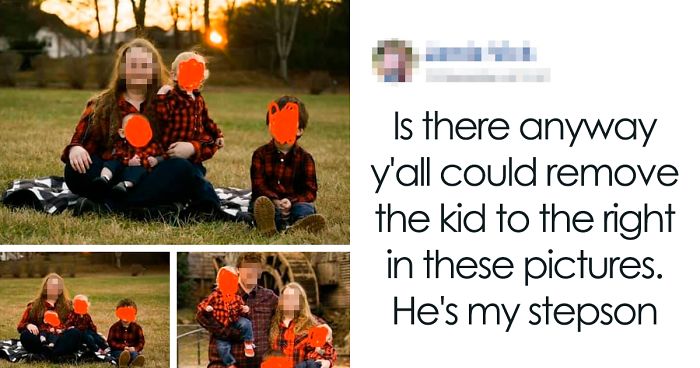
The story centers on a mom who reportedly asked a Facebook photo-editing group whether someone could Photoshop her stepson out of family pictures. She said she loved him, but wanted some images without him. That explanation did not land gently. Online users quickly accused her of excluding a child who was already navigating the complicated world of blended family relationships. The backlash spread across Facebook, Reddit, Twitter/X, and parenting sites, with many commenters saying the request felt less like a harmless edit and more like a digital version of “you do not belong here.”
So why did this story hit such a nerve? Because it was never really just about Photoshop. It was about belonging. It was about what children notice. And it was about how adults sometimes treat family photos like decorative wall art, while kids experience them as evidence of who counts.
What Actually Happened?
According to the viral coverage, the stepmother posted family photos from a professional shoot and asked if someone could remove her stepson from the images. In one version of the story, she explained that she loved the pictures of herself with the children but wanted some without the stepson included. In another similar viral case, a woman asked a photo-editing group to remove “the center kid,” later clarified by online discussion as her stepson.
On paper, the request might sound like a small technical favor. After all, people ask for photo edits all the time: remove the trash can, fix the weird lighting, make Uncle Dave stop looking like he just saw a ghost. But asking to remove a child from family pictures is different. A trash can does not have feelings. A kid does.
The biological mother of the boy reportedly found out about the post through family, not directly from the stepmother or father. She said she was extremely upset at first, especially because the child was very young and had no say in the situation. As the story spread, she also said she was grateful for the support her son received online.
The stepmother responded to criticism by saying she loved her stepson and only wanted some pictures without him. But by that point, the internet had already put on its judge robe, grabbed a wooden spoon as a gavel, and called the court of public opinion into session.
Why The Backlash Was So Intense
The outrage was not only about one woman’s wording. It was about a common fear among children in blended families: being treated like an optional attachment instead of a real member of the household. Many adult stepchildren commented that the request reminded them of painful childhood moments when they felt less loved than biological children.
That is why the story traveled so fast. It gave people a visible symbol of something usually invisible. Exclusion in a family is often subtle. It may appear in seating arrangements, birthday effort, holiday plans, or the way someone says “my kids” while one child stands two feet away wondering if they are included in that sentence. In this case, the exclusion was literal. The child was physically present in the photo, and the request was to remove him.
To many readers, the message seemed obvious: the family picture looked better without him. Whether or not the stepmother intended that meaning, people reacted to the emotional message a child could receive from it.
The Bigger Issue: Blended Families Need More Than Good Intentions
Blended families are common in the United States. Recent Pew Research Center analysis found that about 17% of U.S. children under 18 live in a blended family most or all of the time. Census data also shows millions of children live in households with step-relationships, adoptive relationships, half-siblings, or other family structures beyond the traditional “two biological parents and kids” model.
In other words, stepfamilies are not rare side quests. They are part of everyday American family life. But common does not mean easy. The American Psychological Association notes that stepfamilies often need time, patience, communication, and realistic expectations. The American Academy of Child and Adolescent Psychiatry also emphasizes that newly blended families face adjustments because each member may be dealing with loss, change, loyalty conflicts, or uncertainty.
That context matters. A stepparent cannot simply enter a family, pose for a holiday card, and expect instant sitcom harmony. This is not “The Brady Bunch” with better Wi-Fi. Children may wonder where they fit. Biological parents may feel protective. Stepparents may feel unsure of their role. Everyone is trying to build a new map while already driving on the road.
That is why symbolic gestures matter so much. A family photo is not just a picture. It is a public declaration. It says, “These are my people.” When a child is edited out, especially a stepchild, it can feel like the declaration comes with an asterisk.
Was There Any Possible Innocent Explanation?
It is fair to ask whether the internet judged too quickly. Sometimes divorced or separated parents have rules about posting children online. Sometimes one parent wants privacy. Sometimes a stepparent may want a photo with only the children she gave birth to, not because she dislikes the stepchild, but because families can want different combinations of pictures.
In a perfect world, that could be handled privately and kindly. A family might say, “Let’s take group photos, sibling photos, parent-child photos, and individual shots so everyone has what they need.” Professional photographers do this all the time. Nobody has to feel rejected when every child gets included first and different combinations happen afterward.
The problem in this viral case was the public nature and emotional wording of the request. Posting a child’s image in a photo-editing group and asking strangers to remove him created a scene where the child became the subject of online debate. Even if the intent was not cruel, the impact looked harsh.
Intent matters, but impact matters too. If you step on someone’s foot while dancing, you may not have meant to hurt them. But you still apologize, move your foot, and maybe stop attempting TikTok choreography in the kitchen.
Why Family Photos Matter So Much To Children
Family photos are emotional receipts. They prove who was there, who was celebrated, and who was placed close enough to be considered part of the center. Children may not understand adult explanations about custody, privacy, or photo composition, but they understand who gets hugged in the frame.
Imagine a child growing up and seeing two versions of the same family shoot: one with him, one where he has been removed. Even if the edit was never meant for him to see, screenshots live forever online. The internet is basically a scrapbook with raccoon energy: messy, fast, and weirdly impossible to control.
For stepchildren, photos can carry extra meaning. They may already be moving between homes, routines, and sets of family rules. A picture that includes them can say, “You belong here too.” A picture that removes them can say the opposite, even if no adult says it out loud.
The Internet’s Reaction: Protective Or Too Harsh?
Many online commenters defended the child fiercely. Some shared their own experiences of being stepchildren who felt like outsiders. Others praised stepparents who call their stepchildren “bonus children” and include them fully in family life. The strongest reactions came from people who believed the request could cause long-term emotional harm.
At the same time, the internet can turn accountability into a pile-on. Public shaming often moves faster than context. A single screenshot can become a character trial, and strangers may say things they would never say face-to-face in a school pickup line. That does not excuse the stepmother’s request, but it does remind us that online outrage should be aimed at protecting the child, not creating more chaos around the child.
The healthiest takeaway is not “destroy the mom forever.” It is “adults need to think before making children feel replaceable.” Online criticism can spotlight a real problem, but the best outcome would be changed behavior, repair, and a safer family environment for the child.
What Stepparents Can Learn From This Story
1. Inclusion Comes First
If you marry someone with children, you are entering a package deal. That does not mean the relationship will be instantly warm or simple. It does mean the child should not be treated like an inconvenient guest star in their own family story.
Inclusion can be simple: invite the child into pictures, use language that does not separate them from “real” children, remember milestones, and avoid jokes that make them feel like outsiders. A child should never have to audition for belonging.
2. Build The Relationship Before Expecting The Title
Experts often recommend that stepparents focus on trust before authority. A child may not immediately see a stepparent as “Mom” or “Dad,” and forcing closeness can backfire. A better approach is to be consistent, kind, patient, and present.
That means showing up without demanding instant affection. Help with homework. Ask about their interests. Learn their favorite snacks. Attend their events. Let the relationship grow like a garden, not a microwave dinner.
3. Do Not Compete With The Biological Parent
Children in stepfamilies may feel loyalty conflicts. They might worry that liking a stepparent means betraying a biological parent. Adults can reduce that pressure by being respectful. A good stepparent does not try to erase the other parent. They create a new, separate relationship based on safety and trust.
In photo situations, this also means communicating with the biological parent when needed. If there are privacy concerns, custody agreements, or posting boundaries, discuss them adult-to-adult. Do not let a child become the messenger, the problem, or the Photoshop project.
4. Think Before Posting Children Online
Common Sense Media and UNICEF both encourage parents to think carefully before sharing children’s images online. Children deserve privacy, and family posts can create misunderstandings, especially when co-parenting is involved. Before posting a child’s photo, adults should consider who can see it, whether identifying details are visible, and whether all relevant caregivers are comfortable with it.
This story shows another layer of “sharenting”: it is not only about whether a child appears online, but how they are represented. A child should not become viral content because adults failed to handle a sensitive family issue privately.
What Parents Should Do Instead During Family Photos
The solution is not complicated. During family photo sessions, take many combinations. Get the full blended family. Get each parent with each child. Get sibling groups. Get biological child groupings if that is meaningful. Get silly photos, formal photos, and the one photo where everyone looks in a different direction because life is not a furniture catalog.
The key is sequencing and sensitivity. Start with the inclusive full-family shots so every child knows they matter. Then move into smaller combinations in a way that feels normal and fair. A photographer can help manage this smoothly by saying, “Now we’ll do a few different groupings,” instead of making one child feel singled out.
If an edit is needed later for privacy reasons, explain it carefully and privately. For example, if a child’s other parent does not want them posted online, crop or choose another image without making the child feel unwanted. The message should be, “We are protecting your privacy,” not “We wanted the picture without you.”
The Real Lesson: Children Remember How Adults Make Them Feel
The viral story became famous because it touched a universal truth: kids remember belonging. They remember who saved them a seat, who introduced them proudly, who put their picture on the wall, and who acted like they were extra luggage.
Adults may forget a Facebook post. Children may not. That is why small choices deserve big care. A photo edit can be undone with software, but the feeling of being edited out of a family can last much longer.
For stepparents, the message is clear. You do not have to be perfect. You do not have to pretend blended family life is always easy. But you do have to be careful with a child’s heart. It is not a background object. It is the main subject.
Additional Experiences Related To The Topic
Anyone who has been part of a blended family, worked with children, or even watched relatives navigate remarriage knows that the hardest moments are often not the dramatic ones. They are the tiny moments that adults almost miss. A child notices when everyone else gets a matching shirt and theirs is “somewhere in the laundry.” A child notices when the new baby is called “our child” and they are called “your son.” A child notices when family pictures are selected for the living room and the one with them stays hidden in a folder on someone’s phone.
One common experience in blended families is the “group photo test.” It usually happens at birthdays, weddings, holidays, or school events. Someone says, “Let’s get a family picture,” and suddenly the room has to answer a question nobody said out loud: who is family? In healthy homes, the answer is generous. The stepchild is called over. The half-sibling is included. The adults make space. Nobody needs a legal chart or DNA report. The picture says, “Come here, you belong.”
In more strained homes, the moment feels different. A child may be told to stand aside for “just one” photo. That can be fine if every child gets different combinations and nobody is made to feel lesser. But when the same child is always the one stepping out, the pattern becomes painful. Kids are excellent pattern detectives. They may not have the vocabulary to say, “I feel emotionally excluded from this family system,” but they absolutely know how it feels to be left out while adults pretend it is no big deal.
Another experience related to this topic is the tension between privacy and inclusion. Some biological parents do not want their child posted online by an ex’s new partner. That boundary can be reasonable. Children deserve digital privacy. But the adults must handle that boundary with care. A stepparent can choose not to post a child publicly while still including them in private albums, printed pictures, and family rituals. Privacy should not become a polite mask for rejection.
There is also the experience of regret. Many adults have posted something online too quickly and realized later that the wording was awful. The mature response is not defensiveness. It is repair. A sincere apology might sound like: “I see how this made him feel excluded. That was not okay. I should have handled it privately and with more care.” Children do not need flawless adults. They need adults who can admit mistakes without turning the apology into a courtroom speech.
Finally, this story reminds families that love is not only something adults claim. It is something children can observe. Saying “I love my stepson” matters less if the child sees actions that suggest he is removable. Real love makes room in the frame, even when the frame is crowded, the lighting is bad, and someone’s toddler is chewing on a shoelace. Especially then.
Conclusion
The story of a mom being shamed for asking to have her stepson Photoshopped out of family pictures became viral because it revealed a sensitive truth about blended families: belonging must be protected. A photo may seem small to an adult, but to a child, it can become proof of whether they are truly included.
The backlash was fierce because people recognized the emotional danger of making a stepchild feel optional. Still, the best lesson is not simply to shame one person online. The better lesson is for parents, stepparents, and co-parents to communicate clearly, respect children’s privacy, and make inclusion the default. Take the full family photo first. Handle special requests privately. Never make a child feel like an object to be removed from the picture.
Blended families do not need to be perfect to be loving. They need patience, humility, and adults who understand that children are always reading the room. Sometimes, they are also reading the photo album.
Note: This article is based on publicly reported viral coverage and general family-relationship guidance. It is intended for informational and editorial use, not as legal, medical, or therapeutic advice.











